
For investors, traders, and financial enthusiasts, the rhythm of the stock market dictates the flow of global capital. When someone asks, “What time does the Dow close?” they are referring to the New York Stock Exchange (NYSE) and the Nasdaq, where the 30 blue-chip stocks that comprise the Dow Jones Industrial Average (DJIA) are traded. Understanding these hours is not merely a matter of checking a clock; it is a fundamental requirement for managing risk, executing trades efficiently, and understanding the psychological shifts of the financial world.
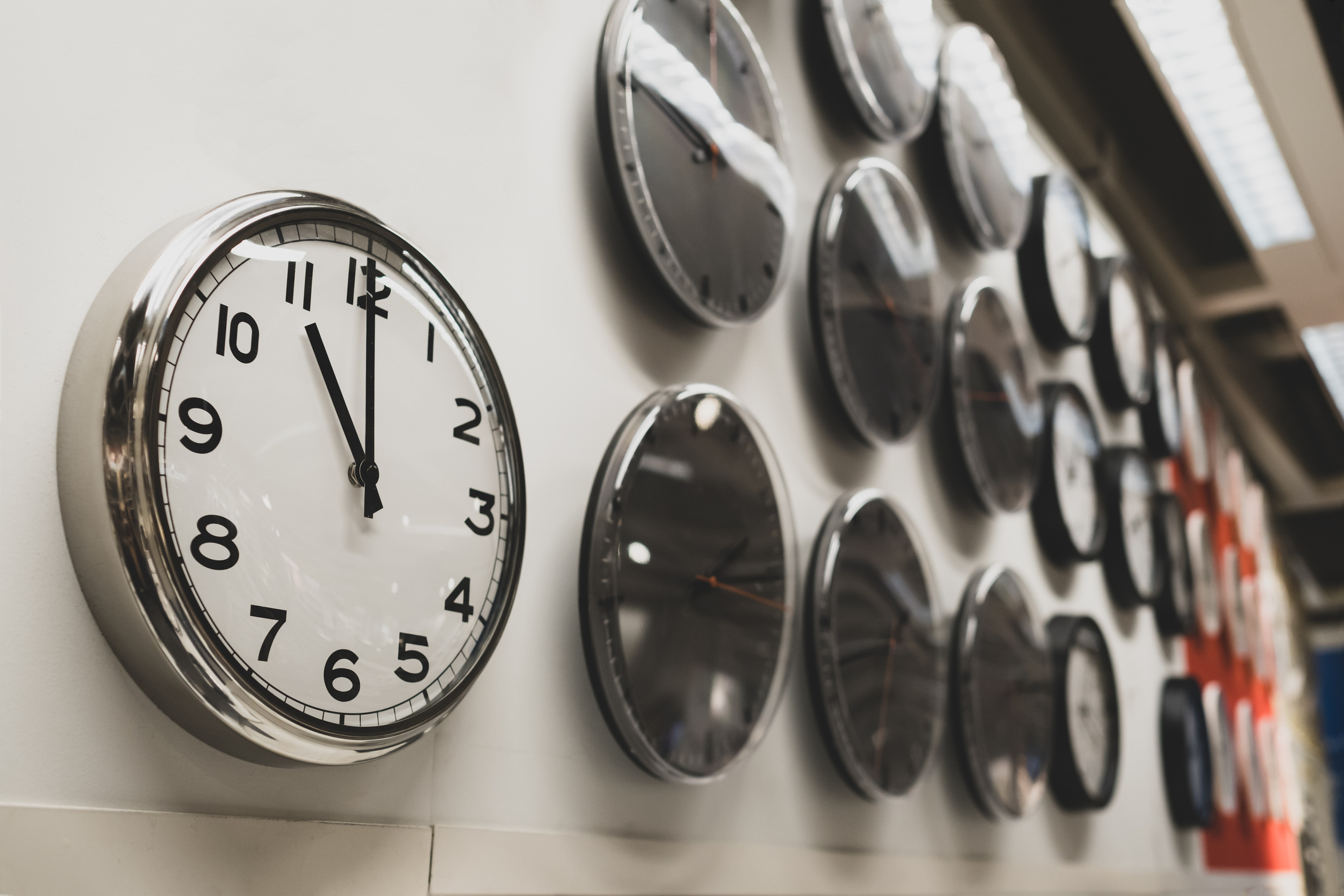
In the modern era of digital finance, the lines between “open” and “closed” have blurred, yet the official closing bell remains the most significant anchor in the investing day. This guide explores the core hours of the market, the complexities of extended trading, and the strategic importance of the 4:00 PM ET deadline.
Understanding Core Market Hours: The Standard Session
The Dow Jones Industrial Average follows the operating schedule of the major U.S. stock exchanges. While we live in a 24/7 global economy, the concentrated liquidity that defines the “Dow” occurs during a specific window on business days.
The Standard Session: 9:30 AM to 4:00 PM ET
The official trading session for the Dow Jones stocks begins at 9:30 AM Eastern Time and ends promptly at 4:00 PM Eastern Time. This six-and-a-half-hour window is when the vast majority of trading volume occurs. For the retail investor, this is the safest and most efficient time to buy or sell shares because the “spread”—the difference between the price a buyer offers and a seller accepts—is typically at its narrowest.
During these hours, institutional investors, mutual funds, and high-frequency trading algorithms are most active. This concentration of activity ensures that prices are reflective of all currently available information, a concept known in finance as “market efficiency.”
Why the Closing Bell Matters
The 4:00 PM ET closing bell is more than just a tradition. It marks the moment when “closing prices” are established. These prices are used to calculate the daily performance of mutual funds, the value of retirement accounts, and the official daily change in the Dow Jones index itself.
The final minutes of the trading day, often called the “Power Hour,” frequently see a surge in volume. Traders scramble to square their positions before the bell, and institutional managers rebalance their portfolios to match index weightings. For the “Money” niche professional, the close is the ultimate daily benchmark of market sentiment.
Beyond the Bell: Extended-Hours Trading
While the official close is at 4:00 PM, the digital nature of modern exchanges allows for trading to continue long after the floor brokers have gone home. However, “Extended-Hours Trading” operates under a different set of rules and risks.
Pre-Market Sessions
Before the opening bell rings at 9:30 AM, the pre-market session allows early birds to react to overnight news. Pre-market trading can start as early as 4:00 AM ET, though the bulk of the activity occurs between 8:00 AM and 9:30 AM. Investors often watch pre-market moves in the Dow futures to gauge how the actual index will open. If a major company in the Dow, such as Apple or Goldman Sachs, releases earnings at 7:30 AM, the pre-market is where that initial price discovery happens.
After-Hours Trading Dynamics
After the 4:00 PM close, the after-hours session begins, typically running until 8:00 PM ET. This period is crucial for reacting to “after-the-bell” earnings reports or major geopolitical events. While it offers the flexibility to trade late in the evening, it is not for the faint of heart.
Risks and Rewards of Non-Standard Trading
Trading outside of the core 9:30 AM to 4:00 PM window carries significant risks, primarily regarding liquidity. Because there are fewer participants, a relatively small sell order can cause a disproportionately large drop in price. This is known as “slippage.” Furthermore, most brokerage firms require “limit orders” during these times to protect investors from volatile price swings. For the average personal finance enthusiast, the core hours remain the gold standard for execution.

Global Time Zones and Market Holidays
Timing is relative. While the Dow is a U.S. index, it is watched by investors in London, Tokyo, and Dubai. Understanding how the Dow’s closing time interacts with global schedules is essential for international portfolio management.
Converting Eastern Time for International Investors
The U.S. markets operate on Eastern Time (ET). For an investor in London, the Dow closes at 9:00 PM GMT. For someone in Los Angeles, the closing bell rings at 1:00 PM PT. This time difference means that West Coast traders often start their day while the market is already in full swing, whereas European traders spend their evening watching the U.S. market close. Being aware of Daylight Saving Time shifts is also critical, as the U.S. often transitions on different dates than Europe or Australia, briefly shifting the closing time relative to those regions.
Stock Market Holidays: When the Dow Stays Dark
The Dow Jones does not close only at 4:00 PM daily; it also remains closed on specific federal holidays. These include:
- New Year’s Day
- Martin Luther King, Jr. Day
- Presidents’ Day
- Good Friday
- Memorial Day
- Juneteenth National Independence Day
- Independence Day (July 4th)
- Labor Day
- Thanksgiving Day (with an early close at 1:00 PM on Black Friday)
- Christmas Day
For those managing their own money, a “holiday calendar” is an essential tool to ensure they aren’t caught off guard by a lack of liquidity or an inability to access their capital.
Trading Strategies for the Market Close
Professional traders don’t just watch the clock; they trade the clock. The closing minutes of the Dow offer unique opportunities for those who understand market mechanics.
The “Closing Auction” and Liquidity
At exactly 4:00 PM, the NYSE conducts a “Closing Auction.” This is a process that aggregates all the buying and selling interest to determine a single closing price for each stock. Large institutional “Market-on-Close” (MOC) orders are filled here. Understanding the “imbalance”—whether there are more buyers than sellers heading into the close—can provide clues about the next day’s opening momentum.
Volatility Patterns at 4:00 PM
The “closing cross” often brings a spike in volatility. Stocks may swing several percentage points in the final seconds as billions of dollars in “passive” index funds are forced to buy or sell shares to maintain their tracking of the Dow Jones. For a long-term investor, this volatility is noise, but for a short-term trader, it represents a window of opportunity to capture price discrepancies.
How to Manage Positions Before the Close
A common rule in risk management is the “Overnight Risk” assessment. Before 4:00 PM, an investor must decide whether to hold a position overnight or “flat” their position (sell everything). Since you cannot easily exit a position at the current price once the market closes, holding overnight exposes you to “gap risk”—the possibility that the market opens significantly higher or lower the next morning due to news that breaks while you are asleep.
The Impact of Global Events on the Dow’s Timing
The Dow Jones Industrial Average is a barometer for the global economy. While the clock tells us when it closes, global events tell us how it closes.
Economic Indicators and Late-Day Swings
Many economic reports, such as the Federal Reserve’s interest rate decisions, are released at 2:00 PM ET. This leaves exactly two hours of trading before the Dow closes. These two hours are often the most volatile of the month. Money managers analyze the language of the Fed during this window, leading to massive repositioning that culminates at the 4:00 PM bell.

Futures Markets and 24-Hour Sentiment
Even after the Dow closes at 4:00 PM, the “Dow Futures” (specifically the E-mini Dow) continue to trade almost 24 hours a day on the Chicago Mercantile Exchange (CME). If the Dow closes at 40,000 but major news breaks at midnight, the futures market will reflect a new price immediately. When the “physical” market opens again at 9:30 AM the next day, the Dow will “gap” to meet the price set by the futures market.
In conclusion, knowing what time the Dow closes is the first step in mastering the mechanics of the financial markets. Whether you are a retail investor checking your 401(k) or a day trader looking for “Power Hour” volatility, the 4:00 PM ET bell represents the pulse of American capitalism. By understanding the core hours, the extended sessions, and the strategic importance of the close, you can navigate the world of money with greater precision and confidence.
aViewFromTheCave is a participant in the Amazon Services LLC Associates Program, an affiliate advertising program designed to provide a means for sites to earn advertising fees by advertising and linking to Amazon.com. Amazon, the Amazon logo, AmazonSupply, and the AmazonSupply logo are trademarks of Amazon.com, Inc. or its affiliates. As an Amazon Associate we earn affiliate commissions from qualifying purchases.