
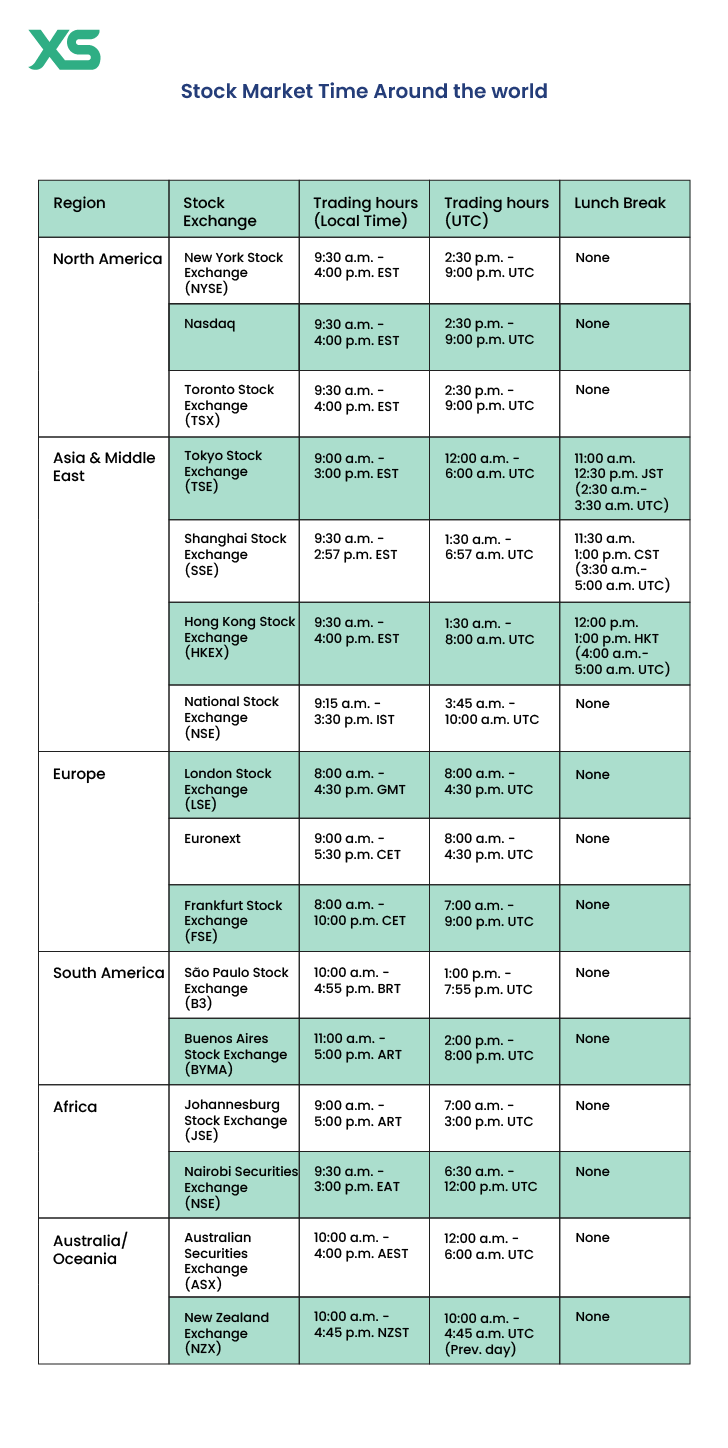
The New York Stock Exchange (NYSE), a cornerstone of global finance, maintains a consistent schedule for its regular trading hours, critical knowledge for investors, traders, and anyone engaged with financial markets. The standard operating hours for the NYSE are from 9:30 AM Eastern Time (ET) to 4:00 PM ET, Monday through Friday. The market officially concludes its regular trading session with the iconic closing bell at precisely 4:00 PM ET. This strict adherence to a schedule ensures order, transparency, and a level playing field for market participants, while also serving as a fundamental rhythm for the financial world.
The Standard Trading Day and Its Significance
Understanding the NYSE’s regular trading hours is more than just knowing when the doors open and close; it’s about grasping the underlying mechanics that drive market activity and influence investment decisions. The 9:30 AM to 4:00 PM ET window represents the period of highest liquidity, greatest price discovery, and most active participation from both institutional and retail investors.
The Official Closing Bell
The closing bell at 4:00 PM ET marks the end of the primary trading day. This isn’t merely a ceremonial event; it signifies the culmination of the day’s price action and serves as a critical timestamp for various financial calculations. At this exact moment, all regular market orders are executed, and the final closing prices for all listed securities are established. These closing prices are vital benchmarks, used globally to value portfolios, calculate daily returns, and determine the performance of various investment funds and indices.
For many investors, the 4:00 PM close represents the definitive end-of-day valuation for their holdings. It’s the point at which daily gains or losses are finalized, and the market “resets” before the next trading session. This clarity is essential for financial reporting, risk assessment, and tracking investment performance over time.
Why Market Close Matters for Investors
The market close is a pivotal moment with several profound implications for investors and traders:
- Order Execution: Orders placed as “market orders” are typically executed at the best available price during regular trading hours. If a market order is placed near the close, it will be filled at or very close to the closing price. However, orders placed after 4:00 PM ET will either be rejected, held for the next trading day, or routed to extended trading sessions depending on the order type and brokerage firm’s rules. Understanding this timing is crucial for ensuring trades are executed under desired conditions.
- Portfolio Valuation: The closing prices of stocks dictate the daily value of an investor’s portfolio. Financial statements, performance reports, and margin calculations all depend on these official closing figures. For individuals managing their personal finances, knowing the 4:00 PM benchmark helps in assessing daily progress towards financial goals or adjusting strategies.
- Risk Management and Volatility: The period leading up to and immediately following the market close can sometimes exhibit increased volatility as traders close out positions, institutions rebalance, or news is digested. Savvy investors often watch this period closely, as significant price swings can occur. For long-term investors, the closing price provides a stable reference point to evaluate daily sentiment, rather than being swayed by intraday fluctuations.
- Psychological Impact: The market close also has a psychological impact. A strong finish can boost investor confidence, while a weak close might trigger anxiety. For many, it’s a moment of reflection on the day’s events and a time to plan for the next trading session. This psychological aspect can subtly influence future buying and selling decisions, impacting overall market dynamics.
Beyond the Bell: Understanding Extended Trading Hours
While the 4:00 PM ET closing bell signals the end of regular trading, the markets don’t entirely go dark. Extended trading hours—comprising pre-market and after-hours sessions—allow certain market participants to trade outside the standard window. These periods, though often less liquid and more volatile, offer opportunities for investors to react to news and events occurring overnight or after the close.
Pre-Market Trading
Pre-market trading typically occurs before the official 9:30 AM ET opening bell, often starting as early as 4:00 AM ET and continuing until the market opens. During this period, investors can place buy and sell orders that are matched electronically.
- Reasons for Participation: Pre-market trading is primarily driven by the need to react to significant news that breaks before the market opens. This often includes corporate earnings reports released overnight, major economic data, geopolitical events, or analyst upgrades/downgrades. Institutional investors and active traders frequently use pre-market sessions to position themselves ahead of the official opening.
- Characteristics and Risks: The defining characteristics of pre-market trading are lower liquidity, wider bid-ask spreads, and heightened volatility compared to regular hours. With fewer participants, even relatively small orders can have a disproportionate impact on stock prices. This can lead to rapid price swings and make it challenging to execute trades at desired levels. Retail investors should approach pre-market trading with caution, understanding these inherent risks.
- Implications for Personal Finance: For most long-term retail investors, monitoring pre-market activity might offer insights into potential market sentiment, but engaging in trading during these hours is generally not recommended due to the increased risk and complexity. However, being aware of significant pre-market movements can help in understanding the likely direction of the market at the open.
After-Hours Trading
After-hours trading commences immediately after the 4:00 PM ET closing bell and can extend until 8:00 PM ET. Similar to pre-market, it’s an electronic trading period.
- Drivers and Opportunities: The primary catalyst for after-hours trading is the release of corporate news, particularly quarterly earnings reports, which are frequently announced after the market closes. Other news, such as mergers and acquisitions, drug trial results, or significant legal rulings, can also prompt intense after-hours activity. For active traders, this period can present opportunities to capitalize on immediate price reactions to breaking news.
- Risks and Challenges: Like pre-market trading, after-hours sessions suffer from reduced liquidity and increased volatility. Price discrepancies between the after-hours session and the next day’s open are common due to the limited trading volume and fewer participants. Retail investors must be aware that the price at which they execute an after-hours trade may be significantly different from the price the stock trades at during regular hours the following day.
- Access for Retail Investors: Most major brokerage platforms offer access to extended-hours trading. However, investors often need to explicitly opt in or select specific order types (e.g., “good for extended hours”) to participate. It’s crucial to understand the specific rules and limitations of your brokerage regarding extended-hours trading.
Navigating Market Holidays and Early Closures
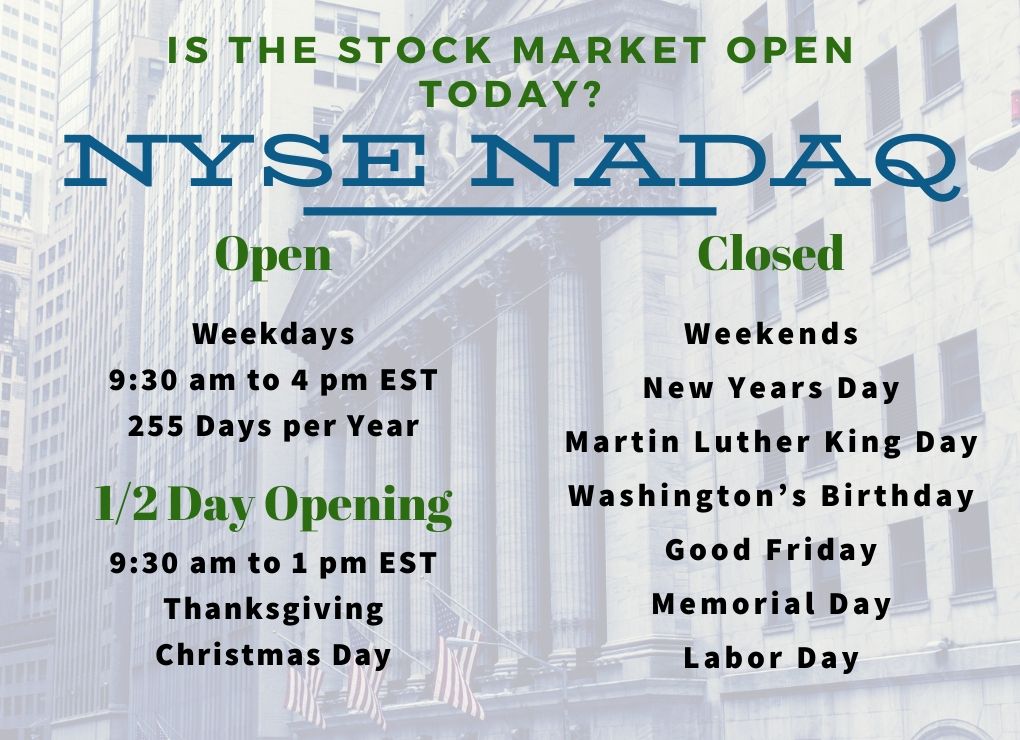
While the 9:30 AM to 4:00 PM ET schedule is standard, the NYSE does observe a number of holidays and occasionally implements early closures. Being aware of these exceptions is vital for financial planning, trade execution, and managing investment expectations.
NYSE Holiday Schedule
The NYSE typically closes on major U.S. federal holidays. These include:
- New Year’s Day
- Martin Luther King, Jr. Day
- Presidents’ Day
- Good Friday
- Memorial Day
- Juneteenth National Independence Day
- Independence Day
- Labor Day
- Thanksgiving Day
- Christmas Day
When a holiday falls on a weekend, the market typically observes it on the preceding Friday or following Monday. For instance, if Christmas Day falls on a Sunday, the market might close on the preceding Friday. It is always advisable to consult the official NYSE website or your brokerage firm’s calendar for the exact holiday schedule each year.
Early Market Closures
In addition to full-day holidays, the NYSE sometimes operates on an abbreviated schedule, closing early at 1:00 PM ET. Common instances for early closures include:
- The day before Independence Day (if it falls on a weekday)
- The day after Thanksgiving (Black Friday)
- Christmas Eve
These early closures require investors to adjust their trading strategies and deadlines for placing orders. For instance, any market orders intended for same-day execution must be placed well before the 1:00 PM ET early close. Failing to account for these shortened days can lead to missed opportunities or unexpected delays in trade settlement.
The Strategic Implications for Personal Finance and Investing
Understanding the NYSE’s closing time and the broader market hours isn’t just about trivia; it’s a strategic imperative for effective personal finance and investing.
Timing Your Trades
For active investors, the timing of trade entries and exits around market open and close can significantly impact outcomes. Volatility often spikes at the open as overnight news is digested and at the close as positions are settled. Knowing when these periods occur allows investors to strategically place orders, potentially capitalizing on specific market movements or avoiding adverse price action. For example, some investors might avoid placing market orders right at the open or close, opting for limit orders or waiting for the market to stabilize.
Portfolio Management Around Market Hours
The market’s closing price serves as a daily snapshot of an investor’s portfolio value. This benchmark is crucial for:
- Daily Assessment: Evaluating daily performance against personal financial goals or benchmarks.
- Rebalancing Decisions: For those who rebalance their portfolios regularly, understanding the end-of-day valuation helps in identifying deviations from target allocations.
- News Integration: Major financial news often breaks after market close. Investors can use this after-hours period to digest the information, assess its potential impact on their holdings, and formulate a strategy for the next trading day, rather than making impulsive decisions during highly volatile extended hours.
- Long-Term Perspective: While daily fluctuations are constant, the market close provides a clear demarcation. Long-term investors can use these daily markers to reinforce a disciplined approach, focusing on broader trends rather than getting caught up in short-term noise.
Tools and Resources for Market Awareness
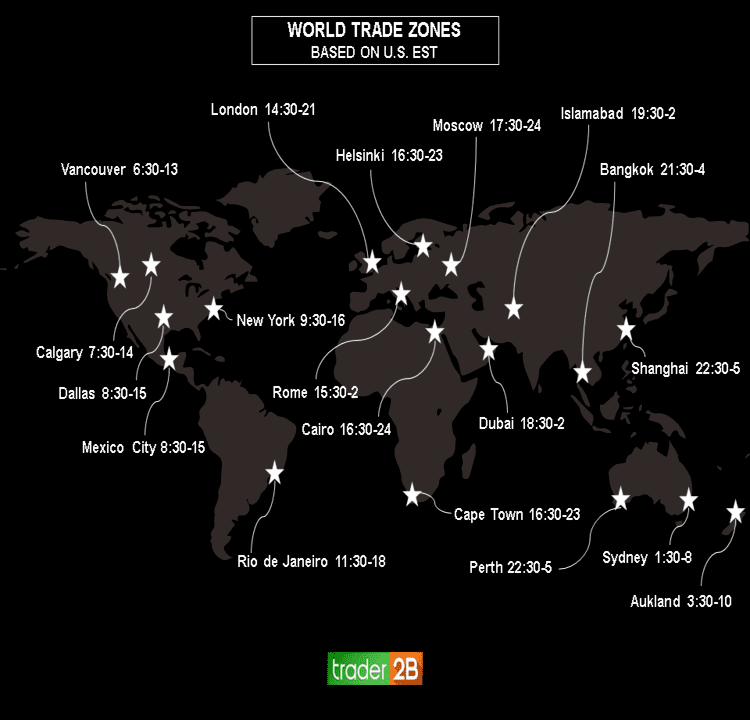
To effectively navigate market hours, investors should leverage readily available tools and resources:
- Brokerage Platforms: Most online brokerage accounts provide real-time market data, pre-market/after-hours quotes, and integrated news feeds that highlight market-moving events.
- Financial News Outlets: Reputable financial news sources (e.g., Wall Street Journal, Bloomberg, CNBC) offer comprehensive coverage of market openings, closings, and any significant events happening during extended hours.
- Official Exchange Websites: The NYSE’s official website is the definitive source for current trading schedules, holiday calendars, and any special announcements regarding market operations. Regularly checking this resource ensures investors have the most accurate and up-to-date information.
In conclusion, the NYSE’s 4:00 PM ET closing time is a fundamental component of the financial landscape. Understanding its rhythm, along with the nuances of extended trading hours and holiday schedules, empowers investors to make more informed decisions, manage risk effectively, and ultimately work towards their financial objectives with greater confidence.
aViewFromTheCave is a participant in the Amazon Services LLC Associates Program, an affiliate advertising program designed to provide a means for sites to earn advertising fees by advertising and linking to Amazon.com. Amazon, the Amazon logo, AmazonSupply, and the AmazonSupply logo are trademarks of Amazon.com, Inc. or its affiliates. As an Amazon Associate we earn affiliate commissions from qualifying purchases.