
Understanding NASDAQ’s Core Trading Hours
The NASDAQ Stock Market, a global electronic marketplace for buying and selling securities, operates under specific hours that are crucial for investors worldwide. Understanding these times is fundamental for anyone looking to participate in the U.S. equity markets, from seasoned day traders to long-term investors. The standard operating hours are designed to concentrate liquidity, facilitate efficient price discovery, and provide a structured environment for transactions.
Standard Market Session
The primary trading session for the NASDAQ, often referred to as “regular trading hours,” commences at 9:30 AM Eastern Time (ET) and concludes at 4:00 PM Eastern Time (ET). This six-and-a-half-hour window is when the vast majority of trading volume occurs and when market news, company earnings, and economic reports have their most immediate and significant impact on stock prices. During this period, liquidity is typically at its highest, meaning there are more buyers and sellers, which generally leads to tighter bid-ask spreads and easier execution of trades. High liquidity is beneficial because it allows investors to enter or exit positions quickly without significantly affecting the stock’s price. The opening bell often sees a surge in activity as orders accumulated overnight are executed, and the closing bell likewise sees increased volume as traders adjust positions before the market closes. For many retail investors, limiting trading to these core hours is a strategic choice due to the increased stability and reduced volatility compared to extended hours.
Observing Eastern Time
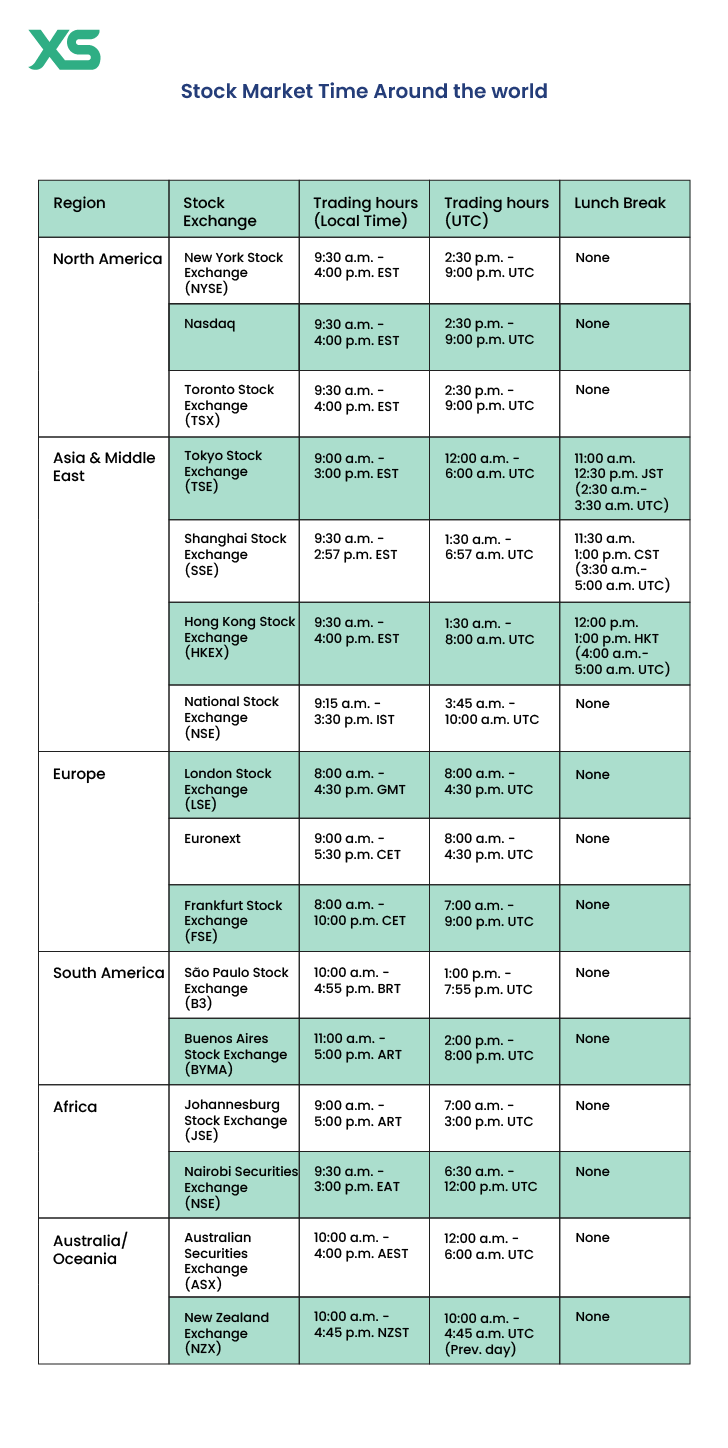
It is paramount for investors to remember that all NASDAQ trading times are quoted in Eastern Time (ET), which observes daylight saving time (EDT during summer months). This seemingly minor detail is incredibly important for investors situated in different time zones around the United States or internationally. For instance, an investor on the West Coast of the U.S. (Pacific Time) would need to subtract three hours, meaning the market opens at 6:30 AM PT and closes at 1:00 PM PT. Similarly, European investors would need to add five or six hours depending on their specific time zone and whether daylight saving is active in both regions. This time zone difference requires careful planning, especially for those who wish to actively monitor their investments or react to market-moving news in real-time. Missing a critical market event or miscalculating a trading window due to a time zone error can lead to missed opportunities or unintended risks. Therefore, a reliable clock and an understanding of time zone conversions are indispensable tools for any investor engaging with the NASDAQ.
Beyond the Bell: Pre-Market and After-Hours Trading
While the core trading session defines the main activity window for the NASDAQ, the market also offers extended trading opportunities before the official open and after the official close. These “pre-market” and “after-hours” sessions provide flexibility for investors but also come with a unique set of characteristics, risks, and strategic considerations. They allow investors to react promptly to news that breaks outside standard hours, such as late-night earnings reports or early-morning economic data releases.
Strategic Opportunities in Extended Hours
Pre-market trading on the NASDAQ typically begins as early as 4:00 AM Eastern Time (ET) and runs until the market opens at 9:30 AM ET. After-hours trading usually commences immediately after the 4:00 PM ET close and can extend as late as 8:00 PM Eastern Time (ET). These extended sessions are primarily electronic, with transactions executed through electronic communication networks (ECNs) rather than through traditional exchange specialists. The main advantage of these hours is the ability to react quickly to significant news. For example, a company’s quarterly earnings report released at 7:00 AM ET can be traded upon in the pre-market, allowing investors to capitalize on immediate price movements. Similarly, a major economic announcement made after the 4:00 PM ET close can be acted upon in after-hours trading, potentially mitigating losses or securing gains before the next regular session. This can be particularly beneficial for institutional investors or highly active individual traders who need to manage their portfolios continuously. Additionally, some investors might use these sessions to execute larger block trades with less market impact, assuming they can find sufficient liquidity.
Risks and Considerations for Off-Hours Trading
Despite the strategic advantages, trading outside regular hours carries significant risks that every investor must understand. The most prominent risk is lower liquidity. With fewer participants in the market during pre-market and after-hours sessions, bid-ask spreads tend to be wider, and the volume of shares traded is significantly lower. This can lead to greater price volatility and difficulty in executing trades at desired prices. A small order can have a disproportionately large impact on a stock’s price compared to the regular session. Furthermore, the wider spreads mean investors might pay more to buy and receive less to sell, impacting their overall return. Another crucial consideration is limited access to information. While some news breaks during these times, the comprehensive research, analysis, and news coverage that characterize regular hours are often not available. This can lead to uninformed decisions based on incomplete data. Finally, many brokers offer limited services or have specific rules for extended-hours trading, such as requiring limit orders instead of market orders, which can further complicate execution. For these reasons, extended-hours trading is generally recommended for experienced investors who are well-versed in market dynamics and possess a higher tolerance for risk.
The Rationale Behind Market Hours and Their Impact
The establishment of specific trading hours for exchanges like NASDAQ is not arbitrary; it is the result of decades of evolution aimed at optimizing market functionality. These defined periods serve multiple purposes, from concentrating liquidity to managing information flow, ultimately influencing market efficiency, price stability, and investor behavior.
Market Efficiency and Liquidity
One of the primary reasons for fixed trading hours is to concentrate liquidity. By limiting the time frame during which stocks can be actively bought and sold, exchanges ensure that a large pool of buyers and sellers are present simultaneously. This concentration leads to higher trading volumes, which in turn results in tighter bid-ask spreads. Tighter spreads mean that the difference between the highest price a buyer is willing to pay and the lowest price a seller is willing to accept is minimal, reducing transaction costs for investors and facilitating more efficient price discovery. When liquidity is high, large orders can be executed without significantly moving the market price, reflecting the true supply and demand dynamics more accurately. This efficiency is crucial for the fair valuation of securities and for maintaining investor confidence in the integrity of the market. Without defined hours, trading could be perpetually thin, leading to highly volatile and easily manipulated prices, ultimately undermining the market’s role as a capital allocation mechanism. The structured daily cycle allows for a period of reflection and analysis overnight, where market participants can digest news and plan their strategies for the next trading day.
Investor Behavior and Volatility
Market hours also have a profound impact on investor behavior and market volatility. The opening and closing hours of the NASDAQ are often characterized by heightened activity and increased volatility. The opening bell sees a flurry of activity as pre-market orders are filled and investors react to overnight news, economic data, or earnings reports released before the market officially opens. This can lead to significant price swings in the first few minutes of trading. Similarly, the closing bell often sees an increase in volume as traders close out positions, rebalance portfolios, or execute orders ahead of the overnight break. For many investors, particularly those engaged in day trading, these periods of elevated volatility can present opportunities for quick gains but also carry substantial risk. Long-term investors, on the other hand, might choose to avoid placing orders during these peak volatility periods to ensure better execution prices. The defined hours also impose a rhythm on the financial world, structuring the release of corporate announcements and economic data. Companies often release earnings reports after the market closes or before it opens to allow investors time to process the information and react thoughtfully, rather than during active trading when reactions might be more impulsive and less considered. This controlled environment helps manage the flow of information and prevents constant, chaotic price movements.
Navigating Time Zones and Global Investment
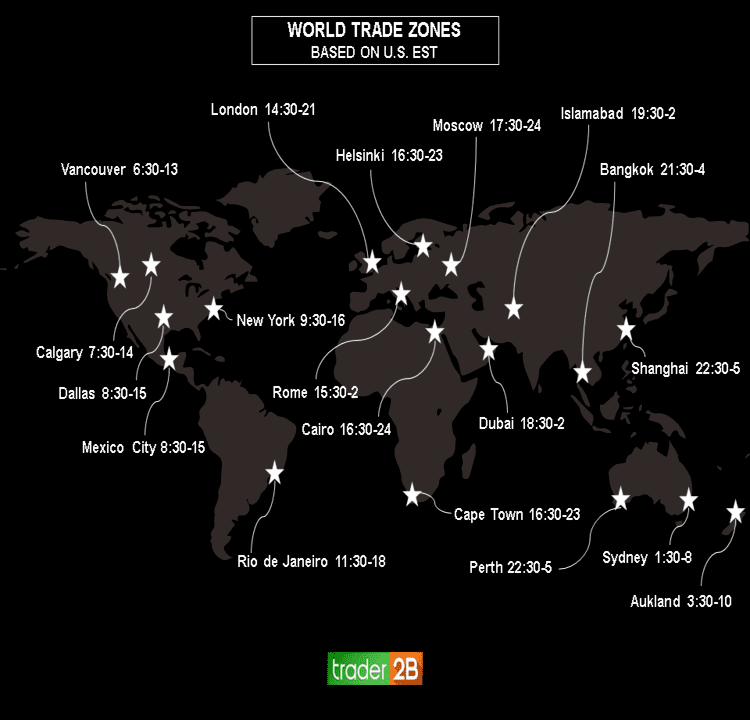
For investors residing outside of the Eastern Time Zone, understanding the NASDAQ’s trading hours requires careful conversion and strategic planning. The global nature of finance means that markets never truly sleep, but individual exchanges operate within their local time frames, creating challenges and opportunities for international participants.
Implications for International Investors
International investors face the unique challenge of aligning their local time with the NASDAQ’s Eastern Time schedule. For example, an investor in London (GMT/BST) would see the NASDAQ open in the early afternoon (2:30 PM BST) and close in the late evening (9:00 PM BST). An investor in Tokyo (JST) would find the market opening in the late evening (10:30 PM JST) and closing early morning (5:00 AM JST) the next day. This often means that active monitoring or direct trading requires being awake during unconventional hours. This can affect the ability to respond in real-time to market fluctuations or news, potentially leading to a delay in trade execution or missing critical entry/exit points. While some international investors might rely on automated trading systems or limit orders, others might adjust their daily schedules to participate directly. The time zone difference also impacts the consumption of financial news and analysis; reports and market commentary from U.S.-based sources might be published during the international investor’s night, requiring proactive checking. Understanding the exact overlap of the NASDAQ’s trading hours with local business hours is crucial for effective portfolio management and strategic decision-making, ensuring that opportunities are not missed due to geographical constraints.
Tools and Resources for Tracking Market Times
Fortunately, numerous tools and resources are available to help both domestic and international investors accurately track NASDAQ trading hours and their equivalents in different time zones. Most reputable financial news websites (e.g., Bloomberg, Reuters, Wall Street Journal) and financial data providers (e.g., Yahoo Finance, Google Finance) offer real-time market status indicators, often including countdown timers to market open or close, and automatically convert times to the user’s local time zone. Dedicated market clock widgets and mobile applications are also widely available, allowing investors to monitor multiple global markets simultaneously. Furthermore, online brokerage platforms typically display the market status directly on their trading interfaces, providing immediate visual cues about whether the NASDAQ is open for regular or extended trading. Investors can also utilize world clock websites or smartphone functions to manually convert Eastern Time to their local time. For those engaged in systematic trading, many platforms allow for the scheduling of trades based on specific market events or times, further simplifying the process of navigating time differences. Employing these tools minimizes the risk of miscalculating trading windows and ensures that investors can make timely decisions regardless of their geographical location.
Holidays, Disruptions, and Market Closures
While the NASDAQ typically adheres to its standard trading schedule, there are specific days and situations when the market operates on a modified schedule or closes entirely. These closures are essential for investors to be aware of, as they directly impact trading activity and portfolio management.
Scheduled Market Holidays
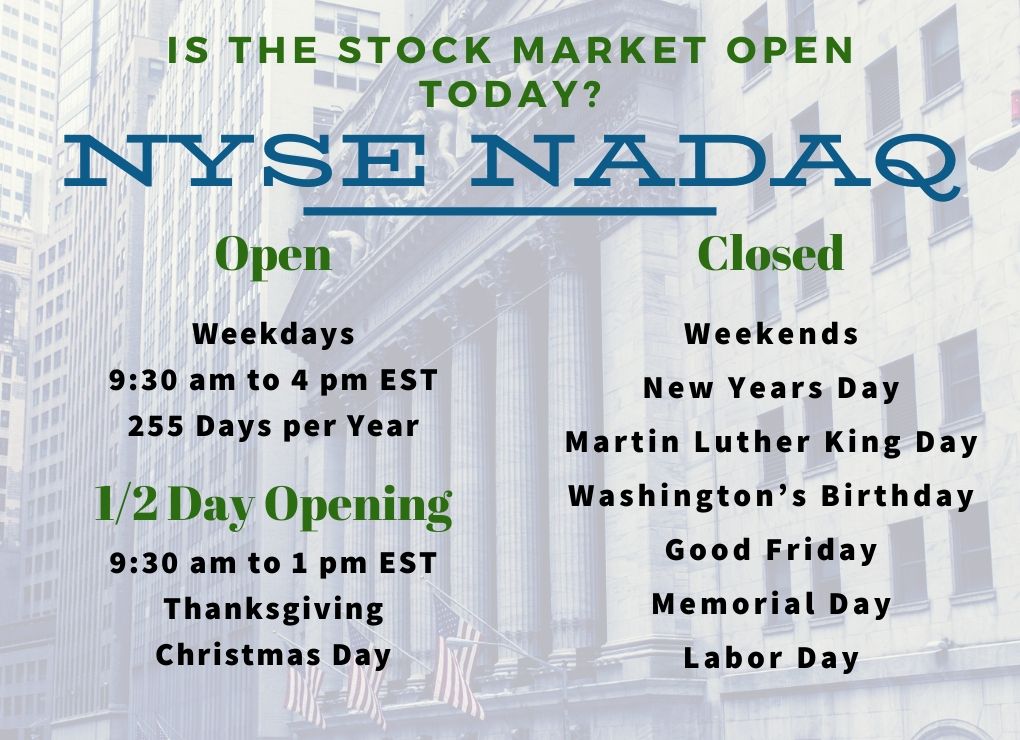
The NASDAQ, like other major U.S. stock exchanges, observes a predefined set of holidays during which the market is closed for trading. These typically align with U.S. federal holidays. Common market holidays include New Year’s Day, Martin Luther King, Jr. Day, Presidents’ Day, Good Friday, Memorial Day, Juneteenth National Independence Day, Independence Day, Labor Day, Thanksgiving Day, and Christmas Day. On these full market holidays, both regular and extended trading sessions are completely suspended. The Financial Industry Regulatory Authority (FINRA) publishes an annual holiday schedule well in advance, and all brokerage firms and financial news outlets disseminate this information widely. It is crucial for investors to consult these schedules to avoid planning trades on non-trading days. Sometimes, if a holiday falls on a weekend, the market might observe it on the preceding Friday or the following Monday. Additionally, there are occasions when the market closes early, such as on the day after Thanksgiving (Black Friday) or on Christmas Eve, with trading typically ending at 1:00 PM ET. These partial closures still provide trading opportunities but with a shortened window. Being informed about these scheduled breaks is vital for managing liquidity, setting trade expectations, and planning portfolio adjustments, especially for short-term traders.
Unforeseen Closures and Announcements
Beyond scheduled holidays, there are rare instances when the NASDAQ may experience unforeseen closures or early closings due to extraordinary circumstances. These events are typically triggered by severe weather conditions that impact New York City (e.g., blizzards, hurricanes), national emergencies, significant technological failures, or major national days of mourning. Such closures are uncommon but have occurred historically, most notably after the September 11, 2001, attacks, and occasionally due to severe weather. In such events, the decision to close or modify market hours is usually made by the exchange in consultation with regulatory bodies like the Securities and Exchange Commission (SEC) and other financial market participants. Announcements of unforeseen closures or modifications are broadcast immediately through official exchange channels, major financial news services, and often directly by brokerage firms to their clients. While these events are rare, their impact on trading and investor confidence can be substantial. Investors must stay informed through reliable news sources during periods of national or regional crisis that could potentially affect market operations. Understanding that the market is subject to these infrequent, yet impactful, disruptions is part of a comprehensive approach to managing investments.
aViewFromTheCave is a participant in the Amazon Services LLC Associates Program, an affiliate advertising program designed to provide a means for sites to earn advertising fees by advertising and linking to Amazon.com. Amazon, the Amazon logo, AmazonSupply, and the AmazonSupply logo are trademarks of Amazon.com, Inc. or its affiliates. As an Amazon Associate we earn affiliate commissions from qualifying purchases.