
In the world of finance, timing is often just as important as the asset itself. For the uninitiated, the stock market might seem like a digital entity that breathes 24/7, but for traditional equity investors, the rhythm of the trading day is governed by a strict set of opening and closing bells. Understanding what time the market closes is not merely a matter of knowing when to stop looking at tickers; it is a fundamental component of liquidity management, risk mitigation, and strategic execution.
Whether you are a retail investor managing a retirement portfolio or a day trader looking to capitalize on “Power Hour” volatility, the nuances of market hours dictate the flow of capital across the globe. This guide explores the standard operating hours of major exchanges, the mechanics of extended-hours trading, and the strategic importance of the closing session.
1. The Standard Trading Session: US Markets and the 4:00 PM Deadline
For the vast majority of North American investors, the most critical timeframe is the standard session of the New York Stock Exchange (NYSE) and the NASDAQ. These two giants of the financial world dictate the pace of global equity markets, and their operating hours are the benchmark for many domestic investment strategies.
Standard Hours for the NYSE and NASDAQ
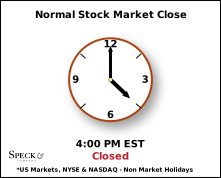
The standard trading session for both the NYSE and the NASDAQ begins at 9:30 AM Eastern Time (ET) and concludes at 4:00 PM ET. This six-and-a-half-hour window is when the highest volume of trading occurs. During these hours, liquidity—the ease with which one can buy or sell shares without significantly affecting the price—is at its peak. For the average investor, executing trades within this window ensures that they get the most “fair” market price due to the tight bid-ask spreads provided by high participation.
The Significance of the Closing Bell
The 4:00 PM ET closing bell is more than just a ceremonial tradition. It represents the official “Mark-to-Market” point for the day. Mutual funds, for instance, calculate their Net Asset Value (NAV) based on the closing prices of the securities they hold at this exact moment. Furthermore, many institutional “limit-on-close” (LOC) and “market-on-close” (MOC) orders are executed in a frantic final auction that determines the official daily closing price. This price is what is recorded in historical databases and used for technical analysis.
Early Closures and Market Holidays
It is important to note that the market does not always follow the 9:30 AM to 4:00 PM schedule. US markets are closed on federal holidays, including New Year’s Day, Martin Luther King Jr. Day, President’s Day, Good Friday, Memorial Day, Juneteenth, Independence Day, Labor Day, Thanksgiving, and Christmas. Additionally, the market often observes “early close” days (typically 1:00 PM ET), such as the day after Thanksgiving (Black Friday) or Christmas Eve, depending on how the calendar falls.
2. Extended-Hours Trading: Pre-Market and After-Hours Sessions
While the “official” market closes at 4:00 PM ET, the digital nature of modern exchanges allows for trading to continue long after the floor has cleared. Extended-hours trading is divided into two segments: the pre-market session and the after-hours session.
The Mechanics of After-Hours Trading
The after-hours session typically runs from 4:00 PM to 8:00 PM ET. This period is particularly significant because most publicly traded companies release their quarterly earnings reports after the 4:00 PM bell. This prevents “information asymmetry” during the main session and allows the market to digest news overnight. Consequently, the after-hours session can see massive price swings as investors react to revenue beats, misses, or revised guidance.
Pre-Market Sessions
On the other side of the coin, the pre-market session begins as early as 4:00 AM ET, though the bulk of the activity happens between 8:00 AM and 9:30 AM ET. This session is often influenced by overnight developments in European markets or early morning economic data releases, such as the Consumer Price Index (CPI) or the monthly Jobs Report.
Risks of Trading Outside Standard Hours
Investors must exercise caution when trading after the market closes. Because there are fewer participants, liquidity is significantly lower, and bid-ask spreads are much wider. This means it might be harder to exit a position, and the price you receive may be far less favorable than it would be during the day. Most brokers require the use of “limit orders” during these sessions to protect traders from executing at irrational price points caused by low volume.
3. The Global Clock: International Market Schedules
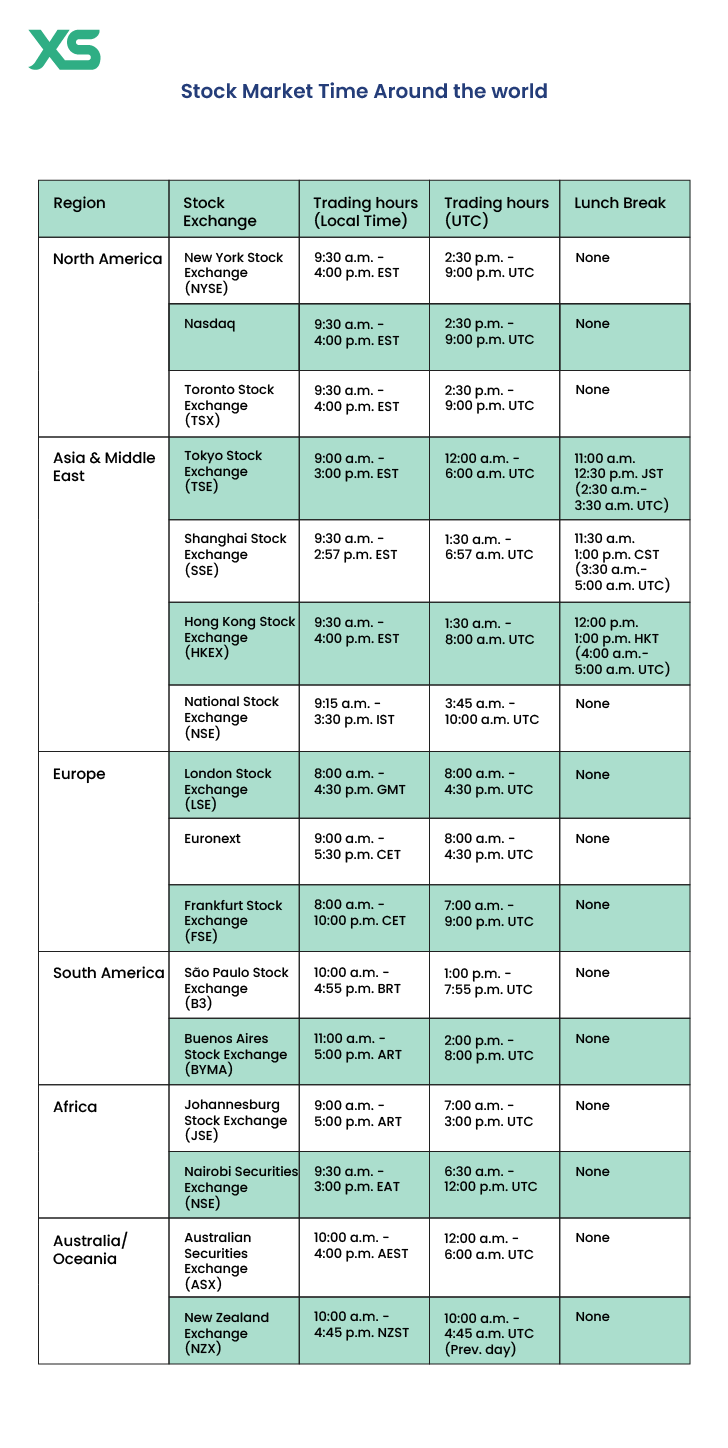
In an increasingly interconnected global economy, the closing time of the US market is only one piece of the puzzle. Professional investors often follow a “sun never sets” approach, tracking the close of one market as a catalyst for the opening of another.
European Markets: London and the Eurozone
The London Stock Exchange (LSE) and the Euronext (which includes exchanges in Paris and Amsterdam) generally operate from 8:00 AM to 4:30 PM local time. For a trader in New York, the London market opens at 3:00 AM ET and closes at 11:30 AM ET. This means there is a significant overlap between the US and European sessions (9:30 AM to 11:30 AM ET), which often results in the highest volatility and volume of the day as transatlantic capital flows peak.
Asian Markets: Tokyo, Hong Kong, and Shanghai
The Asian session provides the first look at global sentiment for each new calendar day. The Tokyo Stock Exchange (TSE) operates from 9:00 AM to 3:00 PM local time, with a lunch break from 11:30 AM to 12:30 PM. For US investors, the Asian markets are “overnight” markets, usually opening around 7:00 PM or 8:00 PM ET. Watching the close of the Nikkei or the Hang Seng can provide valuable clues about how the US markets will open the following morning.
Time Zone Coordination
Managing a global portfolio requires a keen understanding of Coordinated Universal Time (UTC). During the transitions into and out of Daylight Saving Time, the “overlap” hours between New York, London, and Tokyo shift, which can catch unwary investors off guard. Understanding these shifts is crucial for those trading international ETFs or foreign-listed ADRs (American Depositary Receipts).
4. Market Hours for Other Asset Classes: Forex, Commodities, and Crypto
While stocks have rigid opening and closing times, other financial instruments operate on different schedules. For those looking for income outside of the standard 9-to-5 equity window, these markets offer alternative opportunities.
The 24/5 Forex Market
The Foreign Exchange (Forex) market is the largest and most liquid financial market in the world. Unlike stocks, Forex does not have a centralized exchange. Instead, it is a global network of banks and brokers. Consequently, the Forex market is open 24 hours a day, five days a week. It opens on Sunday at 5:00 PM ET (as the Sydney session begins) and remains open continuously until Friday at 5:00 PM ET. This allows for constant reaction to geopolitical events.
Commodities and Futures
Commodities such as oil, gold, and agricultural products are traded primarily on futures exchanges like the CME Group. These markets also offer nearly 24-hour trading, typically closing for a brief 60-minute “settlement” period in the late afternoon. For investors using futures to hedge their stock positions, these extended hours are a vital tool for managing risk when the stock market is closed.
The 24/7 Cryptocurrency Reality
The emergence of cryptocurrency has introduced a true “never-sleeps” market. Digital assets like Bitcoin and Ethereum trade 24 hours a day, seven days a week, 365 days a year. There are no holidays or closing bells in the crypto space. This has changed the psychological landscape of investing, as “weekend volatility” in crypto often sets the stage for how traditional financial markets might react on Monday morning.
5. Strategic Implications of Timing Your Trades
Knowing what time the market closes is the first step, but understanding why certain times are better for trading than others is what separates successful investors from the rest.
The “Power Hour” Phenomenon
The final hour of the trading day, from 3:00 PM to 4:00 PM ET, is colloquially known as the “Power Hour.” This is when institutional investors—pension funds, hedge funds, and mutual funds—frequently rebalance their portfolios. It is often characterized by high volume and sharp price movements. For a momentum trader, this is the most profitable time of the day. For a conservative long-term investor, it may be a time to avoid, as price fluctuations can be erratic.
The Closing Auction
At exactly 4:00 PM, the NYSE and NASDAQ conduct a “Closing Cross” or auction. This is a sophisticated process where buy and sell orders are matched to find the price that maximizes the number of shares traded. Many large-scale institutional trades are designed to execute specifically at this closing price to ensure they receive the benchmark price for the day. Understanding this mechanism helps investors realize why there is often a massive “spike” in volume in the final seconds of the day.

Avoiding the “No-Man’s Land”
Many experienced traders avoid the middle of the day (12:00 PM to 2:00 PM ET), often referred to as the “lunchtime doldrums.” During this period, floor traders and institutional desks often step away, leading to lower volume and “choppy” price action. By focusing efforts on the market open (when news is priced in) and the market close (when the day’s trend is solidified), investors can optimize their entry and exit points for maximum efficiency.
In conclusion, the question “what time does the market close” is the gateway to a deeper understanding of market mechanics. While 4:00 PM ET marks the end of the standard session, the world of finance is a continuous loop of global activity. By mastering the schedule of the closing bell, the risks of after-hours trading, and the rhythms of global exchanges, investors can better position their capital to thrive in an ever-shifting financial landscape.
aViewFromTheCave is a participant in the Amazon Services LLC Associates Program, an affiliate advertising program designed to provide a means for sites to earn advertising fees by advertising and linking to Amazon.com. Amazon, the Amazon logo, AmazonSupply, and the AmazonSupply logo are trademarks of Amazon.com, Inc. or its affiliates. As an Amazon Associate we earn affiliate commissions from qualifying purchases.