
Navigating the financial markets requires more than just a keen understanding of economic indicators and company fundamentals; it demands precise knowledge of when these vital engines of commerce are actually open for business. For investors, traders, and financial professionals alike, the exact opening and closing times of exchanges can significantly influence strategy, risk management, and opportunity identification. While the question “what time do the markets open today?” seems straightforward, its answer is multifaceted, encompassing core trading hours, extended sessions, global time zones, and the often-overlooked impact of holidays and special events. Understanding these nuances is fundamental to effective participation in the world of finance.
Navigating U.S. Stock Market Hours: Core Sessions and Beyond
The United States boasts some of the world’s largest and most influential stock exchanges, primarily the New York Stock Exchange (NYSE) and the Nasdaq Stock Market. For most retail investors, understanding the standard operating hours of these powerhouses is the first step toward informed trading.
The Standard Operating Hours
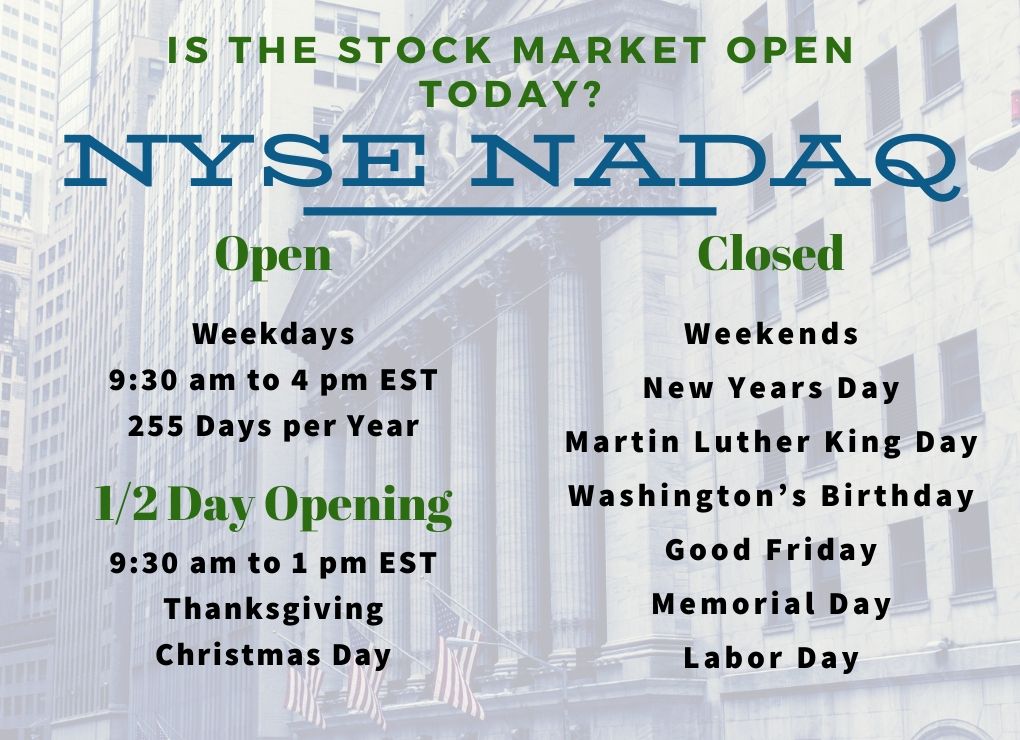
The conventional trading session for both the NYSE and Nasdaq runs from 9:30 AM to 4:00 PM Eastern Time (ET), Monday through Friday. This 6.5-hour window is often referred to as the “cash market” or “regular trading hours” and represents the period of highest liquidity and typically, the tightest bid-ask spreads. During these hours, a vast majority of trading volume occurs, driven by both institutional and retail participants. It’s when company news, economic data, and analyst reports have their most immediate and observable impact on stock prices. The choice of Eastern Time is crucial; investors in other time zones must adjust their understanding accordingly, recognizing that 9:30 AM ET could be 6:30 AM PT or 2:30 PM GMT, for instance.
Understanding Pre-Market Trading
The market’s activity doesn’t strictly begin at 9:30 AM ET. A significant amount of trading takes place in the “pre-market” session, which typically runs from 4:00 AM to 9:30 AM ET. This period is characterized by lower trading volumes and often wider bid-ask spreads compared to regular hours. Pre-market trading is primarily driven by institutional investors reacting to overnight news, earnings reports released before the market open, and global market movements. While retail investors can participate, the reduced liquidity means that larger orders can have a more pronounced impact on prices, and executing trades at desired prices can be more challenging. It’s a period ripe with potential volatility as news is digested before the full market open.
After-Hours Trading Sessions
Similarly, trading extends beyond the 4:00 PM ET close into the “after-hours” session, typically from 4:00 PM to 8:00 PM ET. Like pre-market trading, this session sees reduced liquidity and increased volatility. It’s a time when companies often release their quarterly earnings reports or significant announcements that can move stock prices, and investors can react immediately. The dynamics are similar to pre-market: lower volume, wider spreads, and often institutional-driven activity. For investors needing to adjust positions or react to post-market news, after-hours trading provides a crucial window, albeit one that requires careful consideration of its unique characteristics.
The Role of Electronic Communication Networks (ECNs)
The ability to trade outside regular market hours is largely facilitated by Electronic Communication Networks (ECNs). These automated systems match buy and sell orders electronically, bypassing traditional brokers and exchanges to offer direct access to market liquidity. ECNs play a pivotal role in creating the continuous trading environment of pre-market and after-hours sessions, enabling institutional and retail investors to execute trades based on real-time information even when the “opening bell” hasn’t officially rung or has already chimed for the day’s close.
A Global Perspective: International Market Opening Times
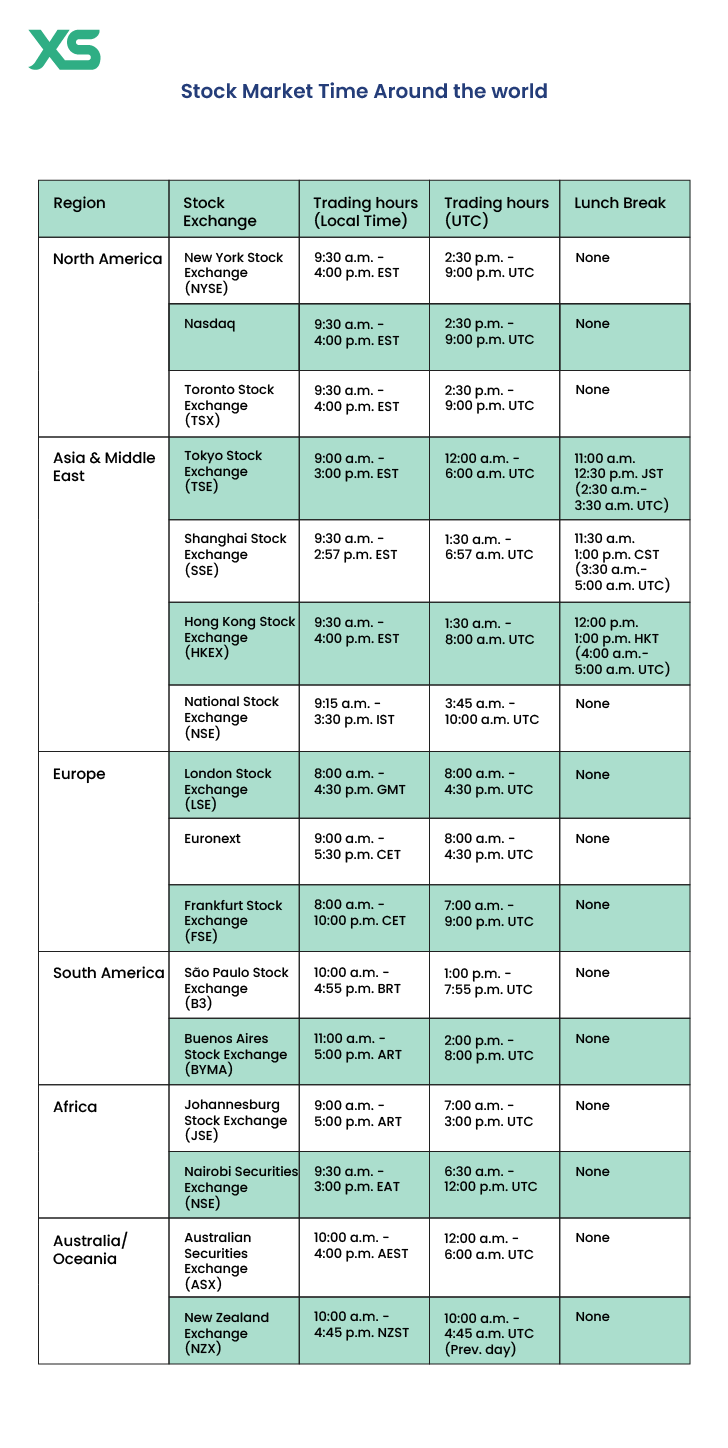
While U.S. markets are central, the world of finance is interconnected, with major exchanges operating across various continents and time zones. For global investors or those tracking international economic events, understanding the opening times of key global markets is essential for a comprehensive market view.
European Major Exchanges
Europe hosts several influential exchanges, each with its own trading schedule:
- London Stock Exchange (LSE): The LSE operates from 8:00 AM to 4:30 PM GMT (or BST during daylight saving), Monday to Friday. As one of the world’s oldest and largest stock exchanges, its activity significantly impacts global sentiment, especially in commodities and currency markets.
- Euronext: This pan-European exchange group covers Paris, Amsterdam, Brussels, and Lisbon, operating predominantly from 9:00 AM to 5:30 PM CET (or CEST during daylight saving). Euronext provides a crucial window into the Eurozone’s economic health and corporate performance.
- Deutsche Börse (Xetra, Frankfurt): Germany’s primary exchange, Xetra, trades from 9:00 AM to 5:30 PM CET (or CEST). It’s a key indicator for the strength of the German and broader European industrial sectors.
Asian Pacific Markets
As Western markets close, Asian markets begin their day, creating a continuous flow of global trading:
- Tokyo Stock Exchange (TSE): The TSE operates from 9:00 AM to 3:00 PM JST (Japan Standard Time), with a lunch break from 11:30 AM to 12:30 PM. It is a bellwether for the Japanese economy and a key gauge of global manufacturing and technology.
- Shanghai Stock Exchange (SSE) / Shenzhen Stock Exchange (SZSE): China’s two mainland exchanges trade from 9:30 AM to 3:00 PM CST (China Standard Time), also with a lunch break from 11:30 AM to 1:00 PM. These markets offer insight into the world’s second-largest economy and its vast consumer and industrial sectors.
- Australian Securities Exchange (ASX): Operating from 10:00 AM to 4:00 PM AEST (or AEDT during daylight saving), the ASX provides an early read on global commodity prices and Asian economic sentiment due to its time zone.
Overlapping Trading Sessions: Opportunities and Challenges
The staggered opening and closing of global markets mean that for several hours each day, multiple major financial centers are simultaneously active. For example, there’s an overlap between European and U.S. markets for several hours, and between Asian and European markets. This creates periods of heightened liquidity and opportunity, especially in foreign exchange (forex) markets which famously operate 24 hours a day, five days a week. Overlapping sessions can increase volatility and trading volume as news and sentiments from one region cascade into another. Traders often leverage these overlaps for arbitrage opportunities or to react to breaking news with broader market participation. Conversely, managing positions across multiple time zones requires constant vigilance and sophisticated risk management.
Factors That Alter Market Schedules: Holidays and Exceptions
Beyond the standard trading hours, various events and holidays can significantly alter market schedules, leading to full closures or early finishes. Missing these details can result in missed opportunities or, worse, unintended exposure.
U.S. Stock Market Holidays
The U.S. stock markets observe several national holidays, during which they remain entirely closed. These full closure days include:
- New Year’s Day
- Martin Luther King, Jr. Day
- Presidents’ Day
- Good Friday
- Memorial Day
- Juneteenth National Independence Day
- Independence Day
- Labor Day
- Thanksgiving Day
- Christmas Day

It’s critical for investors to mark these dates on their calendars. Trades cannot be executed, and funds may not settle on these days. For long-term investors, this simply means a day off, but for active traders or those managing short-term positions, awareness of these closures is paramount for planning cash flow and avoiding unexpected portfolio immobility.
Early Closures and Half-Days
In addition to full holidays, U.S. markets occasionally operate on a modified schedule, typically closing early at 1:00 PM ET. Common instances of half-day trading include:
- The day before Independence Day (if it falls on a weekday)
- The day after Thanksgiving (Black Friday)
- Christmas Eve (if it falls on a weekday)
During these abbreviated sessions, trading volume can be significantly lower, and volatility might be amplified due to reduced liquidity. This can lead to exaggerated price movements and wider spreads. Investors should exercise caution during these periods, as typical trading strategies might behave differently under these conditions.
Impact of Global Holidays
While a holiday in the U.S. directly closes its exchanges, holidays in other major financial centers can indirectly affect global markets. For example, a bank holiday in London might reduce liquidity in the forex market or impact trading in U.S. stocks with significant European exposure. Similarly, major holidays in Asia can dampen trading activity in specific sectors or commodities. Astute investors track global financial calendars to anticipate these shifts in market dynamics, recognizing that the interconnected nature of finance means a closure in one part of the world can ripple through others.
The Strategic Edge: Why Market Opening Matters to Investors
Knowing the exact time markets open is far more than a logistical detail; it’s a strategic imperative that can significantly influence trading outcomes and investment decisions. The opening minutes and hours of a trading day are often the most dynamic, presenting both heightened risks and unique opportunities.
Volatility and Price Discovery at the Open
The market open is characterized by a surge in activity as orders accumulated overnight are processed, and investors react to any news that emerged while markets were closed. This confluence of demand and supply often leads to significant price volatility in the first 15 to 30 minutes of trading. For day traders, this period, often dubbed the “opening bell,” is a prime opportunity to capitalize on rapid price movements. However, this increased volatility also means heightened risk; prices can swing dramatically, leading to quick gains or losses. The opening also plays a crucial role in “price discovery,” where the market collectively determines the initial fair value of an asset based on all available new information.
Volume Spikes and Liquidity
Accompanying the volatility is a substantial spike in trading volume during the opening hours. High volume generally correlates with high liquidity, meaning there are plenty of buyers and sellers to facilitate trades. This ample liquidity is beneficial for executing larger orders without significantly moving the price, thereby reducing “slippage” – the difference between the expected price of a trade and the price at which the trade is actually executed. For institutional investors managing large portfolios, the opening hours are often preferred for executing substantial trades due to this enhanced liquidity.
News Reactions and Gap Trading
Overnight news – ranging from company-specific earnings reports to macroeconomic data releases – often leads to “gaps” in stock prices. A stock might open significantly higher or lower than its previous day’s close, creating a price gap. This phenomenon is particularly pronounced at market open as investors digest and react to fresh information. Day traders frequently employ “gap trading” strategies, attempting to predict whether a gap will “fill” (move back towards the previous day’s close) or “fade” (continue in the direction of the gap). Understanding the opening mechanisms is critical for participating in or avoiding these high-stakes scenarios.
Managing Risk in Opening Hours
Given the inherent volatility and rapid price movements at the open, risk management becomes even more critical. Setting appropriate stop-loss orders is paramount to limit potential losses if a trade moves against expectations. Investors should also be mindful of the wider bid-ask spreads that can occur, especially in less liquid stocks, which can impact the profitability of quick trades. For less experienced investors, or those with a lower risk tolerance, it might be prudent to wait until the initial volatility subsides – typically after the first 30 minutes to an hour – before entering or exiting positions. Patience can be a virtue when the market is at its most frenetic.
Essential Tools for Staying Informed on Market Hours
In today’s fast-paced financial world, staying updated on market opening times, holidays, and special schedules is easier than ever, thanks to a plethora of digital tools and resources. Leveraging these effectively can ensure an investor is never caught off guard.
Brokerage Platform Resources
Most reputable online brokerage platforms integrate market status information directly into their user interfaces. This often includes real-time indicators of whether markets are open, closed, or in extended trading sessions. Many platforms also provide financial calendars that highlight upcoming holidays and early closures relevant to the exchanges their clients trade on. This direct integration within the trading environment makes it convenient for investors to check market hours without leaving their primary trading interface.
Financial News Websites
Major financial news outlets are invaluable resources for up-to-the-minute market information. Websites like Bloomberg, Reuters, The Wall Street Journal, CNBC, and Yahoo Finance regularly publish articles and dedicated sections detailing market hours, holiday schedules, and any exceptional closures. These platforms often provide a global perspective, covering key exchanges worldwide, which is particularly useful for internationally focused investors. Subscribing to their newsletters or setting up alerts for market news can ensure timely notifications.
Dedicated Financial Calendars and Apps
Beyond general news sites, there are specialized financial calendar websites and mobile applications designed specifically to track global market hours, economic data releases, corporate earnings, and holidays. Tools from providers like Investing.com, Forexfactory, or specific market data vendors allow users to customize calendars based on their preferred markets and assets, offering a granular view of upcoming events that could impact trading schedules or market volatility. Many of these apps offer push notifications for critical events, serving as a proactive alert system.
Subscribing to Exchange Alerts
For the most direct and authoritative information, investors can often subscribe to email alerts or RSS feeds directly from the stock exchanges themselves, such as the NYSE or Nasdaq. These official channels provide timely announcements regarding market hours, holiday schedules, and any emergency closures or operational changes. While this might be more granular than most retail investors require, it offers an undeniable level of accuracy and directness for those who need to be absolutely certain about market accessibility. Combining these tools ensures a robust approach to staying informed, allowing investors to trade with confidence and precision, regardless of the dynamic nature of global market schedules.
aViewFromTheCave is a participant in the Amazon Services LLC Associates Program, an affiliate advertising program designed to provide a means for sites to earn advertising fees by advertising and linking to Amazon.com. Amazon, the Amazon logo, AmazonSupply, and the AmazonSupply logo are trademarks of Amazon.com, Inc. or its affiliates. As an Amazon Associate we earn affiliate commissions from qualifying purchases.