
Understanding the operating hours of financial markets is a fundamental piece of knowledge for anyone involved in investing, trading, or simply tracking global economic shifts. Far from a simple 9-to-5 operation, “the markets” refer to a complex, interconnected web of exchanges and trading platforms that span the globe, operating across different time zones and with varying schedules. For the novice investor, a seasoned trader, or a business professional, knowing when these markets are active can dictate strategy, influence decision-making, and even impact personal financial planning. This article delves into the intricate schedules of various financial markets, exploring their opening and closing times, the factors that influence them, and why these hours are critical for participants worldwide.
Understanding Global Stock Market Operating Hours
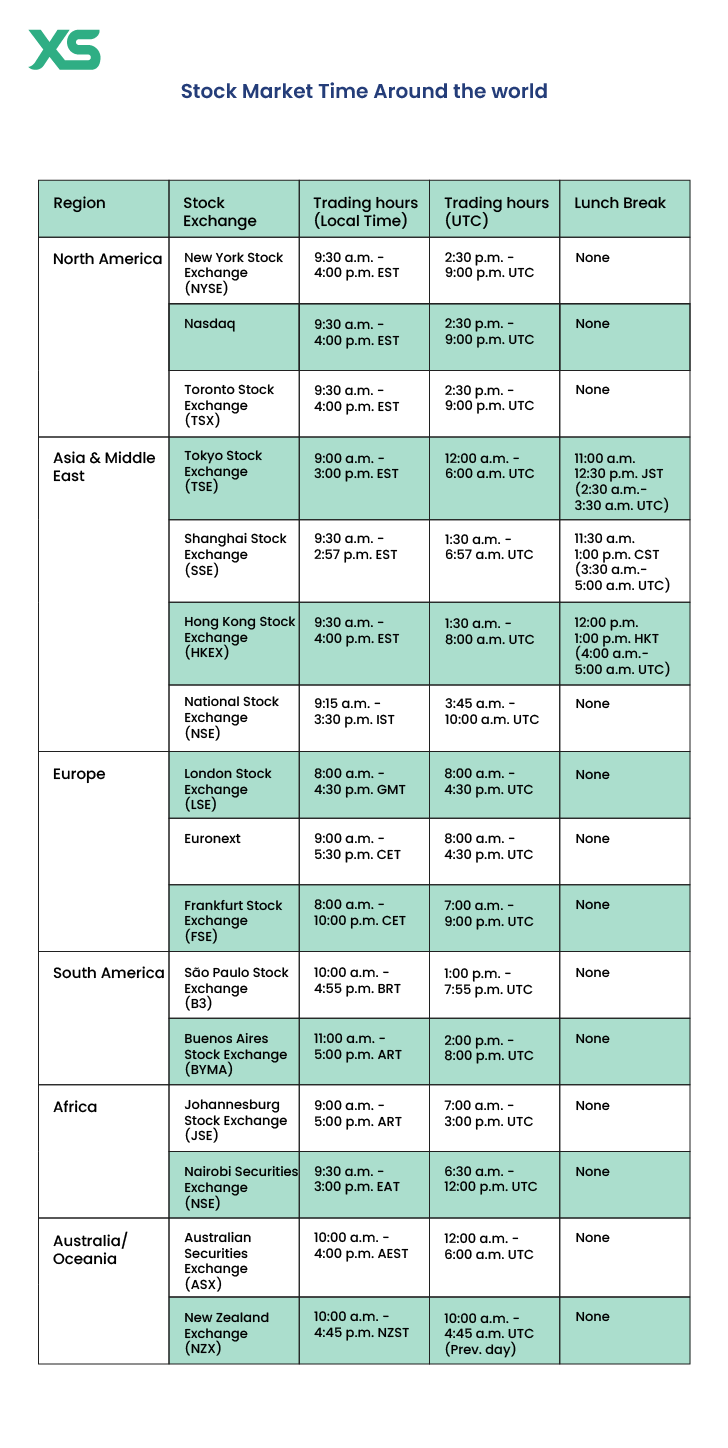
The stock market is often what people first think of when they hear “the markets.” These exchanges facilitate the buying and selling of publicly traded company shares, and their operating hours are typically set and observed meticulously within their respective countries. The interconnectedness of global economies means that while one market closes, another is often just beginning its day, creating a near-continuous flow of trading activity around the world.
Major North American Exchanges (NYSE, NASDAQ)
North America hosts some of the world’s largest and most influential stock exchanges: the New York Stock Exchange (NYSE) and the NASDAQ. Both are located in New York City and operate on Eastern Time (ET).
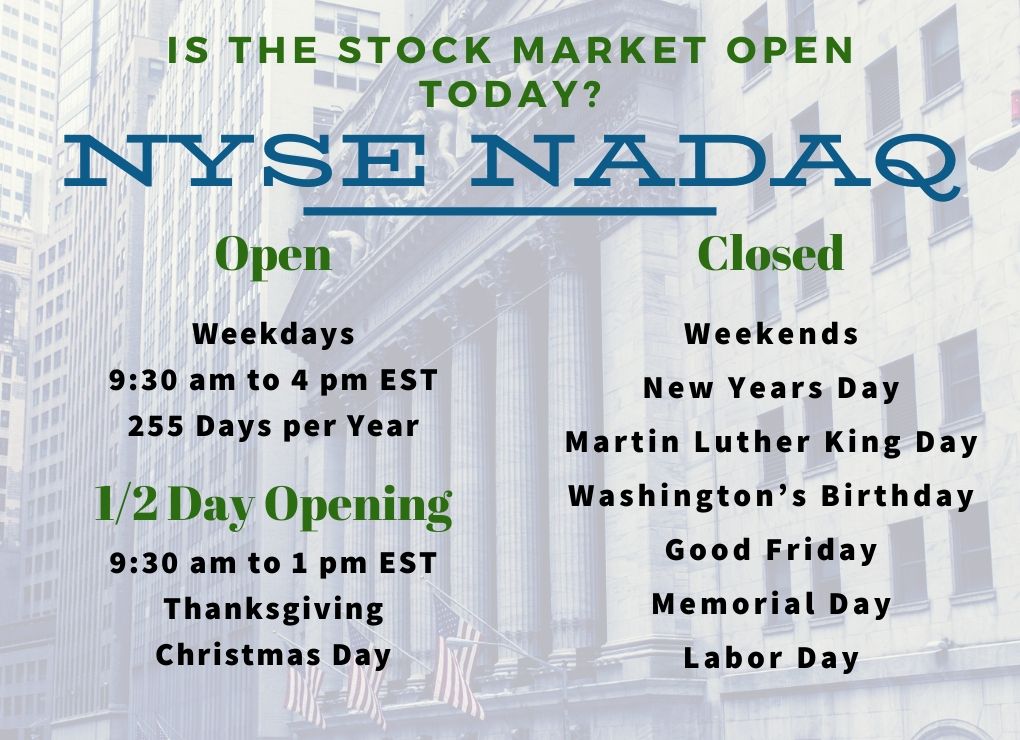
- Regular Trading Hours: For both the NYSE and NASDAQ, the standard trading session runs from 9:30 AM ET to 4:00 PM ET on weekdays. This is often referred to as the “core trading session.”
- Pre-Market Trading: Activity often begins much earlier, with pre-market trading sessions typically running from 4:00 AM ET to 9:30 AM ET. During this period, institutional investors and some retail brokers can place orders, which can sometimes provide early indications of market sentiment or price movements.
- After-Hours Trading: Following the close of the regular session, after-hours trading usually takes place from 4:00 PM ET to 8:00 PM ET. Similar to pre-market, this allows for trades outside of standard hours, often in response to earnings reports or breaking news released after the market close.
These extended hours offer flexibility but often involve lower liquidity and higher volatility, making them potentially riskier for individual investors.
European Market Highlights (LSE, Euronext)
Europe’s stock exchanges are crucial pillars of the global financial system, with key players like the London Stock Exchange (LSE) and Euronext.
- London Stock Exchange (LSE): Located in London, UK, the LSE operates on Greenwich Mean Time (GMT) or British Summer Time (BST) during daylight saving. Its regular trading hours are from 8:00 AM GMT/BST to 4:30 PM GMT/BST. The LSE is a major hub for international listings and plays a significant role in global finance.
- Euronext: Euronext is a pan-European exchange group, operating markets in Amsterdam, Brussels, Dublin, Lisbon, Milan, Oslo, and Paris. As such, its trading hours are generally aligned with Central European Time (CET) or Central European Summer Time (CEST). For most of its markets, the standard trading session runs from 9:00 AM CET/CEST to 5:30 PM CET/CEST. This broad reach makes Euronext a vital gateway for accessing European equity markets.
Asian Market Overview (TSE, SSE, HKEX)
Asia’s markets are typically the first to open each day, setting the tone for global trading. They are characterized by rapid growth and diverse economic landscapes.
- Tokyo Stock Exchange (TSE): Located in Tokyo, Japan, the TSE operates on Japan Standard Time (JST). Its trading hours are split into two sessions: 9:00 AM JST to 11:30 AM JST and 12:30 PM JST to 3:00 PM JST. The one-hour lunch break is a common feature in many Asian markets.
- Shanghai Stock Exchange (SSE) & Shenzhen Stock Exchange (SZSE): China’s main exchanges, the SSE and SZSE, both operate on China Standard Time (CST). Their trading hours mirror Japan’s split session: 9:30 AM CST to 11:30 AM CST and 1:00 PM CST to 3:00 PM CST. Access to these markets can be restricted for foreign investors, though avenues like the Stock Connect programs have expanded access.
- Hong Kong Stock Exchange (HKEX): The HKEX, a major gateway to China, operates on Hong Kong Time (HKT) with a split session: 9:30 AM HKT to 12:00 PM HKT and 1:00 PM HKT to 4:00 PM HKT. It is known for its high liquidity and international investor base.
Other Key Global Markets (ASX, B3)
Beyond the major financial centers, other significant exchanges contribute to the global trading landscape.
- Australian Securities Exchange (ASX): Located in Sydney, Australia, the ASX operates on Australian Eastern Standard Time (AEST) or Australian Eastern Daylight Time (AEDT). Its core trading hours are from 10:00 AM AEST/AEDT to 4:00 PM AEST/AEDT. The ASX is typically the first major developed market to open each week.
- B3 (Brazil Stock Exchange): Based in São Paulo, Brazil, B3 operates on Brasília Time (BRT) or Brasília Summer Time (BRST). Its equity market typically trades from 10:00 AM BRT/BRST to 5:00 PM BRT/BRST. B3 is the largest stock exchange in Latin America and a key market for emerging economy investors.
The 24/5 World of Forex and Cryptocurrency Markets
While stock markets have defined opening and closing times, some financial markets operate almost continuously, offering unparalleled flexibility and unique challenges.
How Forex Trading Works Around the Clock
The foreign exchange (Forex or FX) market is by far the largest and most liquid financial market in the world, facilitating currency trading. Unlike stock markets, Forex doesn’t have a single centralized exchange; instead, it operates via a global network of banks, brokers, institutions, and individual traders. This decentralized structure allows it to function virtually 24 hours a day, five days a week, starting Sunday evening (ET) and closing Friday afternoon (ET).
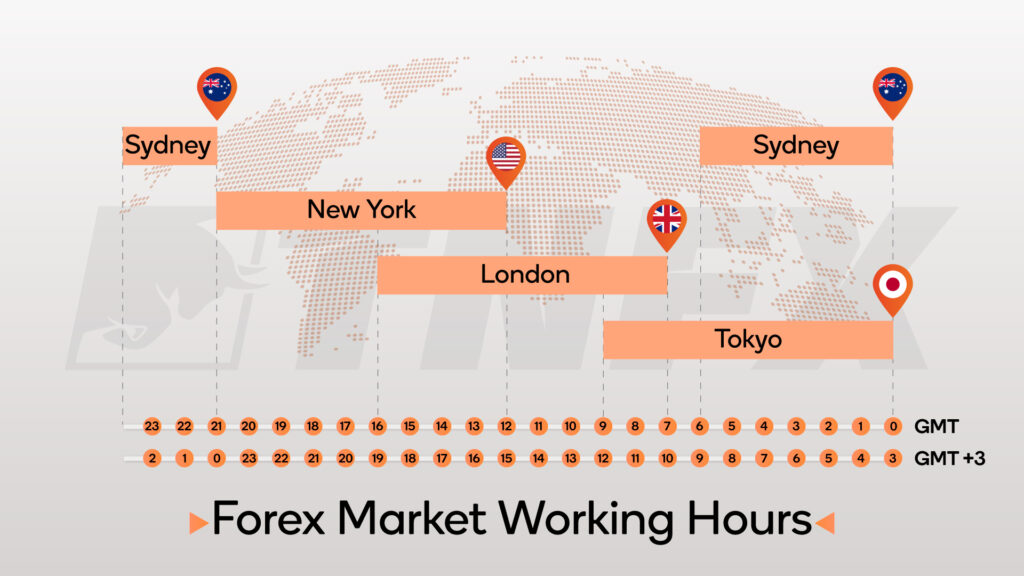
- Market Sessions: The 24/5 cycle is driven by overlapping trading sessions corresponding to major financial centers:
- Sydney Session: Opens the week, followed by Tokyo.
- Tokyo Session: Overlaps with Sydney, then leads into London.
- London Session: The most active session, overlapping significantly with Tokyo and New York.
- New York Session: Overlaps with London, then closes the week.
This continuous operation ensures that liquidity is always available, and traders can react to news and economic data at any time, regardless of their local time zone.
Cryptocurrency: A Truly Decentralized, Always-On Market
Cryptocurrency markets represent the most truly “always-on” segment of the financial world. Cryptocurrencies like Bitcoin and Ethereum are traded on various decentralized exchanges and platforms globally, and these markets never close.
- 24/7/365 Operation: Unlike traditional markets, crypto exchanges operate literally every hour of every day, including weekends and holidays. This reflects the decentralized and global nature of blockchain technology.
- Implications: This constant availability offers immense flexibility but also means that price movements can occur at any time, requiring active monitoring for traders who want to capitalize on opportunities or manage risk. There are no “after-hours” or “pre-market” sessions; it’s all one continuous flow.
Implications for Traders and Investors
The 24/5 (Forex) and 24/7 (Crypto) nature of these markets presents distinct advantages and disadvantages:
- Advantages: Greater flexibility for traders in different time zones, immediate reaction to global news, and continuous liquidity.
- Disadvantages: Potential for increased volatility outside of peak liquidity hours, need for constant monitoring (which can lead to burnout), and significant exposure to “weekend gaps” in Forex or sudden overnight moves in crypto without the buffer of a market close. Understanding these dynamics is crucial for effective risk management.
Commodity Markets: A Blend of Exchange and Continuous Trading
Commodity markets deal in raw materials like oil, gold, agricultural products, and industrial metals. These markets can trade on organized exchanges or through over-the-counter (OTC) agreements, presenting a hybrid of scheduled and continuous trading.
Futures and Options Exchanges for Commodities
Many commodities are traded via futures and options contracts on specialized exchanges, such as the New York Mercantile Exchange (NYMEX), the Chicago Board of Trade (CBOT), and the London Metal Exchange (LME).
- NYMEX/CBOT (Part of CME Group): These US-based exchanges, now part of the CME Group, trade a wide array of commodities including crude oil, natural gas, corn, wheat, and soybeans. Their electronic trading platforms (Globex) allow for near 24-hour trading, typically from 6:00 PM ET Sunday to 5:00 PM ET Friday, with a daily one-hour break from 5:00 PM ET to 6:00 PM ET. This extended access provides global participants continuous opportunities.
- London Metal Exchange (LME): The LME, based in London, is the world’s largest market for industrial metals. It operates both electronic trading (LMEselect) and a unique “ring-dealing” open outcry system. LMEselect operates almost 24 hours, but the physically settled contracts often have specific closing times for daily settlement prices (e.g., around 12:35 PM GMT/BST for official prices).
Over-the-Counter (OTC) Commodity Trading
Beyond exchanges, many commodities are traded directly between parties in the OTC market. This is particularly common for physical commodities where specific delivery terms are negotiated. OTC trading is generally continuous, driven by global demand and supply, and not constrained by exchange hours. However, pricing references often derive from the publicly traded futures contracts.
Key Commodity Market Hours (Oil, Gold, Agriculture)
- Crude Oil (WTI/Brent): Often traded via futures on NYMEX and ICE (Intercontinental Exchange). Electronic trading for WTI (NYMEX) is almost 24 hours, from 6:00 PM ET Sunday to 5:00 PM ET Friday (with the daily 1-hour break). Brent (ICE Europe) futures also trade extensively during this window.
- Gold & Precious Metals: Gold is traded globally, not only on futures exchanges (like COMEX, part of CME Group) but also heavily in the OTC market (e.g., London Bullion Market). Futures trading for gold on COMEX follows the same near 24-hour schedule as other CME Group commodities. OTC trading for spot gold is effectively 24/5, following the sun from Asian markets through Europe and North America.
- Agricultural Commodities (Corn, Wheat, Soybeans): Primarily traded on CBOT (CME Group). Electronic trading for these also follows the 6:00 PM ET Sunday to 5:00 PM ET Friday schedule, with the daily break.
The extended hours for commodities reflect their critical role in global industries and the continuous need for participants to hedge, speculate, and manage price risk across different time zones.
Factors Influencing Market Hours and Exceptions
While standard market hours provide a framework, several factors can alter or create exceptions to these schedules. Awareness of these influences is vital for market participants.
Time Zones and Their Impact
The most obvious factor is time zones. As shown, financial centers across the globe operate in different time zones. This asynchronous operation is precisely what creates the continuous trading environment for markets like Forex and commodities, as well as the sequential opening of stock markets. Investors must always convert times to their local reference to understand when a particular market is active.
Public Holidays and Early Closures
Financial markets typically observe national public holidays. For example, US markets (NYSE, NASDAQ) close for federal holidays like Christmas, New Year’s Day, Thanksgiving, and Independence Day. Similarly, European and Asian exchanges close for their respective national holidays.
- Early Closures: Markets may also have shortened trading days around holidays, closing earlier than usual (e.g., the day before Thanksgiving or Christmas Eve in the US). These exceptions are always announced well in advance by the exchanges.
Market Volatility and Circuit Breakers
In times of extreme market volatility, exchanges may implement “circuit breakers.” These are temporary trading halts designed to give investors time to absorb news and prevent panic selling or buying.
- Rules: For example, US stock markets have circuit breaker rules that halt trading for a specified period (e.g., 15 minutes) if the S&P 500 falls by a certain percentage (e.g., 7%, 13%, 20%) during the trading day. These are rare occurrences but demonstrate that market hours can be interrupted to maintain order.
Pre-Market and After-Hours Trading
As touched upon earlier for stock markets, pre-market and after-hours trading sessions extend the traditional 9:30 AM to 4:00 PM window. While not full market open hours, they represent periods where price discovery continues.
- Characteristics: These sessions are often characterized by lower trading volumes, wider bid-ask spreads, and increased volatility compared to regular hours, primarily because fewer participants are active. This can lead to significant price gaps between the close of regular hours and the next day’s open if substantial news breaks overnight.
Why Market Hours Matter for Investors and Traders
Understanding market opening and closing times is not merely an academic exercise; it has practical, strategic implications for anyone engaging with financial markets.
Strategic Trading Decisions
Traders often develop strategies that specifically leverage market hours.
- Volatility and Liquidity: The opening and closing hours of major stock exchanges, as well as overlaps between Forex sessions, typically see the highest liquidity and volatility. This can present opportunities for short-term traders but also higher risk.
- News Reactions: News and economic data releases often occur at specific times, either before market open, during trading hours, or after close. Knowing when these releases happen in relation to market hours helps traders position themselves or react promptly.
Risk Management and Volatility
Trading outside core market hours, particularly in pre-market or after-hours sessions for stocks, or during less liquid periods for Forex, can expose investors to increased risk.
- Wider Spreads: Lower liquidity often results in wider bid-ask spreads, meaning the cost of executing a trade is higher.
- Sudden Moves: With fewer participants, a single large order can have a disproportionate impact on prices, leading to sudden and significant movements.
- Information Asymmetry: During less active hours, information flow might be thinner, and not all participants have equal access to or ability to react to late-breaking news.
Access to Information and News Flow
Major economic reports, company earnings announcements, and geopolitical events are frequently scheduled to coincide with market hours.
- Timely Information: Knowing when markets are open ensures that investors are monitoring relevant news during critical periods. For example, a company’s earnings report released after market close will heavily influence its stock price in the subsequent pre-market and regular trading sessions.
- Global Interdependence: Because markets operate sequentially, news from one region’s closing session can influence the opening sentiment of another, highlighting the importance of a global perspective.
Impact on Personal Finance Planning
For individuals managing their own investments or financial advisors working with clients, market hours affect when trades can be placed and when portfolio values are most actively changing.
- Executing Orders: Investors must place buy/sell orders when markets are open. While many platforms allow orders to be placed 24/7, they are typically executed only when the relevant market is active.
- Monitoring Investments: The value of investments fluctuates during market hours. Staying informed, even if not actively trading, requires an understanding of these schedules to assess the health of one’s portfolio.
In conclusion, the question “what time do the markets open and close?” has no single answer, reflecting the diverse and global nature of finance. From the structured sessions of stock exchanges to the continuous flow of Forex and crypto, market hours are a critical dimension of the financial landscape. A comprehensive understanding of these schedules empowers investors and traders to navigate opportunities, manage risks, and make informed decisions in an ever-interconnected global economy.
aViewFromTheCave is a participant in the Amazon Services LLC Associates Program, an affiliate advertising program designed to provide a means for sites to earn advertising fees by advertising and linking to Amazon.com. Amazon, the Amazon logo, AmazonSupply, and the AmazonSupply logo are trademarks of Amazon.com, Inc. or its affiliates. As an Amazon Associate we earn affiliate commissions from qualifying purchases.