
For anyone stepping into the dynamic world of investing, one of the most fundamental questions, yet often overlooked in its nuances, is simply: “What time do stocks open?” While seemingly straightforward, the answer unlocks a deeper understanding of market mechanics, trading strategies, and the interconnectedness of global finance. Knowing when the markets awaken, when they pause, and when they extend their operations is not just logistical knowledge; it’s a critical component of informed decision-making for both novice and seasoned investors. The opening and closing bells signify more than just the start and end of a trading day; they represent shifts in liquidity, volatility, and the overall psychological sentiment of the market. Understanding these rhythms is paramount for anyone looking to build wealth, manage risk, and seize opportunities within the financial landscape. This article will delve into the specifics of stock market hours, exploring the standard schedules, extended trading sessions, holiday impacts, and the strategic implications for investors operating within the complex global financial system.
Understanding Standard Market Hours in the U.S.
The United States boasts two of the world’s largest and most influential stock exchanges: the New York Stock Exchange (NYSE) and the Nasdaq Stock Market. These exchanges set the benchmark for market hours, dictating when the vast majority of U.S. listed stocks can be openly traded during regular business hours. Their schedules are the heartbeat of the American financial system, influencing global markets and investor behavior worldwide.
The NYSE and NASDAQ: Core Trading Times
Both the New York Stock Exchange (NYSE) and the Nasdaq Stock Market operate under the same standard trading hours. The markets officially open at 9:30 AM Eastern Time (ET) and close at 4:00 PM ET on weekdays. This seven-and-a-half-hour window is considered the “regular trading session” where the highest volume and liquidity typically occur. During these hours, brokers execute orders for individual investors and institutions, prices fluctuate based on supply and demand, and company news, economic data releases, and geopolitical events are digested and reflected in stock valuations. For most individual investors, particularly those just starting out, focusing on these standard hours is generally advisable due to the greater market depth and tighter bid-ask spreads, which can lead to more efficient trade executions. The opening bell, often a ceremonial event, marks a period of heightened activity as overnight news and orders accumulate, leading to potentially significant price movements in the first few minutes of trading. Similarly, the closing bell can also see increased volume as traders square off positions or execute last-minute orders.
Time Zones and Their Critical Role
Understanding the impact of time zones is absolutely crucial for investors who are not located in the Eastern Time Zone. While the NYSE and Nasdaq operate on Eastern Time, an investor in California (Pacific Time) must remember that the market opens at 6:30 AM PT and closes at 1:00 PM PT. For someone in London (GMT), the market opens at 2:30 PM GMT and closes at 9:00 PM GMT. Failing to account for these differences can lead to missed opportunities, delayed reactions to market news, or even unintended trades if orders are placed with incorrect assumptions about market status. Many online brokerage platforms will display market hours relative to the user’s local time zone, but it’s always wise for investors to double-check and ensure they are operating with the correct information, especially when dealing with time-sensitive trading decisions or reacting to earnings reports and economic announcements. The global nature of finance means that events in different time zones can also impact U.S. market sentiment, even before the official opening bell rings.
Weekend and Holiday Closures: When the Markets Rest
The stock markets do not operate 24/7. Both the NYSE and Nasdaq are closed on weekends (Saturdays and Sundays) and observe a number of federal holidays. These closures provide periods of respite for market participants and allow for the processing and settlement of trades from the previous week. Key holidays that typically result in market closures include New Year’s Day, Martin Luther King, Jr. Day, Presidents’ Day, Good Friday, Memorial Day, Juneteenth, Independence Day, Labor Day, Thanksgiving Day, and Christmas Day. It’s important to note that if a holiday falls on a weekend, the market closure may be observed on the preceding Friday or the following Monday. Additionally, the markets may have abbreviated trading hours on certain days, such as the day after Thanksgiving (Black Friday) or Christmas Eve, if they fall on a weekday. Investors must stay informed about these closures to avoid placing orders that won’t be executed until the next trading day, which could lead to unexpected price discrepancies, especially if significant news breaks during the off-market period. Many brokerage firms provide calendars of market holidays to help investors plan accordingly.
Beyond Standard Hours: Pre-Market and After-Hours Trading
While the regular 9:30 AM to 4:00 PM ET session is where most trading activity occurs, the market’s influence extends far beyond these core hours. Electronic communication networks (ECNs) and alternative trading systems (ATSs) allow for trading before the official opening and after the official closing, providing investors with flexibility but also introducing unique risks and opportunities.
Pre-Market Trading: Early Bird Opportunities
Pre-market trading typically begins as early as 4:00 AM ET and runs until the market’s official open at 9:30 AM ET. This period allows market participants to react to news that breaks overnight or before the regular trading session begins. For example, if a major company announces earnings results at 7:00 AM ET, pre-market trading provides an immediate avenue for investors to buy or sell shares based on that information, rather than waiting until 9:30 AM. This early access can be particularly appealing to day traders or institutional investors who need to adjust their positions quickly. However, pre-market trading is characterized by significantly lower trading volumes and liquidity compared to regular hours. This reduced liquidity means that bid-ask spreads can be much wider, and even small orders can have a disproportionate impact on stock prices, leading to increased volatility. Price movements during pre-market can also be less reliable indicators of where a stock will trade once the full market opens.
After-Hours Trading: Extending the Market Day
Just as trading begins before the official open, it also continues after the official close. After-hours trading typically runs from 4:00 PM ET to 8:00 PM ET, although some platforms may offer even longer extended sessions. This period serves a similar purpose to pre-market trading, allowing investors to react to news released after the market closes, such as quarterly earnings reports or corporate announcements made in the late afternoon. For investors who are unable to monitor the market during regular business hours, after-hours trading provides a window to manage their portfolios. However, like pre-market, after-hours sessions are marked by lower liquidity and higher volatility. Institutional investors and algorithmic trading often dominate these sessions, making it challenging for individual investors to get favorable prices. Executing large orders can be difficult without significantly moving the price against oneself, and there’s a greater risk of price gaps between the after-hours close and the next day’s open.
Risks and Rewards of Extended-Hours Trading
Engaging in extended-hours trading, whether pre-market or after-hours, comes with a unique set of risks and potential rewards. The primary reward is the ability to react quickly to breaking news and potentially capitalize on immediate price movements. This can be advantageous for investors who have a strong conviction about a stock’s direction based on new information. However, the risks are substantial. Lower liquidity is a major concern, as it can lead to wider bid-ask spreads, making it more expensive to enter or exit positions. The limited number of participants can also mean that prices are more easily manipulated or subject to rapid, unpredictable swings. Furthermore, not all brokers offer extended-hours trading, and those that do may have specific rules, order types, or fees associated with it. Information dissemination can also be less efficient, as the official market news channels are geared towards regular hours. Investors considering extended-hours trading should do so with a clear understanding of these heightened risks and preferably with sophisticated tools and experience. It is generally not recommended for beginners.
Why Market Hours Matter for Investors
Understanding market hours is more than just knowing when you can place an order; it’s about grasping the underlying dynamics that influence prices, liquidity, and ultimately, investment outcomes. The timing of market operations has profound implications for trading strategies, risk management, and how investors interpret market data.
Impact on Volatility and Liquidity
Market hours are intrinsically linked to volatility and liquidity, two critical factors for investors. Liquidity, or the ease with which an asset can be converted into cash without affecting its price, is highest during standard trading hours. This is when the largest number of buyers and sellers are active, leading to tight bid-ask spreads and efficient price discovery. Outside of these hours, liquidity dries up significantly, making it harder to buy or sell stocks at desired prices without moving the market. Volatility, or the degree of variation of a trading price series over time, is also heavily influenced by market hours. The opening and closing minutes of the regular session are often the most volatile, as accumulated orders and news are processed. Pre-market and after-hours sessions can also exhibit extreme volatility due to low liquidity. For investors, high liquidity generally means better trade execution, while understanding volatility helps in assessing risk and identifying potential entry or exit points. Trading during periods of low liquidity can expose investors to “slippage,” where the actual execution price differs from the expected price, often unfavorably.
Strategic Considerations for Different Trading Styles
Different investment strategies are inherently tied to market hours. Day traders, for instance, rely heavily on the high volatility and liquidity of the regular trading session, often making multiple trades within the 9:30 AM to 4:00 PM window. They thrive on the predictable rhythms of the daily market cycle. Swing traders, who hold positions for several days or weeks, also pay close attention to opening and closing prices, as these often set the tone for the next trading day. Long-term investors, while less concerned with minute-by-minute fluctuations, still need to be aware of market hours for placing buy or sell orders and for understanding when major news might impact their portfolios. For example, a long-term investor might choose to place a limit order during regular hours to ensure better execution rather than relying on extended hours. Furthermore, understanding the busiest times allows investors to avoid placing market orders during periods of extreme volatility if they are not prepared for potential price swings.
Global Influence on U.S. Market Open
The U.S. stock market doesn’t operate in a vacuum. Events from global markets can significantly influence how U.S. stocks open. For example, if Asian and European markets experience a significant downturn overnight, or if major economic news from China or the Eurozone is released, U.S. futures contracts may react, signaling a potential gap up or down at the New York open. Many investors, particularly institutions, closely monitor international market performance, currency movements, and commodity prices even before the U.S. pre-market session begins. This global interconnectedness means that the “opening bell” in New York is often a reaction to hours of trading activity across the rest of the world. Understanding this global context can help investors anticipate market sentiment and make more informed decisions about their U.S. equity positions, rather than being surprised by significant opening price gaps.
International Stock Markets: A Glimpse into Global Trading
While the focus often remains on the NYSE and Nasdaq for U.S.-based investors, the global financial landscape is a 24-hour symphony of trading activity. Major exchanges across continents operate on their own schedules, creating a continuous, albeit fragmented, global market.
Synchronizing with Global Clocks
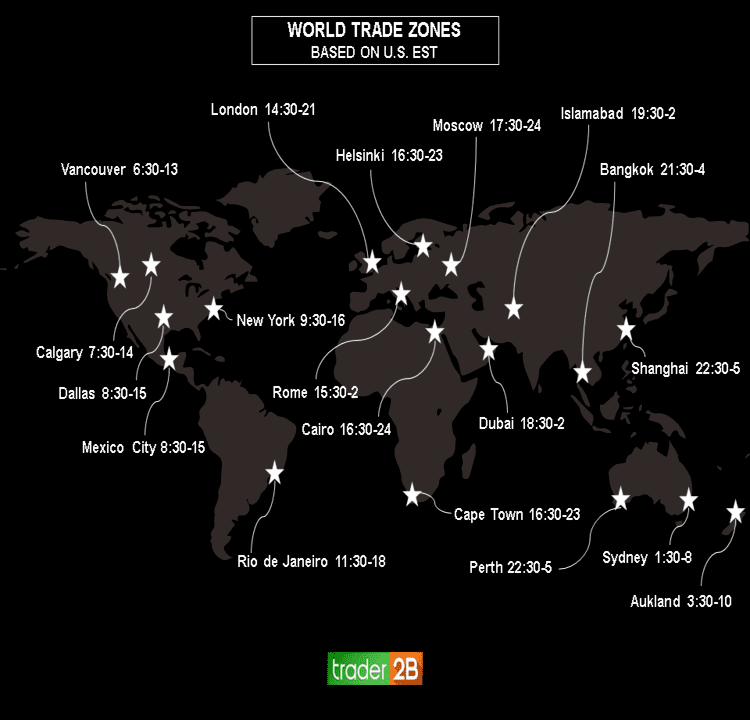
The concept of “what time do stocks open” expands dramatically when considering international markets. As one major market closes, another is often opening, creating a near-continuous cycle of global trading. For instance, while the U.S. markets are winding down, markets in Asia like Tokyo (Nikkei 225) and Shanghai (SSE Composite) are already open or about to open. As Asia closes, European markets such as London (FTSE 100), Frankfurt (DAX), and Paris (CAC 40) begin their trading day. This sequential opening and closing across time zones means that there’s always an active market somewhere in the world. For investors with global portfolios or those interested in international diversification, understanding these overlapping schedules is essential for monitoring asset performance and reacting to global news in a timely manner. Currency trading (Forex) is perhaps the best example of a truly 24-hour market, but even equity markets collectively offer nearly round-the-clock price discovery.
Major International Exchanges and Their Schedules
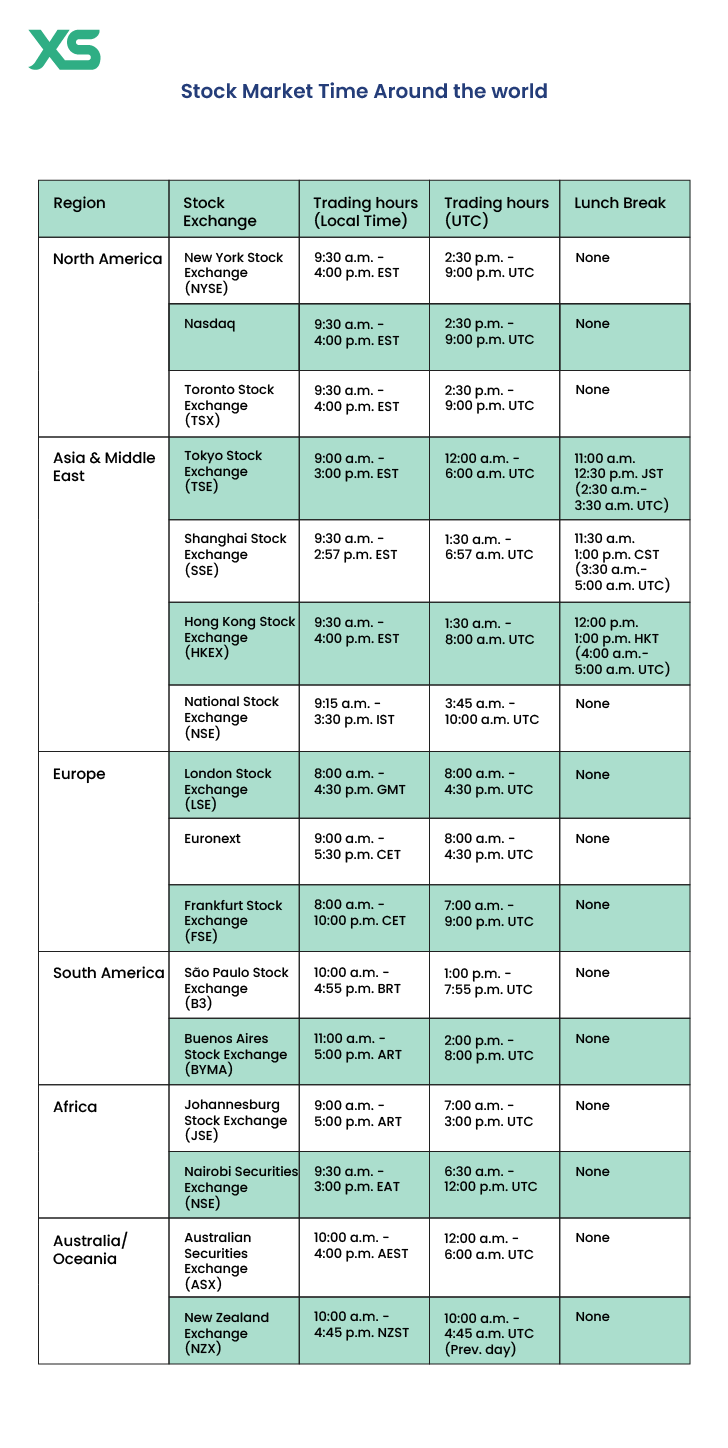
Here’s a brief overview of some major international stock exchanges and their typical operating hours (local time, non-holiday weekdays):
- Tokyo Stock Exchange (TSE – Japan): 9:00 AM – 11:30 AM, 12:30 PM – 3:00 PM JST (Japan Standard Time)
- Shanghai Stock Exchange (SSE – China): 9:30 AM – 11:30 AM, 1:00 PM – 3:00 PM CST (China Standard Time)
- London Stock Exchange (LSE – UK): 8:00 AM – 4:30 PM GMT (Greenwich Mean Time)
- Euronext (e.g., Paris, Amsterdam, Brussels): 9:00 AM – 5:30 PM CET (Central European Time)
- Frankfurt Stock Exchange (Xetra – Germany): 9:00 AM – 5:30 PM CET
- Australian Securities Exchange (ASX – Australia): 10:00 AM – 4:00 PM AEST (Australian Eastern Standard Time)
These are just a few examples, and specific market holidays and half-days will vary by country. For investors tracking international ETFs or ADRs (American Depositary Receipts), the underlying asset’s local market hours can be just as important as the U.S. market hours. Movements in these foreign markets often foreshadow or influence the opening sentiment of the U.S. markets, making awareness of their schedules a valuable tool for any investor seeking a comprehensive market view.
Practical Tips for Investors Navigating Market Hours
Successfully navigating the intricacies of market hours requires more than just knowing the times; it involves proactive planning, leveraging technology, and developing a disciplined approach to investing. These practical tips can help investors optimize their strategy and minimize potential pitfalls.
Setting Alerts and Staying Informed
In today’s fast-paced market, staying informed is paramount. Investors should utilize the tools available to them, such as setting price alerts or news notifications through their brokerage accounts, financial news apps, or dedicated market data services. These alerts can notify you when a stock reaches a certain price, when a company releases news, or when major economic data is announced, regardless of whether the market is open or closed. Subscribing to financial news outlets and following reputable financial analysts can also provide crucial insights that help you understand market sentiment and potential movements, allowing you to react strategically once trading is available. Being aware of the schedule for economic reports (e.g., inflation data, unemployment figures) and company earnings releases is also critical, as these events frequently trigger significant price action at market open or during extended hours.
Utilizing Financial Tools for Real-Time Data
Modern financial technology offers a wealth of tools that can empower investors to make better decisions around market hours. Real-time charting software, advanced order types (like limit orders, stop-loss orders, and stop-limit orders), and pre-market/after-hours scanning tools are invaluable. Limit orders, for instance, allow you to specify the maximum price you’re willing to pay or the minimum price you’re willing to accept, which is particularly useful in illiquid extended-hours sessions to protect against adverse price movements. Stop-loss orders can help automate risk management by triggering a sell if a stock falls below a certain price. Many brokerage platforms now integrate these advanced features, along with real-time streaming quotes, news feeds, and analyst ratings, enabling investors to monitor and react to market developments efficiently. Familiarizing yourself with these tools is key to optimizing your trading and investing activities within and outside regular market hours.
Developing a Trading Routine
Consistency and discipline are hallmarks of successful investing. Developing a personal trading routine that aligns with your investment strategy and lifestyle can significantly improve your outcomes. This might involve a morning routine of checking overnight news and international market performance before the U.S. market opens, setting specific times during the day to review your portfolio, or allocating time after market close to analyze daily performance and plan for the next day. For those who can’t monitor the market during regular hours, a routine might involve placing orders as market open approaches or using limit orders to execute trades at desired prices without constant vigilance. A well-defined routine helps minimize emotional decisions, ensures you stay informed, and allows you to capitalize on market rhythms rather than being caught off guard. Understanding “what time do stocks open” is the first step; integrating that knowledge into a thoughtful, consistent routine is where true financial acumen develops.
aViewFromTheCave is a participant in the Amazon Services LLC Associates Program, an affiliate advertising program designed to provide a means for sites to earn advertising fees by advertising and linking to Amazon.com. Amazon, the Amazon logo, AmazonSupply, and the AmazonSupply logo are trademarks of Amazon.com, Inc. or its affiliates. As an Amazon Associate we earn affiliate commissions from qualifying purchases.