
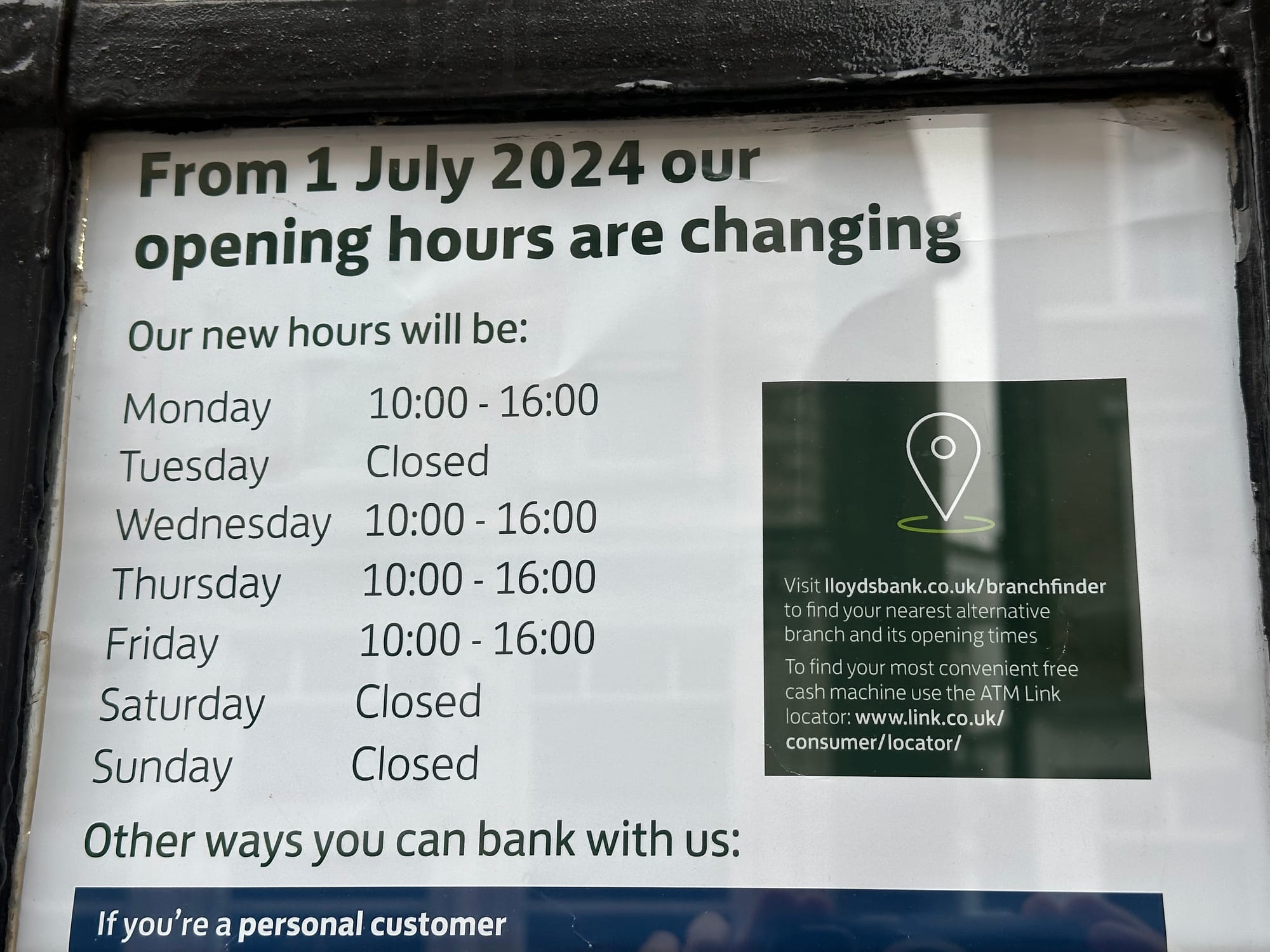
For decades, the phrase “Banker’s Hours” was used as a shorthand for a relaxed, 9-to-5 lifestyle. However, for the modern consumer and the savvy investor, the question of “what time does the bank close?” is more than a matter of simple logistics; it is a critical component of personal finance management. In an era where digital transactions happen in milliseconds, the physical and operational hours of traditional financial institutions still dictate the flow of capital, the clearing of checks, and the availability of funds.
Understanding the nuances of banking schedules is essential for maintaining liquidity, avoiding late fees, and ensuring that your financial strategy remains robust regardless of the time of day. This guide explores the intersection of time and money, providing a professional roadmap for navigating the complexities of modern banking.
The Evolution of Banking Hours and the Financial Ecosystem
To understand why bank hours remain a cornerstone of the financial world, one must look at the structural foundations of the industry. While we live in a 24/7 digital economy, the “settlement layer” of the financial system—where actual money moves between institutions—is still largely tied to a traditional schedule.
Why Banks Close When They Do: A Brief History
The traditional 9:00 AM to 5:00 PM schedule of physical bank branches is a legacy of the manual processing era. Before high-speed computing, banks needed several hours after the doors closed to balance the ledgers, verify physical deposits, and communicate with the central clearinghouse. While technology has automated much of this, the “business day” remains a legal and operational standard. Most banks close their physical lobbies early on Saturdays and remain closed on Sundays to align with the Federal Reserve’s processing schedule, which ensures that all transactions are batched and settled in a synchronized manner.
The Impact of Time Zones on Global Finance
For those involved in international investing or business finance, the closing time of a local branch is only one piece of the puzzle. The global financial market operates on a “follow the sun” model. When a bank closes in New York, the markets in Tokyo are beginning to stir. Understanding these overlaps is vital for managing foreign exchange (FX) rates and international wire transfers. If you initiate a transfer just as your local branch closes, you may be subject to the exchange rates of the following day, which could impact your bottom line if the currency market is volatile.
Strategic Timing for Personal Finance Management
Effective personal finance is as much about when you move your money as it is about how much you move. The difference of a few minutes can determine whether a mortgage payment is credited on time or if a high-value check clears before the weekend.
Deposit Cut-off Times and Funds Availability
The time the bank closes its doors is often different from its “cut-off time” for deposits. Many institutions have a cut-off time (often 2:00 PM or 3:00 PM) for transactions to be processed on the same business day. If you deposit a check at 4:30 PM, even if the branch is open until 5:00 PM, that deposit may not begin processing until the following business day. This “float” can be dangerous for those managing tight budgets. To master your money, you must identify your bank’s specific cut-off times for ATM deposits, teller transactions, and mobile captures to ensure your “available balance” matches your needs.
Planning Your Visits: Peak Hours vs. Quiet Windows
In terms of financial efficiency, time is literally money. If you must visit a physical branch for complex tasks—such as notarizing documents, opening a new investment account, or securing a cashier’s check—timing is everything. Most banks experience peak traffic during lunch hours (12:00 PM to 2:00 PM) and Friday afternoons. For the most attentive service and the shortest wait times, aim for mid-week mornings. Establishing a relationship with a personal banker during these quiet hours can lead to better financial advice and more personalized service for your investment portfolio.
The Shift to 24/7 Financial Tools and Digital Solutions
The question of “what time the bank closes” has been significantly altered by the rise of financial technology (FinTech). While the physical building may have a lock on the door, your financial tools should never truly sleep.
Leveraging Online Portals for After-Hours Transactions
Modern personal finance relies heavily on the ability to manage accounts remotely. Online banking portals allow for internal transfers, bill payments, and account monitoring at any hour. However, the “effective date” of these transactions still usually follows the bank’s standard business hours. For example, a bill paid on a Sunday will typically be processed on Monday. Understanding this lag is crucial for avoiding late penalties on credit cards or utility bills. High-net-worth individuals often use these after-hours windows to review their portfolios and set up “scheduled transfers” to ensure their money is always working in the highest-interest environments.
Mobile Check Deposits and Instant Transfers
The advent of Mobile Check Deposit (MCD) has revolutionized the way we handle physical payments. By using a smartphone to photograph a check, you bypass the need to race to the bank before it closes. However, be aware of the “hold” policies. Banks often place a hold on larger mobile deposits made after-hours to mitigate fraud risks. On the other hand, peer-to-peer (P2P) services like Zelle or Venmo, often integrated directly into banking apps, offer near-instant liquidity. Incorporating these tools into your financial routine allows you to move money with agility, regardless of whether the physical bank is open or closed.
Business Finance: Managing Cash Flow Outside Standard Hours
For business owners and entrepreneurs, banking hours represent a critical window for payroll, vendor payments, and cash management. Mismanaging the clock in a business context can lead to strained vendor relationships or even legal issues regarding employee compensation.
The Importance of the “Business Day” in Corporate Finance
In corporate finance, the “business day” is a legal term defined by the Uniform Commercial Code (UCC). It typically excludes weekends and federal holidays. If your business relies on ACH (Automated Clearing House) transfers for payroll, you must often initiate these transactions two to three days in advance of the actual payday. If a bank closes for a federal holiday, like Labor Day or Juneteenth, that day does not count toward the processing window. Savvy business managers maintain a “financial calendar” that highlights bank holidays and early-close days to ensure their operations remain seamless.
Dealing with Weekends and Federal Holidays
The weekend “dead zone” is a significant hurdle in business finance. Cash collected over the weekend cannot be officially deposited into an interest-bearing account until Monday. For cash-intensive businesses, such as retail or hospitality, this presents a security risk and a liquidity gap. Utilizing “smart safes” or night-drop boxes provided by banks can help bridge this gap, allowing for the secure physical transfer of funds even when the bank is closed, with the assurance that the funds will be credited at the earliest possible moment on the next business day.
Future-Proofing Your Financial Schedule
As the landscape of money continues to shift toward a digital-first model, the traditional constraints of banking hours are slowly dissolving. However, a professional approach to finance requires preparing for both the old-world structures and the new-world opportunities.
Transitioning to Neobanks and Digital-First Institutions
For many, the solution to the “closing time” dilemma is moving toward neobanks or digital-first financial institutions. These banks, which lack physical branches, are built on modern tech stacks that often allow for faster processing times and more flexible customer service hours. For a side hustler or a digital nomad, these institutions provide a level of accessibility that traditional “brick-and-mortar” banks struggle to match. Integrating a neobank into your broader financial strategy can provide a valuable backup for when traditional institutions are inaccessible.

Building an Emergency Plan for Immediate Liquidity
The ultimate goal of understanding banking hours is to ensure you never face a “liquidity crunch.” This involves maintaining a diverse set of financial tools:
- A primary checking account at a major institution for stability and branch access.
- A high-yield savings account at a digital bank for better interest rates and 24/7 management.
- A reserve of liquid cash or a dedicated line of credit to cover needs that arise when the bank is closed.
By treating the bank’s closing time not as a barrier, but as a known variable in your financial equation, you can build a more resilient and responsive personal finance strategy. Whether it is understanding the “cut-off” for an ACH transfer or knowing when to use a mobile app versus a physical teller, mastering the clock is a fundamental step in mastering your money.
aViewFromTheCave is a participant in the Amazon Services LLC Associates Program, an affiliate advertising program designed to provide a means for sites to earn advertising fees by advertising and linking to Amazon.com. Amazon, the Amazon logo, AmazonSupply, and the AmazonSupply logo are trademarks of Amazon.com, Inc. or its affiliates. As an Amazon Associate we earn affiliate commissions from qualifying purchases.