
In an age dominated by instant information and digital convenience, the simple, profound human curiosity about the cosmos remains undimmed. Yet, how we satisfy that curiosity has transformed dramatically. The question, “what time can we see the Blood Moon tonight?”, once a matter for almanacs and patient observation, is now answered with a tap of a screen, a voice command to an AI assistant, or a notification from a specialized app. This evolution underscores a powerful trend: technology isn’t just facilitating our daily lives; it’s actively enhancing our connection to the universe, making celestial events more accessible, predictable, and even immersive.

From the casual stargazing enthusiast to the dedicated amateur astronomer, technology has become an indispensable companion. It empowers us not only to track elusive phenomena like a Blood Moon but also to understand the mechanics behind them, plan our observations with pinpoint accuracy, and even share our experiences with a global community. This article delves into the technological innovations that have revolutionized how we engage with the night sky, transforming a timeless human endeavor into a digitally augmented experience. We’ll explore the tools, trends, and ethical considerations that define this new era of celestial exploration, ensuring that no cosmic spectacle, be it a meteor shower or a total lunar eclipse, passes us by unnoticed.
The Digital Transformation of Astronomical Information Access
For millennia, humans have gazed skyward, charting stars and predicting celestial movements with remarkable ingenuity, relying on meticulously crafted star charts, sundials, and ancient observatories. The core challenge was always information access: knowing when and where to look. Today, that challenge has been largely overcome by an array of digital tools that have democratized astronomy, making real-time, predictive, and comprehensive celestial data available to virtually anyone with an internet connection.
From Stargazing Charts to Digital Sky Guides
The journey from static paper charts to dynamic digital guides represents a monumental leap in accessibility and interactivity. Traditional star charts, while beautiful and historically significant, offered a fixed snapshot of the sky, often requiring users to account for their specific location and time mentally. Modern astronomy apps, conversely, leverage GPS and device orientation to provide an immediate, personalized view of the sky above, accurate to the second. They aren’t just maps; they’re interactive planetariums in your pocket, offering detailed information on constellations, planets, deep-sky objects, and, crucially, transient events like lunar eclipses.
These digital sky guides do more than just display stars; they integrate complex astronomical algorithms to predict the exact timing and visibility of events from any given location on Earth. For an event like a Blood Moon, they can provide precise start and end times, the path of the eclipse, and even suggest optimal viewing directions, eliminating guesswork and significantly enhancing the viewing experience. This shift has not only made astronomy more approachable but also fostered a new generation of informed and engaged skywatchers.
The Rise of Real-time Data and Predictive Algorithms
At the heart of modern celestial event tracking lies sophisticated real-time data processing and predictive algorithms. Observatories around the world constantly feed data into vast networks, tracking everything from asteroid movements to solar flares. This information, once the exclusive domain of professional astronomers, is now aggregated and filtered by various platforms, from dedicated astronomy websites to popular weather apps, and is often presented in an easily digestible format.
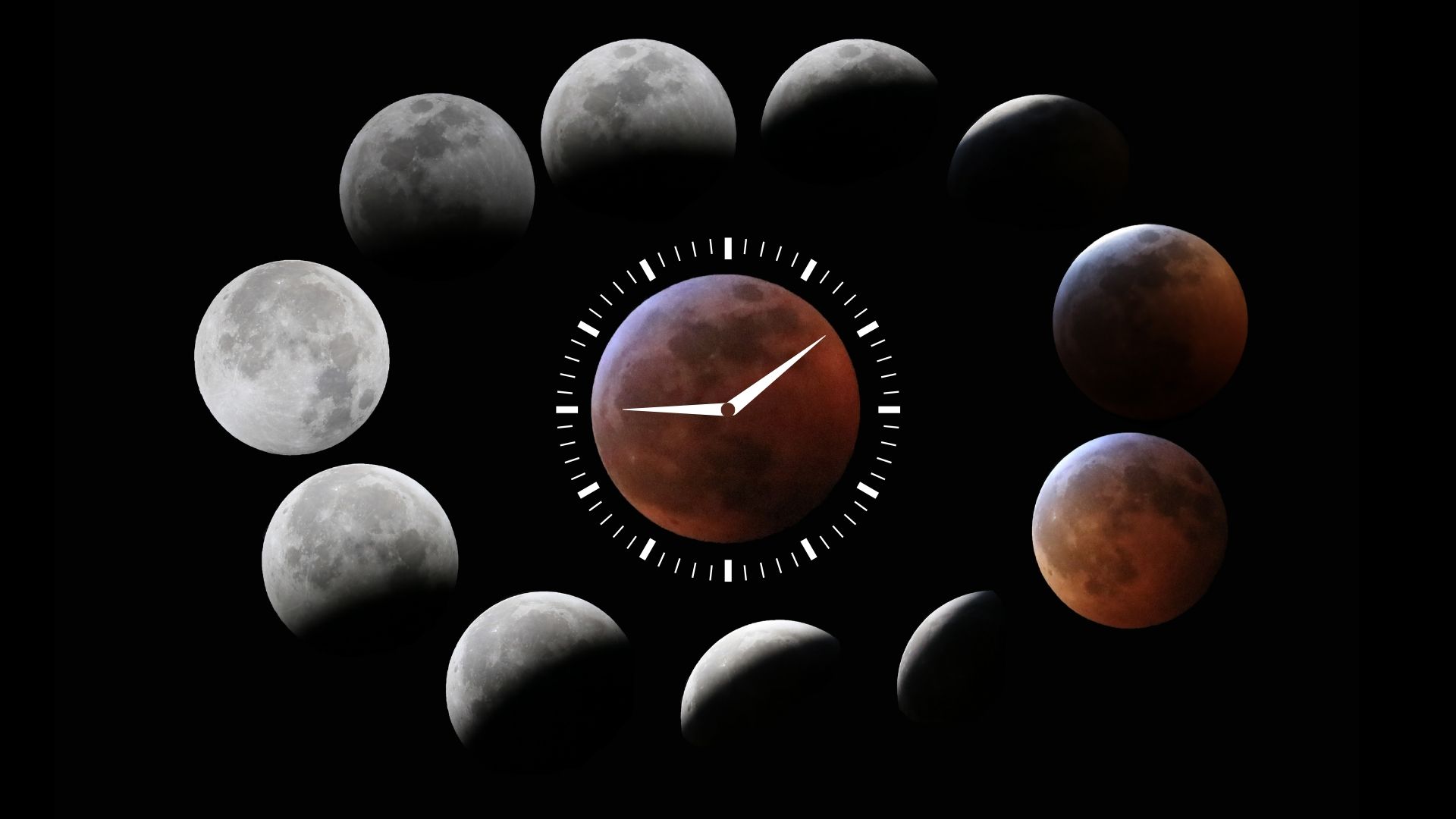
Predictive algorithms, powered by high-performance computing, can model the complex gravitational interactions of celestial bodies with incredible precision. This allows for accurate forecasts of eclipses, conjunctions, meteor showers, and planetary transits years, even decades, in advance. For phenomena like a Blood Moon, these algorithms calculate the Earth’s shadow path and the Moon’s trajectory through it, determining the exact minutes of totality for different geographical locations. The result is unparalleled accuracy, turning what was once a somewhat uncertain prediction into a scheduled event that millions can anticipate and prepare for, fostering a collective experience of wonder that spans continents.
Essential Apps and Software for Celestial Event Tracking
The market is awash with technological solutions designed to help you connect with the night sky. From free mobile applications to advanced desktop software, these tools cater to a wide spectrum of users, each offering unique features to enhance your celestial observation experience. Identifying the right tools can make all the difference in ensuring you don’t miss that crucial moment when the moon turns a dusky red.
Mobile Astronomy Apps: Your Pocket Planetarium
Mobile applications have undeniably revolutionized casual skywatching. Apps like Star Walk, SkyView, Stellarium Mobile, and Night Sky provide an augmented reality experience, overlaying constellation lines, planet names, and deep-sky objects onto your phone’s camera feed as you point it upwards. Their intuitive interfaces make them ideal for beginners, offering basic information on celestial bodies and constellations, often with stunning visuals and educational content.
Crucially, for events like a Blood Moon, these apps excel at providing immediate, location-specific timing and visibility details. They send push notifications for upcoming events, allowing users to set reminders well in advance. Many also feature interactive maps that show the moon’s path through the Earth’s shadow, allowing users to visualize the eclipse progression in real-time. The convenience of having a comprehensive sky guide and event tracker in your pocket means that spontaneous stargazing or planned observations are always just a tap away.
Desktop Software for Advanced Sky Mapping and Planning
For the more serious amateur astronomer or astrophotographer, desktop software offers a deeper level of detail and planning capability. Programs like Stellarium (desktop version), Cartes du Ciel, or TheSkyX provide robust features that go beyond what mobile apps can offer. These applications typically boast extensive star catalogs, advanced telescope control capabilities, and powerful planning tools for imaging sessions.
When planning to observe or photograph a Blood Moon, desktop software allows users to simulate the event from their exact coordinates, factoring in local horizon obstructions, weather patterns (sometimes integrated via plugins), and camera field-of-view. This level of precision is invaluable for optimizing equipment setup, determining ideal observation sites, and ensuring that complex photographic sequences are executed flawlessly. The ability to export detailed charts and event timelines further aids in meticulous preparation, transforming a simple observation into a well-orchestrated scientific endeavor.
AI-Powered Notifications and Personalized Alerts
The integration of Artificial Intelligence (AI) into astronomy tools is ushering in a new era of personalized and proactive celestial guidance. Beyond simple push notifications, AI-powered systems can learn user preferences, observe viewing habits, and even cross-reference local weather forecasts to provide highly relevant and actionable alerts. Imagine an app that not only tells you “what time can we see the Blood Moon tonight” but also suggests the best local viewing spot based on light pollution data, cloud cover predictions, and your travel history.

AI algorithms can process vast amounts of astronomical data to identify subtle patterns or predict less common events that might escape standard programming. They can also analyze user engagement with different types of celestial events to tailor future recommendations, ensuring that the information delivered is always pertinent and engaging. This move towards intelligent, personalized astronomical assistance ensures that users are always informed about the events that matter most to them, maximizing their opportunities to connect with the night sky without being overwhelmed by irrelevant data.
Enhancing the Viewing Experience with Gadgets and Tools
Beyond information access and planning, technology has also profoundly impacted the act of observation itself. The humble telescope, once a purely optical instrument, has been augmented with digital intelligence, while new gadgets are emerging to make the cosmos more accessible and even shareable than ever before.
Smart Telescopes and Augmented Reality Viewers
The advent of “smart telescopes” represents a significant leap for amateur astronomy. These devices often feature automated alignment systems, built-in cameras, and Wi-Fi connectivity, allowing users to control them from a smartphone or tablet. They can automatically locate and track celestial objects with minimal input, making the often-challenging process of manual star alignment a thing of the past. For a Blood Moon, a smart telescope can automatically center and track the Moon throughout the eclipse, providing a stable, magnified view without constant manual adjustments. Many also offer “live stacking” capabilities, combining multiple short exposures in real-time to reveal faint details and colors, a revolutionary feature for beginners.
Augmented Reality (AR) viewers, while still nascent, hold immense potential. Imagine looking through a pair of AR glasses and seeing digital overlays identifying constellations, planets, and the precise trajectory of an eclipse, all while maintaining an unhindered view of the real sky. Such devices could provide context and information directly within your field of vision, enhancing understanding and engagement without distracting from the natural beauty of the event.
High-Tech Astrophotography Equipment and Software
Astrophotography, once a specialized niche requiring significant expertise and expensive equipment, has become far more accessible thanks to technological advancements. Modern digital cameras, even consumer-grade DSLRs and mirrorless cameras, offer excellent low-light performance, making it easier to capture stunning images of celestial events. Paired with motorized equatorial mounts, which precisely track the movement of the sky, photographers can achieve sharp, long-exposure shots of the Blood Moon.
Specialized astrophotography software further refines the process. Programs for image stacking, noise reduction, and post-processing allow photographers to combine multiple exposures, remove digital noise, and enhance colors and details, bringing out the subtle beauty of an eclipsed moon. Furthermore, remote observatory software allows enthusiasts to control telescopes and cameras located thousands of miles away, accessing professional-grade equipment and dark skies from the comfort of their home, dramatically expanding the possibilities for capturing celestial phenomena.
Live Streaming and Virtual Reality: Sharing the Cosmos
Perhaps one of the most impactful technological developments is the ability to share celestial events with a global audience in real-time. Live streaming platforms have become invaluable during events like a Blood Moon, especially for those in regions where the eclipse is not visible or obscured by weather. Observatories, educational institutions, and amateur astronomers alike host live broadcasts, often accompanied by expert commentary, allowing millions to witness the spectacle simultaneously.
Virtual Reality (VR) is taking this a step further. While still in its early stages for live celestial events, VR simulations and pre-recorded 360-degree experiences offer an unparalleled sense of immersion. Users can virtually “stand” on the Moon, witnessing a total lunar eclipse from its surface, or experience the Earth’s shadow creeping across the lunar disk from a simulated vantage point in space. This technology promises to democratize not just viewing, but experiencing the cosmos in ways previously unimaginable, fostering a shared sense of wonder and connection to the universe.
Digital Security and Responsible Tech Use for Skywatchers
As technology increasingly mediates our interaction with the cosmos, it also introduces new considerations regarding digital security, data privacy, and ethical practices. Engaging with celestial events through digital means, while enriching, requires an awareness of these emerging responsibilities.
Protecting Your Data in the Digital Astronomy Ecosystem
The apps and software we use to track celestial events often require access to location data, user preferences, and sometimes even payment information. Ensuring the security of this personal data is paramount. Users should prioritize applications from reputable developers, read privacy policies carefully, and be mindful of the permissions granted to these apps. Secure passwords, two-factor authentication, and regular software updates are basic, yet crucial, steps to protect against data breaches or unauthorized access to personal information. As more sophisticated AI tools emerge, understanding how our preferences and viewing habits are used and stored will become an even greater concern for the digital skywatcher.
Ethical Considerations in Astrophotography and Data Sharing
The ease of capturing and sharing astrophotography brings its own set of ethical considerations. While sharing beautiful images of a Blood Moon is generally positive, issues such as copyright, attribution, and responsible online behavior come into play. Photographers should be mindful of watermarking their work and giving proper credit when using images from others. Furthermore, the practice of “digital dark sky” manipulation, where artificial effects are added to astrophotographs, raises questions about authenticity and transparency within the astrophotography community. Clear disclosure of such enhancements helps maintain trust and artistic integrity.
Beyond individual ethics, the broader impact of satellite constellations (like Starlink) on astrophotography and professional astronomy is a growing concern. While providing global internet access, their increasing numbers can lead to light pollution in telescope images and interfere with scientific observations. Responsible tech use also extends to advocating for sustainable space practices that preserve the pristine dark skies for both scientific discovery and public enjoyment.
The Future of Space-Tech Integration and Citizen Science
The integration of space technology and citizen science platforms holds immense promise for the future. AI-powered algorithms can sift through vast amounts of data contributed by citizen scientists, identifying supernovae, exoplanets, or tracking near-Earth asteroids. Projects like SETI@home have long demonstrated the power of distributed computing, and similar models could be applied to amateur astronomical observations globally.
The ongoing evolution of space-based telescopes and Earth-observing satellites, combined with sophisticated data analytics and AI, will provide an unprecedented wealth of information about our universe. Democratizing access to this data, through user-friendly interfaces and collaborative platforms, will empower more individuals to contribute to scientific discovery. This future envisions a world where “what time can we see the Blood Moon tonight?” is just the beginning of a deeper, technologically mediated journey into cosmic understanding, shared and shaped by a global community of skywatchers.
aViewFromTheCave is a participant in the Amazon Services LLC Associates Program, an affiliate advertising program designed to provide a means for sites to earn advertising fees by advertising and linking to Amazon.com. Amazon, the Amazon logo, AmazonSupply, and the AmazonSupply logo are trademarks of Amazon.com, Inc. or its affiliates. As an Amazon Associate we earn affiliate commissions from qualifying purchases.