
In our increasingly interconnected world, music acts as a universal language, capable of evoking memories, stirring emotions, and fostering connections. From the fleeting melody overheard in a cafe to a captivating soundtrack in a film, the desire to identify a song that has piqued our interest is a common and often frustrating experience. The digital age, however, has transformed this quest from a laborious scavenger hunt into a near-instantaneous process. This article delves into the technological advancements that empower us to answer the perennial question: “What is this song called?” We will explore the evolution of music identification tools, the underlying technologies that make them possible, and the diverse applications that have emerged, fundamentally reshaping our interaction with music.

The Genesis of Song Recognition: From Hum to AI
The fundamental challenge of identifying a song lies in its ephemeral nature. Unlike a visual object that can be easily described or photographed, a melody is intangible, often captured only in fleeting auditory moments. Early attempts at song recognition relied on human memory and analog methods, often proving inefficient and prone to error.
Early Analog Approaches and Their Limitations
Before the advent of digital technology, identifying a song often involved a collective effort of recall and description. A person might hum the tune, try to recall a few lyrical fragments, or describe the genre and instrumentation. This information would then be disseminated through word-of-mouth, music stores, or radio requests, a process that was inherently slow and relied heavily on the expertise and memory of individuals. Record stores, with their knowledgeable staff and extensive catalogs, served as vital hubs for musical detective work. Radio DJs, with their vast libraries and deep understanding of music, were also instrumental. However, these methods were limited by geographical location, the availability of experts, and the ability of the user to accurately articulate even a small portion of the song. The hit-or-miss nature of these early approaches often left many musical curiosities unresolved.
The Dawn of Digital Databases and Algorithmic Matching
The true revolution in song identification began with the digitization of music and the development of sophisticated algorithms. The core principle behind modern song recognition is the ability to analyze the acoustic fingerprint of a piece of music and match it against a vast database of known songs. This acoustic fingerprint is essentially a unique set of characteristics extracted from the audio signal, such as its spectral content, rhythm, and pitch.
Initially, these systems relied on relatively simple feature extraction methods. For example, a program might analyze the dominant frequencies and their changes over time. While these early systems were a significant leap forward, they often struggled with noisy environments, variations in playback quality, or incomplete audio samples. The sheer volume of music to be cataloged also presented a significant computational challenge. The development of more robust signal processing techniques and the exponential growth in computing power were crucial in overcoming these initial hurdles.
The Algorithmic Heartbeat: How Music Identification Works
At the core of every modern song identification application lies a complex interplay of signal processing, machine learning, and vast databases. Understanding these underlying technologies provides insight into the remarkable accuracy and speed of these tools.
Acoustic Fingerprinting: Capturing the Essence of a Song
The concept of acoustic fingerprinting is analogous to a human fingerprint – a unique identifier for each song. However, instead of physical ridges, an acoustic fingerprint is a digital representation derived from the audio signal itself. This process involves analyzing various aspects of the sound, such as:
- Spectrogram Analysis: This technique breaks down the audio signal into its constituent frequencies over time, creating a visual representation called a spectrogram. Peaks and troughs in the spectrogram reveal the dominant frequencies and their relative intensities, forming a unique pattern for the song.
- Mel-Frequency Cepstral Coefficients (MFCCs): These are widely used features that represent the short-term power spectrum of a sound, based on a linear cosine transform of a log power spectrum on a non-linear Mel scale of frequency. MFCCs are particularly effective at capturing the timbral qualities of a sound, which are crucial for distinguishing between different instruments and vocalists.
- Rhythmic and Pitch Patterns: The inherent rhythm and melodic contours of a song also contribute to its unique fingerprint. Algorithms can identify recurring rhythmic motifs and the progression of pitches, adding further layers of identification.
These extracted features are then compressed into a compact digital code, the “acoustic fingerprint.” This process is designed to be robust, meaning that slight variations in audio quality, background noise, or even the speed of playback should not significantly alter the resulting fingerprint.
The Power of Databases and Machine Learning
Once an acoustic fingerprint is generated from an unknown audio sample, it needs to be compared against a massive library of known fingerprints. This is where enormous databases and advanced machine learning algorithms come into play.
- Massive Song Databases: Companies like Shazam, SoundHound, and others maintain colossal databases containing the acoustic fingerprints of millions of songs. These databases are constantly being updated with new releases and cataloged older music. The efficiency of searching these databases is paramount to achieving near-instantaneous results.
- Machine Learning for Matching: Machine learning algorithms, particularly those based on pattern recognition and similarity search, are employed to quickly find the closest match between the query fingerprint and the fingerprints in the database. These algorithms are trained to account for minor discrepancies and potential errors in the input audio. Techniques like Locality-Sensitive Hashing (LSH) are often used to speed up the search process in these high-dimensional datasets.
- Crowdsourcing and Continuous Improvement: Many identification services also leverage crowdsourcing. When a user submits an audio clip, the service not only attempts to match it against its database but can also flag it for further human review or incorporate it into future training data if a definitive match isn’t immediately found. This continuous feedback loop allows these systems to learn and improve over time, becoming even more accurate and comprehensive.
Beyond Identification: The Evolving Applications of Song Recognition
The ability to instantly identify a song has transcended its initial purpose, leading to a proliferation of applications and influencing various aspects of the music industry and our daily lives.
Personal Music Discovery and Curation
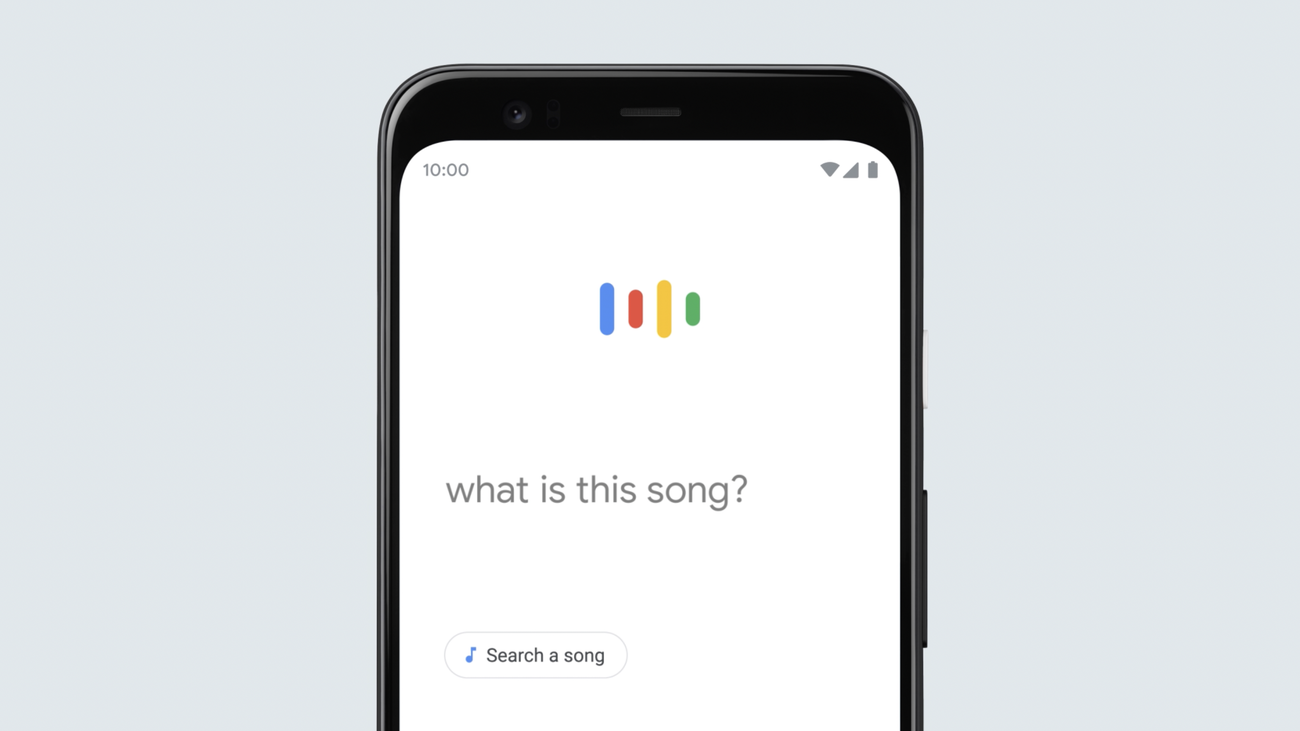
The most immediate and widely appreciated application of song identification technology is personal music discovery. No longer are we left wondering about that catchy tune heard on the radio or in a television commercial. A quick tap on a smartphone app can reveal the song title and artist, allowing us to seamlessly add it to our playlists, purchase it, or explore more of the artist’s work. This has democratized music discovery, empowering individuals to curate their musical experiences with unprecedented ease. Streaming services have integrated these identification capabilities, further streamlining the process of finding and enjoying new music.
Enhancing the Music Industry Ecosystem
Song identification technology has also profoundly impacted the music industry itself.
- Royalty Tracking and Licensing: For copyright holders and performance rights organizations, accurate identification is crucial for tracking music usage and ensuring fair royalty distribution. Technologies that can identify music played in public spaces, broadcast on radio, or used in digital content help in creating transparent and efficient licensing systems. This helps ensure that artists and songwriters are compensated for their work.
- Market Research and Trend Analysis: By analyzing the queries made by users, companies can gain valuable insights into emerging musical trends, popular artists, and regional preferences. This data can inform marketing strategies, artist development, and even influence the direction of music production. Understanding what songs people are actively trying to find can reveal untapped potential and shifting tastes in the market.
- Artist Promotion and Discovery: For emerging artists, the ability for their music to be easily identifiable through these services can be a significant boon. When a listener identifies a song by an unknown artist, it’s a direct pathway to engagement and potential fandom. This technology can act as a powerful promotional tool, helping new talent gain exposure and build an audience organically.

Future Frontiers: AI, Context, and Immersive Experiences
The evolution of song identification is far from over. As artificial intelligence and machine learning continue to advance, we can expect even more sophisticated and integrated applications.
- Contextual Understanding: Future systems may go beyond simple identification to understand the context in which a song is being heard. This could involve recognizing a song based on its inclusion in a specific scene in a movie or TV show, its association with a particular event, or even its emotional impact on the listener. Imagine an AI that can recommend music based on your current mood or the activity you’re engaged in, inferred from your device’s sensors and your listening history.
- Multimodal Identification: Beyond audio, future identification systems might incorporate other sensory inputs. For example, recognizing a song based on a combination of visual cues from a concert or a performance, alongside the audio, could lead to richer identification experiences. This could also extend to identifying music based on lyrical content alone, even if the melody is unfamiliar.
- Personalized Music Generation: While currently a separate field, the deep understanding of musical structures and patterns gained from song identification technologies could contribute to the development of AI systems capable of generating personalized music tailored to individual preferences and moods. This could lead to entirely new ways of experiencing and interacting with music.
In conclusion, the simple question “What is this song called?” has spurred remarkable technological innovation. From the rudimentary attempts of yesteryear to the sophisticated AI-powered systems of today, the journey of song identification has been one of continuous advancement. These technologies have not only made our lives musically richer by facilitating effortless discovery but have also fundamentally reshaped the landscape of the music industry and opened up exciting possibilities for the future of how we engage with sound. As technology continues to evolve, our ability to connect with and understand the music that surrounds us will only deepen, further cementing music’s place as a vital and dynamic force in our lives.
aViewFromTheCave is a participant in the Amazon Services LLC Associates Program, an affiliate advertising program designed to provide a means for sites to earn advertising fees by advertising and linking to Amazon.com. Amazon, the Amazon logo, AmazonSupply, and the AmazonSupply logo are trademarks of Amazon.com, Inc. or its affiliates. As an Amazon Associate we earn affiliate commissions from qualifying purchases.