
In an increasingly complex financial world, understanding percentages isn’t just a useful skill; it’s a fundamental necessity. From the daily grind of budgeting and shopping to the long-term strategies of investing and business management, percentages are the universal language of finance. They quantify change, express proportions, and simplify comparisons, making abstract numbers tangible and actionable. Yet, despite their pervasive presence, calculating percentages accurately and quickly can often be a source of confusion or error for many. This is where the unsung hero of financial literacy steps in: the percent calculator. Far more than a simple arithmetic tool, a robust percent calculator serves as an essential navigator, demystifying financial data and empowering individuals and businesses to make informed, confident decisions.
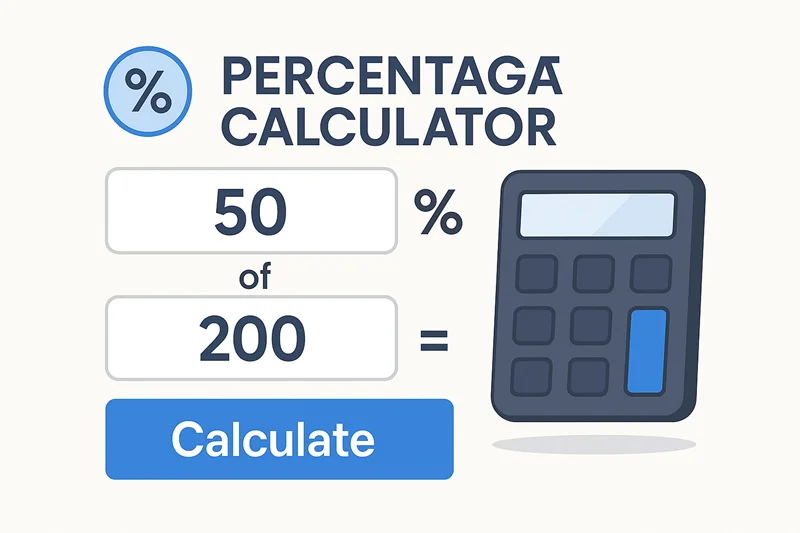
The Ubiquitous Language of Percentages in Finance
Percentages are not merely mathematical constructs; they are the bedrock upon which much of our financial understanding is built. They provide a standardized way to compare parts to a whole, or to measure changes over time, offering immediate context that raw numbers often lack.
Decoding the Essence of “Per Cent”
At its core, “percent” means “per one hundred” or “out of one hundred.” It’s a fraction with a denominator of 100, represented by the symbol ‘%’. This simple concept allows us to express proportions in a universally understood format, making it incredibly powerful. For instance, saying you saved “$50” on a purchase is less informative than saying you saved “25%,” as the latter immediately tells you the relative impact of that saving on the original price. This standardized representation is critical for comparing vastly different figures on an equal footing. Whether discussing interest rates on a multi-million-dollar loan or a small discount on a coffee, the percentage provides a consistent metric for comparison.
Why Percentages Reign Supreme in Financial Communication
In the realm of personal finance, investing, and business operations, percentages are the go-to metric for clarity and consistency. They translate complex numerical relationships into easily digestible insights. Imagine trying to compare the growth of a small startup earning $10,000 in profit with a large corporation earning $1,000,000. If both grew their profits by $1,000, the absolute number tells you little about their relative performance. However, if the startup grew by 10% and the corporation by 0.1%, the percentage reveals the startup’s far more significant proportional progress.
From bank statements detailing interest rates and credit card APRs, to investment reports showcasing portfolio returns, to business dashboards monitoring profit margins and market share, percentages are the common thread. They enable individuals to grasp the true cost of borrowing, the actual yield of an investment, or the performance efficiency of a business unit. Without a firm grasp of percentages, and a reliable tool to calculate them, navigating the modern financial landscape would be akin to sailing without a compass.
The Percent Calculator: Your Essential Financial Navigator
While the concept of percentages is straightforward, their actual calculation, especially in varied and complex scenarios, can quickly become cumbersome. This is precisely where the percent calculator transcends being a mere convenience to becoming an indispensable financial tool.
Bridging the Gap Between Raw Numbers and Financial Insight
A percent calculator is a digital or physical utility designed to perform various percentage-related calculations quickly and accurately. Its primary function is to eliminate the manual arithmetic, reducing the likelihood of errors and freeing up mental energy for analysis rather than computation. By simply inputting the relevant numbers, the calculator instantly provides the percentage, percentage change, or original value, transforming raw data into meaningful financial insights. This immediate feedback is crucial for making timely decisions, whether you’re at the checkout counter evaluating a discount or in a boardroom analyzing quarterly growth.
Core Functions That Empower Financial Decision-Making
The utility of a percent calculator lies in its versatility. It typically handles several fundamental types of percentage problems, each with significant financial implications:
- Finding a Percentage of a Number: This is perhaps the most common application. Need to know the exact amount of a 15% tip on a $75 bill? Or the 7% sales tax on a $250 purchase? The calculator instantly provides the specific monetary value.
- Determining What Percentage One Number is of Another: Essential for understanding proportions. If your business spent $2,000 on marketing from a total revenue of $10,000, what percentage of revenue went to marketing? This function reveals expense ratios, profit margins, and market share.
- Calculating Percentage Increase or Decrease: Crucial for tracking growth or decline. What was the percentage increase in your stock portfolio if it grew from $10,000 to $12,500? What was the percentage decrease in a product’s price from $200 to $150? This helps in evaluating investment performance, sales trends, and cost reductions.
- Reversing Percentages (Finding the Original Number): A slightly more advanced, yet incredibly useful function. If an item costs $80 after a 20% discount, what was its original price? Or if a product sells for $107 after a 7% sales tax, what was the pre-tax price? This is invaluable for deciphering original costs or verifying pricing structures.
Beyond Simple Arithmetic: Tackling Complex Scenarios
While basic percentage calculations are the bread and butter, many financial scenarios involve multiple layers. A sophisticated percent calculator, or one used effectively with a clear understanding of the problem, can tackle these complexities. For instance, calculating compound interest requires repeated percentage increases over time, and a calculator can streamline this. Similarly, understanding the true annual percentage rate (APR) on a loan often involves multiple percentage-based fees and interest calculations. By breaking down these complex problems into their percentage components, the calculator helps to visualize the financial impact more clearly, enabling better planning and negotiation.
Real-World Financial Applications: Where Your Percent Calculator Shines
The theoretical utility of a percent calculator becomes brilliantly clear when applied to the myriad of financial situations encountered in daily life and business operations.
Mastering Personal Finance: Discounts, Taxes, and Tips
For the average consumer, a percent calculator is an invaluable aid in managing everyday expenses and making smart purchasing decisions.
- Discounts and Sales: How much will you truly save with that “30% off” coupon? The calculator swiftly shows the exact dollar amount and the final price, preventing overspending due to miscalculation or optimistic estimation.
- Sales Tax: Accurately calculating sales tax on purchases, especially large ones like cars or appliances, helps in budgeting and avoiding surprises at the checkout.
- Tipping: Whether dining out or using a service, quickly calculating the appropriate 15-20% tip ensures fair compensation without awkward fumbling with mental math.
- Budgeting and Expense Tracking: Understanding what percentage of your income goes towards housing, food, or entertainment is crucial for effective budgeting. A calculator helps visualize these proportions, highlighting areas for potential savings.
Unlocking Investment Potential: Returns, Growth, and Risk
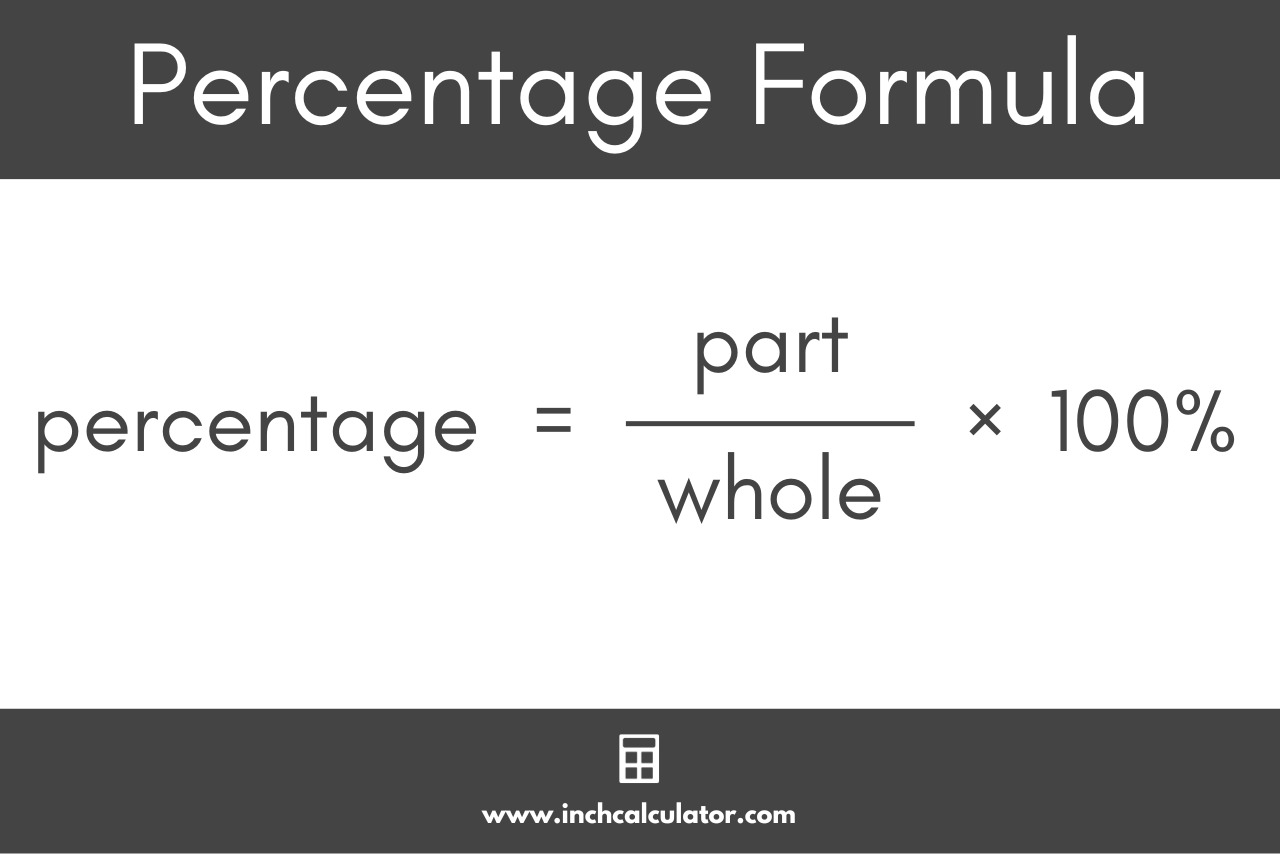
For investors, percentages are the language of performance and risk. A percent calculator is an indispensable tool for analysis and strategic planning.
- Investment Returns: Calculating the percentage gain or loss on an investment allows for accurate comparison across different assets and timeframes. A stock might have gained $100, but if it started at $1,000, that’s a 10% return, which is very different if it started at $10,000 (1% return).
- Portfolio Growth: Tracking the percentage growth of your overall portfolio over months or years provides a clear picture of your investment strategy’s effectiveness.
- Compounding: Understanding the power of compound interest, where returns earn returns, is fundamental to wealth creation. A calculator can illustrate how even small percentage gains, compounded over time, lead to significant wealth accumulation.
- Risk Assessment: While not directly calculating risk, understanding the percentage volatility or drawdown of an investment helps in assessing its risk profile relative to potential returns.
Empowering Business Finance: Profitability and Performance Metrics
In the business world, percentages are the lifeblood of financial reporting, strategic planning, and performance evaluation.
- Profit Margins: Gross profit margin, operating profit margin, and net profit margin are all percentage-based metrics vital for assessing a company’s efficiency and profitability. A calculator helps in quickly deriving these from raw revenue and cost figures.
- Market Share: Understanding what percentage of the total market your business captures is key for competitive analysis and growth strategies.
- Sales Growth: Measuring the percentage increase or decrease in sales revenue quarter-over-quarter or year-over-year provides critical insights into market demand and sales team performance.
- Expense Ratios: What percentage of revenue is consumed by operational costs, marketing, or research and development? These ratios inform cost-cutting initiatives and resource allocation.
- Pricing Strategies: Calculating markups and discounts as percentages is fundamental to setting competitive and profitable prices.
Choosing and Utilizing Your Financial Percent Calculator Wisely
Given the diverse applications and crucial role of a percent calculator, selecting the right tool and using it effectively can significantly enhance your financial acumen and decision-making capabilities.
Exploring Diverse Calculator Formats: From Web to Apps
Percent calculators come in various forms, each offering distinct advantages:
- Online Web Calculators: Accessible from any device with an internet connection, these are often free, straightforward, and perfect for quick, ad-hoc calculations without needing to download anything. Many financial websites offer specialized calculators for mortgages, savings, and loans that incorporate percentage calculations.
- Mobile Apps: Dedicated percentage calculator apps for smartphones and tablets often offer a more refined user experience, offline functionality, and sometimes additional features like history logs or integration with other financial tools. They are ideal for on-the-go calculations.
- Built-in Spreadsheet Functions: Programs like Microsoft Excel or Google Sheets have powerful percentage functions (
=A1*B1%,=(B1-A1)/A1) that are invaluable for complex financial modeling, budgeting, and data analysis, especially when dealing with large datasets. - Physical Calculators: Even standard scientific or financial calculators have percentage functions, offering a reliable, distraction-free option.
The best format depends on your needs. For quick checks, an online tool or mobile app is perfect. For detailed financial planning or business analysis, spreadsheet functions become indispensable.
Best Practices for Accuracy and Efficiency
While a calculator automates the math, user input accuracy remains paramount.
- Double-Check Inputs: A common source of error is simply entering the wrong numbers. Always verify your inputs before hitting calculate.
- Understand the Question: Before using the calculator, be clear about what you’re trying to find. Are you looking for a percentage of a number, a percentage change, or the original number? Different types of percentage questions require different calculator functions or input sequences.
- Contextualize Results: Don’t just accept the number; understand what it means in your specific financial context. A 5% increase might be great for a large investment but negligible for a small expense.
- Use for Verification: Even if you can do the mental math, use the calculator to verify your answers, especially for significant financial decisions.
Integrating the Calculator into Your Financial Toolkit
A percent calculator shouldn’t be a standalone tool but rather an integrated part of your broader financial management system. Use it in conjunction with:
- Budgeting Software: To quickly allocate percentages of income to different categories or calculate savings rates.
- Investment Tracking Platforms: To verify reported returns or model potential growth scenarios.
- Business Accounting Software: To validate calculated margins, expense ratios, and growth figures.
- Online Banking and Credit Card Portals: To understand interest accrual, minimum payments as a percentage of balance, or cashback rewards.
The Future of Financial Calculation: Enhanced Understanding and Empowerment
As technology continues to evolve, so too will the capabilities of financial tools, including the percent calculator. While its core function remains steadfast, its integration into more sophisticated platforms promises an even greater degree of financial insight and empowerment.
Beyond Just Numbers: Fostering Financial Literacy
The true value of a percent calculator extends beyond merely providing answers. By offering instant, accurate results, it frees individuals to focus on understanding what those percentages mean and how they impact their financial well-being. This iterative process of calculation and interpretation naturally fosters greater financial literacy. It allows users to experiment with different scenarios – “What if I save an extra 5% of my income?” or “How much does a 2% interest rate difference truly cost me over a 30-year mortgage?” – leading to deeper insights and more informed decision-making. Future calculators might even incorporate explanatory text or visual aids to further enhance this learning.
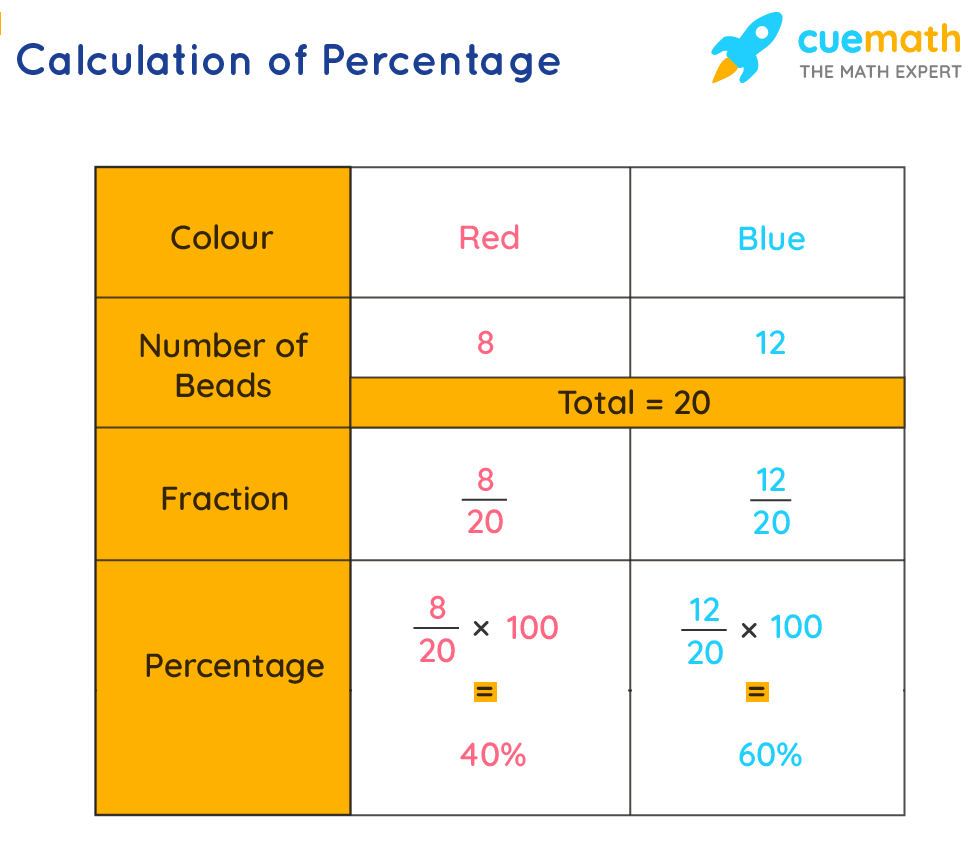
The Evolving Landscape of Digital Financial Tools
The simple percent calculator is already evolving into more specialized and integrated tools. We see this in mortgage calculators that factor in interest rates and down payments, retirement planners that project growth based on contribution percentages, and business dashboards that dynamically update key performance indicators. The trend is towards calculators that are not just standalone utilities but intelligent components of larger financial management ecosystems, potentially powered by AI to offer personalized insights or proactive recommendations. This future promises not just greater efficiency in calculation, but a more intuitive, accessible, and comprehensive approach to managing our financial lives, making the complex world of money understandable and controllable for everyone.
In conclusion, the humble percent calculator is anything but basic. It is a vital instrument that translates the abstract language of numbers into actionable financial intelligence. By mastering its use, individuals and businesses can gain an unparalleled advantage in navigating the financial landscape, ensuring clarity, accuracy, and confidence in every monetary decision.
aViewFromTheCave is a participant in the Amazon Services LLC Associates Program, an affiliate advertising program designed to provide a means for sites to earn advertising fees by advertising and linking to Amazon.com. Amazon, the Amazon logo, AmazonSupply, and the AmazonSupply logo are trademarks of Amazon.com, Inc. or its affiliates. As an Amazon Associate we earn affiliate commissions from qualifying purchases.