
The title itself, “What the Lowest IQ?”, is a provocative one, hinting at curiosity, perhaps even a touch of morbid fascination, about the extreme ends of cognitive ability. It’s a question that sparks debate, fuels misconceptions, and often overshadows the nuanced reality of human intelligence. While the internet is rife with sensationalized discussions and simplistic rankings, understanding the concept of “lowest IQ” requires a deeper dive, one that aligns with the critical thinking fostered by a website dedicated to technology, brand, and money.
Our exploration won’t be about sensationalizing deficits. Instead, we’ll use this question as a jumping-off point to understand the spectrum of cognitive abilities, the complexities of IQ measurement, and importantly, how these concepts intersect with the domains of technology, branding, and financial literacy. We’ll consider how understanding cognitive diversity can impact our approach to these fields, from designing accessible tech to building inclusive brands and fostering financial empowerment.
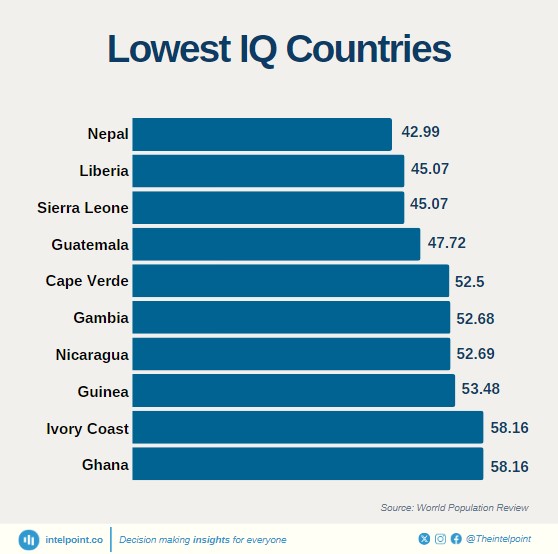
Understanding the IQ Scale: Beyond a Single Number
Before we can even approach the concept of the “lowest IQ,” it’s crucial to understand what IQ (Intelligence Quotient) actually is and how it’s measured. IQ tests are standardized assessments designed to measure a person’s cognitive abilities in relation to a representative sample of the population. They typically assess skills like logical reasoning, problem-solving, spatial visualization, verbal comprehension, and memory.
The Bell Curve: A Statistical Foundation
The bedrock of IQ scoring is the normal distribution, often visualized as a bell curve. The average IQ is conventionally set at 100. The scores are then distributed around this average, with a standard deviation typically of 15. This means:
- ~68% of the population scores between 85 and 115.
- ~95% of the population scores between 70 and 130.
- ~99.7% of the population scores between 55 and 145.
Defining “Low” on the IQ Spectrum
Within this statistical framework, “low IQ” is not a definitive diagnosis but rather a descriptive term for individuals scoring significantly below the average. While there isn’t a universally agreed-upon single threshold for what constitutes “low IQ,” scores falling two standard deviations below the mean (70 and below) are often considered in the range of intellectual disability.
It’s vital to emphasize that an IQ score is a snapshot of cognitive ability at a specific point in time, under specific test conditions. It does not encompass the entirety of a person’s potential, their emotional intelligence, creativity, practical skills, or their capacity for learning and growth. Furthermore, IQ tests are culturally influenced, and biases can exist, potentially affecting scores for individuals from diverse backgrounds.
Debunking Myths and Misconceptions
The concept of “lowest IQ” is fertile ground for myths. One common misconception is that individuals with lower IQs are inherently incapable of contributing to society or leading fulfilling lives. This is far from the truth. Many individuals with lower IQs possess valuable skills, demonstrate remarkable resilience, and find success and happiness through different pathways.
Another myth is that IQ is fixed and unchangeable. While genetics plays a role, environmental factors, education, and targeted interventions can significantly influence cognitive development and performance. The “lowest IQ” is not a life sentence; it’s a point on a complex spectrum that can be influenced by various factors.
The Impact of Cognitive Diversity in the Digital Age
Understanding the spectrum of cognitive abilities, including those at the lower end of the IQ scale, is increasingly important in our technologically driven world. The way we design, develop, and market technology, build brands, and manage personal finance all have implications for individuals with varying cognitive capacities.
Navigating Technology with Diverse Cognitive Strengths
The tech landscape is rapidly evolving, and the goal of many advancements is to enhance productivity, accessibility, and user experience. However, for individuals who may struggle with complex interfaces, abstract concepts, or rapid information processing – often associated with lower IQ scores – these advancements can sometimes present barriers.
Designing for Inclusivity and Accessibility
This is where the principles of universal design become paramount. When we consider “what the lowest IQ” might perceive or interact with technology, we’re prompted to think about:
- Simplicity and Clarity: Interfaces should be intuitive, with clear labeling, minimal jargon, and straightforward navigation. This benefits everyone, but is particularly crucial for those who find complex systems overwhelming.
- Reduced Cognitive Load: Minimizing the amount of information presented at once, using visual cues, and providing step-by-step guidance can make technology more approachable.
- Error Prevention and Recovery: Designing systems that make it difficult to make mistakes and easy to correct them when they do occur is essential. This can involve confirmation prompts for critical actions or clear undo functions.
- Personalization and Customization: Allowing users to adjust font sizes, color contrasts, or even the level of detail displayed can cater to diverse needs.
AI Tools and Cognitive Support
Artificial intelligence, with its potential for automation and personalized assistance, holds immense promise for supporting individuals with diverse cognitive abilities. AI-powered tools can:
- Provide Conversational Interfaces: Natural language processing can enable users to interact with technology using spoken or written language, bypassing complex menus.
- Offer Predictive Assistance: AI can anticipate user needs, offering suggestions or completing tasks proactively, reducing the burden of decision-making.
- Simplify Complex Information: AI tools can summarize lengthy documents, translate jargon into simpler terms, or even generate visual aids to explain concepts.
- Aid in Skill Development: AI-powered educational platforms can offer personalized learning paths and adaptive feedback, helping individuals develop new skills at their own pace.
However, the development of these AI tools must be guided by an understanding of cognitive diversity. Simply creating more complex AI won’t necessarily bridge the gap. We need AI that is designed to be supportive, not overwhelming.
Brand Building in a Diverse World
The concept of “what the lowest IQ” also has significant implications for branding and marketing. A brand’s success hinges on its ability to connect with its target audience. Ignoring segments of the population, including those with lower cognitive abilities, means missing out on opportunities and potentially alienating potential customers.
Marketing Strategies for Broader Appeal
Brands that aim for broad appeal need to consider how their messaging and products are perceived by individuals with varying levels of cognitive processing. This means:
- Clear and Concise Communication: Marketing materials should avoid overly complex language, abstract metaphors, or ambiguous claims. Direct, honest, and easy-to-understand messaging is key.
- Visual Storytelling: Compelling visuals can transcend language barriers and cognitive processing styles. Brands can leverage imagery and video to convey their message effectively.
- Focus on Benefits, Not Just Features: Instead of listing technical specifications, brands should clearly articulate the tangible benefits their products or services offer. How will it make the customer’s life easier, more enjoyable, or more secure?
- Accessible Brand Experiences: This extends to customer service, website design, and even product packaging. A brand’s entire ecosystem should be navigable and understandable by a wide range of individuals.
Reputation and Social Responsibility
A brand’s reputation is built on trust and perceived value. By actively considering and catering to individuals with diverse cognitive abilities, brands can foster a reputation for inclusivity and social responsibility. This can lead to increased customer loyalty and a stronger brand image in the long run. Ignoring these considerations, conversely, can lead to accusations of being exclusionary or out of touch.
Financial Empowerment and Cognitive Abilities
The intersection of cognitive ability and financial literacy is a critical, yet often overlooked, area. Personal finance and investing can be complex, involving abstract concepts, risk assessment, and long-term planning. For individuals who struggle with these aspects, financial well-being can be significantly challenged.
Bridging the Gap: Financial Tools and Education
Understanding “what the lowest IQ” in the context of finance prompts us to think about how we can make financial concepts more accessible and how we can empower individuals to manage their money effectively.
Simplifying Personal Finance Concepts
Many financial tools and resources are designed for individuals with a high degree of financial literacy. To reach a broader audience, including those who may find these topics challenging, we need:
- Intuitive Budgeting Apps: Tools that use visual cues, simple data entry, and clear summaries to help users track their spending.
- Educational Content in Accessible Formats: Explanations of investing, saving, and debt management should be available in plain language, with ample use of examples and visual aids. This could include short videos, infographics, or interactive modules.
- Gamified Financial Learning: Turning financial education into engaging games can make the learning process more enjoyable and less intimidating.
- Automated Financial Management Tools: Services that can automate savings, bill payments, or investment contributions can reduce the cognitive burden of financial management.
The Role of Digital Security
In the digital age, financial security is paramount. However, navigating online security measures and recognizing fraudulent schemes can be particularly difficult for individuals who are less digitally savvy or who may be more susceptible to persuasive tactics. Therefore, financial technology and security solutions must prioritize:
- Clear and Simple Security Instructions: Explaining multi-factor authentication, strong password practices, and recognizing phishing attempts in straightforward terms.
- User-Friendly Security Features: Designing interfaces for online banking and financial platforms that are easy to understand and use, with clear indicators of security.
- Proactive Fraud Detection and Alerts: Leveraging technology to identify suspicious activity and alert users in a timely and understandable manner.
Beyond IQ: The Importance of Financial Literacy for All
Ultimately, fostering financial literacy is about empowering individuals, regardless of their IQ. While cognitive abilities play a role in how easily someone grasps financial concepts, dedicated education, accessible tools, and supportive environments can make a significant difference. The question of “what the lowest IQ” should inspire us to build a more inclusive financial ecosystem, one that doesn’t leave anyone behind.
Conclusion: Embracing Cognitive Diversity for a Brighter Future
The initial, perhaps provocative, question – “what the lowest IQ?” – serves as a valuable catalyst for a broader discussion about cognitive diversity. It compels us to look beyond simplistic labels and understand the vast spectrum of human intellect.
In the realms of technology, brand, and money, this understanding is not just an ethical consideration; it’s a strategic imperative. By designing accessible technology, crafting inclusive brands, and promoting accessible financial tools and education, we can unlock the potential of a wider population.
Our journey through the implications of cognitive diversity highlights that true innovation and success come from embracing inclusivity. It means building a world where everyone, regardless of their cognitive profile, has the opportunity to engage with technology, connect with brands, and achieve financial security. The “lowest IQ” isn’t a mark of limitation, but rather an indicator of the diverse tapestry of human minds that we must strive to understand, support, and empower.
aViewFromTheCave is a participant in the Amazon Services LLC Associates Program, an affiliate advertising program designed to provide a means for sites to earn advertising fees by advertising and linking to Amazon.com. Amazon, the Amazon logo, AmazonSupply, and the AmazonSupply logo are trademarks of Amazon.com, Inc. or its affiliates. As an Amazon Associate we earn affiliate commissions from qualifying purchases.