
To the uninitiated, the aggressive, syncopated, and often jarring sounds of dubstep can feel like a sonic assault. When the genre exploded into the mainstream in the early 2010s, the common refrain from bewildered listeners was, “What the fuck is dubstep?” However, beneath the chaotic “wobbles” and the earth-shaking “drops” lies one of the most technologically sophisticated movements in the history of music production. Dubstep is not merely a genre; it is a showcase of digital signal processing (DSP), advanced synthesis, and the limits of modern audio software.
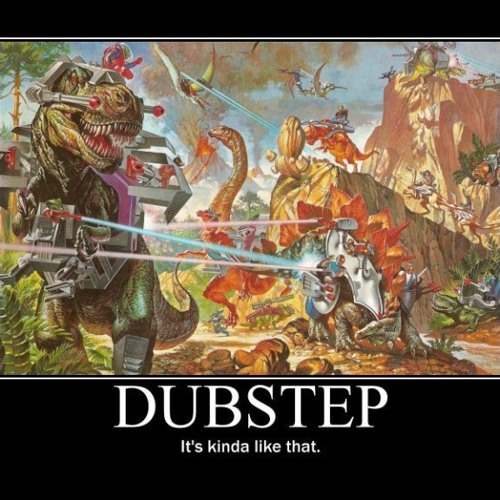
To understand dubstep, one must look past the subculture and examine the technological stack that makes it possible. It is a genre defined by the manipulation of frequencies, the precision of Digital Audio Workstations (DAWs), and the relentless pursuit of new sonic textures through software engineering.
The Digital Architecture of the “Wobble”: Synthesis and Modulation
At its core, the signature “dubstep sound” is a product of complex modulation. While traditional instruments rely on physical resonance, dubstep relies on the manipulation of waveforms through software. The “wobble bass”—the genre’s most recognizable element—is a feat of engineering that requires a deep understanding of oscillation and frequency.
FM Synthesis and the Rise of NI Massive
The transition of dubstep from a niche UK underground sound to a global phenomenon was largely fueled by a specific piece of software: Native Instruments’ Massive. This Virtual Instrument Software (VST) utilized Wavetable Synthesis, allowing producers to cycle through various digital waveforms. By using Frequency Modulation (FM) synthesis, producers could create “growls” and “screeches” that had never been heard before. Massive’s internal routing allowed for complex signal paths where one oscillator could modulate another, creating the metallic, aggressive timbres that defined the “Brostep” era.
Low-Frequency Oscillators (LFOs) and Automated Parameters
The “wobble” itself is a technical application of a Low-Frequency Oscillator (LFO). In a DAW environment, an LFO is assigned to a filter’s cutoff frequency or the volume of an oscillator. By synchronizing the rate of this LFO to the track’s tempo (usually 140 BPM), producers create a rhythmic pulsing. The technological breakthrough in dubstep was the move from static LFOs to highly automated ones. Producers began “drawing” complex automation curves in their software, allowing the wobble to change speed, shape, and intensity instantaneously. This level of micro-editing was only made possible by the increased CPU power of modern computers, which could handle hundreds of automated parameters simultaneously.
The Evolution of the Digital Audio Workstation (DAW)
Dubstep served as a stress test for the Digital Audio Workstations of the 21st century. As the genre evolved, the requirements for software became more demanding. Producers were no longer just recording audio; they were building complex architectural structures of sound.
From Sub-Bass Minimalism to Complex Soundscapes
Early dubstep, rooted in London’s dub and garage scenes, was technologically minimalist. It focused on the “sub-bass”—frequencies typically between 40Hz and 80Hz. Engineering these frequencies requires precision; if the sub-bass is not mixed correctly, it can destroy speakers or sound like indistinct mud. This led to the development of high-end monitoring technology and advanced compression algorithms. As the genre progressed, the “mid-range” became the focus. This required DAWs like Ableton Live, FL Studio, and Logic Pro to evolve, offering better “freeze” and “flatten” functions so that producers could commit CPU-heavy synth patches to audio files to save processing power.

Essential VSTs and Signal Processing Chains
Beyond synthesis, the “tech” of dubstep lies in the processing chain. A single bass sound in a modern dubstep track might pass through twenty different software plugins. These include:
- Multiband Compression: Using tools like Xfer Records’ OTT to squash the dynamic range across different frequency bands, creating a “larger than life” sound.
- Distortion and Saturation: Applying digital “clipping” to add harmonics, making a sound feel “warm” or “gritty.”
- Spatial Imaging: Utilizing plugins to ensure the sub-bass remains in mono (centered) while the mid-range growls are spread wide across the stereo field, creating an immersive 3D audio experience.
Hardware vs. Software: The Tools That Built the Sound
While dubstep is primarily a “box-native” genre (created entirely within a computer), the hardware used to produce and perform it has seen significant technological shifts. The interplay between physical controllers and digital code is what allowed dubstep to move from the bedroom studio to the festival stage.
Analog Roots and Digital Transcendence
Early pioneers utilized hardware samplers and analog mixing desks to achieve a “weighty” sound. However, as the genre demanded more “impossible” sounds—sounds that do not exist in the natural world—the shift to digital was inevitable. Modern dubstep tech is defined by high-resolution audio interfaces and Digital-to-Analog Converters (DACs). Because the music relies so heavily on the low-end spectrum, producers require hardware that can accurately reproduce sub-frequencies without distortion. This demand pushed the audio industry to develop better subwoofers and studio monitors designed for electronic music production.
The Role of Modern MIDI Controllers and Live Performance Tech
Performing dubstep live presented a unique technical challenge. How does one “play” a genre that is so heavily reliant on post-production and automation? The answer came through advanced MIDI (Musical Instrument Digital Interface) controllers. Devices like the Ableton Push or the NI Maschine allow performers to trigger loops, manipulate filters in real-time, and “re-mix” their tracks on the fly. Some artists have even integrated motion-capture technology or “wearable tech” (like MIDI-enabled gloves) to control the “wobble” through physical gestures, bridging the gap between human movement and digital synthesis.
Artificial Intelligence and the Future of Bass Music Production
As we look toward the future, the question “What is dubstep?” is being answered by the next frontier of technology: Artificial Intelligence. We are entering an era where machine learning is becoming a fundamental tool in the bass music producer’s toolkit.
AI-Driven Mixing and Mastering Tools
One of the most difficult aspects of dubstep production is the “mixdown”—ensuring that every frequency has its own space. New AI-powered tools like iZotope’s Neutron and Ozone use machine learning algorithms to analyze a track and suggest EQ cuts or compression settings. For dubstep, where frequency masking is a constant battle, these tools use “unmasking” technology to automatically find where the kick drum and the sub-bass are clashing, providing a level of clarity that previously took years of manual training to achieve.

Generative Audio and the Next Frontier of Sound Synthesis
The most exciting (and controversial) technological shift is generative AI. New neural networks are being trained on vast libraries of “growls” and “drums.” Producers can now use AI to generate entirely new wavetables or to “morph” between two different sounds in ways that traditional synthesis cannot. We are seeing the rise of “intelligent” plugins that can generate complex rhythmic patterns based on a simple input.
This technological evolution ensures that the genre will continue to push the boundaries of what is possible. Dubstep has always been a “tech-first” genre; it is a celebration of the digital age. When people ask, “What the fuck is dubstep?” the answer is simple: it is the sound of high-performance computing, sophisticated software engineering, and the endless possibilities of digital signal manipulation. It is the sound of the machine, mastered by the human.
aViewFromTheCave is a participant in the Amazon Services LLC Associates Program, an affiliate advertising program designed to provide a means for sites to earn advertising fees by advertising and linking to Amazon.com. Amazon, the Amazon logo, AmazonSupply, and the AmazonSupply logo are trademarks of Amazon.com, Inc. or its affiliates. As an Amazon Associate we earn affiliate commissions from qualifying purchases.