
In the vast and often complex world of financial markets, few indicators capture public attention and influence investor sentiment quite like the Dow Jones Industrial Average (DJIA), affectionately known simply as “the Dow.” More than just a collection of numbers flashing across financial news channels, the Dow represents a significant barometer of American economic health and corporate performance. For over a century, its daily fluctuations have been scrutinized by professionals and lay investors alike, serving as a pulse check for the nation’s industrial might and overall market direction. Understanding what the Dow does, how it’s constructed, and its place in the broader financial ecosystem is fundamental for anyone looking to comprehend market dynamics and make informed investment decisions. This deep dive will explore the Dow’s historical significance, its mechanics, its strengths and weaknesses, and what its movements truly signify for your financial outlook.
The Foundation of the Dow: More Than Just a Number
To truly appreciate the Dow, one must delve into its origins and the unique methodology that underpins its calculation. It’s not merely an average of stock prices but a specially constructed index designed to offer a snapshot of the U.S. economy through the lens of its leading companies.
A Legacy Forged in Industry
The Dow Jones Industrial Average was created in 1896 by Charles Dow, a founder of The Wall Street Journal and Dow Jones & Company. Initially comprising 12 predominantly industrial companies, its purpose was to provide a simple, easily digestible measure of the stock market’s performance. In an era before advanced computing and complex financial models, the Dow offered a crucial glimpse into the health of America’s burgeoning industrial sector. Over time, while the number of components expanded to 30 and the nature of “industry” broadened to include technology, finance, and consumer goods, the index retained its core identity as a reflection of established, large-cap American corporations. This rich history imbues the Dow with a symbolic weight that few other indices can match, representing continuity and resilience through countless economic cycles.
The Mechanics Behind the Movement: How It’s Calculated
Unlike market-capitalization-weighted indices such as the S&P 500, the Dow is a price-weighted index. This means that stocks with higher share prices have a greater impact on the index’s value than stocks with lower share prices, regardless of their total market capitalization. The calculation involves summing the prices of the 30 component stocks and then dividing by a specially adjusted divisor, known as the Dow Divisor. This divisor is regularly adjusted for stock splits, spin-offs, and other structural changes to ensure the continuity of the index’s value and prevent these events from distorting the average. Because of this price-weighting, a dollar change in a higher-priced stock affects the index more than the same dollar change in a lower-priced stock, making it crucial for investors to understand this unique characteristic when interpreting the Dow’s daily movements.
Who Are the Dow’s Elite 30?
The selection of the 30 companies that constitute the Dow is not governed by rigid quantitative rules but rather by a committee from S&P Dow Jones Indices. The primary criteria include the company’s reputation, sustained growth, investor interest, and its representation of the broader U.S. economy. These are typically large, well-established “blue-chip” companies that are leaders in their respective industries. The components are changed infrequently, only when a company’s business has materially changed, or when a merger or acquisition makes it less representative of the broader market. This selective inclusion of industry titans ensures that the Dow maintains its prestige and relevance as a benchmark for corporate America, although it also contributes to some of its inherent limitations.
The Dow as a Market Barometer: Its Reach and Its Realities
While the Dow holds a prominent place in financial discourse, its utility as a comprehensive market barometer must be understood within its specific context. It offers valuable insights but also has inherent limitations that savvy investors must consider.
Gauging Investor Sentiment and Economic Health
The Dow’s daily performance is often cited as the primary indicator of how “the market” is doing. A significant rise is generally interpreted as a sign of economic optimism and strong corporate earnings, while a sharp decline can signal worries about an impending recession or specific industry headwinds. For many, it represents the collective mood of investors and the perceived health of the American industrial and corporate landscape. Beyond raw numbers, the types of companies performing well within the Dow can also offer clues: if industrials are soaring, it might suggest robust manufacturing; if tech giants are leading, it points to innovation-driven growth. This makes the Dow an accessible, albeit simplified, narrative of the economy’s direction.
Comparing the Dow: A Glimpse, Not the Whole Picture
While influential, the Dow is not the sole, nor always the best, measure of the entire U.S. stock market. Other indices, such as the S&P 500 and the Nasdaq Composite, provide broader and often more representative perspectives. The S&P 500, with its 500 large-cap companies weighted by market capitalization, offers a more comprehensive view of the large-cap segment of the U.S. equity market. The Nasdaq Composite, heavily skewed towards technology and growth companies, captures a different dimension of the economy. Comparing the Dow’s performance against these broader indices can reveal important divergences. For instance, if the Dow is flat but the Nasdaq is surging, it might indicate a sector-specific boom rather than broad economic strength, highlighting the Dow’s focused lens.
Understanding the Dow’s Limitations
The Dow’s price-weighted methodology and limited number of components are its most significant criticisms. Because higher-priced stocks influence the index more, a 1% move in a stock trading at $300 will have a greater impact than a 1% move in a stock trading at $100, even if the latter company has a much larger market capitalization. This can lead to a skewed representation of true market movements. Furthermore, 30 companies, even if they are giants, cannot truly encapsulate the diversity and complexity of the entire U.S. economy, which comprises thousands of publicly traded companies across all market capitalizations and sectors. It notably under-represents smaller companies and newer, high-growth sectors until they achieve significant maturity. Therefore, while excellent for historical context and as a widely recognized benchmark, the Dow should be viewed as one piece of a larger financial puzzle, rather than the definitive measure of market health.
Investing Insights from the Dow: Strategies and Considerations

For investors, understanding the Dow is not just about historical context; it’s about informing present and future investment decisions. While direct investment in the Dow is not possible, its components and the broader index offer valuable strategic insights.
Beyond Individual Stocks: Accessing the Dow through ETFs and Funds
While you can’t directly “buy the Dow,” investors can gain exposure to its performance through various financial instruments. Exchange-Traded Funds (ETFs) and mutual funds specifically designed to track the Dow’s performance are popular options. These funds typically hold shares in the 30 component companies in proportions that mirror their influence on the index. This provides a diversified way to invest in large-cap U.S. blue-chip companies without having to research and purchase each stock individually. For those seeking a simpler, more hands-off approach to investing in established American businesses, Dow-tracking funds offer a compelling avenue.
Navigating Volatility: The Dow’s Cyclical Nature
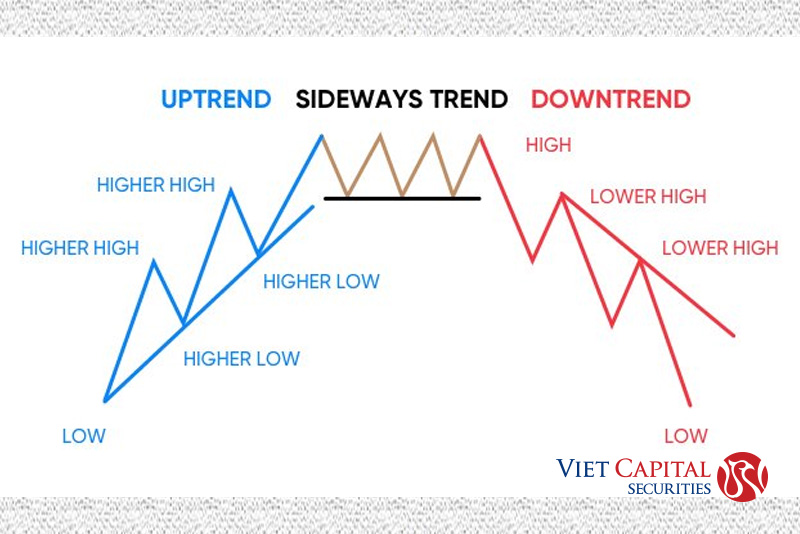
Like all stock market indices, the Dow is subject to periods of volatility, experiencing both exhilarating rallies and disheartening downturns. A historical analysis of the Dow reveals its cyclical nature, often reflecting broader economic booms and busts. Investors should understand that short-term fluctuations are normal and often driven by news, sentiment, or geopolitical events rather than fundamental changes in company value. Long-term investors typically view these downturns as potential buying opportunities, adhering to the principle of “buy low, sell high.” Conversely, rapid upward movements should be greeted with a balanced perspective, recognizing that markets can overshoot. The Dow, therefore, serves as a powerful reminder of the importance of a long-term investment horizon and emotional discipline.
Diversification: The Prudent Investor’s Approach
While investing in the Dow’s components or an index fund provides some level of diversification across 30 large companies, a truly diversified portfolio extends far beyond this. Prudent investors often diversify across different asset classes (stocks, bonds, real estate), geographies (U.S. and international markets), and market capitalizations (large, mid, and small-cap companies). Relying solely on the Dow, given its inherent limitations, could leave a portfolio overly concentrated in a specific segment of the market. The Dow can be a foundational piece, especially for exposure to established leaders, but it should typically be part of a broader, well-thought-out asset allocation strategy designed to mitigate risk and capture growth opportunities from various sources.
Major Milestones and Economic Echoes: A Historical Perspective
The Dow’s long history is inextricably linked with the economic triumphs and tribulations of the United States. Its movements have often served as a real-time ledger of the nation’s financial narrative, marking pivotal moments in history.
The Roaring Twenties to the Great Depression
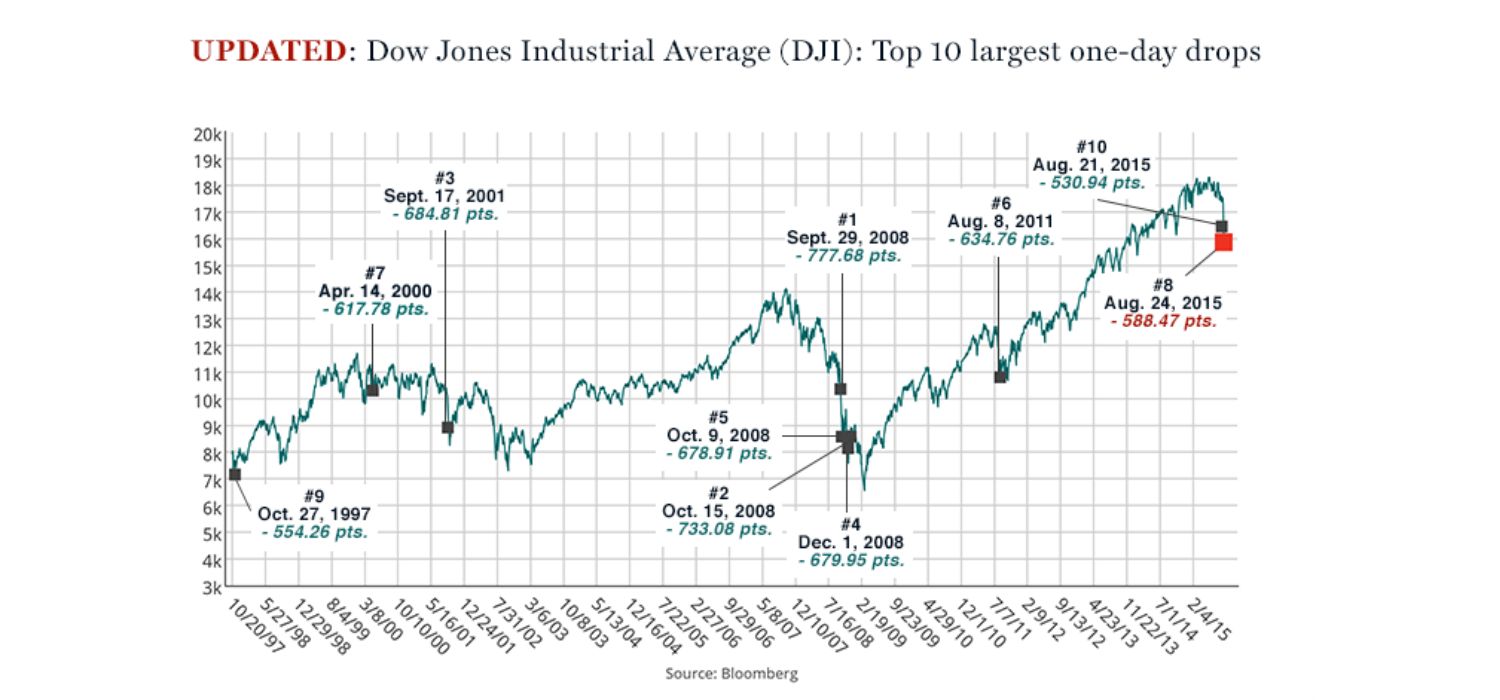
The Dow soared during the prosperous Roaring Twenties, emblematic of a booming economy and widespread speculation. However, this euphoric period culminated in the devastating stock market crash of October 1929, famously known as Black Tuesday. The Dow plummeted, marking the onset of the Great Depression and illustrating the profound link between stock market performance and broader economic health. This period underscored the fragility of financial systems and the potential for speculative bubbles, forever etching the Dow’s dramatic fall into financial lore.
Black Monday and the Dot-Com Bubble
Fast forward to more modern times, the Dow experienced another monumental single-day drop on Black Monday, October 19, 1987, losing nearly 22% of its value. While terrifying, the market recovered relatively quickly, demonstrating increased resilience and the effectiveness of new circuit breakers designed to prevent panic selling. Later, the late 1990s saw the Dow, alongside the broader market, surge during the dot-com bubble, fueled by optimism around internet companies. Its subsequent correction in the early 2000s, though less severe for the blue-chip heavy Dow than for the tech-laden Nasdaq, reminded investors that even established companies are not immune to speculative excess and market corrections.
The 2008 Financial Crisis and Beyond
The 2008 global financial crisis presented another monumental challenge for the Dow, which saw significant declines as housing bubbles burst and major financial institutions faced collapse. This period tested the very fabric of the financial system, with the Dow reflecting deep investor pessimism and economic uncertainty. However, it also demonstrated the index’s eventual recovery, driven by unprecedented monetary and fiscal interventions. More recently, the sharp, but rapid, downturn and recovery in early 2020 due to the COVID-19 pandemic further highlighted the Dow’s role as a barometer of global events and the market’s capacity for both dramatic falls and robust rebounds, especially when supported by policy action.
The Dow’s Enduring Relevance in a Dynamic Global Economy
Despite its age and specific construction, the Dow Jones Industrial Average continues to hold a significant place in the modern financial landscape. Its relevance, however, is constantly adapting to an ever-evolving global economy.
Adapting to Evolving Economic Landscapes
The composition of the Dow has changed dramatically since its inception, reflecting the transformation of the U.S. economy. Originally dominated by heavy industry, it now includes leading companies from technology, healthcare, finance, and consumer goods. This evolution ensures that the Dow remains somewhat reflective of current economic drivers, even if its scope is limited. The committee responsible for its selection continuously evaluates its components to ensure it retains its status as a representative measure of America’s leading corporations, adapting to new sectors and industries as they rise to prominence.
The Influence of Global Markets and Innovation
In today’s interconnected world, the Dow’s movements are increasingly influenced not just by domestic factors but by global economic trends, geopolitical events, and technological innovations. The performance of the 30 multinational corporations within the index is often tied to international trade, global supply chains, and consumer demand worldwide. The rise of disruptive technologies and the speed of information dissemination also mean that market reactions can be instantaneous and far-reaching. The Dow, therefore, serves as a focal point where global forces converge, impacting the valuations of America’s most recognizable brands.
What the Dow Signifies for Tomorrow’s Investors
For new and seasoned investors alike, the Dow offers a blend of historical perspective and contemporary insight. It remains a powerful symbol of American corporate strength and a widely understood benchmark. While it shouldn’t be the sole data point guiding investment decisions, its movements provide valuable context for understanding investor sentiment, economic shifts, and the performance of a crucial segment of the U.S. stock market. For those seeking to build wealth, monitoring the Dow, alongside other comprehensive indices and economic indicators, contributes to a holistic understanding of the investment landscape, empowering them to navigate markets with greater confidence and insight. What the Dow does, ultimately, is offer a compelling, if sometimes simplified, narrative of progress, challenge, and opportunity in the world of finance.
aViewFromTheCave is a participant in the Amazon Services LLC Associates Program, an affiliate advertising program designed to provide a means for sites to earn advertising fees by advertising and linking to Amazon.com. Amazon, the Amazon logo, AmazonSupply, and the AmazonSupply logo are trademarks of Amazon.com, Inc. or its affiliates. As an Amazon Associate we earn affiliate commissions from qualifying purchases.