
The cannabis industry is a dynamic and rapidly expanding sector, constantly presenting new opportunities and complex challenges for entrepreneurs, investors, and financial strategists. At the heart of much contemporary discussion are Delta-8 tetrahydrocannabinol (THC) and Delta-9 THC, two distinct cannabinoids with significant implications for market entry, product development, regulatory compliance, and overall financial viability. Understanding the fundamental differences between these two compounds is not merely an academic exercise; it is crucial for navigating the commercial landscape, assessing risk, and pinpointing lucrative niches within this evolving economy. For those looking to capitalize on the burgeoning cannabinoid market, a clear financial and business lens is indispensable when comparing Delta-8 and Delta-9.

The Evolving Landscape of Cannabinoid Commerce
The passage of the 2018 Farm Bill marked a pivotal moment, federally legalizing hemp and its derivatives, including cannabinoids, provided they contain less than 0.3% Delta-9 THC on a dry weight basis. This legislation inadvertently created a pathway for the emergence of “minor” cannabinoids like Delta-8 THC, which exist in trace amounts in the cannabis plant but can be synthesized from more abundant cannabinoids like CBD derived from legal hemp. This legislative nuance has given rise to a parallel, often less regulated, market for Delta-8 products, creating a fascinating economic dichotomy with the established, albeit state-regulated, Delta-9 THC market.
For businesses and investors, this dual market presents both unprecedented opportunities and considerable risks. The ability to identify where capital can be most effectively deployed, where regulatory hurdles are manageable, and where consumer demand is sustainable requires a deep dive into the specific characteristics and financial ecosystem surrounding each cannabinoid. The distinctions between Delta-8 and Delta-9 are not just chemical; they are financial, legal, and strategic.
Delta-9 THC: The Established Market and Its Financial Footprint
Delta-9 THC is the primary psychoactive component of cannabis and the compound historically associated with marijuana. Its market presence is defined by significant regulatory frameworks, established consumer bases, and substantial capital requirements.
Legality and Market Access
The legal status of Delta-9 THC is highly complex, operating under a patchwork of state-level medical and adult-use legalization programs, while still remaining federally illegal as a Schedule I controlled substance. This dichotomy dictates market access and business models. Companies operating in the Delta-9 space must navigate intricate state licensing processes, which are often costly, competitive, and geographically restricted.
For investors, this means opportunities are largely confined to states with explicit legalization, often requiring significant due diligence into state-specific regulations, tax structures, and market saturation levels. The federal illegality also presents challenges in interstate commerce, banking, and federal taxation (e.g., IRS Section 280E, which disallows normal business deductions for cannabis companies).
Market Size, Consumer Base, and Pricing
The Delta-9 THC market, while constrained by federal illegality, is robust in legal states. It boasts an established consumer base willing to pay premium prices for tested, regulated products. Dispensaries, licensed cultivators, and manufacturers operate within a vertically integrated or highly regulated supply chain. This structure often leads to higher profit margins for established players, especially in mature markets where brands have cultivated consumer loyalty.
Investment in Delta-9 often targets large-scale cultivation facilities, processing plants, or multi-state operators (MSOs). The higher barriers to entry, including substantial upfront capital for licenses and infrastructure, tend to favor larger corporations or well-funded ventures. Pricing strategies for Delta-9 products often reflect these overheads, alongside brand equity and product quality.
Investment Profile and Risk
Investing in the Delta-9 space can offer significant returns due to high demand and regulated pricing power in legal markets. However, it comes with inherent risks:
- Regulatory Uncertainty: The ongoing tension between state and federal law creates instability and potential for sudden shifts.
- High Capital Requirements: Licensing, real estate, and operational costs are substantial.
- Banking Challenges: Federal illegality complicates access to traditional banking services, forcing reliance on cash or alternative financial solutions, increasing security and operational costs.
- Taxation: IRS Section 280E dramatically impacts profitability by disallowing standard business deductions.
Despite these challenges, the long-term prospects tied to potential federal descheduling or legalization continue to attract substantial capital, positioning Delta-9 as a high-risk, high-reward investment.
Delta-8 THC: The Emerging Market and Its Unique Financial Calculus
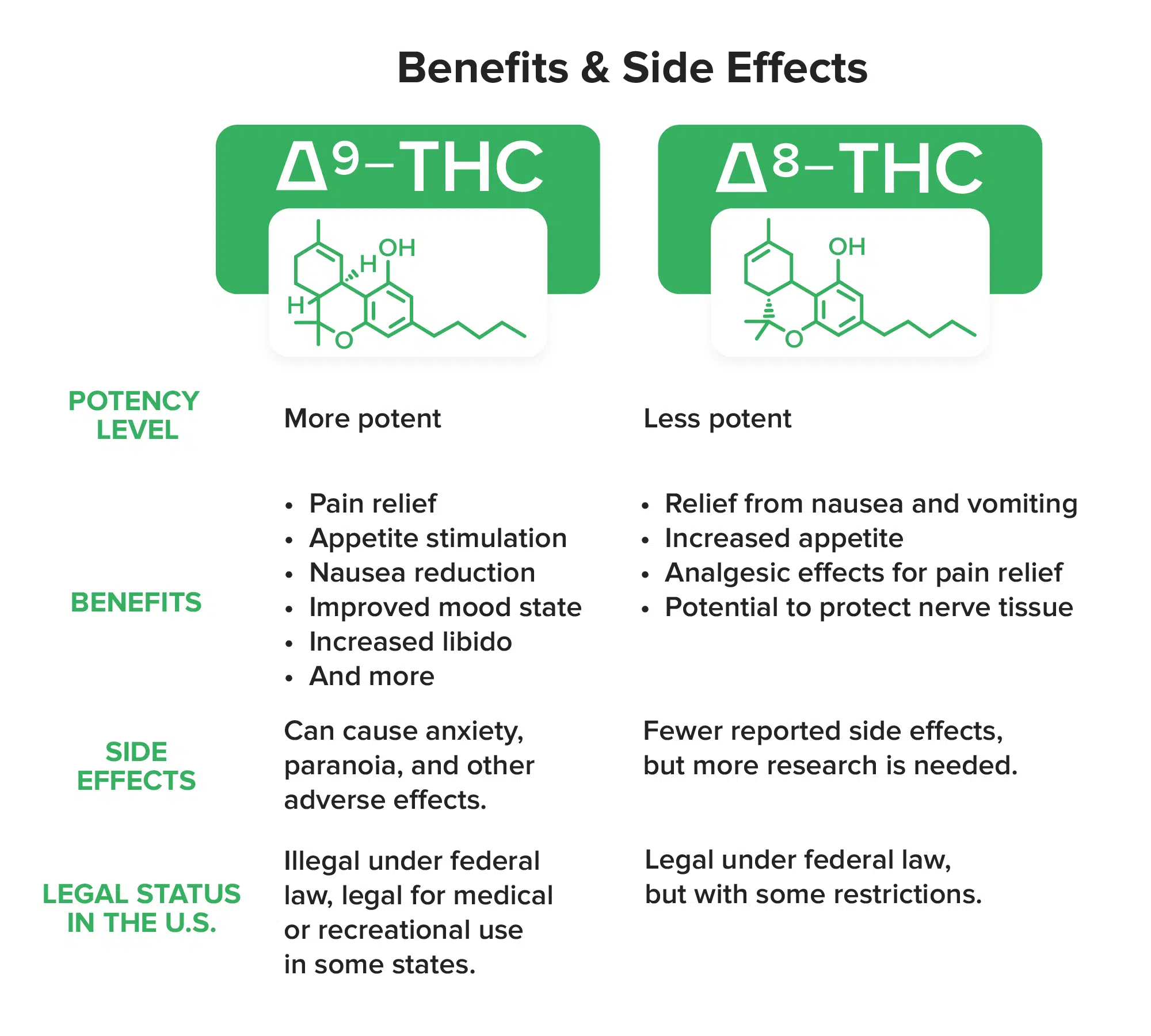
Delta-8 THC exists in trace amounts in cannabis but can be synthesized from CBD, making it accessible through hemp-derived pathways. Its legal ambiguity, stemming from the 2018 Farm Bill, has opened a different, often less regulated, commercial frontier.
Legality and Market Accessibility
The crucial difference lies in its origin. As Delta-8 THC can be derived from federally legal hemp and naturally contains less than 0.3% Delta-9 THC, many argue it falls within the legal framework established by the 2018 Farm Bill. This interpretation, however, is not universal, and numerous states have enacted bans or severe restrictions on Delta-8 products. This creates a fragmented market where legality can change rapidly, posing a unique challenge for national brands and supply chains.
From a financial perspective, this legal ambiguity translates into lower barriers to entry in many jurisdictions. Businesses can operate online, through convenience stores, or via specialized hemp shops, sidestepping the onerous licensing requirements of the Delta-9 market. This accessibility allows for rapid market penetration and a broader geographic reach for sales.
Market Entry, Product Diversification, and Pricing
The Delta-8 market is characterized by diverse product offerings and a lower price point compared to Delta-9. Products include edibles, vapes, tinctures, and topicals, often targeting consumers seeking a milder psychoactive experience or those in states without legal Delta-9 access. This broad appeal allows businesses to tap into a wider demographic.
The lower overheads associated with market entry—no expensive state licenses, often simpler operational structures—enable businesses to offer more competitive pricing. This can lead to high sales volumes, especially through e-commerce channels. However, lower price points can also mean tighter profit margins per unit, necessitating efficient operations and strong marketing strategies to drive volume.
Entrepreneurial Opportunities and Risks
Delta-8 presents a compelling opportunity for smaller entrepreneurs, online retailers, and white-label manufacturers.
- Lower Startup Costs: Reduced regulatory hurdles mean less capital is needed to launch.
- Broader Distribution: Online sales and general retail allow for wider market reach.
- Agile Business Models: Companies can adapt quickly to changing consumer trends and regional regulations.
However, these opportunities are accompanied by significant risks:
- Regulatory Volatility: State and federal agencies are actively reviewing Delta-8’s legality, with potential for sudden bans or reclassification, threatening business models overnight.
- Quality Control & Consumer Trust: The less regulated environment can lead to inconsistent product quality, mislabeling, or contamination. Building consumer trust through transparent third-party testing is paramount but requires investment.
- Banking & Payment Processing: Similar to Delta-9, but often exacerbated by the “gray market” perception, Delta-8 businesses face difficulties securing traditional banking and payment processing, impacting cash flow and scalability.
- Reputation Risk: Association with potentially unregulated or illicit products can damage brand equity.
The Delta-8 market demands a high tolerance for regulatory uncertainty but offers a potentially faster path to market and significant returns for those who can navigate its complexities.
Navigating the Regulatory Minefield: Risks and Opportunities
Both Delta-8 and Delta-9 markets are deeply influenced by a constantly shifting regulatory landscape. For any financial stakeholder, understanding and proactively managing these regulatory risks is paramount.
The Impact of Federal and State Regulations
For Delta-9, the push for federal legalization or descheduling remains a significant driver of investment interest. Such a change would dramatically reduce operational risks, open interstate commerce, and potentially resolve banking issues, leading to an explosion in market size and financial opportunities. Conversely, for Delta-8, the current “gray area” status is its primary commercial enabler. Any federal clarification that deems Delta-8 illegal (e.g., through an analog act interpretation or specific scheduling) would obliterate a substantial portion of the market, rendering investments worthless. Conversely, a clear federal endorsement could legitimize the market, attracting more institutional investment and driving consolidation.
Compliance Costs and Operational Complexity
Even in states where Delta-9 is legal, compliance costs are immense, covering everything from cultivation and manufacturing standards to testing, packaging, and labeling requirements. These costs directly impact profitability and require sophisticated operational management.
For Delta-8, while initial compliance costs might be lower, the dynamic regulatory environment demands constant legal counsel and market monitoring. Businesses must be prepared to pivot rapidly in response to new state bans or federal guidance, a strategic challenge that can incur significant legal and operational expenses.
Banking, Taxation, and Investment Challenges
Both Delta-8 and Delta-9 businesses struggle with traditional banking services due to federal concerns about cannabis-related funds. This forces reliance on alternative banking solutions, increasing transaction costs and limiting access to capital for expansion. Taxation, particularly for Delta-9 under IRS 280E, remains a significant drag on net income. For Delta-8, while 280E typically doesn’t apply (as it’s derived from legal hemp), uncertainty around its federal status could change this.
Investing in either sector requires a high tolerance for these financial infrastructure limitations. Companies that can develop robust internal financial controls and find compliant banking solutions gain a considerable competitive advantage.
Strategic Considerations for Investment and Business Development
For those looking to invest or build businesses around Delta-8 or Delta-9, strategic foresight is critical to financial success and sustainability.
Market Research and Due Diligence
Thorough market research is essential. This includes understanding state-specific regulations for both cannabinoids, consumer demand patterns, competitive landscapes, and supply chain integrity. For Delta-8, monitoring legislative activity at both state and federal levels is non-negotiable. For Delta-9, assessing the maturity of specific state markets and the potential for federal reform is key.
Risk Management and Diversification
Given the regulatory volatility, particularly for Delta-8, businesses might consider diversification. This could mean developing product lines that include other federally legal cannabinoids like CBD or CBN, which carry less regulatory risk. For Delta-9, diversification might involve investing across multiple legal states to mitigate the impact of localized market shifts. Legal counsel specializing in cannabis law is a non-negotiable expense for managing ongoing risk.
Brand Building, Quality Control, and Consumer Trust
In both markets, but especially the less regulated Delta-8 space, building a strong brand founded on trust, transparency, and consistent product quality is paramount. Investing in robust third-party lab testing and clearly communicating results to consumers helps differentiate legitimate businesses from fly-by-night operations, fostering long-term consumer loyalty and market share. This investment in quality directly translates to brand equity and pricing power.

Supply Chain Resilience and Ethical Sourcing
Ensuring a stable, compliant, and ethical supply chain is vital. For Delta-8, this means sourcing high-quality, pure CBD isolates for conversion. For Delta-9, it involves securing reliable cultivation partners and processing facilities that adhere to stringent state regulations. A resilient supply chain minimizes operational disruptions and ensures consistent product availability, crucial for maintaining revenue streams.
Ultimately, the choice between entering or investing in the Delta-8 or Delta-9 market boils down to a carefully calculated risk-reward assessment. Delta-9 offers higher barriers to entry but established markets and potential for significant long-term growth with federal reform. Delta-8 presents lower entry costs and wider immediate access but operates under a cloud of regulatory uncertainty that could dramatically impact its future viability. Strategic investors and entrepreneurs will approach both with a keen understanding of their unique financial architectures, regulatory challenges, and consumer dynamics.
aViewFromTheCave is a participant in the Amazon Services LLC Associates Program, an affiliate advertising program designed to provide a means for sites to earn advertising fees by advertising and linking to Amazon.com. Amazon, the Amazon logo, AmazonSupply, and the AmazonSupply logo are trademarks of Amazon.com, Inc. or its affiliates. As an Amazon Associate we earn affiliate commissions from qualifying purchases.