
In the globalized landscape of the 21st century, time is often viewed as a universal constant, governed by the Gregorian calendar and synchronized via Atomic Clocks and Network Time Protocol (NTP) servers. However, for software developers, data architects, and tech innovators operating within or interacting with East Africa, the question “What is the date in Ethiopia today?” triggers a complex series of algorithmic conversions and localization challenges. Ethiopia follows the Erythraean or Ge’ez calendar, a system that remains approximately seven to eight years behind the Gregorian count and features a unique 13-month structure.
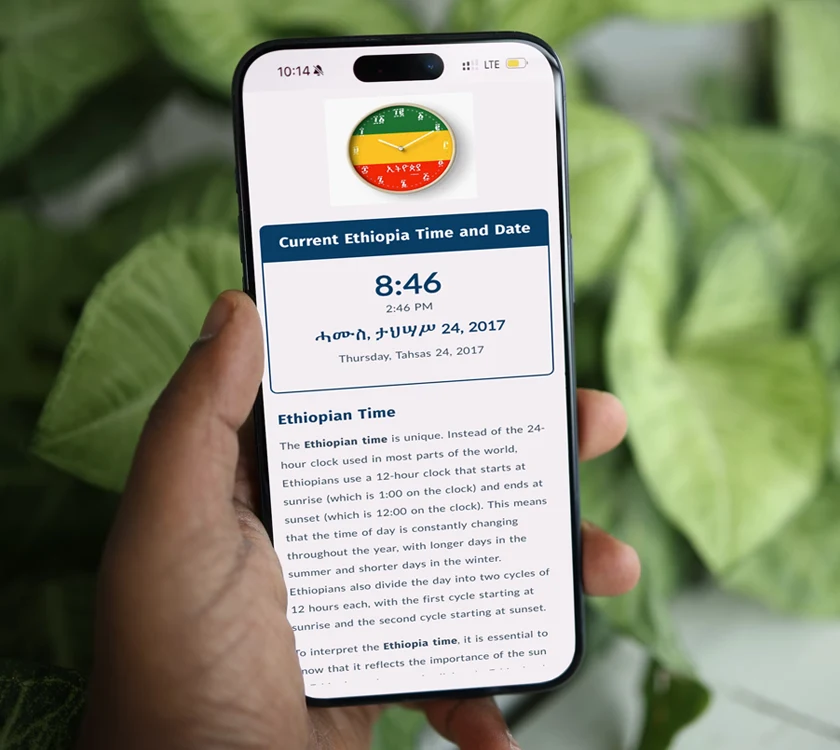
From a technical perspective, supporting the Ethiopian calendar is not merely about changing a display label; it involves deep-tier software engineering, precise API integrations, and a sophisticated understanding of temporal data management. This article explores the technical hurdles and innovative solutions involved in digitizing Ethiopia’s unique relationship with time.
The Algorithm of Time: Decoding the Ethiopian Calendar Logic
To build software that accurately answers what the date is in Ethiopia, engineers must first understand the mathematical foundations of the Ge’ez calendar. Unlike the Gregorian system, which is the product of Roman and Papal reforms, the Ethiopian system is rooted in the ancient Coptic Orthodox tradition.
The 13-Month Architecture
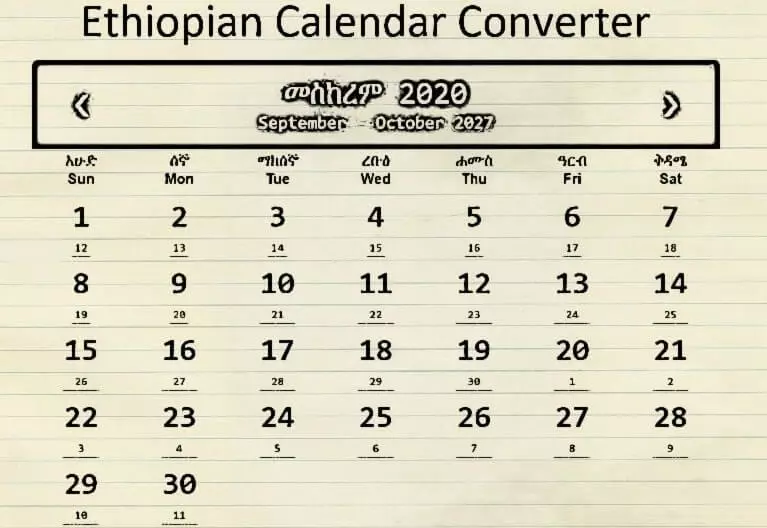
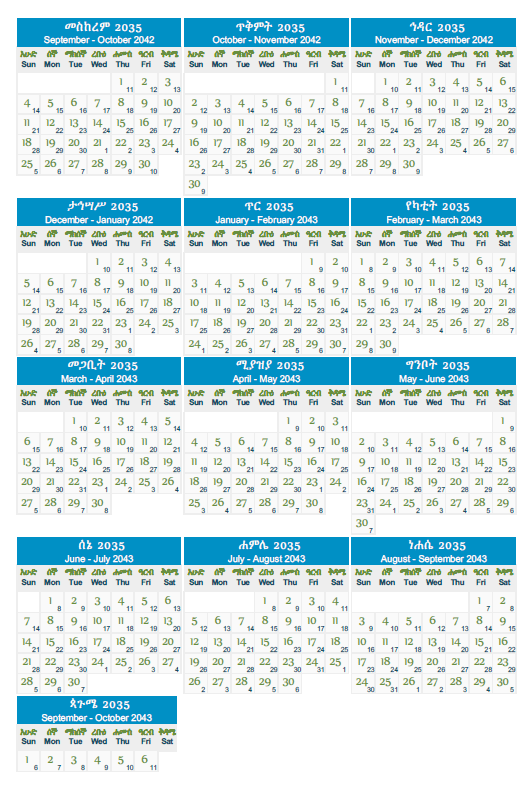
The primary technical differentiator is the “Pagumē” month. The Ethiopian year consists of 12 months of exactly 30 days each, followed by a 13th month (Pagumē) that has five days in a common year and six days in a leap year. For a database architect, this presents a significant departure from standard DATETIME objects used in SQL or NoSQL environments, which are hardcoded for the 28-31 day fluctuations of the Gregorian months. Implementing a 13-month array requires custom logic layers that sit between the core database and the user interface.
The Year Offset and Leap Year Logic
The Ethiopian New Year (Enkutatash) typically falls on September 11 or 12 of the Gregorian calendar. Because the calculation of the Annunciation of Jesus differs between the Western and Eastern traditions, Ethiopia is effectively 7 years and 8 months “behind” the West for most of the year. Developers must implement precise offset algorithms to ensure that timestamps generated on a local device in Addis Ababa correctly map to UTC for global synchronization without losing the local context. The leap year cycle—occurring every four years without the “century rule” exceptions found in the Gregorian system—adds another layer of conditional logic to the backend code.
Software Engineering Challenges: Localization and Globalization
In the world of DevOps and Full-Stack development, “localization” (L10n) and “internationalization” (i18n) are standard practices. However, the Ethiopian calendar represents an “edge case” that tests the limits of mainstream development frameworks.
API Integration and Date Libraries
Most modern programming languages rely on standard libraries like Python’s datetime, JavaScript’s Date object, or Java’s java.time. These libraries are natively Gregorian. To bridge the gap, the tech community has developed specialized open-source libraries such as ethiopian-calendar for Python or various Node.js packages that handle conversion.
A significant challenge arises when integrating third-party APIs. If a financial application in Ethiopia calls a global payment gateway API (like Stripe or PayPal), the “Date” header in the HTTP request must be in the ISO 8601 format (Gregorian). The middleware must therefore perform a “double-translation”: maintaining the Ethiopian date for the user’s front-end experience while utilizing a Gregorian timestamp for the transaction’s backend validity and security handshakes.
UI/UX Design for Multi-Calendar Support
For UI/UX designers, displaying the Ethiopian date requires a “Calendar Toggle” or “Dual-Date” interface. In professional enterprise software, such as ERP (Enterprise Resource Planning) systems used by Ethiopian corporations, users often need to see both dates simultaneously. This requires flexible CSS grid layouts and responsive components that can accommodate a 13th month without breaking the visual hierarchy of the application. Furthermore, the 12-hour clock in Ethiopia starts at dawn (6:00 AM Gregorian is 12:00 AM local time), adding a layer of temporal translation to any time-sensitive application, such as ride-sharing or food delivery apps.
The Digital Infrastructure of Ethiopia: Syncing with the Global Web
As Ethiopia undergoes a rapid digital transformation, driven by the expansion of telecommunications and cloud computing, the need for robust temporal synchronization has never been higher.
Cloud Computing and Server-Side Timestamping
When hosting applications on AWS, Azure, or Google Cloud, the default server time is usually set to UTC. For an Ethiopian startup, setting the server’s local time to the Ethiopian calendar can lead to catastrophic failures in system logs, security certificates, and scheduled cron jobs. Instead, the best practice in the tech industry is to keep the “System Time” in UTC and implement a “Presentation Layer” conversion. This ensures that while the computer “thinks” in a global standard, the human interacts with the system in their native temporal framework. This separation of concerns is vital for maintaining the integrity of digital signatures and blockchain entries, which rely on immutable, standardized timestamps.
Mobile App Development for the Ethiopian Market
With a mobile-first population, the most frequent way users check “what the date is in Ethiopia today” is via smartphone widgets. Developing these widgets requires a deep understanding of mobile OS limitations. Both Android (AOSP) and iOS have moved toward better support for non-Gregorian calendars, but the Ethiopian calendar still requires custom implementation for specific features like “Date Pickers.” A developer building a flight booking app for Ethiopian Airlines, for instance, must ensure that the date-picking logic accounts for the 13th month to prevent “Invalid Date” errors that would otherwise lose the company revenue.
AI and Machine Learning in Temporal Translation
The next frontier for the Ethiopian calendar in tech lies in Artificial Intelligence. As Large Language Models (LLMs) and predictive analytics become integrated into Ethiopian business processes, the “time variable” becomes a critical data point.
Natural Language Processing (NLP) for Date Extraction
AI models must be trained to recognize Ethiopian dates in unstructured text. If an AI assistant is asked to “Schedule a meeting on Meskerem 1,” it must understand that this refers to the Ethiopian New Year and correctly map it to the corresponding Gregorian date for a user’s Google Calendar. Tech firms in Addis Ababa are currently leveraging NLP to build “Temporal Converters” that can parse Amharic text and extract precise dates, a task that requires significantly more nuance than standard English-date parsing.
Predictive Analytics across Different Calendars
In the realm of “Money-Tech” (FinTech) and supply chain management, seasonality is key. However, seasonality in Ethiopia is tied to the Ethiopian calendar (e.g., the harvest following the end of the rainy season in September). Machine learning models used for stock market prediction or agricultural yield forecasting must be trained on datasets where the time-series data is aligned with the Ethiopian months. If a model assumes a Gregorian seasonal cycle, its predictions for the Ethiopian market will be skewed by nearly a month, leading to potential financial loss.
Conclusion: The Future of Localized Tech
The question of “what the date is in Ethiopia today” is more than a matter of curiosity; it is a foundational challenge for the tech industry in East Africa. As we move toward a more inclusive digital future, the ability of software to respect and integrate local traditions—like the Ge’ez calendar—will define the success of global technology brands in local markets.
By treating the Ethiopian calendar as a first-class citizen in the world of code, developers are doing more than just building apps; they are preserving cultural identity through digital architecture. The future of tech in Ethiopia lies in this balance: maintaining the precision of global standards while celebrating the uniqueness of a calendar that has stood the test of millennia. Through robust API design, intelligent UI/UX, and AI-driven translation, the tech world is finally ensuring that when someone asks for the date in Ethiopia, the digital response is as accurate and meaningful as the culture it represents.
aViewFromTheCave is a participant in the Amazon Services LLC Associates Program, an affiliate advertising program designed to provide a means for sites to earn advertising fees by advertising and linking to Amazon.com. Amazon, the Amazon logo, AmazonSupply, and the AmazonSupply logo are trademarks of Amazon.com, Inc. or its affiliates. As an Amazon Associate we earn affiliate commissions from qualifying purchases.