
In the realm of material science and hardware logistics, the thermal properties of packaging materials are more than just a matter of curiosity; they are a critical component of safety engineering. For the technology industry, which relies heavily on the global movement of delicate electronic components, understanding the flashpoint of corrugated fiberboard—commonly known as cardboard—is essential. While literary enthusiasts may recognize the “Fahrenheit 451” figure associated with paper, the reality of cardboard combustion is a nuanced technical subject that dictates how data centers are designed, how hardware is shipped, and how consumer electronics are protected.
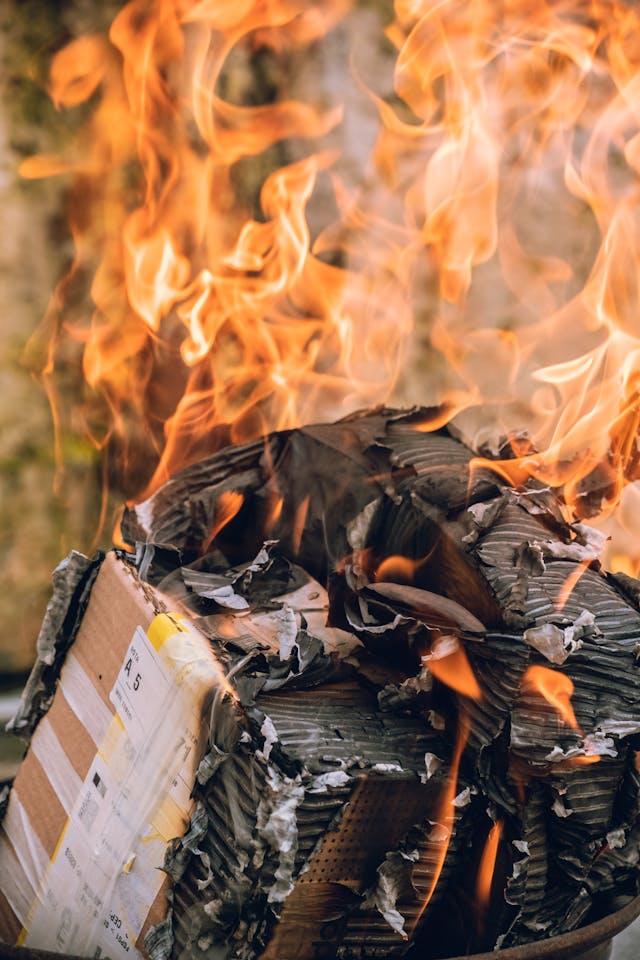
At a fundamental level, cardboard typically reaches its auto-ignition temperature between 427°F and 450°F (219°C to 232°C). However, in the context of high-performance computing and industrial tech environments, the burning point is only one part of a complex thermal safety equation.
The Science of Thermal Ignition: Understanding Flashpoints in Tech Logistics
To understand why cardboard behaves the way it does under heat, we must look at its chemical composition. Cardboard is primarily composed of cellulose fibers derived from wood pulp. In the tech supply chain, these fibers are structured into corrugated layers to provide structural integrity.
The Stages of Combustion
Combustion in cardboard does not happen instantaneously. It involves three distinct technical phases:
- Dehydration: As the material reaches 212°F (100°C), moisture trapped within the cellulose fibers evaporates. This is a critical stage for electronics packaging, as high humidity or sudden temperature shifts can compromise the structural integrity of the box before any fire risk is present.
- Pyrolysis: Between 300°F and 400°F, the chemical decomposition of the organic material begins. The cardboard starts to off-gas volatile organic compounds (VOCs). In a clean-room or data center environment, these gases can interfere with sensitive optical sensors or deposit residue on circuit boards.
- Auto-ignition: This is the point where the cardboard ignites without an external flame. For most standard shipping containers used for hardware, this occurs around the 427°F mark.
Variables Influencing Ignition Temperature
Not all cardboard is engineered equally. In the tech industry, “Technical Grade” cardboard may be treated with flame retardants or moisture-resistant coatings. The thickness (single-wall vs. triple-wall), the density of the fluting, and the presence of synthetic adhesives all play a role in how the material handles thermal stress. For hardware engineers, calculating the “fire load” of a warehouse involves understanding these specific material variables.
Data Center Integrity: Why Cardboard is a Controlled Substance
If you walk into a Tier III or Tier IV data center, you will notice a conspicuous absence of cardboard. Modern facility management protocols, such as those established by the National Fire Protection Association (NFPA 75), strictly regulate the presence of combustible materials in the “white space” where servers reside.
The Risk of Particulate Contamination
While the 450°F ignition point is high, the danger of cardboard in a tech environment starts much lower. Cardboard is “lint-prone.” As it moves, it sheds microscopic cellulose fibers. In a high-airflow environment like a server room, these fibers are pulled into cooling intakes, clogging HEPA filters and accumulating on heat sinks. This leads to “thermal throttling,” where CPUs downclock to prevent overheating, effectively degrading the performance of the tech infrastructure.
Fire Load and Insurance Compliance
Data centers house millions of dollars in silicon and copper. The “fire load” refers to the amount of heat that would be released if all combustible materials in a space were to burn. Because cardboard has a high energy density once it reaches its ignition temperature, its presence increases the insurance premiums for tech facilities. To mitigate this, enterprise-grade hardware is typically “staged”—unboxed in a separate loading dock area—before being moved into the clean environment on anti-static, non-combustible plastic or metal carts.
Material Tech: Engineering the Future of Fire-Retardant Packaging
As the tech industry moves toward greater sustainability, the challenge is to create packaging that is both biodegradable and thermally stable. We are currently seeing a surge in “Smart Packaging” technology designed to address the inherent risks of traditional cardboard.

Chemical Alteration and Coating Tech
To raise the burning temperature of cardboard, tech manufacturers are experimenting with intumescent coatings. These are substances that swell when exposed to heat, creating a charred layer that insulates the remaining cellulose fibers. This technology is vital for the shipping of lithium-ion batteries. Since “thermal runaway” in batteries can exceed 1,000°F, the goal is not just to prevent the cardboard from burning, but to use the packaging as a thermal barrier to prevent a single cell failure from spreading to the rest of the shipment.
The Rise of Mycelium and Bio-Composites
Leading tech firms are investing in mycelium-based packaging (fungal roots grown into specific shapes). From a technical standpoint, mycelium has a higher natural fire resistance than traditional corrugated cardboard. It does not ignite as easily and tends to smolder rather than produce an open flame, providing a critical window for automated fire suppression systems to activate in a logistics hub.
IoT-Integrated Thermal Monitoring
The intersection of “logistics tech” and material science has birthed the “connected box.” By embedding low-cost IoT sensors into the layers of high-value hardware packaging, companies can monitor the internal temperature of the cardboard in real-time. If the material nears the pyrolysis stage (around 300°F) due to a localized heat source or a failing component inside, an alert is sent to the carrier before the auto-ignition temperature is ever reached.
Hardware Logistics: Managing the “Thermal Runaway” Threat
The relationship between cardboard and heat is most precarious during the transport of high-capacity energy storage devices and high-end GPUs. The tech industry must account for the “ambient vs. internal” temperature delta.
Shipping Stress Tests
Before a new smartphone or laptop is cleared for global distribution, its packaging undergoes thermal stress testing. This involves placing the boxed unit in a chamber that mimics extreme environments—such as the hold of a cargo plane or a shipping container in a tropical port. Engineers look for the point of “structural failure” versus “combustion failure.” If the cardboard becomes brittle or soft at high temperatures, it can no longer protect the tech inside from physical impact, even if it doesn’t catch fire.
Regulatory Standards in Tech Shipping
The International Air Transport Association (IATA) has strict guidelines on the use of fiberboard for shipping electronic components. These regulations specify the bursting strength (Mullen test) and the water resistance (Cobb test) of the cardboard. While these don’t always directly measure the burning temperature, they ensure the material’s density is sufficient to act as a brief thermal buffer in the event of an external flash fire.
The Future: Will Tech Move Beyond Cardboard?
While the 427°F burning point of cardboard remains a constant of physics, the technology surrounding it is evolving. We are moving toward a future where “Tech-Grade Fiber” may replace traditional cardboard entirely in the high-end hardware sector.
Advanced Thermal Barriers
Innovation is currently focused on “Aerogel” liners—ultra-light materials that can be laminated onto cardboard. These liners can withstand temperatures thousands of degrees higher than the cardboard itself, ensuring that even if the outer box is exposed to extreme heat, the internal hardware remains at a safe operating temperature.
Digital Twins and Fire Modeling
Software is also playing a role. Logistics companies now use “Digital Twin” technology to simulate how fire would spread through a warehouse filled with cardboard-packaged tech. By modeling the thermal output of burning cardboard, AI tools can optimize the placement of sprinklers and the layout of shelving to ensure that if a fire does start, it never reaches the critical mass needed to jump from one pallet of hardware to the next.

Conclusion
Understanding what temperature cardboard burns is not just a safety requirement; it is a fundamental aspect of modern technological infrastructure. For the engineer, the logistics manager, and the tech brand, the 450°F threshold represents a boundary that must be managed through material science, rigorous data center protocols, and innovative packaging design.
As we continue to pack more power into smaller, more heat-sensitive devices, the “low-tech” cardboard box remains one of the greatest challenges in the “high-tech” supply chain. By respecting the thermal limits of this ubiquitous material and augmenting it with fire-retardant chemistry and IoT monitoring, the industry ensures that the hardware of tomorrow remains safe from the thermal risks of today.
aViewFromTheCave is a participant in the Amazon Services LLC Associates Program, an affiliate advertising program designed to provide a means for sites to earn advertising fees by advertising and linking to Amazon.com. Amazon, the Amazon logo, AmazonSupply, and the AmazonSupply logo are trademarks of Amazon.com, Inc. or its affiliates. As an Amazon Associate we earn affiliate commissions from qualifying purchases.