
In the rapidly evolving landscape of industrial technology, the demand for materials that are simultaneously lightweight, incredibly strong, and cost-effective has never been higher. From the fuselage of a next-generation aerospace vessel to the aerodynamic chassis of an electric supercar, the search for the perfect manufacturing process often leads to one definitive solution: Resin Transfer Molding (RTM).
Resin Transfer Molding is a sophisticated closed-mold manufacturing process used to create high-performance composite parts. By injecting liquid resin into a cavity containing a pre-formed fiber reinforcement, RTM allows engineers to produce complex geometries with high dimensional accuracy and exceptional surface finishes. In this guide, we will explore the technical mechanics of RTM, the technological variations that drive modern industry, and the future of this essential manufacturing vertical.
1. The Technical Fundamentals of the RTM Process
At its core, Resin Transfer Molding is an evolution of traditional composite manufacturing. Unlike “open-mold” processes where layers of fiber and resin are applied by hand, RTM utilizes a two-sided, matched mold system. This closed-environment approach ensures that the resulting part is finished on both sides and maintains strict tolerances.
The Preparation of Preforms
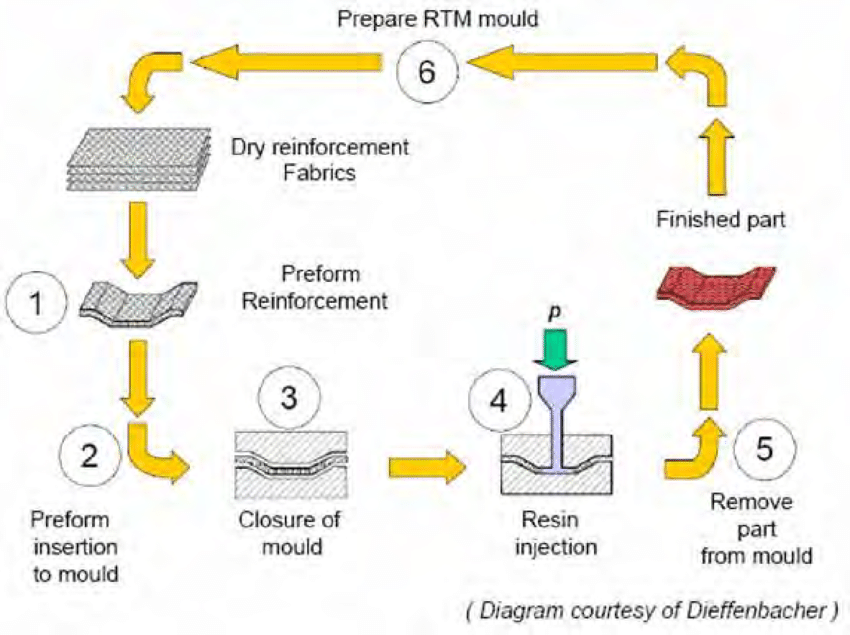
The process begins with the “preform.” This is a dry reinforcement—typically made of carbon fiber, fiberglass, or aramid—that is shaped into the geometry of the final part. These fibers are often woven, knitted, or stitched into a stable 3D structure. The precision of the preform is critical; it dictates the structural integrity and load-bearing capabilities of the final component. In advanced tech applications, automated fiber placement (AFP) robots are often used to create these preforms with surgical precision.
Mold Closure and Injection
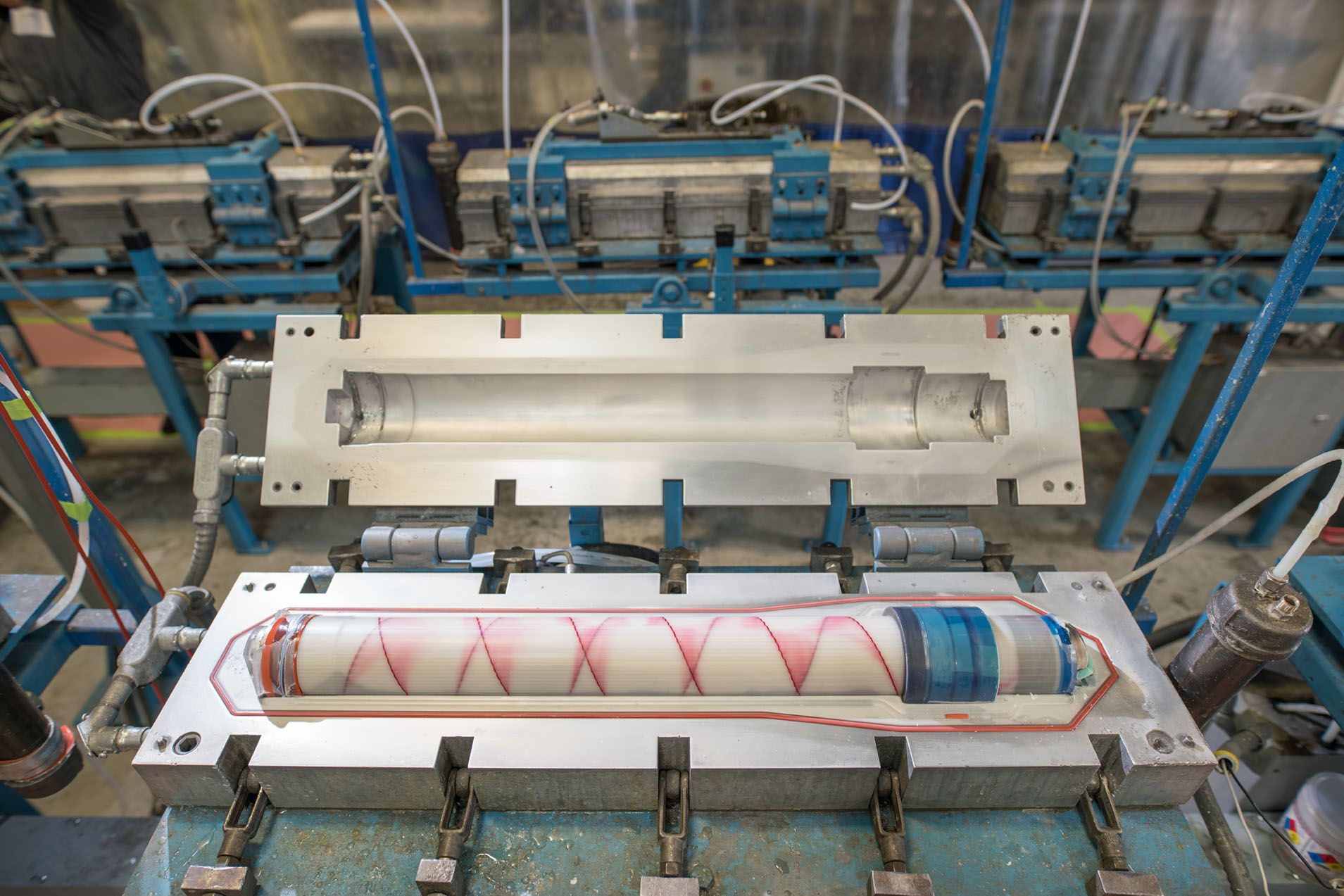
Once the preform is placed into the mold cavity, the two halves of the mold (the “tooling”) are clamped together under high pressure. This mold is typically CNC-machined from steel, aluminum, or high-temperature epoxy to ensure longevity and thermal stability.
The “transfer” phase then begins. A low-viscosity thermoset resin (such as epoxy, polyester, or vinyl ester) is injected into the mold under pressure. The resin permeates the preform, saturating the fibers completely while displacing any air. This ensures a “void-free” laminate, which is the gold standard for high-performance engineering.
Curing and De-molding
After the resin has fully impregnated the fibers, the mold is heated to trigger a chemical reaction known as polymerization or “curing.” Once the resin hardens into a solid matrix, the mold is opened, and the finished part is ejected. Because the mold is precision-engineered, the part requires minimal post-processing, such as trimming or sanding, which significantly reduces manufacturing lead times.
2. Technological Advancements in RTM Systems
The technology behind RTM has branched into several specialized sub-sectors to meet the needs of different industries. These advancements have moved the needle from manual, slow-paced production to high-speed, automated manufacturing.
Vacuum-Assisted Resin Transfer Molding (VARTM)
One of the most significant tech trends in composites is VARTM. In this variation, atmospheric pressure—rather than just mechanical pumps—is used to drive the resin into the fibers. A vacuum is pulled on the mold cavity, which draws the resin through the preform. This technology is particularly useful for massive components, such as wind turbine blades or boat hulls, where heavy metal molds would be prohibitively expensive. VARTM allows for high-quality parts with lower tooling costs.
High-Pressure RTM (HP-RTM)
In the automotive sector, speed is everything. HP-RTM is a high-tech evolution designed for mass production. By using extremely high injection pressures and fast-curing resin systems, HP-RTM can reduce cycle times from hours to just a few minutes. This process often incorporates sophisticated metering and mixing equipment that ensures the resin-to-catalyst ratio is perfect down to the milligram, utilizing industrial IoT sensors to monitor the flow in real-time.
Compression RTM (C-RTM)
C-RTM is a hybrid technology that combines RTM with compression molding. The resin is injected into a slightly open mold; as the mold closes, it forces the resin through the fibers. This technique is favored when dealing with high-volume fiber fractions, as it prevents “fiber washout”—a defect where the force of injected resin displaces the structural fibers.
3. The Role of RTM in Modern Industry and High-Tech Sectors

The adoption of RTM has become a benchmark for technological maturity in several key sectors. Its ability to create parts that outperform traditional metals has shifted the paradigm of modern engineering.
Aerospace and Defense
In aerospace, the weight-to-strength ratio is the most critical metric. RTM is used to manufacture structural components like wing ribs, stringers, and engine fan blades. By utilizing carbon fiber RTM, aerospace engineers can reduce the weight of a commercial aircraft by thousands of pounds, leading to massive increases in fuel efficiency and a reduction in carbon emissions. The technology also allows for the integration of multiple parts into a single molded piece, reducing the need for rivets and fasteners.
Automotive Engineering and Electrification
The shift toward Electric Vehicles (EVs) has catalyzed the use of RTM. Because batteries are heavy, manufacturers must find ways to reduce the weight of the vehicle’s body and chassis to maintain range. HP-RTM is used to create “carbon tubs” and structural frames for high-performance EVs. Furthermore, the electromagnetic shielding properties of certain composite resins make them ideal for housing sensitive electronic components and battery modules.
Renewable Energy
The green tech revolution relies heavily on RTM. Wind energy is a primary example. As wind turbines grow larger to capture more energy, their blades must become longer and stiffer without becoming excessively heavy. RTM and VARTM processes enable the production of 100-meter-long blades that are aerodynamically perfect and durable enough to withstand decades of harsh environmental exposure.
4. Comparing RTM with Other Manufacturing Technologies
To understand the value of RTM, one must compare it to alternative manufacturing methods such as Hand Lay-up or Filament Winding.
Precision vs. Manual Labor
Traditional hand lay-up is labor-intensive and prone to human error. Variations in resin thickness or air bubbles (voids) can compromise the structural integrity of a part. RTM removes the “human element” from the saturation process. Because the resin is injected into a closed, pressurized environment, the results are repeatable and consistent, which is a requirement for safety-critical components in medical and aviation tech.
Environmental Impact and VOCs
From a digital security and workplace safety perspective, RTM is a “clean” technology. Open-mold processes release Volatile Organic Compounds (VOCs) and styrene into the atmosphere, requiring massive ventilation systems and posing health risks. Because RTM is a closed-loop system, emissions are virtually zero. This makes it easier for tech-focused manufacturing facilities to meet strict ESG (Environmental, Social, and Governance) standards and carbon-neutral goals.
Tooling Complexity and Cost
While RTM offers superior quality, it requires a higher initial investment in technology. The CNC-machined molds and high-pressure injection systems are more expensive than the simple molds used in vacuum bagging. However, for high-volume production, the “cost per part” drops significantly due to the speed and reduced labor requirements, making it the preferred choice for industrial-scale operations.
5. The Future of RTM: AI, Digital Twins, and Sustainability
As we look toward the future, Resin Transfer Molding is being integrated with Industry 4.0 technologies to further optimize performance.
AI-Driven Flow Simulation
Engineers now use sophisticated software to create “Digital Twins” of the RTM process. Before a single drop of resin is injected, AI algorithms simulate the flow through the fiber preform. These simulations can predict “dry spots” or resin-rich areas, allowing engineers to optimize the placement of injection ports and vents. This reduces waste and ensures that the first physical part produced is as perfect as the thousandth.
Smart Resins and Structural Health Monitoring
The next frontier in RTM tech involves “Smart Composites.” By embedding fiber-optic sensors or conductive nanoparticles into the RTM part during the molding process, manufacturers can create components that “feel.” These parts can transmit data regarding stress, strain, or damage throughout their lifecycle. In a high-tech future, an airplane wing manufactured via RTM could alert maintenance crews to micro-cracks before they are even visible to the human eye.
Bio-Resins and Circular Economy
Sustainability is driving the development of bio-based resins derived from renewable sources. While traditional RTM relies on petroleum-based epoxies, new research is focusing on resins that are recyclable or biodegradable. When combined with natural fibers like flax or hemp in an RTM process, the tech industry moves closer to a truly circular manufacturing economy, where high-performance components are as sustainable as they are strong.
In conclusion, Resin Transfer Molding is much more than a simple manufacturing technique; it is a foundational technology that enables the existence of modern high-performance machines. By bridging the gap between raw chemical science and precision mechanical engineering, RTM continues to push the boundaries of what is possible in the physical world.
aViewFromTheCave is a participant in the Amazon Services LLC Associates Program, an affiliate advertising program designed to provide a means for sites to earn advertising fees by advertising and linking to Amazon.com. Amazon, the Amazon logo, AmazonSupply, and the AmazonSupply logo are trademarks of Amazon.com, Inc. or its affiliates. As an Amazon Associate we earn affiliate commissions from qualifying purchases.