
In the vast landscape of financial markets, certain indices stand out as barometers of economic health and technological advancement. Among these, the Nasdaq 100 holds a particularly influential position. Often synonymous with innovation and growth, this index is more than just a collection of numbers; it represents a concentrated portfolio of some of the world’s most dynamic and impactful companies. For investors, understanding “what stocks are in the Nasdaq 100” isn’t merely a matter of curiosity; it’s fundamental to comprehending market trends, identifying investment opportunities, and strategizing portfolio allocations.
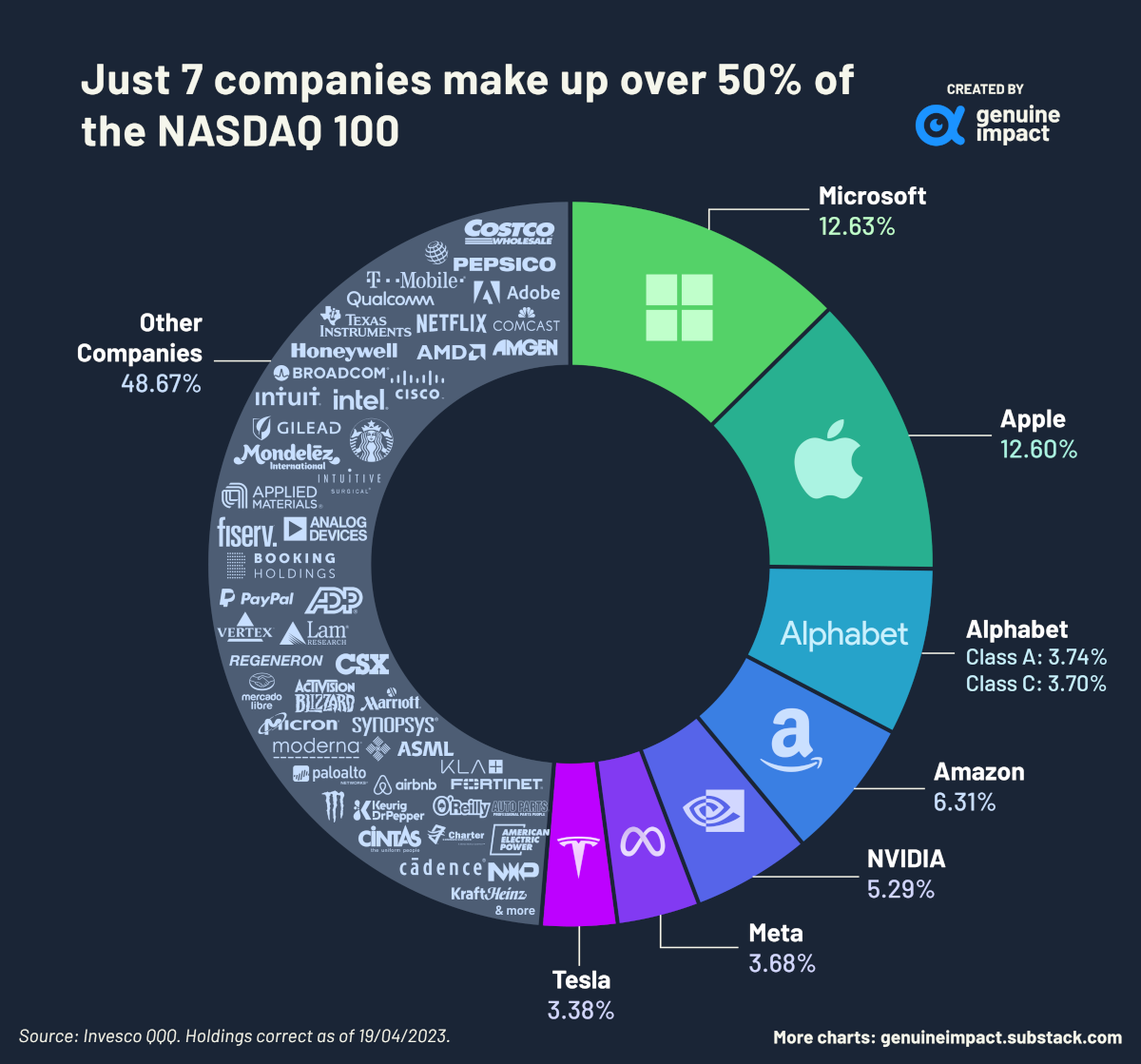
The Nasdaq 100 is widely recognized for its heavy weighting towards technology and growth-oriented firms, but its actual composition is more nuanced than often perceived. It offers a unique lens through which to view the sectors driving global progress, encompassing not just software and hardware giants but also leading companies in biotechnology, telecommunications, retail, and industrial innovation. This guide will delve into the intricacies of the Nasdaq 100, revealing its constituents, the criteria for inclusion, and why this index is a crucial benchmark for savvy investors.
Understanding the Nasdaq 100: More Than Just Tech
While often perceived as a tech-heavy index, a deeper look reveals that the Nasdaq 100 encompasses a broader range of innovative, non-financial companies listed on the Nasdaq Stock Market. Its structure and selection criteria are key to appreciating its unique market position.
The Nasdaq Composite vs. The Nasdaq 100: Clarifying the Distinction
It’s crucial to differentiate between the Nasdaq Composite Index and the Nasdaq 100 Index. The Nasdaq Composite is an extremely broad index, representing virtually all common stocks listed on the Nasdaq Stock Market – currently over 3,000 companies. It’s market-capitalization weighted, meaning larger companies have a greater impact on the index’s value. Given Nasdaq’s historical association with technology startups, the Composite naturally leans heavily into the tech sector, but it includes companies from all industries, financial ones included.
In contrast, the Nasdaq 100 is a far more selective index. It comprises the 100 largest non-financial companies by market capitalization listed on the Nasdaq Stock Market. This exclusion of financial companies (like banks, insurance firms, and brokerage houses) is a defining characteristic, setting it apart from broader market indices like the S&P 500. This deliberate exclusion hones its focus on growth-oriented sectors, making it a distinct proxy for innovation.
Eligibility Criteria: What Makes a Stock Nasdaq 100-Worthy?
Inclusion in the Nasdaq 100 is not arbitrary; it’s governed by a specific set of rules designed to ensure the index reflects leading companies. The primary criteria include:
-
Listing on Nasdaq: The company’s stock must be listed on the Nasdaq Stock Market.
-
Market Capitalization: It must be among the 100 largest non-financial companies by market capitalization. This is periodically reviewed to ensure the index remains reflective of the largest players.
-
Non-Financial Sector: As mentioned, companies primarily classified as financial institutions are explicitly excluded. This means banks, investment companies, and other financial services firms do not qualify, regardless of their size.
-
Liquidity: Companies must meet certain minimum average daily trading volume requirements to ensure their stocks are sufficiently liquid.
-
Seasoning Period: Typically, new listings must have been traded for a certain period before becoming eligible, though exceptions can be made for particularly large and impactful IPOs.
-
No Bankruptcy Filings: Companies that have filed for bankruptcy are generally not eligible for inclusion.
These criteria ensure that the Nasdaq 100 represents a collection of robust, actively traded, and influential companies that are at the forefront of their respective industries, driving economic progress outside the traditional financial sector.
Market-Capitalization Weighted Index: How Influence is Distributed
Like many major indices, the Nasdaq 100 is market-capitalization weighted. This means that companies with larger market capitalizations (total value of all outstanding shares) have a greater impact on the index’s performance than smaller companies. For example, if Apple (with a multi-trillion-dollar market cap) sees a 1% increase in its stock price, it will move the index significantly more than a 1% increase in a company with a market cap of, say, $50 billion.
This weighting methodology naturally leads to a concentration of influence among the largest companies. While there are 100 companies, a handful of mega-cap stocks often account for a substantial portion of the index’s overall value and movement, making their individual performances critical to the index’s trajectory. This characteristic is important for investors to understand, as it implies that the performance of the “top dogs” heavily dictates the overall returns of a Nasdaq 100-tracking investment.
The Titans of the Nasdaq 100: A Glimpse at Key Constituents
While the exact list of companies in the Nasdaq 100 can fluctuate with quarterly rebalancings and annual reviews, certain companies consistently hold dominant positions. These are the household names and industry leaders that exemplify the innovative spirit of the index.
Dominant Tech Giants
Unsurprisingly, technology behemoths form the backbone of the Nasdaq 100. These companies have not only revolutionized their respective industries but have also reshaped global commerce and daily life.
-
Apple (AAPL): A pioneer in personal computing, smartphones, and digital services, Apple consistently ranks among the largest companies globally by market capitalization. Its ecosystem of hardware, software, and services drives immense revenue.
-
Microsoft (MSFT): Evolving from its operating system dominance, Microsoft is now a cloud computing powerhouse with Azure, a major player in enterprise software, gaming (Xbox), and professional networking (LinkedIn).
-
Amazon (AMZN): Beyond its origins as an online bookseller, Amazon has transformed into a global e-commerce giant, cloud computing leader (AWS), and a significant force in digital advertising and entertainment.
-
Alphabet (GOOGL/GOOG): The parent company of Google, Alphabet dominates internet search, digital advertising, YouTube, and Android mobile operating systems, alongside ventures into AI and autonomous driving.
-
Meta Platforms (META): Formerly Facebook, Meta controls a vast social media empire including Facebook, Instagram, and WhatsApp, and is heavily investing in the metaverse.
-
NVIDIA (NVDA): A leader in graphics processing units (GPUs), NVIDIA’s technology is critical for gaming, professional visualization, data centers, and the burgeoning field of artificial intelligence.
-
Tesla (TSLA): The electric vehicle pioneer has disrupted the automotive industry and is also a significant player in battery storage and solar energy solutions.
These companies, often dubbed the “Magnificent Seven” or similar monikers, collectively exert enormous influence on the Nasdaq 100’s performance due to their massive market capitalizations.
Beyond FAANG/MAGMA: Other Significant Sectors and Companies
While tech giants dominate, the Nasdaq 100’s definition of “non-financial” allows for a surprisingly diverse array of industries and companies that are leaders in their respective fields.
-
Communications Services: Companies like T-Mobile US (TMUS) and Comcast (CMCSA) are integral, providing essential connectivity and entertainment services.
-
Consumer Discretionary: Beyond Amazon, this sector includes prominent names such as Starbucks (SBUX), Costco Wholesale (COST), and Lululemon Athletica (LULU), reflecting strong consumer brands and retail innovation.
-
Consumer Staples: Even within a growth-focused index, consumer staples like PepsiCo (PEP) and Mondelez International (MDLZ) find a place, showcasing their consistent demand and global reach.
-
Healthcare/Biotechnology: Innovative biotech firms and pharmaceutical companies, such as Amgen (AMGN), Gilead Sciences (GILD), and Moderna (MRNA) (during its period of significant growth), are included for their groundbreaking research and development.
-
Industrials: Select industrial companies, particularly those leveraging advanced technology, can also be found.
-
Software & Cloud Services (Beyond the Mega-Caps): Companies like Adobe (ADBE), Salesforce (CRM), Intuit (INTU), and Netflix (NFLX) (often grouped with tech but more specifically streaming entertainment) represent powerful software and subscription-based service models.

This diversity underscores that while technology forms the core ethos of the Nasdaq 100, the index seeks out leadership and innovation across various non-financial sectors, making it a broader gauge of American corporate excellence than a pure tech-only index.
Dynamic Membership: The Annual Rebalancing
The composition of the Nasdaq 100 is not static. It undergoes an annual rebalancing in December, during which the list of constituents is reviewed and adjusted based on market capitalization data from the preceding months. Additionally, quarterly reviews and intra-quarter adjustments can occur due to events like mergers, acquisitions, or bankruptcies.
This dynamic nature ensures that the index remains relevant and accurately reflects the leading non-financial companies on the Nasdaq exchange. Companies that grow sufficiently large and meet the criteria are added, while those that shrink in market value or no longer meet the requirements are removed. This constant evolution is a key factor in the Nasdaq 100’s ability to capture the leading edge of corporate innovation and growth.
Why Track the Nasdaq 100’s Components? Investor Insights
For individual investors and financial professionals alike, closely tracking the components of the Nasdaq 100 offers several strategic advantages, providing valuable insights into market trends and portfolio management.
Benchmarking Performance
The Nasdaq 100 serves as a critical benchmark for investors, particularly those with a growth-oriented investment strategy.
-
Portfolio Comparison: Investors can compare the performance of their own portfolios against the Nasdaq 100 to gauge how well their investments are performing relative to a strong growth benchmark. If a portfolio heavily weighted in tech or growth stocks is underperforming the Nasdaq 100, it might signal an opportunity to re-evaluate individual stock selections or sector allocations.
-
Manager Performance: For actively managed funds focusing on growth or technology, the Nasdaq 100 is often the benchmark against which the fund manager’s skill is measured. Outperforming the index is a sign of successful active management.
Identifying Growth Trends
The composition of the Nasdaq 100 offers a real-time snapshot of the industries and companies leading innovation and market growth.
-
Sector Dominance: By observing which sectors gain or lose weighting in the index, investors can identify overarching economic and technological trends. For instance, the rise of cloud computing, AI, and e-commerce has been consistently reflected in the growing prominence of companies in these areas within the Nasdaq 100.
-
Emerging Leaders: The annual rebalancing highlights companies that have grown significantly to earn a spot in this elite group. This can alert investors to promising mid-cap companies that are transitioning into large-cap leaders, potentially offering early entry points into future market drivers.
Diversification Considerations
While the Nasdaq 100 represents a diverse set of non-financial companies, its heavy concentration in certain sectors, especially technology, is a key consideration for portfolio diversification.
-
Concentration Risk: Understanding the specific stocks and sectors that dominate the Nasdaq 100 allows investors to assess their exposure to these areas. A portfolio heavily mirroring the Nasdaq 100 might be highly concentrated in technology and growth stocks, potentially lacking sufficient diversification across value, defensive, or other cyclical sectors.
-
Strategic Allocation: For investors seeking a balanced portfolio, knowing the Nasdaq 100’s components helps in making informed decisions about how much exposure to allocate to this index versus other indices that track broader markets, value stocks, or international equities. It allows for intentional balancing of growth potential with stability and broader market exposure.
Investing in the Nasdaq 100: Approaches and Vehicles
For investors who believe in the long-term growth potential of the companies within the Nasdaq 100, there are several practical ways to gain exposure to this influential index.
Direct Stock Picking vs. Index Funds
-
Direct Stock Picking: An investor could theoretically attempt to replicate the Nasdaq 100 by buying shares of all 100 constituent companies in the correct proportions. However, this is highly impractical due to the capital required, the effort involved in rebalancing, and transaction costs. A more common approach for stock pickers is to identify a few key companies within the Nasdaq 100 that they believe will outperform the broader index or to use the list as a starting point for fundamental research. This approach offers higher potential returns if successful, but also carries higher risk and demands significant time and expertise.
-
Index Funds: For most investors, the most efficient and cost-effective way to invest in the Nasdaq 100 is through index funds, specifically Exchange Traded Funds (ETFs) or mutual funds. These funds are designed to track the performance of the Nasdaq 100 by holding the same stocks in roughly the same proportions, offering instant diversification across all 100 companies.
Popular ETFs and Mutual Funds
The most renowned and widely used vehicle for investing in the Nasdaq 100 is the Invesco QQQ Trust (QQQ) ETF.
-
QQQ: Often simply referred to as “the Q’s,” QQQ is one of the largest and most liquid ETFs globally. It holds all the stocks in the Nasdaq 100, weighted by market capitalization, and aims to replicate the index’s performance. It offers intraday liquidity, meaning it can be traded like a stock throughout the day.
-
Other ETFs and Mutual Funds: Several other providers also offer ETFs or mutual funds that track the Nasdaq 100, sometimes with slightly different fee structures or strategies (e.g., leveraged or inverse versions, though these carry significantly higher risk). Examples include funds like Fidelity Nasdaq Composite Index Fund (FNCMX), or alternative ETFs such as Invesco Nasdaq 100 ETF (QQQM) which is similar to QQQ but designed for long-term buy-and-hold investors with a slightly lower expense ratio.
Investing in these funds allows individuals to gain broad exposure to the innovation and growth represented by the Nasdaq 100 without needing to research or purchase individual stocks.
Risk and Reward: What Investors Should Know
Investing in the Nasdaq 100 comes with a distinct set of risk and reward characteristics:
-
High Growth Potential: Historically, the Nasdaq 100 has delivered strong returns due to its concentration in rapidly growing companies and disruptive technologies.
-
Higher Volatility: The growth-oriented and tech-heavy nature of the index also means it can be more volatile than broader, more diversified indices like the S&P 500 or the Dow Jones Industrial Average. Technology and growth stocks can experience larger swings in price, especially during periods of economic uncertainty or shifts in investor sentiment towards risk.
-
Concentration Risk: As previously noted, the index’s reliance on a few mega-cap companies means its performance can be heavily influenced by their individual fortunes. A significant downturn in one or two of these dominant stocks can have a noticeable impact on the entire index.
-
Interest Rate Sensitivity: Growth stocks, especially those with high valuations based on future earnings potential, can be particularly sensitive to changes in interest rates. Higher rates can make future earnings less valuable in present terms and increase the cost of borrowing for companies.
Understanding these dynamics is essential for investors considering the Nasdaq 100 as part of their investment strategy. It’s often recommended as a component of a diversified portfolio rather than a sole investment.

Conclusion
The Nasdaq 100 is far more than just a list of companies; it’s a dynamic reflection of innovation, technological advancement, and economic growth. By understanding “what stocks are in the Nasdaq 100,” investors gain profound insights into the leading non-financial corporations driving market trends, defining the future, and shaping our world. From the ubiquitous tech giants to pioneering companies in diverse sectors, the index captures the essence of transformative business.
For those looking to participate in this wave of progress, vehicles like the QQQ ETF offer accessible and diversified exposure. However, an informed investor recognizes the index’s unique characteristics, including its growth potential, inherent volatility, and sector concentration. Whether used as a benchmark for portfolio performance, a guide for identifying emerging trends, or a direct investment, the Nasdaq 100 remains an indispensable tool for navigating the complexities of modern financial markets, standing as a testament to the power of human ingenuity and enterprise.
aViewFromTheCave is a participant in the Amazon Services LLC Associates Program, an affiliate advertising program designed to provide a means for sites to earn advertising fees by advertising and linking to Amazon.com. Amazon, the Amazon logo, AmazonSupply, and the AmazonSupply logo are trademarks of Amazon.com, Inc. or its affiliates. As an Amazon Associate we earn affiliate commissions from qualifying purchases.