
When we ask the question, “what paintings did Picasso paint?” we are often looking for a list of titles: The Old Guitarist, Les Demoiselles d’Avignon, or Guernica. However, from a brand strategy perspective, the answer is much deeper. Pablo Picasso did not just produce canvases; he engineered a global, multi-generational brand identity that remains the most recognizable in the history of art.
Picasso was more than a painter; he was a master of corporate identity before the term existed. He understood that to maintain market dominance, one must constantly innovate, protect their intellectual property, and cultivate a persona that transcends the product itself. In the world of high-stakes branding, the “Picasso” name is a seal of quality, radical innovation, and immense financial value.

The Evolution of Visual Identity: Rebranding Through Artistic Periods
A successful brand must evolve to stay relevant, and Picasso was the ultimate architect of the “pivot.” His career was not a linear progression but a series of calculated rebrands, each defined by a specific visual language that targeted different psychological and market segments.
The Blue and Rose Periods: Establishing Emotional Resonance
Picasso’s early years, specifically the Blue Period (1901–1904) and the Rose Period (1904–1906), represent the “foundational” phase of his brand. During the Blue Period, his paintings—characterized by somber tones and themes of poverty—established his brand’s emotional depth. Works like The Old Guitarist created a “niche” identity of the starving, soulful artist.
As his market expanded, he transitioned into the Rose Period. By introducing warmer hues and circus motifs, he showcased brand versatility. This shift demonstrated an essential branding lesson: while a core identity is necessary, the ability to adapt your “product line” to reflect a different mood or market demand is vital for longevity.
Cubism as Radical Innovation and Market Disruption
If the Blue Period was about emotion, Cubism was about market disruption. Along with Georges Braque, Picasso “launched” Cubism, a visual language that broke objects into geometric shapes. Paintings like Les Demoiselles d’Avignon acted as a “Minimum Viable Product” (MVP) that shocked the industry and redefined the boundaries of art.
In modern branding terms, Cubism was Picasso’s “Blue Ocean Strategy.” He didn’t just compete with existing painters; he created a new category where he was the undisputed leader. By being the first to market with such a radical aesthetic, he ensured that any future artist working in abstraction would be measured against the Picasso benchmark.
Scarcity and Volume: The Strategic Production of Value
One of the greatest paradoxes of the Picasso brand is how he managed to maintain extreme luxury status while being incredibly prolific. Usually, high volume leads to brand dilution. Picasso, however, used volume to create a “monopoly of presence” in the art world.
The Prolific Output Strategy
It is estimated that Picasso produced approximately 50,000 works of art, including 1,885 paintings. This massive output ensured that his brand “omnipresence” was unmatched. By saturating museums and private collections globally, he made it impossible for the art world to ignore him.
From a brand strategy perspective, this is akin to a tech giant like Apple or Google ensuring their ecosystem is everywhere. The more Picasso paintings there were in the world, the more “data points” the public had to reinforce the idea that he was the defining artist of the century.
Controlling the Market Supply and Perceived Scarcity
Despite his high output, Picasso was meticulous about how his work entered the market. He worked closely with elite dealers like Daniel-Henry Kahnweiler and Paul Rosenberg, who acted as “brand managers.” They curated which pieces were shown and to whom they were sold, ensuring that “Blue Chip” status was maintained.
Picasso also understood the value of “holding.” He kept a significant portion of his best work in his personal collection. This created a secondary tier of brand value: the “unobtainable” Picasso. By restricting access to his personal archives, he ensured that whenever a major piece was released to the public, it was treated as a major market event, driving up the valuation of his entire catalog.
The Signature as a Corporate Seal: Personal Branding Before the Digital Age
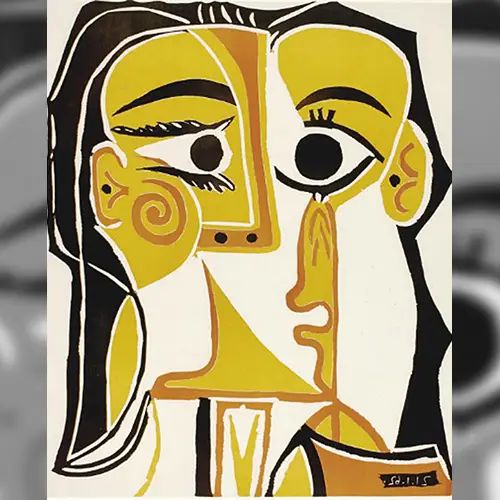
In the 20th century, the name “Picasso” became a shorthand for genius. This was not an accident; it was the result of a deliberate cultivation of a personal brand that merged the artist’s life with his art.
The Power of the Name and Signature
The Picasso signature is perhaps the most famous “logo” in art history. It is bold, legible, and consistent. Picasso understood the weight of his endorsement. There are legendary stories of him paying for meals by doodling on a napkin and signing it—he knew that his signature transformed a scrap of paper into a high-value asset.
In the context of corporate identity, Picasso’s signature functioned as a “Brand Guarantee.” It promised the buyer that the work was part of a prestigious lineage. Today, companies pay millions to develop logos that convey even a fraction of the authority that Picasso’s handwritten name carried.
Picasso as a Media Celebrity: Crafting the “Artist Persona”
Picasso was one of the first artists to utilize mass media to build a personal brand. He collaborated with famous photographers like Gjon Mili and David Douglas Duncan to create iconic images of himself—often shirtless, intense, or wearing his signature Breton striped shirt.
These images were not just “behind-the-scenes” glimpses; they were carefully curated brand assets. They sold the “myth” of Picasso: the virile, tireless creator. By becoming a celebrity himself, he ensured that when people bought a Picasso painting, they weren’t just buying canvas and oil; they were buying a piece of the Picasso lifestyle and legacy.
Legacy Management: Protecting and Extending the Picasso Brand
A brand is only as strong as its ability to survive its founder. Decades after his death in 1973, the Picasso brand remains at the top of the global art market. This is due to rigorous brand protection and strategic licensing.
The Picasso Estate and Licensing
The management of Picasso’s legacy is handled with the same precision as a Fortune 500 company. The Picasso Estate (managed by his heirs) oversees the intellectual property rights to his name and work. This includes strict control over how his paintings are reproduced and how his name is used in commercial ventures.
The most famous example of brand extension is the Citroën Picasso. When the French automaker licensed the Picasso name for a line of cars, it was a controversial move, but it demonstrated the brand’s “elasticity.” The name Picasso was so synonymous with “creativity” and “design” that it could be successfully applied to an entirely different industry, generating massive licensing revenue for the estate.
Maintaining “Blue Chip” Status in the Auction Circuit
The Picasso brand is the ultimate “safe haven” asset in the financial world. His paintings, such as Les Femmes d’Alger (“Version O”), consistently break records at auction, often selling for upwards of $170 million.
This stability is maintained through a global network of “brand ambassadors”—top-tier galleries, auction houses like Christie’s and Sotheby’s, and major museums. By keeping the narrative of Picasso’s “greatness” central to the history of art, these institutions ensure that the brand remains a “Blue Chip” investment, comparable to gold or top-tier real estate.
Lessons for Modern Brand Architects
Studying “what paintings Picasso painted” through the lens of branding offers invaluable insights for modern entrepreneurs, marketers, and creators. Picasso’s career serves as a masterclass in building an identity that is both iconic and adaptable.
Adaptability as a Core Brand Value
The primary lesson from Picasso is that a brand should never be static. By moving from the Blue Period to Cubism to his later Neo-Classical and Surrealist-influenced works, Picasso showed that the core “DNA” of a brand (the artist’s hand) can be expressed through many different products and styles.
For modern brands, this means that while your “why” should remain constant, your “what” must be allowed to change. Innovation is not a threat to a brand; it is the fuel that keeps it alive.

The Intersection of Art and Influence
Finally, Picasso proved that the value of a product is inextricably linked to the influence of the creator. He did not wait for the world to define him; he defined himself through his prolific output, his media presence, and his refusal to be categorized.
In the digital age, where personal branding is more important than ever, Picasso’s life stands as a testament to the power of self-commodification. To build a lasting brand, one must be both the creator of the work and the chief marketer of its story. Picasso didn’t just paint paintings; he painted a legacy that continues to dominate the cultural and financial landscape of the 21st century.
aViewFromTheCave is a participant in the Amazon Services LLC Associates Program, an affiliate advertising program designed to provide a means for sites to earn advertising fees by advertising and linking to Amazon.com. Amazon, the Amazon logo, AmazonSupply, and the AmazonSupply logo are trademarks of Amazon.com, Inc. or its affiliates. As an Amazon Associate we earn affiliate commissions from qualifying purchases.