
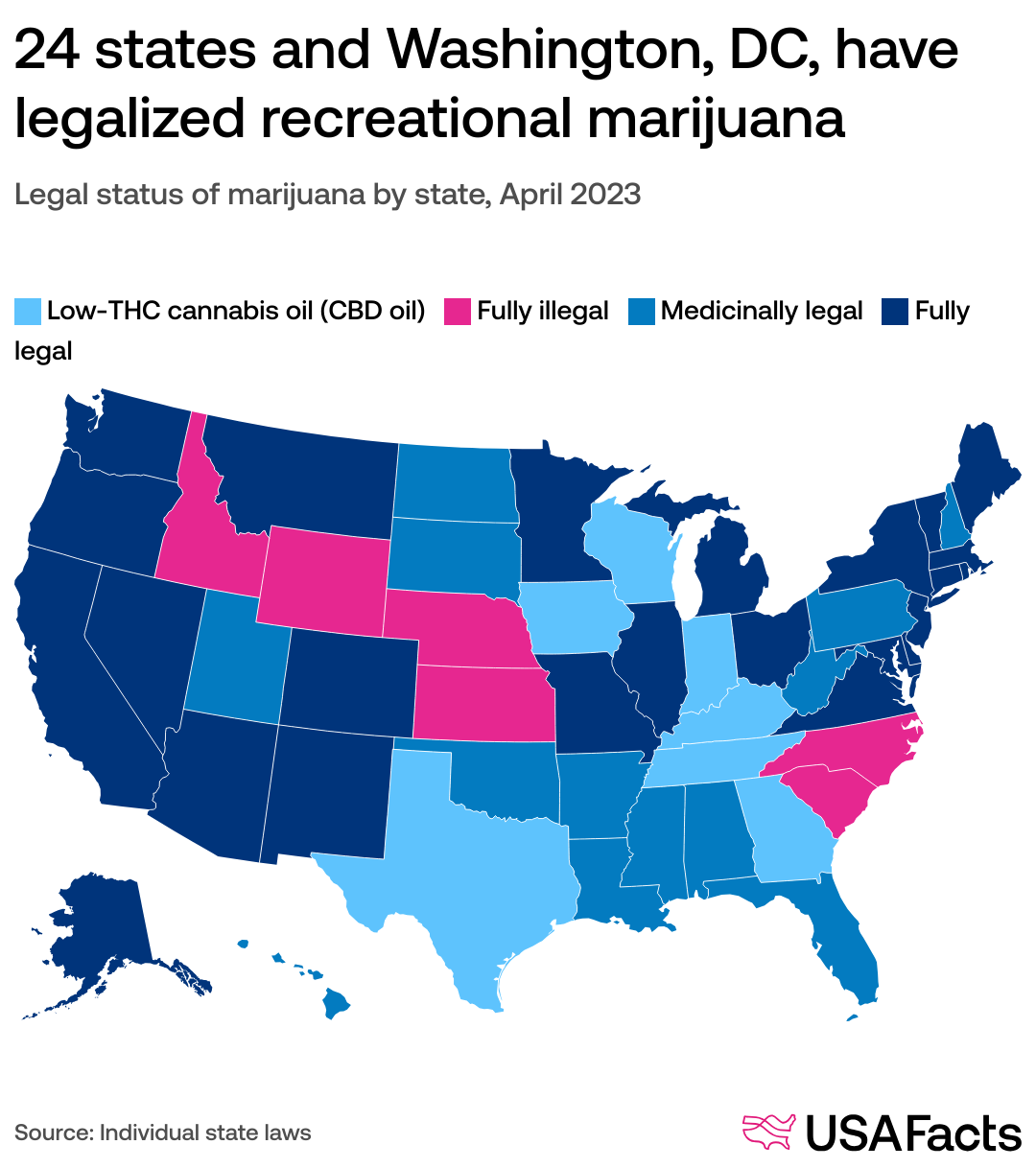
The landscape of the American economy is undergoing a seismic shift as the “Green Wave” continues to move across the map. As of 2024, twenty-four states, along with the District of Columbia, have moved to fully legalize recreational cannabis for adults. What began as a bold experiment in Colorado and Washington in 2012 has evolved into a sophisticated, multi-billion-dollar industry that rivals traditional sectors like craft beer and organic agriculture. For investors, entrepreneurs, and policymakers, the question of which states have legalized recreational weed is no longer just a matter of social policy—it is a critical data point for regional economic forecasting and portfolio diversification.
The Financial Landscape of Legalized Jurisdictions
The list of states that have embraced recreational legalization represents a significant portion of the U.S. GDP. Understanding the financial profile of these states requires looking at them not just as individual entities, but as distinct market clusters with varying degrees of maturity and profitability.
The Pioneer Markets: Colorado and Washington
Colorado and Washington serve as the historical benchmarks for cannabis finance. Since sales began in 2014, Colorado has surpassed $15 billion in total sales. This maturity has led to a stabilized market where price compression—the dropping of wholesale prices due to high supply—has become a primary concern for business owners. From a financial perspective, these states demonstrate the long-term trajectory of the industry: high initial growth followed by a “plateau” phase where only the most operationally efficient companies survive.
The Market Giants: California and New York
California remains the largest legal cannabis market in the world, with annual sales often exceeding $5 billion. However, it also serves as a cautionary tale for business finance. High local taxes and a robust illicit market have squeezed legal margins, making it a challenging environment for startups. Conversely, New York’s recent entry into the market represents the most significant financial opportunity on the East Coast. Investors are watching New York closely as it attempts to integrate a social equity-first model with a massive consumer base, potentially creating a new blueprint for corporate cannabis branding and revenue distribution.
The Midwestern and East Coast Expansion
States like Illinois, Michigan, and New Jersey have seen explosive growth in recent years. Illinois, in particular, has leveraged its position as a regional hub to generate significant “cannabis tourism” revenue from neighboring states where legalization has not yet occurred. Michigan has surprised analysts by becoming one of the highest-volume markets in the country, demonstrating that the appetite for recreational cannabis is not limited to the coastal “blue” states but is a nationwide economic driver.
Revenue Streams and State Taxation Models
For state governments, the primary motivation for legalization is often the potential for a massive influx of tax revenue. The states that have legalized recreational weed have employed various fiscal strategies to capture this value, each with different implications for the consumer and the business owner.
Excise Taxes and State Coffers
Most legalized states apply a specific excise tax on top of standard sales taxes. For example, Washington state imposes a 37% excise tax, one of the highest in the nation. These funds are typically earmarked for specific public services. In many jurisdictions, these millions of dollars are directed toward:
- Public Education: Funding for school construction and teacher salaries.
- Infrastructure: Road repairs and public transportation projects.
- Public Health: Substance abuse prevention and mental health programs.
From a personal finance perspective, these taxes are built into the retail price, meaning the consumer bears the brunt of the state’s fiscal requirements. For the business, managing these tax payments requires rigorous accounting and specialized financial software to ensure compliance with state revenue departments.
The Social Equity Component of Cannabis Funding
A growing trend among states like New York, New Jersey, and Illinois is the allocation of tax revenue toward “Social Equity” funds. These programs provide low-interest loans and grants to entrepreneurs from communities disproportionately affected by the previous prohibition of cannabis. From an investment standpoint, these funds represent a unique form of “impact investing” within the state budget, aimed at creating a more diverse and resilient market ecosystem.
Investment Strategies in the Legal Cannabis Landscape
The legalization of recreational weed across nearly half of the United States has created a new asset class. For those looking to capitalize on this growth, the market is generally divided into two main categories: plant-touching businesses and ancillary services.

Multi-State Operators (MSOs) vs. Boutique Dispensaries
Large-scale investors often focus on Multi-State Operators (MSOs)—companies like Curaleaf, Green Thumb Industries, and Trulieve. These entities operate across multiple legal states, allowing them to achieve economies of scale and hedge against localized market downturns. They are often traded on the Canadian Stock Exchange (CSE) or over-the-counter (OTC) in the U.S., providing a gateway for retail investors to participate in the industry.
On the other end of the spectrum, boutique dispensaries and craft cultivators offer opportunities for “boots on the ground” entrepreneurship. While these businesses face higher risks and lack the capital of MSOs, they often command higher brand loyalty and can pivot more quickly to local market trends.
The Ancillary Service Sector: The “Picks and Shovels” Strategy
Many savvy investors avoid the volatility of the plant itself and instead focus on the “picks and shovels” of the industry. This includes:
- Real Estate: Specialized REITs (Real Estate Investment Trusts) that own the properties where cultivation and retail take place.
- Technology: Seed-to-sale tracking software, e-commerce platforms, and data analytics.
- Packaging and Logistics: Companies that provide the compliant child-proof packaging and the secure armored transport required by state law.
Ancillary companies often have a lower barrier to entry regarding banking and federal regulation, as they do not “touch the plant,” making them an attractive entry point for traditional business finance professionals.
Navigating Financial and Regulatory Hurdles
Despite the proliferation of states that have legalized recreational weed, the industry operates under a unique and often punishing set of financial constraints. These hurdles are the result of the ongoing tension between state legalization and federal prohibition.
Section 280E and the Tax Burden
The most significant financial obstacle for any cannabis business is Section 280E of the Internal Revenue Code. This provision prevents businesses engaged in the trafficking of “Schedule I or II substances” from deducting ordinary business expenses from their taxes. This means a dispensary cannot deduct rent, payroll, or marketing costs. Consequently, cannabis businesses often face effective tax rates of 70% to 90%, significantly hampering their ability to reinvest profits and scale.
Banking Limitations and Cash-Heavy Operations
Because cannabis remains federally illegal, many traditional banks and credit card processors refuse to work with cannabis-related businesses. This has forced the industry to operate largely in cash, creating significant security risks and accounting headaches. While some credit unions and specialized banks have stepped in to fill the void, the cost of banking services for a cannabis business is often five to ten times higher than for a standard retail business.
The “SAFE Banking Act,” which has been debated in Congress for years, aims to solve this issue by protecting banks that service the industry. Until this or similar legislation passes, the financial infrastructure of legalized states will remain fragmented and inefficient.
The Future of Cannabis Finance: Federal Integration and Beyond
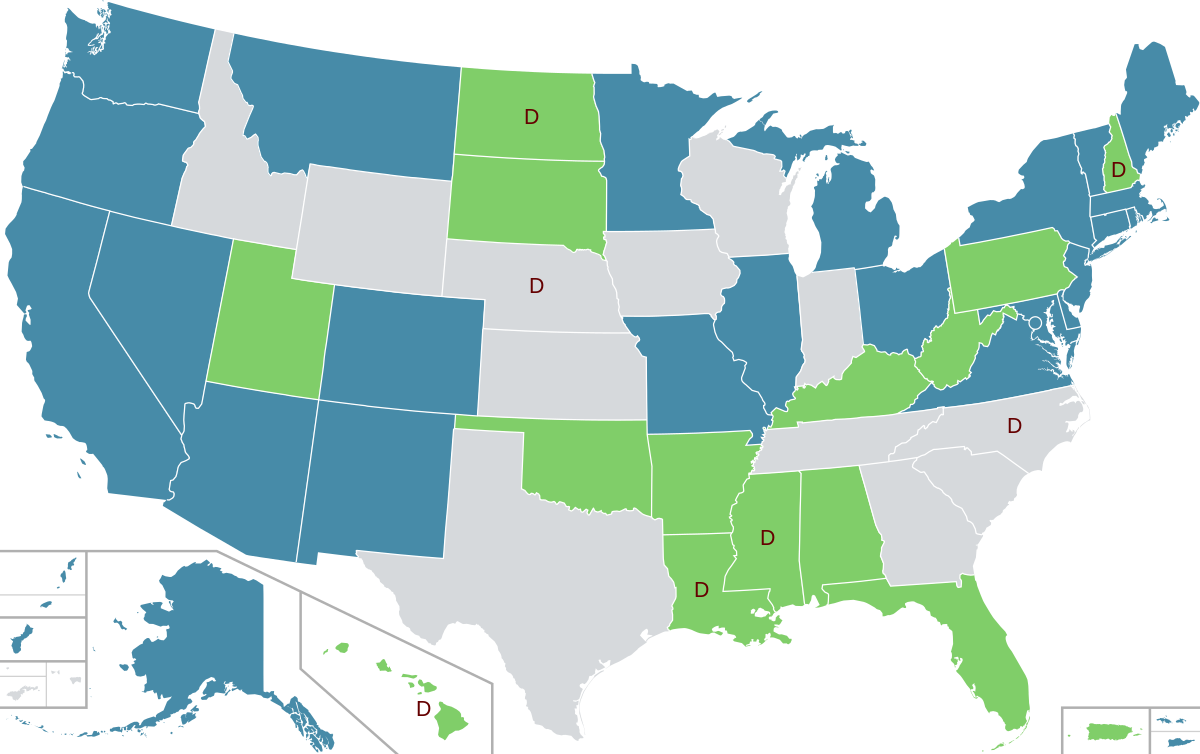
The list of states that have legalized recreational weed is expected to grow, with several more poised to put the issue on the ballot in upcoming election cycles. However, the true “tipping point” for the industry’s finances will be federal rescheduling or descheduling.
The Impact of Rescheduling
If the federal government moves cannabis from Schedule I to Schedule III (as currently proposed by the Department of Health and Human Services), the financial landscape would transform overnight. Most importantly, Section 280E would no longer apply, instantly increasing the profitability and cash flow of every legal operator in the country. This would likely trigger a massive influx of institutional capital from traditional private equity firms and hedge funds that have previously stayed on the sidelines.
Global Market Positioning
As more U.S. states legalize, the domestic industry is positioning itself for the eventual opening of international trade. Currently, cannabis cannot be legally moved across state lines or international borders. Once these barriers fall, the states that have established robust cultivation and processing infrastructures—such as Oregon, California, and Michigan—could become major exporters to the global market, turning a domestic retail trend into a significant component of the U.S. trade balance.
In conclusion, the states that have legalized recreational weed have done more than just change their criminal codes; they have birthed a complex and high-stakes financial frontier. For the modern investor or business professional, understanding the nuances of these state markets, the intricacies of their tax models, and the regulatory hurdles they face is essential for navigating one of the most dynamic economic shifts of the 21st century.
aViewFromTheCave is a participant in the Amazon Services LLC Associates Program, an affiliate advertising program designed to provide a means for sites to earn advertising fees by advertising and linking to Amazon.com. Amazon, the Amazon logo, AmazonSupply, and the AmazonSupply logo are trademarks of Amazon.com, Inc. or its affiliates. As an Amazon Associate we earn affiliate commissions from qualifying purchases.