
Small Scale Industries (SSIs) are more than just businesses operating on a smaller footprint; they are the vibrant capillaries of a nation’s economy, crucial for fostering innovation, generating employment, and distributing wealth. From the bustling workshops of artisans to the tech-driven startups that begin in a garage, SSIs represent the entrepreneurial spirit in action, translating ideas into economic value. This article delves into the essence of what small scale industries are, examining their critical role from a financial and economic perspective, exploring how they generate income, impact personal and business finance, and present compelling investment opportunities. Understanding SSIs is key to comprehending the mechanics of wealth creation at the grass-roots level and appreciating the dynamism they bring to local and global economies.
Defining Small Scale Industries: More Than Just Size
At their core, Small Scale Industries are businesses characterized by their modest investment in plant and machinery, typically operating with a limited workforce and catering to specific market segments. However, their definition extends beyond mere physical dimensions; it encompasses their economic contribution, operational nuances, and their pivotal role in the financial ecosystem.
The Core Financial Metrics
The most common criteria for classifying SSIs revolve around financial thresholds, primarily the investment in plant and machinery, and sometimes, annual turnover. These metrics are critical because they dictate eligibility for various government schemes, loans, and financial incentives designed to bolster smaller enterprises.
- Investment in Plant & Machinery: This is often the primary financial differentiator. Governments establish specific monetary limits for the cost of machinery and equipment, excluding land and building. For instance, in many developing economies, an SSI might be defined as an entity with an investment below a certain threshold (e.g., $1 million USD or equivalent). This threshold directly impacts capital allocation, financing needs, and the overall business finance strategy.
- Turnover/Revenue Thresholds: While investment limits focus on fixed assets, turnover limits define the operational financial scale. Businesses exceeding a particular annual sales figure might be reclassified, indicating a higher level of market penetration and financial activity. This metric is crucial for assessing market size, potential for online income generation, and scaling capacity.
- Employment Figures: Although not always the sole defining criterion, the number of employees is an indirect financial metric. A smaller workforce generally implies lower payroll costs, but also limitations in production capacity, influencing overall revenue potential and business finance management. For individuals seeking side hustles that could evolve into full-fledged businesses, understanding these employment dynamics is vital.
These financial parameters are not arbitrary; they are meticulously crafted to identify businesses that require targeted support to compete against larger corporations. They highlight the initial capital outlay required for starting and sustaining such enterprises, directly impacting an entrepreneur’s personal finance decisions and the availability of business finance from external sources.
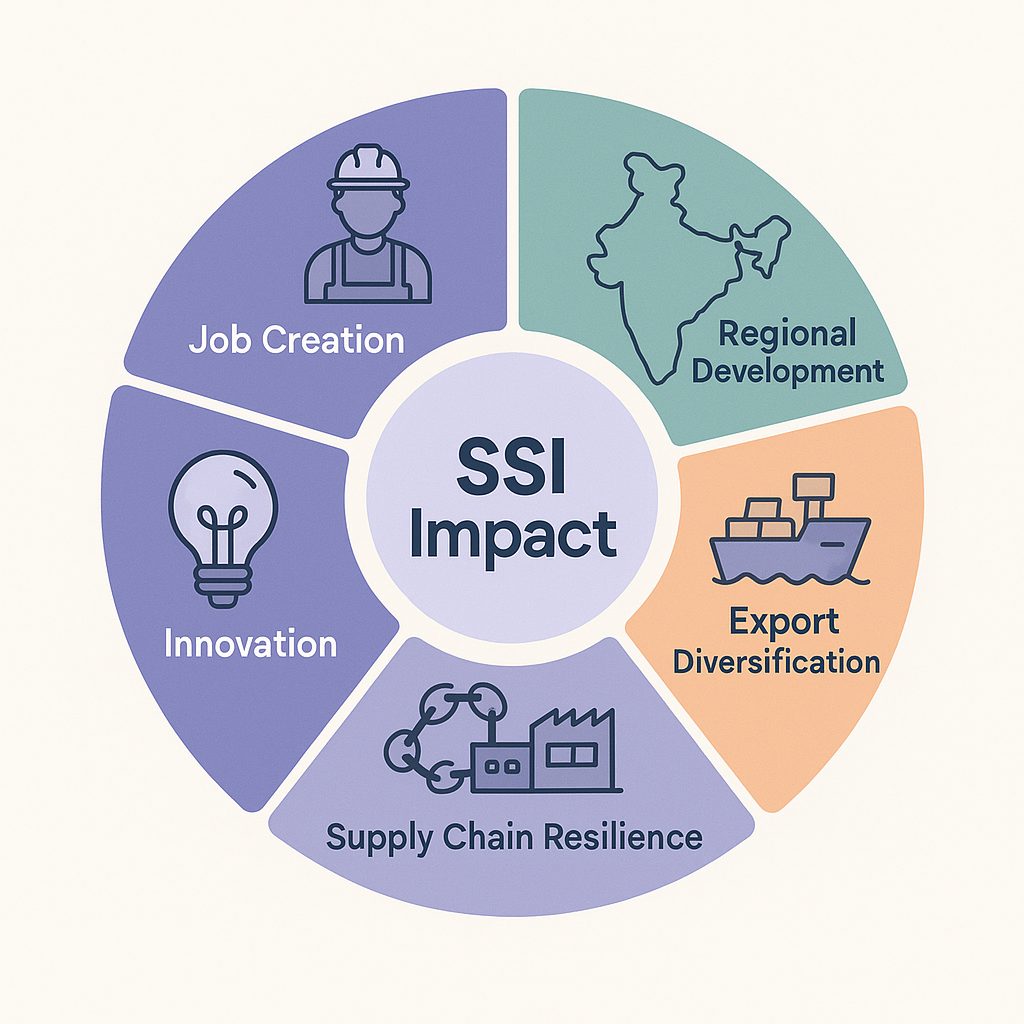
Beyond the Balance Sheet: Economic and Social Contributions
While financial metrics categorize SSIs, their true value is amplified by their broader economic and social impact, all of which ultimately translate into financial gains and wealth creation for individuals and communities.
- Job Creation: SSIs are massive engines of employment, often absorbing a significant portion of the labor force, especially in semi-urban and rural areas. Each job created translates into individual income, contributing to household personal finance and stimulating local economies. This makes them crucial for reducing unemployment and poverty, fostering a more equitable distribution of wealth.
- Local Economic Development: Money earned by SSIs and their employees tends to circulate within local communities, boosting demand for other local goods and services. This multiplier effect is a powerful driver of regional prosperity, making SSIs attractive for community-focused investing and economic planning.
- Entrepreneurship and Innovation: SSIs are often incubators for new ideas, products, and services. They provide a fertile ground for aspiring entrepreneurs to test concepts, innovate, and create new market niches. Many successful online income streams and side hustles eventually scale into SSIs, demonstrating this pathway from individual initiative to structured enterprise. This spirit of innovation frequently leads to new avenues for wealth generation.
- Import Substitution/Export Potential: By producing goods locally, SSIs can reduce a country’s reliance on imports, saving valuable foreign exchange. Conversely, many SSIs develop niche products with export potential, earning foreign currency and contributing to national economic growth. Both scenarios have direct financial benefits, enhancing a nation’s financial stability and global competitiveness.
The Financial Landscape of Small Scale Industries
Navigating the financial world is often the most challenging aspect for SSIs. Unlike large corporations with established credit lines and access to diverse capital markets, SSIs frequently grapple with securing adequate funding and managing their finances effectively.
Funding and Capital Access
The ability to access capital is paramount for the birth, survival, and growth of any SSI. The journey often begins with personal finance and scales up to more sophisticated business finance.
- Challenges Faced by SSIs: One of the most significant hurdles is perceived risk by lenders. Without extensive collateral or a long operational history, securing traditional bank loans can be difficult. High interest rates, stringent documentation, and slow processing times further complicate matters.
- Traditional Financing: This includes bank loans, credit lines, and overdraft facilities. These are foundational business finance tools, but often require a strong business plan, clear financial projections, and sometimes, personal guarantees from the owner, impacting personal finance directly.
- Alternative Financing: The digital age has opened new avenues. Crowdfunding platforms allow SSIs to raise capital from a large number of small investors, often leveraging online income principles. Angel investors and venture capitalists specifically seek out promising SSIs with high growth potential, offering not just capital but also mentorship in exchange for equity, representing a significant form of external investing.
- Government Schemes and Subsidies: Recognizing their economic importance, many governments offer targeted financial support, subsidies, tax breaks, and collateral-free loans to SSIs. These schemes are critical financial tools designed to de-risk investment and encourage entrepreneurial activity.
- Self-funding/Bootstrapping: Many SSIs begin with the entrepreneur’s personal savings, credit cards, or by reinvesting profits from early sales. This bootstrapping approach is common for individuals turning a successful side hustle or online income stream into a formal business, making personal finance management inextricably linked to business growth.
Managing Business Finance for Sustainability
Beyond securing initial capital, the daily management of finances is crucial for an SSI’s long-term viability and profitability. Effective financial stewardship is what distinguishes a thriving business from one that merely survives.
- Importance of Robust Financial Planning: This involves creating detailed budgets, financial forecasts, and cash flow projections. A clear financial roadmap helps SSIs allocate resources efficiently, identify potential shortfalls, and plan for future growth, directly impacting their profitability.
- Profitability and Cost Control Strategies: SSIs must constantly monitor their profit margins and identify areas for cost reduction without compromising quality. This includes optimizing operational expenses, negotiating with suppliers, and improving production efficiency. Every dollar saved on costs directly boosts the bottom line.
- Inventory Management: Capital locked up in excessive inventory is money not earning a return. Efficient inventory management minimizes holding costs and prevents stockouts, ensuring capital is used productively.
- Pricing Strategies: Setting the right price is a delicate balance. It must cover costs, generate a healthy profit margin, and remain competitive. Pricing too low can erode profits, while pricing too high can deter customers, both affecting the financial health of the business.
- Understanding Financial Statements: Entrepreneurs must be able to interpret their Profit & Loss statements, Balance Sheets, and Cash Flow statements. These financial tools provide a snapshot of the business’s health, helping identify trends, make informed decisions, and track progress towards financial goals.
Investment Opportunities and Wealth Creation through SSIs

Small Scale Industries are not just vehicles for entrepreneurs to create wealth; they also offer compelling avenues for investors and contribute to broader economic prosperity. Their dynamism provides diverse opportunities for both direct and indirect financial engagement.
Direct Investment in Small Businesses
For those looking to deploy capital, SSIs present several attractive options that align with various investing strategies.
- As an Entrepreneur: Starting your own SSI is perhaps the most direct form of investment. It involves investing your time, skills, and personal finance into building a business from the ground up. Many successful ventures begin as a passion project or a side hustle that generates online income, eventually formalizing into an SSI. This path offers the potential for significant personal wealth creation and autonomy.
- As an Angel Investor or VC: For accredited investors, funding promising SSIs offers the potential for high returns, albeit with higher risk. Angel investors provide seed money in exchange for equity, often becoming mentors. Venture Capital (VC) firms invest larger sums in growth-stage SSIs, aiming for substantial returns upon acquisition or IPO. This type of investing directly fuels innovation and economic expansion.
- Local Community Investing: Supporting local small businesses can be a financially and socially rewarding form of investing. This might involve purchasing local bonds, participating in community-based lending programs, or directly investing in a neighbor’s business. It strengthens local economies and offers returns that might be tied to community development.
Indirect Investment and Supporting Ecosystems
Beyond direct equity or debt, there are ways to financially benefit from the SSI ecosystem through indirect investment.
- Investing in Companies that Supply SSIs: Many publicly traded companies derive significant revenue from supplying materials, components, or services to SSIs. Investing in these “picks and shovels” providers can be a less risky way to benefit from the growth of the SSI sector.
- Role of Financial Institutions and Fintech Platforms: Banks, microfinance institutions, and increasingly, fintech companies develop specialized financial tools and services for SSIs. Investing in these institutions or platforms can offer exposure to the broader SSI lending and support market. These platforms often leverage technology to streamline credit assessment and delivery, making business finance more accessible.
- Government Bonds/Funds Supporting Industrial Development: Governments often issue bonds or create funds specifically aimed at developing industrial infrastructure or supporting specific sectors where SSIs thrive. Investing in these can offer stable returns while indirectly contributing to the growth of SSIs.
The Entrepreneurial Path: From Side Hustle to SSI
The evolution from a personal side hustle or an online income stream into a full-fledged SSI is a common and powerful narrative in wealth creation.
- Organic Evolution: Many profitable online ventures – a successful e-commerce store, a freelance consulting service, a content creation business – organically grow beyond what can be managed as a single-person operation. As revenue increases and demand scales, the need for formal structure, employees, and more substantial business finance becomes apparent, leading to the establishment of an SSI.
- The Financial Journey: This journey involves critical financial decisions. Initial investment might come from personal savings (personal finance), followed by reinvested profits. As the business grows, it may require venture capital or bank loans (business finance) to fund expansion, hire more staff, or invest in new equipment. Understanding this progression is crucial for anyone considering turning their entrepreneurial passion into a sustainable business.
- Personal Finance Implications: For the entrepreneur, this path blurs the lines between personal and business finance. Early stage investment often comes from personal funds, and the business’s success directly impacts personal wealth. Effective management of this intertwined financial landscape is vital for long-term success and to avoid undue personal risk.
Challenges and Opportunities for Financial Growth
While SSIs are vital, they face unique challenges that can impede their financial growth. However, these challenges often present opportunities for innovative solutions and strategic positioning.
Overcoming Financial Hurdles
The financial resilience of an SSI is constantly tested by various factors.
- Access to Credit and Capital: As discussed, this remains a perennial challenge. Limited collateral, high perceived risk, and stringent lending criteria often restrict growth.
- Market Competition and Pricing Pressures: SSIs often compete with larger players who benefit from economies of scale. This can lead to intense pricing pressures, squeezing profit margins and impacting the financial health of the SSI.
- Regulatory Compliance Costs: Navigating a complex web of licenses, permits, and tax regulations can be financially burdensome and time-consuming for small businesses with limited administrative staff.
- Skill Gaps: A shortage of skilled labor or management expertise can lead to inefficiencies, higher operational costs, and missed opportunities, directly impacting productivity and financial performance.
- Economic Downturns and Resilience: SSIs are often more vulnerable to economic shocks due to their limited reserves and smaller scale of operations. Building financial resilience through contingency planning and diversification is critical.
Leveraging Opportunities for Profitability
Despite the hurdles, SSIs are inherently adaptable and can leverage various opportunities for significant financial growth.
- Digital Transformation: Embracing digital tools and e-commerce platforms can drastically reduce marketing costs, expand market reach (generating online income), and streamline operations. Investing in technology can lead to significant cost reductions and efficiency gains.
- Niche Market Identification and Specialization: Instead of competing head-on with large corporations, SSIs can thrive by identifying and serving niche markets with specialized products or services. This strategy often allows for higher profit margins and greater customer loyalty.
- Strategic Partnerships and Collaborations: Collaborating with other SSIs, larger businesses, or even academic institutions can open new markets, share resources, reduce costs, and foster innovation, leading to mutual financial benefits.
- Export Potential for New Revenue Streams: With globalization and digital platforms, even small businesses can access international markets. Exporting can unlock new revenue streams, diversify income sources, and reduce dependence on local market fluctuations.
- Sustainable Practices: Adopting environmentally friendly and socially responsible practices can attract a growing segment of consumers and impact investors who prioritize ethical business. This can lead to increased sales, premium pricing, and access to impact-focused financing.

Conclusion
Small Scale Industries are unequivocally a cornerstone of economic growth and a powerful engine for both personal and national wealth creation. Their dynamism, capacity for innovation, and significant role in employment generation make them indispensable to a healthy financial ecosystem. From providing pathways for individuals to turn side hustles into substantial online income businesses, to offering compelling investment opportunities for those seeking to deploy capital, SSIs permeate every aspect of the “Money” landscape.
Understanding what small scale industries are, their financial metrics, the challenges they face, and the opportunities they present is crucial for entrepreneurs, investors, policymakers, and indeed, anyone interested in the foundational elements of economic prosperity. Supporting and fostering the growth of SSIs is not merely an act of economic development; it is an investment in a resilient, innovative, and financially inclusive future.
aViewFromTheCave is a participant in the Amazon Services LLC Associates Program, an affiliate advertising program designed to provide a means for sites to earn advertising fees by advertising and linking to Amazon.com. Amazon, the Amazon logo, AmazonSupply, and the AmazonSupply logo are trademarks of Amazon.com, Inc. or its affiliates. As an Amazon Associate we earn affiliate commissions from qualifying purchases.