
Selecting the appropriate kettlebell weight is a critical decision, akin to choosing the right software for a specific task or selecting a particular hardware component for optimal system performance. It’s not merely a purchase; it’s an investment in a fundamental fitness tool whose utility and effectiveness are directly tied to its specification. An incorrect weight can lead to inefficient workouts, plateaus in progress, or, worse, operational hazards and injury. This guide will help you benchmark your requirements and select the ideal kettlebell “hardware” for your fitness objectives.
Understanding Kettlebell Weight Selection as a Performance Metric
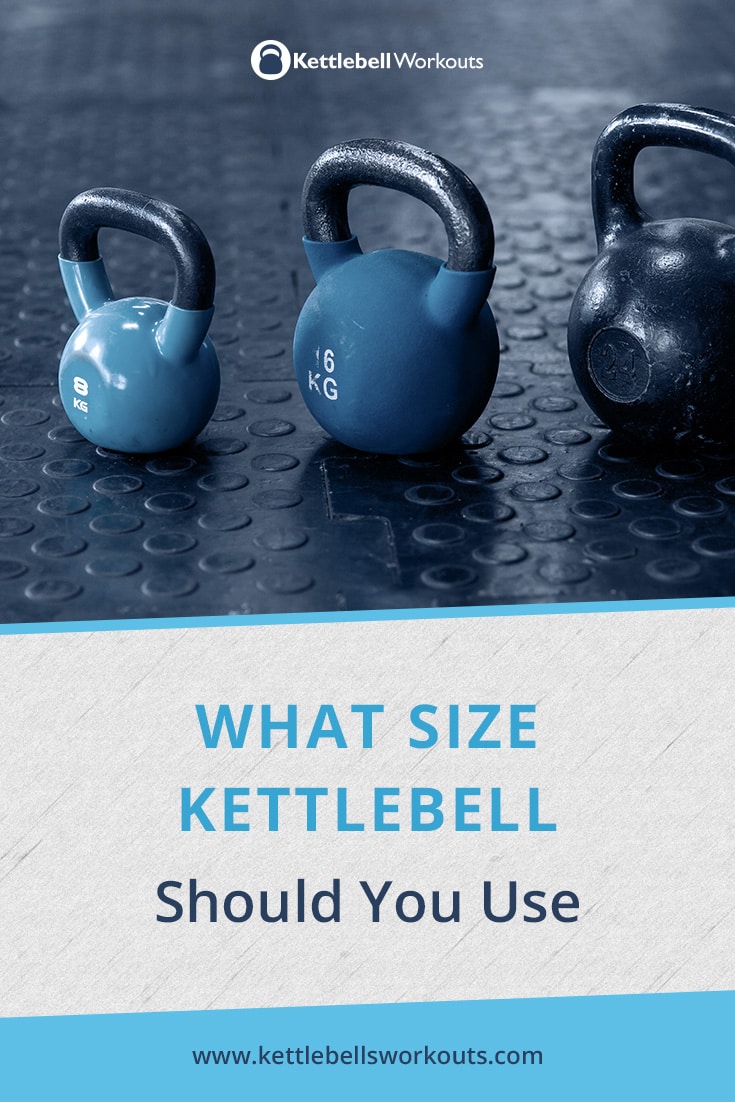
The kettlebell, as a piece of exercise technology, operates on principles of leverage, momentum, and functional strength. Its unique design necessitates a precise approach to weight selection, differentiating it from traditional dumbbells or barbells. The “size,” in this context, refers specifically to its mass, which directly dictates the resistance and dynamic load applied during movements.
The Fundamental Principle: Matching Tool to Task
Optimal performance with any tool, whether digital or physical, begins with understanding its intended function and matching it to the user’s current capabilities and desired outcome. For kettlebells, this means selecting a weight that allows for proper form and technique across a range of exercises, enabling progressive overload without compromising safety or efficiency. Too light, and the neurological pathways for power generation remain unchallenged; too heavy, and compensatory movements emerge, negating the exercise’s intended benefit and increasing risk.
Gender and Starting Points: General Guidelines
While individual variability is paramount, general benchmarks exist to provide a starting point for most users entering the kettlebell ecosystem. These are not rigid rules but rather typical “configurations” for initial deployment.
- For Men (General Fitness & Strength): Many men begin with a kettlebell in the range of 16kg (35 lbs) to 20kg (44 lbs). For those new to strength training or highly technical movements like the snatch, a lighter option around 12kg (26 lbs) might be a more suitable “entry-level” unit for mastering form. More experienced individuals might start at 24kg (53 lbs) or even 28kg (62 lbs).
- For Women (General Fitness & Strength): Women typically initiate their kettlebell journey with weights between 8kg (18 lbs) to 12kg (26 lbs). An 8kg unit is often ideal for learning complex movements, while a 12kg unit provides a good challenge for foundational exercises like swings and goblet squats. Stronger, more experienced women may comfortably begin with a 16kg (35 lbs) kettlebell.
It’s crucial to remember that these are starting recommendations. Your unique physiological “hardware” and prior experience with resistance training will significantly influence your optimal initial specification.
Factors Influencing Your Optimal Kettlebell “Specification”
Choosing the correct kettlebell weight is a multi-variable equation. Beyond general guidelines, several specific parameters must be evaluated to ensure you acquire a unit that maximizes your training utility and longevity.
Current Strength and Fitness Level
This is the most critical determinant. An honest assessment of your existing strength base is essential.
- Beginner: If you are new to strength training or new to kettlebells specifically, prioritize mastering movement patterns with a lighter weight. Focus on form, stability, and control. This phase is about “installing the software” correctly before increasing the “processing load.”
- Intermediate: You have a foundational understanding of strength training and perhaps some experience with kettlebells or similar free weights. You can maintain good form through multiple repetitions of basic exercises. You’re ready to incrementally increase the “bandwidth” of your workouts.
- Advanced: You possess significant strength, excellent body awareness, and a strong command of various kettlebell movements. You might be looking to push limits, train for specific performance goals, or integrate heavier units into a more complex training “system.”
Exercise Type and Goal
The intended application of the kettlebell dictates the optimal weight. Different exercises demand different specifications.
- Ballistic Movements (Swings, Snatches, Cleans): These dynamic, power-focused exercises allow for heavier weights due to the momentum generated. The goal is to produce explosive power, and a weight that feels challenging but controllable through the full range of motion is ideal. Too light, and you miss out on the power development; too heavy, and technique degrades rapidly.
- Grinding Movements (Goblet Squats, Presses, Rows, Turkish Get-Ups): These slower, strength-focused exercises require more direct muscular tension and control. You will generally use a lighter kettlebell for these than for ballistic movements. The Turkish Get-Up, for instance, is a complex, full-body stability exercise where even a seemingly light weight can be profoundly challenging and effective.
- Endurance/Flow Work: If your goal is high-repetition work, complexes, or “flow” training, a moderate weight that allows for continuous movement and metabolic conditioning will be most effective.
Technical Proficiency
The kettlebell is not just a weight; it’s a skill tool. Learning proper technique is non-negotiable. If you are learning a new movement, always start with a weight that allows you to execute the movement flawlessly. This may mean choosing a weight that feels “too light” initially. Think of it as “debugging” your form. A lighter kettlebell facilitates learning the motor patterns, understanding the role of the hips, core, and shoulders, and developing the necessary coordination. Attempting complex movements with excessive weight prematurely will ingrain poor form and significantly increase injury risk.
Progressive Overload and Future-Proofing Your Kit
Your strength will improve over time. A single kettlebell, while a great starting point, will eventually be outgrown for certain exercises. When planning your initial acquisition, consider the concept of progressive overload – gradually increasing the demands on your system.
- The “Next Step” Weight: It’s often beneficial to have a target weight in mind for when you master your current unit.
- The Multi-Kettlebell “System”: For comprehensive training, a collection of different weights often becomes necessary, especially if you plan to perform both ballistic and grinding exercises with appropriate resistance.

A Practical Guide to “Benchmarking” Your Kettlebell Choice
Before committing to a specific weight, perform these “test protocols” to assess your readiness and ensure the chosen kettlebell aligns with your current capabilities. These are functional assessments that mimic core kettlebell movements.
The “Swing Test”: Assessing Initial Suitability
- Purpose: To gauge your ability to generate power from the hips and safely control a kettlebell during the most fundamental ballistic movement.
- Procedure: Select a kettlebell you believe might be appropriate for swings (e.g., 16kg for men, 8-12kg for women). Perform 5-10 two-hand kettlebell swings.
- Evaluation:
- Can you hike the kettlebell strongly between your legs?
- Is your back flat at the bottom of the swing?
- Does the kettlebell float effortlessly at the top of the swing, driven by your hips, not your arms?
- Do you feel in control of the descent?
- If you can perform 10 swings with strong, crisp form, the weight is likely suitable for learning the swing. If it feels too heavy, compromises your back position, or relies heavily on arm pulling, opt for a lighter unit.
The “Press Test”: Evaluating Upper Body Capacity
- Purpose: To assess your overhead pressing strength, crucial for movements like the strict press, clean and press, and Turkish Get-Up.
- Procedure: Select a kettlebell and perform a single-arm strict press.
- Evaluation:
- Can you press the kettlebell overhead smoothly, without leaning excessively or using momentum from your legs?
- Does your shoulder feel stable throughout the movement?
- If you can perform 1-3 strict presses with good form, this weight is likely within your capacity for overhead work (though you may start lighter for Get-Ups). If you struggle significantly or cannot complete one strict press, it is too heavy for grinding overhead movements.
The “Goblet Squat Test”: Core and Leg Assessment
- Purpose: To check your core stability, squat mechanics, and lower body strength with an external load.
- Procedure: Hold a kettlebell by the horns against your chest. Perform 5-10 Goblet Squats.
- Evaluation:
- Can you maintain an upright torso throughout the squat?
- Can you squat to at least parallel (hips in line with or below knees) without your lower back rounding?
- Do your knees track in line with your toes?
- If you can perform 10 repetitions with deep, stable form, the weight is likely a good starting point for foundational leg and core exercises. If your form breaks down quickly, or you cannot maintain depth and posture, choose a lighter option.
The Multi-Kettlebell “Setup”: Building Your Fitness Toolkit
For serious enthusiasts, a single kettlebell quickly becomes a limiting factor. A more comprehensive “system” often involves multiple units to cater to varying exercise demands and progressive strength gains.
The “Starter Set”: Initial Investment Strategy
A common and effective strategy is to invest in two kettlebells initially:
- A “Technique” or “Light Grinding” Weight: This lighter unit (e.g., 8kg for women, 12kg for men) is perfect for learning new, complex movements like the Turkish Get-Up, practicing strict presses, or performing high-repetition conditioning work. It’s your “debug” and “fine-tuning” tool.
- A “Main Working” or “Ballistic” Weight: This heavier unit (e.g., 12-16kg for women, 16-24kg for men) is primarily for swings, cleans, and two-hand movements where greater resistance is beneficial. This is your “power core” unit.
This two-kettlebell setup provides significant versatility without a massive initial investment, allowing you to cover both skill development and primary strength/power work.
Expanding Your “Hardware”: Intermediate and Advanced Kits
As you progress, you’ll find utility in expanding your collection.
- Doubles Training: For advanced strength development, particularly in movements like double cleans, double presses, and front squats, owning two kettlebells of the same weight becomes essential.
- Incremental Gains: As you grow stronger, having kettlebells in smaller weight increments (e.g., 4kg or 8kg jumps instead of 12-16kg) allows for smoother progressive overload, optimizing adaptation without large, risky jumps in resistance.
- Specialized Units: Some advanced users may invest in very light kettlebells for rehabilitation or very heavy ones for specific strength challenges or competitive lifting.
Maintenance and Longevity of Your Fitness “Hardware”
While a kettlebell is a robust piece of equipment, understanding its characteristics and basic care ensures its longevity and consistent performance.
Material Considerations and Grip Interface
Most kettlebells are cast iron. Pay attention to the finish and handle circumference.
- Raw Cast Iron: Often preferred by experienced lifters as it holds chalk well, providing superior grip in ballistic movements. However, it can rust if not properly maintained.
- Powder Coat: A common, durable finish that offers a good balance of grip and rust resistance.
- Vinyl/Neoprene Coated: These are typically found on lighter, entry-level kettlebells. While visually appealing and protective of floors, the thicker coating on the handle can sometimes compromise grip feel and technique for advanced movements.
The handle’s diameter and texture are crucial “user interface” elements. Ensure it feels comfortable and secure in your grip, especially during dynamic exercises where friction and stability are paramount.
Storage and Care to Preserve Performance
Kettlebells are designed to be durable, but proper storage prevents cosmetic damage and maintains the handle’s integrity. Store them in a dry area to prevent rust, especially for raw cast iron models. Regularly wipe them down to remove sweat and chalk residue. While seemingly minor, a well-maintained kettlebell performs better and lasts longer, ensuring your fitness investment continues to deliver peak performance for years to come.
aViewFromTheCave is a participant in the Amazon Services LLC Associates Program, an affiliate advertising program designed to provide a means for sites to earn advertising fees by advertising and linking to Amazon.com. Amazon, the Amazon logo, AmazonSupply, and the AmazonSupply logo are trademarks of Amazon.com, Inc. or its affiliates. As an Amazon Associate we earn affiliate commissions from qualifying purchases.