
In the intricate world of technology, from the smallest smart device to the most complex industrial robot, the integrity of physical connections is paramount. While software and circuits often capture the headlines, the unsung heroes of hardware — fasteners — provide the crucial structural foundation. Among these, the M6 designation stands as a ubiquitous standard, a silent workhorse found across countless tech applications. Understanding “what size is M6” is not merely about a dimension; it’s about grasping a fundamental aspect of engineering precision that underpins design, assembly, repair, and innovation in the tech landscape.
Decoding the M6 Standard: A Foundation of Tech Design
The “M6” designation is part of the ISO metric screw thread standard, a globally recognized system that ensures compatibility and consistency in manufacturing. For anyone working with or analyzing technology, comprehending this standard is essential for proper component selection, maintenance, and modification.

The Metric Fastener System Explained
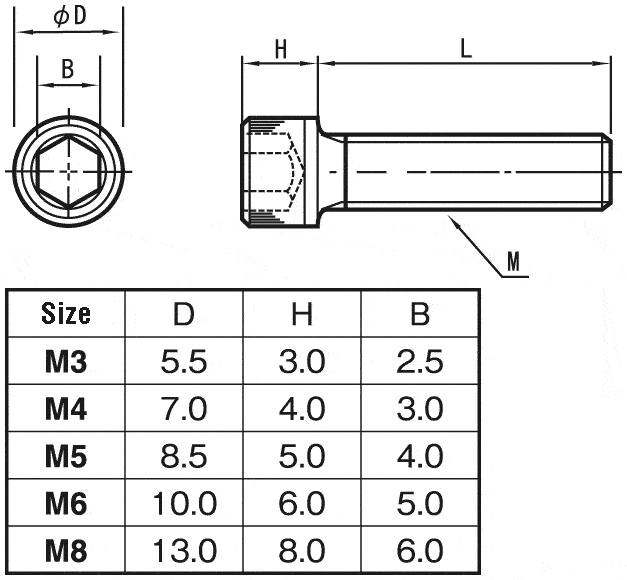
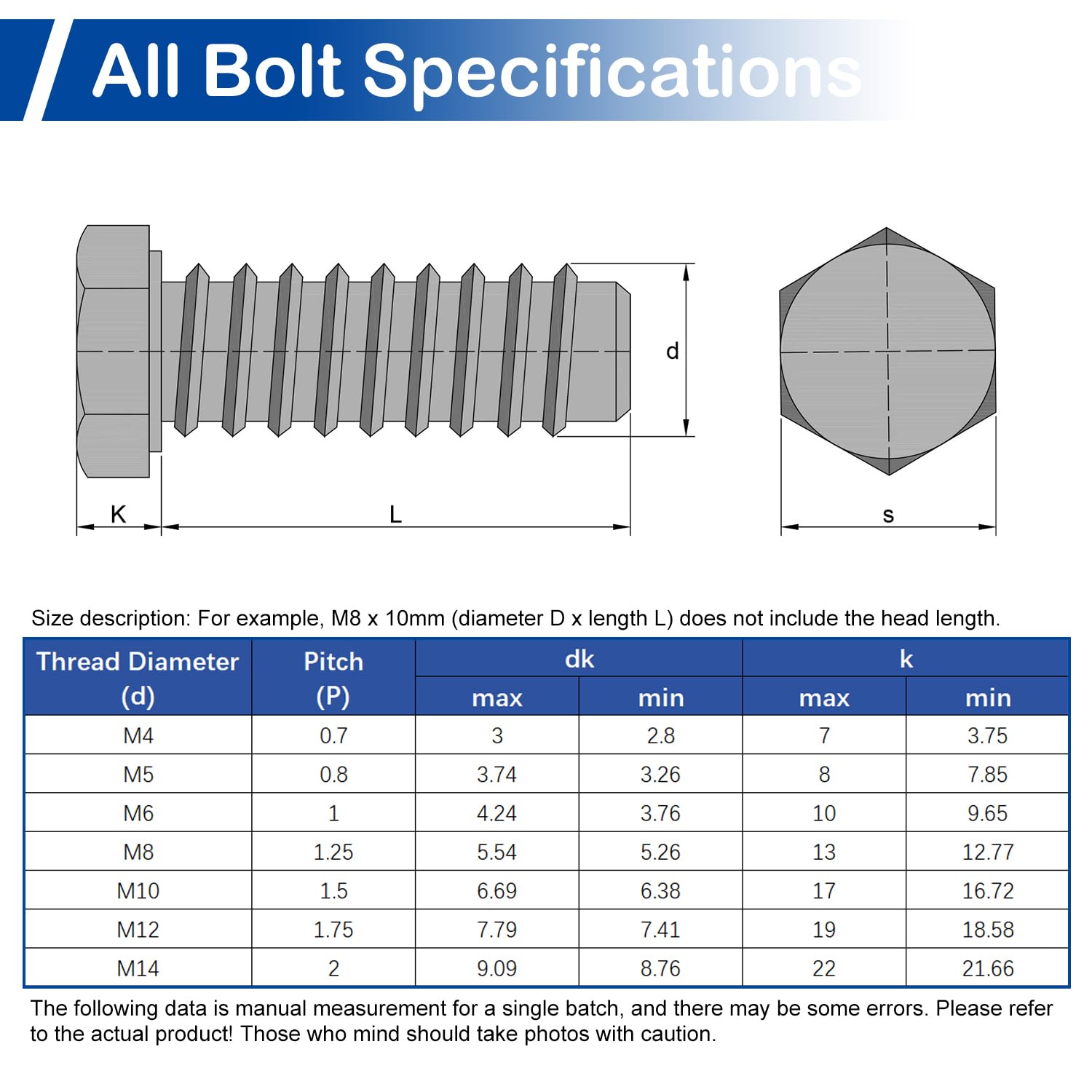
The “M” in M6 stands for “Metric,” indicating that the fastener adheres to the metric system of measurement. This immediately distinguishes it from imperial (inch-based) fasteners. The number “6” immediately following the “M” denotes the nominal diameter of the screw or bolt in millimeters. Specifically, for an M6 bolt, this means the major diameter of the external thread (the bolt) is approximately 6 millimeters. Correspondingly, an M6 nut or a tapped hole designed for an M6 bolt will have an internal thread perfectly matched to accept this 6mm diameter.
However, the size of a metric thread is not solely defined by its nominal diameter. A complete metric thread designation also includes the pitch, which is the distance between adjacent threads. For M6, the most common standard pitch is 1.0mm, often referred to as a “coarse” thread. So, a full specification might be M6x1.0. There are also “fine” pitches for M6, such as M6x0.75, which offer different performance characteristics like increased resistance to loosening under vibration or finer adjustment capabilities. When the pitch is omitted (e.g., just “M6”), the coarse pitch is almost always implied.
Nominal Diameter vs. Thread Pitch
It’s critical for tech professionals and hobbyists alike to differentiate between these two aspects. The nominal diameter (6mm) ensures the bolt fits into the correct-sized hole or nut, dictating the overall “thickness” of the fastener. The thread pitch (e.g., 1.0mm or 0.75mm) dictates how coarse or fine the threads are. Using an M6 bolt with a 1.0mm pitch in a hole tapped for an M6 bolt with a 0.75mm pitch will result in cross-threading, damage, and a failed connection. This seemingly small detail has significant implications for the structural integrity and longevity of any assembled tech product. Understanding this ensures proper assembly, preventing costly damage to components like mounting brackets for servers, enclosures for embedded systems, or structural elements in robotics.
M6 in Action: Where Technology Meets Precision
The M6 fastener’s combination of moderate size, strength, and standardization makes it incredibly versatile. Its presence spans across diverse technological sectors, from consumer electronics to heavy industrial machinery. Its widespread adoption is a testament to its reliability and the ease with which it can be integrated into designs globally.
Consumer Electronics and Gadgets
While smaller fasteners (M1-M3) dominate the internal workings of smartphones and ultrabooks, M6 fasteners play a crucial role in larger consumer electronics. Think about mounting brackets for flat-screen TVs, securing components in home theater systems, or assembling ergonomic stands for monitors. Even high-end audio equipment or specialized camera rigs often utilize M6 bolts for robust, secure attachments. In the DIY and maker community, M6 bolts are frequently found in custom 3D printer frames, CNC machine builds, and robotics kits, providing strong, reliable connections for structural elements that experience stress or need precise alignment.
Robotics, Automation, and 3D Printing
In the realm of robotics and industrial automation, M6 fasteners are indispensable. Robotic arms, automated assembly lines, and motion control systems rely on M6 bolts for critical structural joints, motor mounts, and sensor attachments. Their size offers a good balance between load-bearing capacity and spatial footprint, making them suitable for transmitting force and holding components securely under dynamic conditions.
Similarly, 3D printing enthusiasts and manufacturers often incorporate M6 hardware into their printer designs. From securing the frame extrusions to mounting hotends and stepper motors, M6 bolts provide the necessary rigidity and adjustability. The precise threading ensures that components can be accurately positioned and maintained, which is vital for achieving high-quality prints and reliable machine operation. In many open-source hardware projects, M6 is a common choice due to its availability and known specifications.
PC Builds and Server Racks
For anyone who has delved into building a custom PC or setting up a server rack, M6 fasteners are a familiar sight. While smaller screws hold internal components, M6 bolts are often used for mounting heavy power supplies, securing liquid cooling radiators, or attaching specialized cases to frames. In data centers, M6 cage nuts and bolts are standard for mounting servers, network switches, and other rack-mounted equipment into 19-inch server cabinets. The robustness of M6 ensures that expensive and heavy equipment remains securely fixed, even during transportation or in environments with vibrations. The standardization here is key, allowing for universal compatibility across different brands of racks and equipment, simplifying IT infrastructure deployment and maintenance.
Beyond Dimensions: Material, Strength, and Finish for Tech Applications
While the size specification (M6) is foundational, the performance and suitability of a fastener for a given tech application extend far beyond its dimensions. The material from which an M6 bolt is made, its inherent strength, and any applied finishes critically impact its durability, reliability, and appropriateness for specific environmental or operational conditions.
Material Selection: Steel, Stainless, Nylon
The material choice for M6 fasteners is driven by the demands of the application:
- Steel (Carbon Steel): The most common and economical choice, offering high tensile strength. Often found in general-purpose applications in consumer electronics and machinery. Different grades (e.g., 8.8, 10.9, 12.9) denote varying levels of strength. Higher-grade steel bolts are crucial for high-stress applications in robotics or heavy-duty mounting.
- Stainless Steel (e.g., A2/304, A4/316): Provides excellent corrosion resistance, making it ideal for outdoor tech installations, marine electronics, or environments with high humidity or exposure to chemicals. While generally weaker than high-strength carbon steel, its resistance to rust and staining is invaluable for preserving aesthetic and functional integrity over time in specialized tech.
- Nylon/Plastic: Used for applications requiring electrical insulation, lightweight solutions, or situations where metal-on-metal contact needs to be avoided (e.g., preventing galvanic corrosion or magnetic interference). Nylon M6 bolts are common in certain PCB standoffs, light enclosures, and where non-conductive properties are paramount. They offer lower strength but unique advantages.
Tensile Strength and Load Bearing
The tensile strength of an M6 fastener dictates how much pulling force it can withstand before breaking. This is a crucial specification for structural components in robotics, heavy equipment mounting, or any application where the fastener will be under significant load or stress. For steel bolts, strength grades (e.g., 8.8, 10.9, 12.9) are clearly marked on the bolt head. An M6 Grade 8.8 bolt has a nominal tensile strength of 800 MPa, while a Grade 12.9 bolt offers 1200 MPa. Selecting the correct strength grade is vital for safety, longevity, and preventing catastrophic failure in tech systems, particularly in moving parts or load-bearing structures. Over-tightening can also stress a bolt beyond its yield strength, leading to premature failure even below its ultimate tensile strength.
Finishes and Environmental Resistance
Finishes applied to M6 fasteners serve both protective and functional purposes:
- Zinc Plating: A common, cost-effective finish that provides moderate corrosion resistance and a bright, aesthetic appearance. Suitable for indoor tech applications where direct moisture exposure is minimal.
- Black Oxide: Offers mild corrosion resistance and a non-reflective, black finish. Often used in electronics enclosures and optical equipment where glare needs to be minimized.
- Hot-Dip Galvanizing: Provides superior corrosion resistance due to a thicker zinc coating, making it suitable for outdoor or harsh industrial tech environments, though it can affect thread fit.
- Nickel Plating: Offers good corrosion resistance and wear resistance, often used in precision components or where a bright, durable finish is desired.
- Thread-Locking Patches: Pre-applied patches (e.g., nylon patches) provide increased resistance to vibrational loosening, critical for tech applications with moving parts or in environments prone to vibration (e.g., drone components, industrial machinery).
Choosing the right finish ensures that the M6 fastener not only holds components together but also withstands its operational environment, preventing premature failure due to corrosion, wear, or loosening.
Selecting the Right M6 Fastener for Your Tech Project
Armed with a deeper understanding of M6 fasteners, selecting the correct one for your tech project moves from guesswork to an informed decision. Whether you are assembling a new gadget, repairing an existing piece of equipment, or designing a novel system, precision in fastener selection is non-negotiable.
Tools for Measurement and Verification
Even with the “M6” label, verifying dimensions is always a good practice, especially when dealing with unknown fasteners or critical applications.
- Digital Calipers: Essential for accurately measuring the major diameter (approx. 6mm) and the length of a bolt.
- Thread Pitch Gauge: A simple but invaluable tool for identifying the thread pitch (e.g., 1.0mm or 0.75mm). Matching the gauge to the threads ensures you’re using the correct pitch.
- Go/No-Go Gauges: For high-volume manufacturing or quality control, these specialized gauges quickly verify if a thread’s diameter and pitch are within specified tolerances.
These tools help prevent costly mistakes, such as attempting to force an incorrect fastener, which can strip threads and damage valuable components.
Common M6 Lengths and Head Types
M6 bolts come in a vast array of lengths, typically ranging from 8mm to over 100mm, allowing for versatility in material thickness and clamping requirements. Common lengths include 10mm, 12mm, 16mm, 20mm, 25mm, 30mm, 40mm, and 50mm. The choice of length depends on the thickness of the materials being joined, plus an allowance for adequate thread engagement (typically 1.5 to 2 times the nominal diameter in softer materials, or 1 to 1.5 times in harder materials).
Head types also vary to suit different applications and aesthetic preferences:
- Hex Head: Most common, providing good torque transmission and easy wrench access.
- Socket Head Cap Screw (SHCS): Offers a clean, low-profile finish and requires an Allen key (hex wrench) for tightening. Preferred in compact enclosures or where external tools are undesirable.
- Button Head: Similar to SHCS but with a rounded, decorative head, often used in visible areas.
- Flat Head (Countersunk): Designed to sit flush with the surface, ideal for applications where protrusions are undesirable, requiring a countersunk hole.
- Pan Head: A slightly rounded, domed head, often used with Phillips or Torx drives for a general-purpose, non-intrusive finish.
Choosing the right head type is crucial for accessibility, aesthetics, and the desired level of flushness or protrusion in the final tech assembly.
Preventing Stripping and Cross-Threading
Improper installation of M6 fasteners can lead to stripping or cross-threading, severely compromising the joint’s integrity.
- Start by Hand: Always start threading an M6 bolt into a nut or tapped hole by hand. This allows you to feel for proper alignment and prevents cross-threading (where threads don’t align and cut a new, incorrect path).
- Use the Right Tools: Use appropriately sized wrenches, sockets, or hex keys. Worn tools can slip, damaging the fastener head or applying uneven torque.
- Torque Specifications: For critical tech applications (e.g., motor mounts, pressure-sealed enclosures), always adhere to specified torque values. Over-tightening can stretch and weaken the bolt, or strip the internal threads of the mating component. Under-tightening can lead to vibrational loosening. Torque wrenches are invaluable for achieving precise and consistent clamping forces.
- Lubrication: In some cases, applying a small amount of thread lubricant can reduce friction, allowing for more accurate torque application and preventing galling, especially with stainless steel fasteners.
By diligently applying these practices, anyone working with M6 fasteners can ensure robust, reliable, and long-lasting connections, contributing to the overall quality and performance of their technological endeavors. From the foundational design to the final assembly, the “size” of M6 extends far beyond its 6mm diameter, representing a comprehensive standard vital to modern technology.
aViewFromTheCave is a participant in the Amazon Services LLC Associates Program, an affiliate advertising program designed to provide a means for sites to earn advertising fees by advertising and linking to Amazon.com. Amazon, the Amazon logo, AmazonSupply, and the AmazonSupply logo are trademarks of Amazon.com, Inc. or its affiliates. As an Amazon Associate we earn affiliate commissions from qualifying purchases.