
The quest for healthier, thicker hair has led many to explore a variety of innovative personal care technologies. Among these, the derma roller stands out as an accessible and increasingly popular gadget for stimulating scalp health and potentially promoting hair growth. Often categorized under the umbrella of microneedling devices, this handheld tool, initially popularized in dermatology for skin rejuvenation, has found a dedicated application in the realm of trichology. However, the efficacy and safety of using a derma roller for hair are profoundly influenced by one critical factor: the needle size. Navigating the array of available sizes is essential for anyone considering this technology for their hair care regimen, ensuring both optimal results and the avoidance of potential scalp damage.
Understanding Derma Rollers: A Gadget for Scalp Health
At its core, a derma roller is a mechanical device equipped with numerous tiny needles that, when rolled over the skin, create microscopic punctures. This process, known as microneedling, initiates a controlled injury response in the treated area, triggering a cascade of physiological benefits. For the scalp, this mechanism is particularly interesting due to its potential to address common concerns like hair thinning and loss.
How Microneedling Technology Works
The fundamental principle behind microneedling technology is the stimulation of the body’s natural healing processes. When the small needles of a derma roller penetrate the outermost layer of the skin (epidermis) and sometimes deeper into the dermis, they create micro-channels. These channels serve two primary purposes. First, they enhance the absorption of topical hair growth serums, oils, and solutions by allowing them to bypass the skin’s natural barrier and reach the hair follicles more effectively. Second, and perhaps more significantly, the microscopic wounds trick the body into initiating a repair response. This involves increased blood flow to the area, the release of growth factors, and the production of collagen and elastin—proteins crucial for healthy tissue regeneration.
The Core Function of Derma Rollers for Hair
For hair growth, the benefits derived from a derma roller’s microneedling action are multifaceted. The improved circulation delivers more nutrients and oxygen to dormant or miniaturizing hair follicles, potentially revitalizing them. The growth factors released during the healing process are known to stimulate hair follicle stem cells, encouraging the transition of follicles from the resting (telogen) phase to the active growth (anagen) phase. Furthermore, the collagen production can help strengthen the dermal papilla, a structure vital for hair growth, and improve the overall environment of the scalp. While not a standalone cure for all forms of hair loss, integrating a derma roller into a hair care routine can significantly amplify the effects of other treatments and foster a healthier scalp ecosystem.
Decoding Derma Roller Needle Sizes for Hair Growth
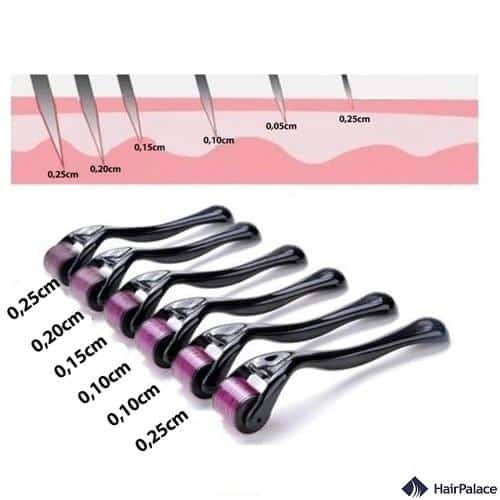
The effectiveness and safety of derma rolling for hair depend almost entirely on selecting the appropriate needle length. Using a size that is too small might yield insufficient results, while a size that is too large can lead to pain, irritation, infection, and even permanent damage to the scalp and hair follicles. Each needle size is designed for a specific depth of penetration and, consequently, a different set of outcomes and frequency of use.
The Smallest Needles: 0.2mm – 0.25mm
These are the most common and safest sizes for beginners and frequent use.
- Penetration Depth: These ultra-fine needles primarily penetrate the stratum corneum (outermost layer of the epidermis) without reaching the dermis.
- Primary Benefit: Their main function is to enhance the absorption of topical hair growth treatments (like minoxidil, peptides, or serums) by creating temporary micro-channels. They do not significantly stimulate collagen production.
- Frequency: Can be used daily or every other day, as they cause minimal trauma and require little recovery time.
- User Experience: Virtually painless, with only a slight tingling sensation.
- Ideal For: Individuals looking to maximize the efficacy of their existing topical hair growth products, improve overall scalp health, or as an introductory step to microneedling technology.
Moderate Needles: 0.5mm
The 0.5mm derma roller is often considered the “sweet spot” for at-home hair growth stimulation due to its balance of effectiveness and safety.
- Penetration Depth: These needles reach the epidermis and superficial dermis, triggering a mild wound-healing response.
- Primary Benefit: This size is effective for stimulating collagen induction, increasing blood flow, and releasing growth factors, all of which are beneficial for hair follicle health and awakening dormant follicles. It also significantly enhances the absorption of topical products.
- Frequency: Typically recommended for use once a week or bi-weekly, allowing the scalp sufficient time to heal and regenerate.
- User Experience: May cause mild discomfort, a pricking sensation, and slight redness post-treatment. Numbing cream is usually not required.
- Ideal For: Most individuals experiencing mild to moderate hair thinning or loss who are comfortable with a more impactful treatment than merely enhancing absorption. It’s a popular choice for pairing with minoxidil.
Advanced Needles: 0.75mm – 1.0mm
These needle lengths offer a more intensive treatment and are generally reserved for experienced users or those seeking more aggressive intervention.
- Penetration Depth: These needles penetrate deeper into the dermis, initiating a stronger wound-healing response and more substantial collagen remodeling.
- Primary Benefit: They are particularly effective for stimulating significant collagen production, promoting robust growth factor release, and potentially targeting deeper hair follicle issues. They provide a pronounced effect for both absorption and regeneration.
- Frequency: Recommended for use every 2-4 weeks, depending on the individual’s healing capabilities and scalp sensitivity. Overuse can lead to scarring.
- User Experience: Can cause moderate pain, significant redness, and potentially some pinpoint bleeding. Numbing cream may be considered for comfort.
- Ideal For: Individuals with more stubborn hair loss patterns, those who have plateaued with 0.5mm rollers, or under professional guidance. Requires careful technique and strict sterilization.
Professional Use Only: 1.5mm and Beyond
Derma rollers with needle lengths of 1.5mm and greater are typically used in clinical settings by trained professionals.
- Penetration Depth: These lengths reach deep into the reticular dermis, capable of inducing significant tissue remodeling.
- Primary Benefit: While highly effective for deep scarring or advanced skin conditions, for the scalp, these sizes carry substantial risks if not administered correctly. The potential for damaging hair follicles, scarring, and infection is significantly higher.
- Frequency: Extremely infrequent, as dictated by a professional.
- User Experience: Painful, requires topical anesthetic, and involves a longer recovery period.
- Ideal For: Should only be used by professionals for specific, severe conditions, not for general at-home hair growth purposes. Using such a device at home is strongly discouraged.
Factors Influencing Your Derma Roller Size Choice
Selecting the correct derma roller size isn’t just about understanding the needle lengths; it’s also about personal factors that dictate safety and efficacy for your specific needs.
Your Experience Level

For absolute beginners to microneedling technology, starting with a 0.2mm or 0.25mm roller is highly advisable. This allows you to familiarize yourself with the technique, assess your scalp’s sensitivity, and establish a sterile routine without the risk of significant injury. As you gain confidence and your scalp adapts, you might consider gradually progressing to a 0.5mm device. Jumping directly to longer needles without prior experience can lead to improper technique, excessive pressure, and adverse reactions.
Desired Outcome and Scalp Sensitivity
Consider what you aim to achieve. If your primary goal is to boost the absorption of topical serums, a 0.25mm roller is sufficient. If you’re seeking to stimulate collagen and growth factors for hair regrowth, a 0.5mm or potentially a 0.75mm roller will be more effective. Your scalp’s sensitivity is also a crucial determinant. Some individuals have more delicate scalps that react strongly to even minimal penetration. If you experience significant pain or prolonged irritation with a certain size, it’s wise to revert to a smaller size or reduce the frequency of use. Listen to your body and prioritize scalp health over aggressive treatment.
Combining with Topical Treatments
The synergy between derma rolling and topical hair growth treatments is well-documented. If you’re using products like minoxidil or specific hair growth serums, the micro-channels created by a derma roller can dramatically improve their penetration. For maximum absorption of these products without initiating a deep wound healing response, a 0.2mm-0.5mm roller is ideal. For example, using a 0.5mm roller once a week, followed by the application of your chosen topical treatment within minutes, can significantly enhance its delivery to the hair follicles. Always apply topical treatments after rolling, not before, to prevent pushing potential irritants deeper into the skin.
Best Practices and Safety Protocols for Derma Roller Use
Like any personal care gadget that interacts directly with your body, a derma roller demands strict adherence to safety and hygiene protocols. Neglecting these can lead to infections, irritation, and counterproductive results.
Sterilization: A Non-Negotiable Step
Before and after every single use, your derma roller must be thoroughly sterilized. This is paramount to prevent the introduction of bacteria and other pathogens into the micro-punctures on your scalp.
- Method: Soak the derma roller head in a 70% isopropyl alcohol solution for 5-10 minutes. Do not use boiling water, as it can damage the delicate needles.
- Drying: Allow the roller to air dry completely on a clean surface before use and before storing it in its protective case.
- Storage: Always store your derma roller in its original protective case to keep it clean and prevent damage to the needles.
Proper Technique for Optimal Results
Effective derma rolling isn’t about applying brute force; it’s about controlled, even pressure.
- Preparation: Ensure your hair and scalp are clean and dry. Consider sectioning your hair to expose the scalp more easily.
- Rolling: Roll the device gently in multiple directions (vertical, horizontal, and diagonal) over the targeted areas of the scalp. Apply consistent, light-to-moderate pressure. Do not press hard enough to cause pain or excessive bleeding.
- Passes: Aim for 4-8 passes over each section of the scalp.
- Lifting: Lift the roller slightly after each pass to avoid rolling over the same micro-channels multiple times in succession, which can tear the skin.
- Avoid: Do not roll over active acne, open wounds, or areas with skin infections.
Frequency of Use Based on Needle Size
The recovery time for your scalp dictates the frequency of use.
- 0.2mm – 0.25mm: Daily or every other day.
- 0.5mm: Once per week or bi-weekly.
- 0.75mm – 1.0mm: Every 2-4 weeks.
- 1.5mm and above: Professional use only, as directed by a specialist.
Allowing adequate time for the scalp to heal is crucial for collagen remodeling and preventing damage. Over-rolling can lead to inflammation and potentially hinder hair growth.
Post-Treatment Care and Gadget Maintenance
After rolling, your scalp will be more receptive to topical treatments. Apply your chosen hair growth serums or nourishing oils. Avoid harsh chemicals, direct sunlight, and excessive heat for at least 24 hours. The derma roller itself has a limited lifespan. The needles become dull over time, which can lead to tearing rather than precise punctures, increasing the risk of irritation and infection. Replace your derma roller every 3-6 months, or sooner if you notice any bent or damaged needles. This ensures the integrity of the device and the safety of your treatments.
The Future of Scalp Microneedling Technology
While manual derma rollers remain a popular and accessible entry point, the landscape of microneedling technology is continually evolving. Innovations aim to enhance precision, efficacy, and user experience, reflecting broader trends in personal care tech.
Automated Microneedling Devices vs. Manual Rollers
The market now offers advanced automated microneedling pens and stamps. These electronic gadgets feature adjustable needle depths, vibrating motors for smoother operation, and sometimes disposable needle cartridges. They offer a more consistent and precise penetration depth compared to manual rollers, reducing the risk of tearing and improving comfort. While typically more expensive, they represent a significant technological upgrade for those seeking professional-grade results at home or in a clinical setting, minimizing user error and maximizing safety and efficacy.

Integrating with Smart Skincare Solutions
Looking ahead, we can anticipate further integration of microneedling devices with smart technology. This could include apps that track treatment zones, recommend optimal needle depths based on scalp analysis, or even devices that incorporate LED light therapy or galvanic currents to further enhance nutrient delivery and cellular regeneration. As consumer demand for personalized and data-driven beauty and health solutions grows, derma rolling technology is poised to become a more sophisticated component of comprehensive scalp care regimens, moving beyond simple manual tools to truly smart and interconnected wellness gadgets.
aViewFromTheCave is a participant in the Amazon Services LLC Associates Program, an affiliate advertising program designed to provide a means for sites to earn advertising fees by advertising and linking to Amazon.com. Amazon, the Amazon logo, AmazonSupply, and the AmazonSupply logo are trademarks of Amazon.com, Inc. or its affiliates. As an Amazon Associate we earn affiliate commissions from qualifying purchases.