
Choosing the correct BMX bike size is a critical decision that profoundly impacts a rider’s performance, comfort, safety, and overall enjoyment. Unlike general road or mountain bikes where fit often prioritizes efficiency and comfort over long distances, BMX sizing is intrinsically linked to control, maneuverability, and the execution of specific tricks or racing lines. A bike that’s too large can be cumbersome and difficult to control, while one that’s too small might feel twitchy, unstable at speed, or limit a rider’s ability to generate power or land cleanly. Understanding the technical metrics and how they relate to your physique and riding style is paramount for making an informed choice in this specialized segment of cycling.

Understanding BMX Bike Sizing Fundamentals
The foundation of BMX sizing primarily revolves around the frame’s dimensions, with a few key measurements dictating the bike’s overall fit and handling characteristics. These technical specifications are the bedrock upon which rider comfort and capability are built.
Why Size Matters for Performance and Safety
In BMX, precision is everything. Whether you’re navigating a tight race track, executing a complex street grind, or launching off a dirt jump, your ability to manipulate the bike directly correlates with its size relative to your body. A well-sized bike allows for optimal weight distribution, facilitates easier balancing, and enables quicker reactions to terrain or obstacles. For example, a street rider needs a frame that allows for easy manipulation and trick execution, often preferring a slightly shorter top tube for agility. Conversely, a racer requires a longer top tube for stability at speed and efficient power transfer. Safety is also a major concern; an ill-fitting bike can lead to loss of control, awkward landings, and an increased risk of injury, especially when pushing limits.
The Primary Metric: Top Tube Length
The most crucial measurement when sizing a BMX bike is the top tube (TT) length. This horizontal measurement, typically taken from the center of the head tube to the center of the seat tube, dictates the rider’s effective reach when standing on the pedals. It’s the primary indicator of how “long” or “short” the bike will feel. TT lengths for full-sized BMX bikes generally range from 20 inches to 21.75 inches, with subtle increments of 0.25 inches making a noticeable difference. Riders with longer torsos or arms, or those seeking more stability at high speeds (e.g., racers), often prefer a longer top tube. Riders prioritizing agility, ease of spinning, or compact trick execution (e.g., park or street riders) might lean towards a shorter top tube. It’s a direct determinant of how much space you have on the bike and how easily you can shift your weight.
Beyond Top Tube: Wheel Size Considerations
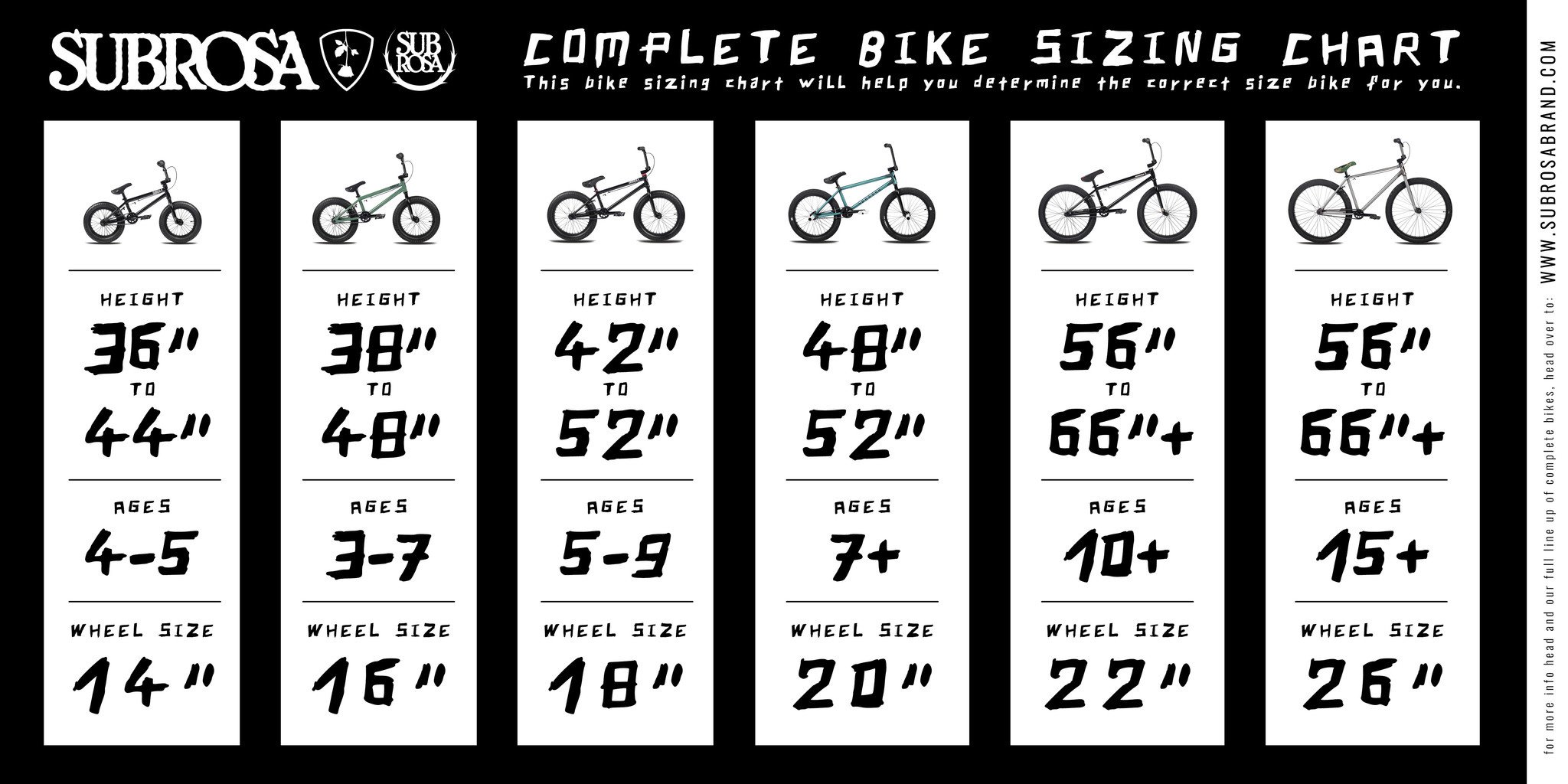
While top tube length defines the frame’s main fit, the overall wheel size also plays a significant role, particularly for younger riders or those engaging in specific disciplines. Most adult-sized BMX bikes utilize 20-inch wheels, which are the standard for racing, park, street, and dirt jumping. However, for younger or smaller riders, smaller wheel sizes are common:
- 12-inch wheels: Typically for toddlers and very young children, often with coaster brakes.
- 14-inch wheels: A step up for early riders, offering a slightly larger frame.
- 16-inch wheels: Often seen in “Mini” BMX bikes, suitable for children around 4-7 years old.
- 18-inch wheels: Common in “Junior” or “Expert Jr.” models, bridging the gap before the full 20-inch wheel.
These smaller wheel sizes are not just about stature; they scale the entire bike, including the frame geometry, to match a smaller rider, ensuring proper leverage and control. Additionally, “cruiser” BMX bikes feature larger 22-inch or 24-inch wheels, offering a smoother ride and increased stability for specific racing classes or riders who prefer a more laid-back feel, though these are less common in traditional freestyle disciplines.
Matching Bike Size to Rider Height and Age
Translating technical specifications into a practical recommendation requires correlating frame dimensions with the rider’s physical attributes, predominantly height and, for younger riders, age. This general guidance provides a strong starting point before fine-tuning.
Sizing Chart for General Guidance
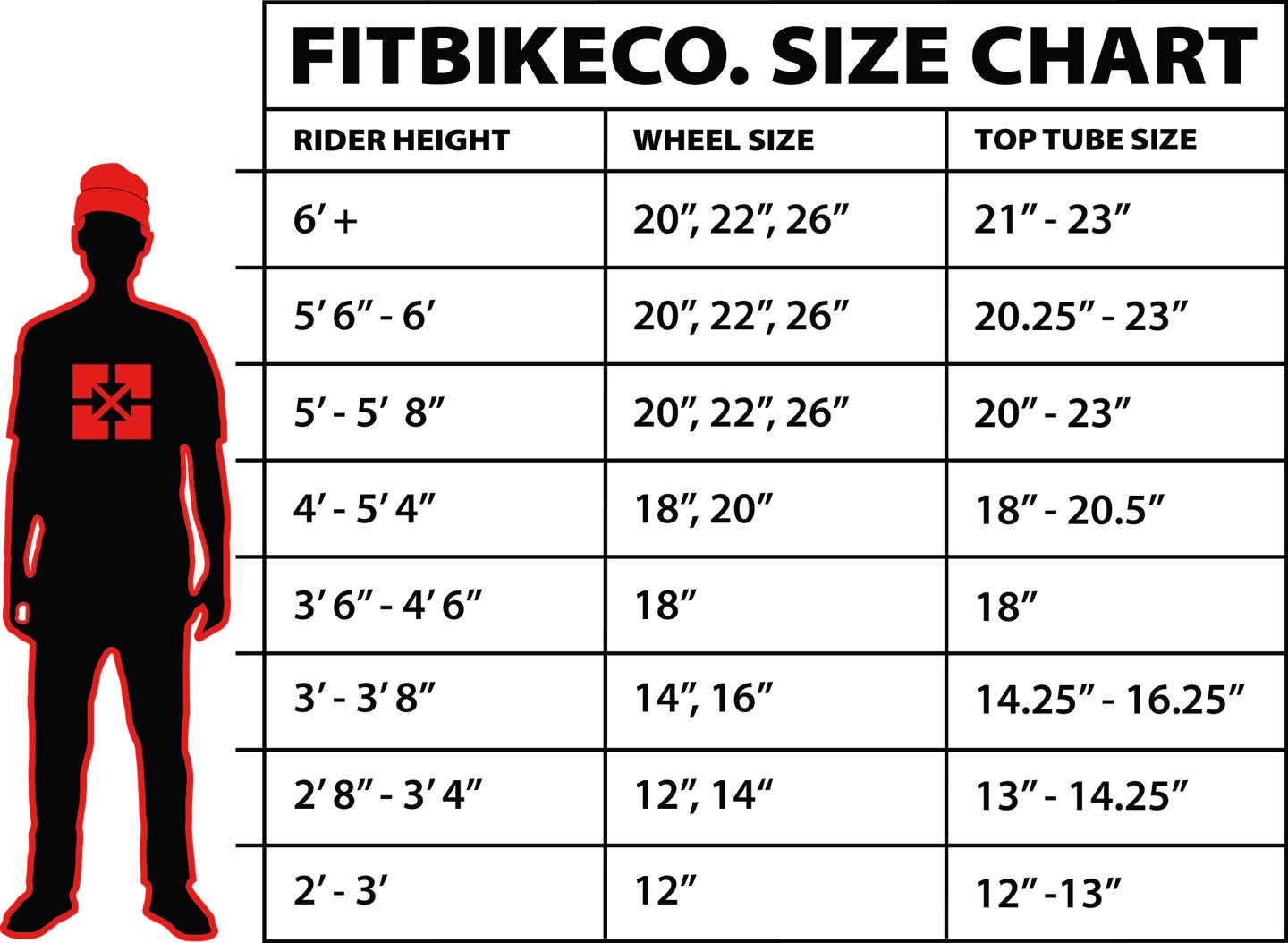
A standardized sizing chart serves as the initial reference point for most riders. This chart typically links rider height (and sometimes age) to an appropriate top tube length for 20-inch wheeled BMX bikes, or to a specific model designation for smaller bikes:
| Rider Height (Approx.) | Rider Age (Approx.) | Top Tube (TT) Length (Approx.) | Bike Type / Wheel Size |
|---|---|---|---|
| Under 3’0″ (90 cm) | 2-4 years | N/A | 12″ Wheel |
| 3’0″ – 3’8″ (90-110 cm) | 4-6 years | 16″ Wheel | Mini BMX / 16″ Wheel |
| 3’8″ – 4’5″ (110-135 cm) | 6-9 years | 17″ – 18″ | Junior BMX / 18″ Wheel |
| 4’5″ – 5’2″ (135-158 cm) | 9-12 years | 18.5″ – 19.5″ | Expert BMX |
| 5’2″ – 5’6″ (158-168 cm) | 12-14 years | 20″ – 20.25″ | Pro BMX (Small) |
| 5’6″ – 5’9″ (168-175 cm) | 14+ years | 20.5″ – 20.75″ | Pro BMX (Medium) |
| 5’9″ – 6’0″ (175-183 cm) | 15+ years | 21″ – 21.25″ | Pro BMX (Large) |
| Over 6’0″ (183 cm) | Adult | 21.25″ – 21.75+” | Pro BMX (XL/XXL) |
This table provides a starting point, but it’s crucial to remember that individual proportions (torso length, arm length, inseam) and riding style preferences can lead to deviations.
Age vs. Height: Nuances for Growing Riders
For younger riders, the interplay between age and height introduces unique considerations. While height is the primary physiological indicator, age often corresponds to skill level and physical development. A rapidly growing child might technically fit a larger bike by height, but their lack of muscle development or coordination might make a slightly smaller, more manageable bike a better choice initially. It’s often better for a growing child to start on a bike that fits them well now, even if they might outgrow it in a year or two, rather than buying a bike that’s “too big to grow into.” Riding a bike that is too large can hinder skill development, create frustration, and increase the risk of accidents. For older teens and adults, height becomes the dominant factor, with age having less direct influence on sizing beyond accounting for potential changes in flexibility or preferred riding posture.
Tailoring Size to Riding Discipline
The specialized nature of BMX means that the optimal bike size isn’t solely determined by rider dimensions; the intended riding discipline significantly influences frame geometry and, consequently, the preferred top tube length.
Park/Street Riding: Agility vs. Stability
Riders focused on park and street riding prioritize agility, responsiveness, and ease of maneuverability for tricks like spins, grinds, manuals, and jumps. For these disciplines, a slightly shorter top tube (e.g., 20″ to 20.75″ for average adult riders) is often preferred. A shorter TT brings the handlebars closer to the rider, making it easier to shift weight over the front wheel, initiate spins, and maintain balance during technical street maneuvers. This compactness allows for quicker bike rotation and enhanced control in tight spaces. However, going too short can compromise stability during faster sections or larger jumps, requiring a balance between flickability and confidence. The ideal choice balances these factors, often leaning slightly towards agility.
Race BMX: Optimized for Speed and Control
Race BMX is fundamentally different, focusing on speed, stability, and efficient power transfer. Racers need to generate maximum propulsion out of the gate, maintain high speeds through corners, and navigate rhythm sections with precision. Consequently, race frames typically feature longer top tubes (often 21″ to 22″+ for adult pros) compared to freestyle bikes. This extended reach spreads the rider’s weight more evenly, enhancing stability at high speeds and providing a more stretched-out position conducive to powerful pedaling. The longer wheelbase also contributes to tracking straight and maintaining control over undulating terrain. While still needing to be agile enough for cornering, the emphasis here is on a stable platform for acceleration and sustained speed rather than acrobatic maneuvers.
Dirt Jumping: Durability and Confidence
Dirt jumping combines elements of both racing (speed and airtime) and freestyle (aerial tricks). Dirt jump specific BMX frames are built for durability and impact absorption, with geometries that inspire confidence on large jumps. For average adult riders, top tube lengths often fall in the middle ground, typically 20.75″ to 21.25″. This provides a balance between the stability needed for hitting large ramps at speed and the maneuverability required for mid-air adjustments and stylish tricks. A slightly longer front end can help prevent “endo-ing” (going over the handlebars) on steep landings, while not being so long as to hinder spinning or pulling up for height. The robust construction and balanced geometry are key, enabling riders to commit to big air without feeling either cramped or overly stretched.
Advanced Considerations and Component Adjustments
Beyond the frame’s top tube and wheel size, several other components can be adjusted to fine-tune the fit and feel of a BMX bike, allowing riders to customize their setup for optimal performance. These adjustments are critical, especially for experienced riders seeking a precise fit.
Handlebar Rise and Width
Handlebars significantly influence the cockpit feel and rider posture. Rise refers to the vertical height from the clamping area to the grips, typically ranging from 8 inches to 10 inches or more. A higher rise brings the grips closer to the rider’s chest, creating a more upright posture, which can be beneficial for pulling up during jumps or manuals. Conversely, a lower rise offers a more aggressive, forward-leaning stance. Width (usually 28 to 30 inches) affects leverage and control. Wider bars offer more leverage, potentially aiding stability and trick control, while narrower bars might be preferred for tighter maneuvers or personal comfort. The ideal combination depends on rider height, arm length, and preferred discipline, aiming to achieve comfortable arm extension and ample leverage without feeling overly wide or narrow.
Crank Arm Length and Gearing
Crank arm length influences pedaling efficiency and ground clearance. Standard lengths for 20-inch wheeled BMX bikes typically range from 165mm to 180mm. Shorter cranks (e.g., 165mm-170mm) are generally preferred for freestyle riding as they offer increased ground clearance for grinding and reduce the likelihood of pedal strike during turns or maneuvers. They also allow for quicker leg rotations, which can be beneficial for short bursts of acceleration. Longer cranks (e.g., 175mm-180mm) provide more leverage, which can be advantageous for generating power, particularly in racing, but come with a higher risk of pedal strike. The choice often balances power output with practical clearance for the rider’s specific discipline. Gearing (the ratio of front sprocket teeth to rear cog teeth) is another crucial element, optimized for acceleration, top speed, or torque depending on whether it’s for racing, street, or park.
Stem Length and Reach
The stem connects the handlebars to the fork’s steerer tube and plays a role in fine-tuning the bike’s reach and steering response. Stem lengths typically range from 48mm to 55mm in BMX. A shorter stem (e.g., 48mm-50mm) results in quicker, more responsive steering and a slightly more compact feel, often favored by street and park riders for agile trick execution. A longer stem (e.g., 52mm-55mm) extends the reach, providing a more stable steering feel and a roomier cockpit, which racers or taller riders might prefer. Even a few millimeters in stem length can noticeably alter the bike’s handling characteristics and how “stretched out” or “cramped” a rider feels.
The Test Ride and Fine-Tuning Your Fit
While charts and technical specifications provide an excellent starting point, the ultimate determinant of correct BMX bike size is the feel of the bike itself. A test ride is invaluable, and subsequent fine-tuning ensures the bike becomes an extension of the rider.
What to Look For During a Test Ride
During a test ride, pay attention to several key sensations and functional aspects:
- Standover Clearance: Can you stand comfortably over the top tube with a small gap (an inch or two) between the top tube and your crotch? This is crucial for safety and for bailing out.
- Reach to Handlebars: Do you feel stretched out or cramped? Your arms should have a slight bend at the elbows when you are in a comfortable riding position. Too much stretch indicates a top tube or stem that’s too long; too cramped means it’s too short.
- Maneuverability: How easily can you turn, manual, or hop the bike? Does it feel responsive or sluggish?
- Balance: Do you feel stable when standing on the pedals? Can you easily shift your weight front-to-back and side-to-side?
- Pedaling Comfort: For race bikes, assess how comfortably and efficiently you can pedal.
Try simulating typical movements for your intended discipline – rolling, turning, standing, perhaps even a small hop if the environment allows.
When to Seek Expert Advice
Sometimes, despite reviewing all the technical data and conducting a test ride, riders may still feel unsure or require further customization. This is when seeking expert advice from a reputable BMX shop or an experienced rider is invaluable. Professionals can offer personalized insights based on your body proportions, riding style, and specific goals. They often have experience with various brands and models, understanding subtle differences in geometry that might not be apparent from specifications alone. Furthermore, they can assist with component adjustments – swapping stems, handlebars, or even crank arms – to achieve a truly dialed-in fit that maximizes comfort, performance, and confidence on your BMX bike.
aViewFromTheCave is a participant in the Amazon Services LLC Associates Program, an affiliate advertising program designed to provide a means for sites to earn advertising fees by advertising and linking to Amazon.com. Amazon, the Amazon logo, AmazonSupply, and the AmazonSupply logo are trademarks of Amazon.com, Inc. or its affiliates. As an Amazon Associate we earn affiliate commissions from qualifying purchases.