
For decades, the United States quarter-dollar has been the workhorse of the American economy. However, for the astute investor and the casual collector alike, these coins represent much more than twenty-five cents of purchasing power. The transition of the U.S. monetary system away from precious metals in the mid-1960s created a definitive line in the sand for coin values. Understanding which silver quarters are worth money requires a blend of historical knowledge, an eye for technical detail, and an understanding of current market dynamics in the precious metals and numismatic sectors.
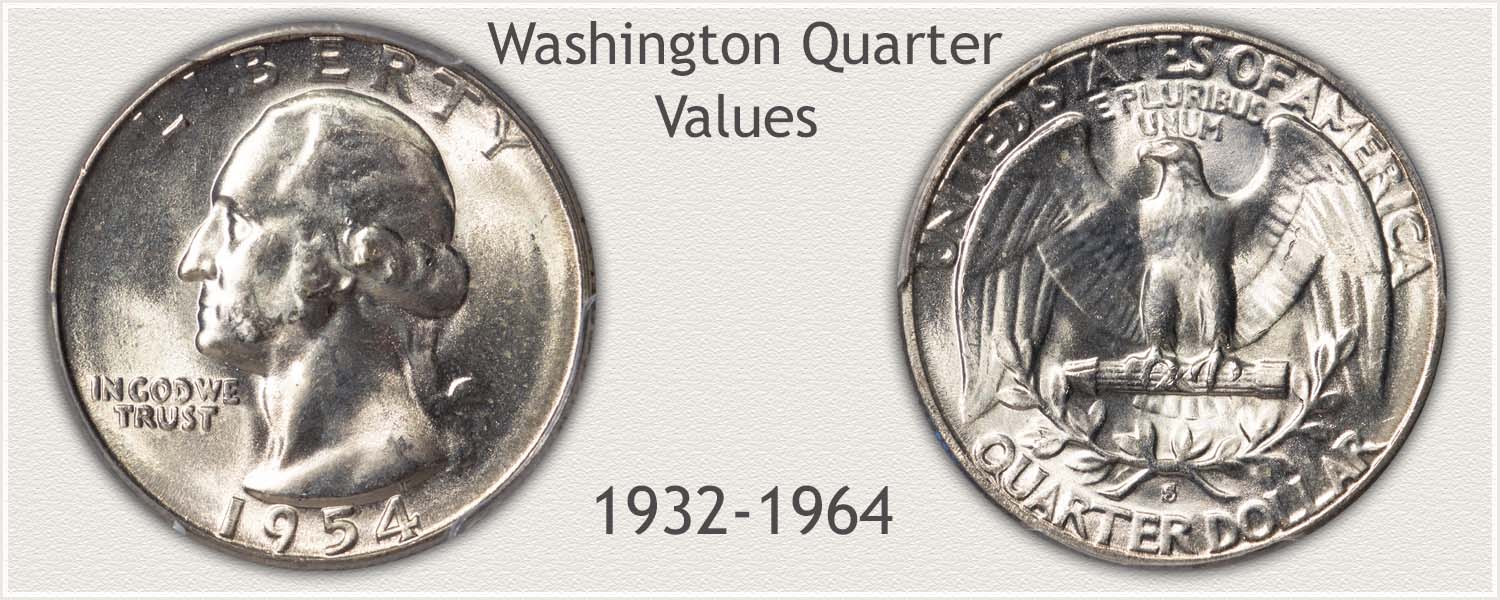
Whether you have inherited a collection, found a stash in an old jar, or are looking to diversify your personal finance portfolio with tangible assets, identifying high-value silver quarters is a lucrative skill. This guide explores the foundational value of silver coinage and identifies the specific “key dates” and errors that can turn a common coin into a high-value financial asset.
The Fundamental Value of 90% Silver Quarters
To understand the value of silver quarters, one must first understand the “floor.” Before 1965, the United States Mint produced Washington quarters with a composition of 90% silver and 10% copper. These coins are often referred to in the financial world as “junk silver.” The term is not derogatory; rather, it implies that the coins have no significant numismatic (collector) value and are traded based solely on their bullion content.
Calculating the Melt Value
Each pre-1964 silver quarter contains approximately 0.1808 troy ounces of pure silver when uncirculated. Because of wear and tear through circulation, a common rule of thumb used by precious metal dealers is that $1.00 in face value (four quarters) contains roughly 0.715 ounces of silver.
To determine the baseline value of any silver quarter, you multiply its silver content by the current spot price of silver. For example, if silver is trading at $25.00 per ounce, a standard silver quarter has a “melt value” of roughly $4.50. This means that even the most worn, common-date 1964 silver quarter is worth significantly more than its twenty-five-cent face value. In times of high inflation or economic volatility, “stacking” these coins is a popular strategy for hedging against currency devaluation.
The 1964 Cutoff and Modern Exceptions
The Coinage Act of 1965 officially ended the use of silver in circulating quarters, replacing them with a copper-nickel “clad” composition. However, silver did not disappear entirely from the Mint’s production lines. Since 1992, the U.S. Mint has produced annual Silver Proof Sets for collectors. These quarters—including many from the 50 State Quarters program and the America the Beautiful series—are also 90% silver (and 99.9% silver since 2019). These are easily identified by their “S” mint mark and their highly polished, mirror-like finish. Investors should be careful not to spend these, as their silver value far exceeds their nominal denomination.
Rare Dates and Mint Marks That Drive Numismatic Value
While silver content provides a price floor, the true “money” in silver quarters comes from numismatic rarity. This is determined by the “mintage”—the total number of coins produced by a specific mint in a specific year. When a low mintage is combined with high demand from collectors, the price of a silver quarter can skyrocket from a few dollars to thousands.
The Holy Grail: 1932-D and 1932-S
The Washington quarter was first introduced in 1932 to commemorate the 200th anniversary of George Washington’s birth. Because of the Great Depression, the demand for new coinage was low, resulting in very small production numbers at the branch mints in Denver (D) and San Francisco (S).
- 1932-D: Only 436,800 were minted. In even modest circulated condition, these coins can command $150 to $300. In high-grade uncirculated condition, they can reach prices between $5,000 and $20,000.
- 1932-S: With a mintage of 408,000, this coin is slightly rarer than its Denver counterpart. It follows a similar price trajectory, serving as a cornerstone for any serious Washington quarter collection.
Semi-Key Dates of the 1930s and 1940s
Beyond the 1932 rarities, several other dates are considered “semi-key” because they are significantly harder to find than common dates. Investors should look for:
- 1936-D: A lower mintage year that commands a premium in all grades.
- 1937-S and 1938-S: These San Francisco issues are scarce, especially in “Mint State” (uncirculated) condition.
- 1940-D: While not as rare as the 1932 issues, this date is highly sought after by collectors looking to complete sets, often selling for $50 to $100 in mid-range grades.
Error Coins: Turning Manufacturing Flaws into Profit
In the world of coin collecting, mistakes are profitable. Minting errors occur when something goes wrong during the production process at the U.S. Mint. Because the Mint has rigorous quality control, very few error coins make it into circulation. This scarcity creates a high-demand market among specialists.
Doubled Die Varieties
A doubled die error occurs when the hub impresses an image onto a die at a slightly different angle or position, creating a “doubled” appearance on the coin’s features.
- 1937 Doubled Die Obverse (DDO): This is one of the most famous Washington quarter errors. The doubling is most visible on the date and the motto “In God We Trust.”
- 1942-D and 1943 Doubled Die Obverses: These are highly recognizable and can add hundreds or even thousands of dollars to the value of a standard silver quarter.
Over-Mint Marks and Die Cracks
In the mid-20th century, mint marks were sometimes hand-punched into dies. This led to famous errors like the 1950-D/S and the 1950-S/D, where one mint mark was punched directly over another. To a casual observer, the “D” or “S” might just look a bit “thick,” but under a jeweler’s loupe, the secondary letter is visible. Depending on the condition, these varieties can fetch between $100 and $600.
Evaluating Condition: How Grading Affects the Bottom Line
In the financial assessment of silver quarters, condition is everything. A 1932-D quarter in “About Uncirculated” condition might be worth $500, but the same coin in a “Mint State 66” grade could be worth $40,000. The numismatic market uses the Sheldon Scale, a 70-point scale used to grade the condition of a coin.
The Sheldon Scale (1–70)
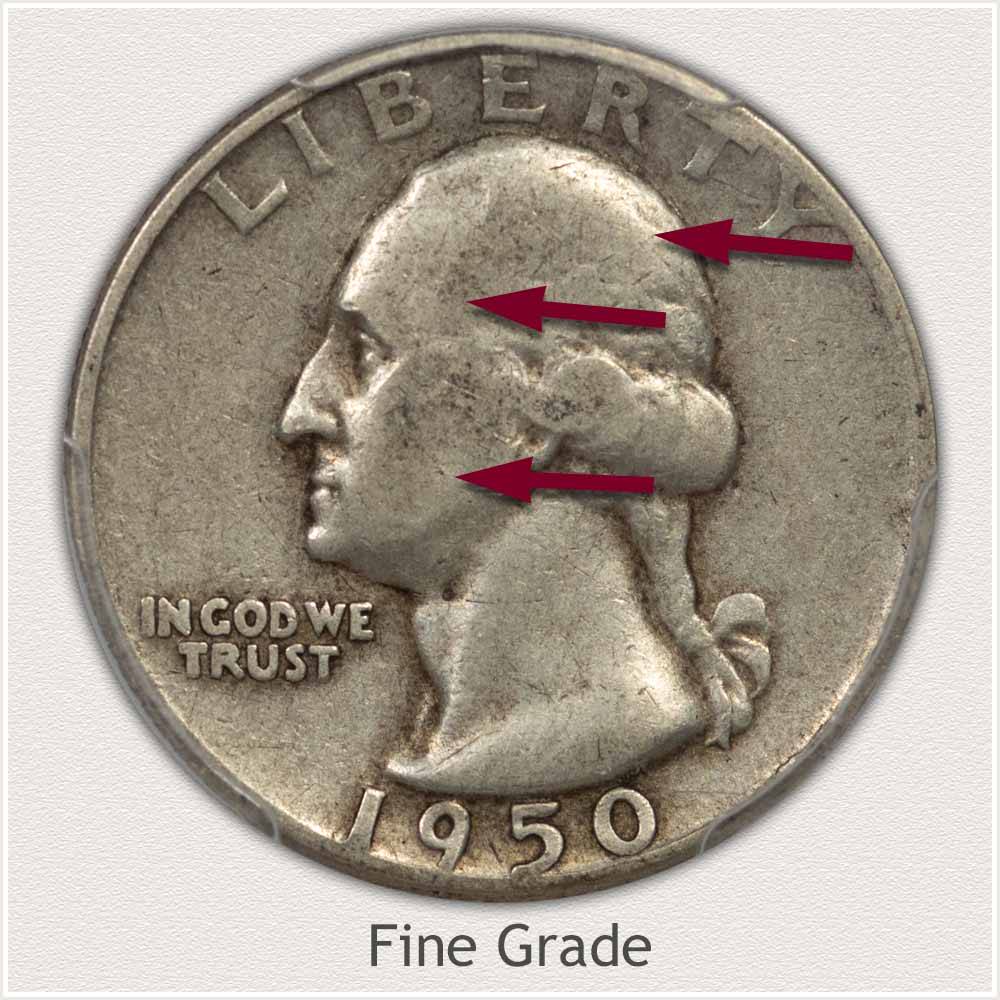
- Good (G-4) to Fine (F-12): The coin shows heavy wear. All major features are visible, but the finer details of Washington’s hair or the eagle’s feathers are worn flat. These coins usually trade for silver melt value unless they are a key date.
- About Uncirculated (AU-50 to AU-58): The coin looks almost new but shows slight traces of wear on the highest points of the design.
- Mint State (MS-60 to MS-70): These are coins that never entered circulation. They possess their original “mint luster”—the frosty or satiny sheen created by the striking process. An MS-67 silver quarter is a rare beast and commands a massive premium because so few survived the decades without being scratched or scuffed in bags.
The Importance of Third-Party Grading
For coins suspected of being high-value, professional authentication is a mandatory step for maximizing ROI. Companies like the Professional Coin Grading Service (PCGS) and the Numismatic Guaranty Company (NGC) authenticate the coin, assign it a numeric grade, and seal it in a tamper-evident plastic “slab.” A “slabbed” coin is much easier to sell at auction or to a dealer because the grade is guaranteed by an objective third party.
Investing and Liquidity: How to Buy and Sell Silver Quarters for Maximum Gain
Investing in silver quarters is a dual-play strategy: you are betting on the spot price of silver while also speculating on the historical value of the coin. To be successful, you must understand how to manage liquidity and avoid common pitfalls.
Where to Source Coins
Finding silver quarters in the wild (pocket change) is increasingly rare but still possible through “roll hunting”—buying rolls of quarters from banks and searching through them. However, most serious investors buy from reputable bullion dealers, local coin shops, or established auction houses. When buying for silver content, aim for the lowest “premium over spot” possible. When buying for numismatic value, focus on “eye appeal” and verified grading.
Maximizing Your Selling Price
When it comes time to liquidate your holdings, avoid “we buy gold” kiosks or pawn shops, as they typically offer only a fraction of the coin’s actual value. For common silver quarters, local coin dealers or online precious metal exchanges are your best bet for getting close to the melt value.
For high-value key dates or error coins, professional numismatic auctions are the preferred venue. These auctions reach a global audience of collectors who are willing to pay top dollar for rare specimens. Keep in mind that auction houses charge a commission, so calculate these costs into your expected net return.

Strategic Portfolio Allocation
Silver quarters should be viewed as a “hard asset” component of a diversified financial portfolio. They offer high liquidity, portability, and intrinsic value. While they may not provide the explosive growth of tech stocks, they offer a level of security that paper assets cannot match. By learning to identify which silver quarters are worth money, you transform a simple hobby into a sophisticated wealth-preservation strategy. Whether it is the raw silver content of a 1964 quarter or the historical rarity of a 1932-S, these small pieces of American history remain a formidable tool for the modern investor.
aViewFromTheCave is a participant in the Amazon Services LLC Associates Program, an affiliate advertising program designed to provide a means for sites to earn advertising fees by advertising and linking to Amazon.com. Amazon, the Amazon logo, AmazonSupply, and the AmazonSupply logo are trademarks of Amazon.com, Inc. or its affiliates. As an Amazon Associate we earn affiliate commissions from qualifying purchases.