
Navigating the delicate conversation around salary expectations is one of the most crucial, and often most anxiety-inducing, aspects of the job search and career progression. It’s a moment that can significantly impact your financial future, reflecting not just your perceived value but also your confidence and strategic acumen. Far from being a simple exchange of numbers, discussing salary is an intricate dance requiring preparation, insight, and a nuanced understanding of market dynamics and personal worth. This guide will equip you with the strategies, language, and confidence to approach this critical discussion effectively, ensuring you advocate for your value without undermining your prospects.

The Art of Pre-Negotiation: Research and Self-Assessment
Before you utter a single word about salary, the most impactful work happens behind the scenes. Robust preparation is the cornerstone of a successful salary negotiation. It’s about arming yourself with knowledge and clarity regarding both the market and your personal financial needs and professional value.
Understanding Market Value
The internet has democratized access to salary data, making it inexcusable to approach a salary discussion without a clear understanding of market rates. Your goal is to pinpoint a realistic and competitive salary range for the specific role, industry, and geographical location.
-
Utilize Salary Aggregators: Websites like Glassdoor, LinkedIn Salary, Salary.com, PayScale, and Robert Half’s Salary Guides are invaluable resources. Input the job title, industry, experience level, and location to get a baseline. Look for median salaries and ranges, rather than just averages, as they often provide a more stable picture.
-
Industry-Specific Reports: Many industries publish annual compensation surveys. Professional organizations and trade associations are excellent sources for this niche data.
-
Networking Insights: Discreetly discussing compensation with peers in similar roles can provide invaluable anecdotal evidence. Approach this carefully and professionally, framing it as research into industry standards rather than direct probing.
-
Company Size and Type: Larger corporations often have more structured compensation bands and may offer more competitive salaries and benefits than smaller startups or non-profits, which might compensate with equity, unique perks, or a different culture.
By compiling data from multiple sources, you’ll establish a strong, data-backed salary range. This range will be crucial in formulating your own expectations and responding to inquiries.
Assessing Your Own Worth and Needs
While market data provides an external benchmark, your internal assessment is equally vital. This involves evaluating your unique contributions, skills, experience, and the financial requirements that underpin your desired lifestyle.
-
Quantify Your Value: Think about your past achievements. How have you saved money, generated revenue, improved processes, or led successful projects? Frame these contributions in measurable terms. For instance, “I reduced operational costs by 15% in my previous role” or “I led a project that increased user engagement by 20%.” These examples demonstrate tangible value that directly translates to an employer’s bottom line.
-
Specialized Skills and Certifications: Do you possess in-demand skills, unique certifications, or a specialized educational background? These factors can significantly elevate your market value, especially in niche fields.
-
Total Compensation Perspective: Beyond the base salary, consider the full compensation package. What benefits are crucial to you? Health insurance, retirement contributions (401k match), paid time off, bonuses, stock options, tuition reimbursement, and flexible work arrangements all hold monetary value. Factor these into your overall financial needs.
-
Minimum Acceptable Salary: Be clear about your absolute minimum acceptable salary – the figure below which you cannot comfortably meet your financial obligations. This forms your non-negotiable floor, providing a crucial boundary during discussions.
The Role of Transparency (or lack thereof)
Be aware of salary history laws in your location. In many places, it’s illegal for employers to ask about your past salary. If asked, you can politely deflect by stating you prefer to focus on the value you bring to this role and your expectations for it. If they persist or if you are in a location where it is legal, consider providing a range that aligns with your current expectations rather than your past earnings. Your past salary should not dictate your future potential.
Crafting Your Message: What to Say and When
Once prepared, the next step is effectively communicating your expectations. The “what” and “when” are critical. Your objective is to present yourself as a valuable asset who understands their worth, without appearing rigid or unreasonable.
The Initial Inquiry: Deflecting or Disclosing?
The question “What are your salary expectations?” often comes early in the hiring process. Your response here can set the tone for future negotiations.
-
Deflecting (Early Stages): In initial screening calls or during the first interview, it’s often strategic to deflect. You want the employer to fall in love with your skills and experience before numbers become a potential hurdle.
-
Example Response: “I’m most interested in finding a role that’s a great fit for my skills and experience, and I’m confident that if we find that alignment, we can agree on a competitive compensation package. What is the salary range budgeted for this position?” This redirects the question back to them, encouraging them to disclose their budget first.
-
Another Option: “My salary expectations are flexible depending on the full compensation package and the scope of responsibilities. I’m open to discussing this further once I have a clearer understanding of the role.”
-
-
Disclosing (Later Stages): Once you’ve had several interviews and are confident the role is a strong fit, and the employer seems genuinely interested, it’s appropriate to provide a range. By this point, you should have a much clearer understanding of the role’s responsibilities and the company’s culture.
Providing a Range vs. a Specific Number
Generally, providing a range is more advantageous than a single figure. It demonstrates flexibility while still anchoring the discussion.
-
Why a Range? A range gives you room to negotiate upward if the employer’s offer is at the lower end, and it prevents you from pricing yourself out of a role if your single figure is too high. It also allows for discussion about the entire compensation package, not just the base salary.
-
How to Construct Your Range: Base your range on your market research and personal worth assessment.
-
The Sweet Spot: Aim for your desired salary to be in the middle to upper end of your stated range. If your ideal salary is $80,000, you might state a range of “$78,000 to $85,000” or “$75,000 to $85,000.”
-
Be Strategic: The top end of your range should ideally be slightly above what you’d be happy with, leaving room for a positive negotiation outcome.
-
Example Response: “Based on my experience, qualifications, and my understanding of the market for similar roles, I am looking for a salary in the range of $X to $Y. Of course, I’m open to discussing the entire compensation package, including benefits and other incentives.”
-
Framing Your Expectations Positively
Always tie your salary expectations back to the value you bring to the company. This isn’t just about what you want; it’s about what you deserve for your contributions.
-
Highlight Your Contributions: When stating your range, briefly reiterate how your skills and experience align with the role’s needs and how you can contribute to the company’s success.
- Example: “Considering my track record in [specific achievement] and my expertise in [relevant skill], I’m confident I can make a significant impact here. For that reason, my salary expectations are in the range of…”
-
Maintain Enthusiasm: Throughout the discussion, convey your excitement for the role and the company. You want them to feel that you’re genuinely interested, not just in the money, but in the opportunity itself.
Navigating the Negotiation: Beyond the Base Salary
The conversation about compensation extends far beyond the base salary. A savvy negotiator understands that the total compensation package offers multiple levers for value creation.
Holistic Compensation: Benefits and Perks
If the initial offer on base salary is lower than your ideal, look for opportunities to negotiate other elements of the compensation package.
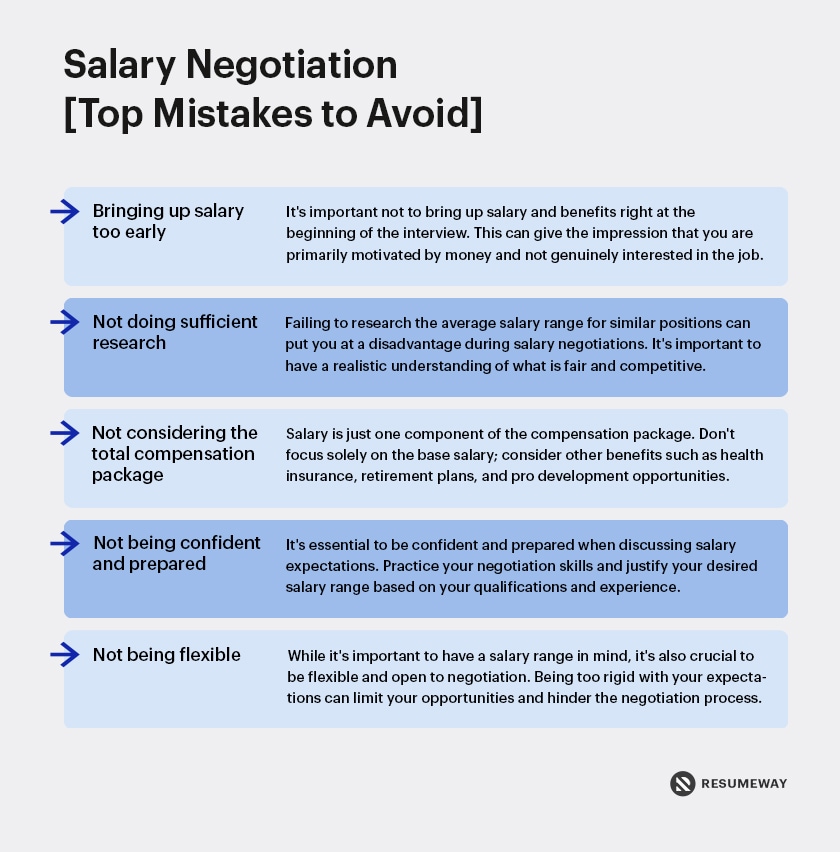
-
Health and Wellness: Premiums, deductibles, FSA/HSA contributions, dental, vision.
-
Retirement: 401k match, pension plans, financial planning services.
-
Time Off: Vacation days, sick leave, personal days, holidays, parental leave.
-
Professional Development: Tuition reimbursement, training budgets, conference attendance.
-
Bonuses and Incentives: Performance bonuses, sign-on bonuses, relocation assistance, stock options/RSUs.
-
Work-Life Balance: Remote work options, flexible hours, sabbatical programs.
-
Other Perks: Commuter benefits, gym memberships, catered meals, professional memberships.
Prioritize which of these benefits hold the most value for you. If the base salary is slightly below your target, an excellent 401k match or additional vacation days might make the overall package more appealing than a higher base salary alone.
When to Hold Your Ground (and when to compromise)
Knowing when to push for more and when to accept an offer is a critical skill.
-
Hold Your Ground When:
-
The offer is significantly below your well-researched market value and your minimum acceptable salary.
-
You have other offers or strong prospects that align more closely with your expectations.
-
You are confident in your unique skills and the value you bring that few others can match.
-
-
Compromise When:
-
The offer is slightly below your ideal but still within your acceptable range, and the role offers significant career growth, learning opportunities, or aligns perfectly with your long-term goals.
-
The overall compensation package (including benefits) meets your needs, even if the base salary is not precisely what you initially aimed for.
-
You have limited other options, and the current offer represents a substantial improvement over your current situation.
-
Remember, negotiation is a collaborative process aimed at finding a mutually beneficial agreement, not a battle to be won at all costs.
The Power of Silence
After you state your desired range or counter-offer, resist the urge to fill the silence. Let the hiring manager or recruiter respond. Often, the person who speaks first after a proposal gives away leverage. Allow them to process your request and formulate their response.
Common Pitfalls and How to Avoid Them
Even with thorough preparation, certain missteps can derail your salary negotiations. Being aware of these common pitfalls can help you navigate the process more smoothly.
Undervaluing Yourself
This is perhaps the most common mistake. Many job seekers, eager to secure a position, will state a lower figure than they genuinely deserve or are willing to accept. This can lead to long-term dissatisfaction and can make future salary increases harder to achieve. Trust your research and your assessment of your value. If you don’t advocate for your worth, no one else will.
Lack of Preparation
Walking into a salary discussion without research on market rates, a clear understanding of your financial needs, or a strategy for negotiation is a recipe for disaster. You’ll be reactive rather than proactive, often settling for less than you could achieve. Preparation builds confidence and provides a strong foundation for your arguments.
Emotional Responses
Salary negotiations can feel personal, but it’s crucial to keep emotions in check. Avoid expressing anger, frustration, or desperation. These emotions can make you appear unprofessional and difficult to work with. Approach the conversation with a calm, confident, and professional demeanor, focusing on facts, figures, and mutual benefit. If you receive an offer you’re not thrilled with, thank them, express your continued interest, and ask for time to consider it rather than reacting impulsively.
Not Considering the Total Package
Focusing solely on the base salary is a narrow view of compensation. A slightly lower base salary might be offset by superior health benefits, a generous 401k match, significant stock options, or more vacation time. Always evaluate the complete compensation package to determine its true value to you.
Revealing Too Much Too Soon
Disclosing your lowest acceptable figure or past salary too early can limit your negotiation power. The goal is to get the employer to reveal their budget or offer first, or at least to present your expectations within a well-researched, flexible range.
Post-Negotiation: Confirming and Moving Forward
Once an agreement has been reached, there are a few final steps to ensure clarity and maintain professionalism.
Getting It in Writing
Never accept a job offer, including all compensation details, without getting it in writing. A formal offer letter should detail:
-
Job title and reporting structure
-
Start date
-
Base salary
-
Bonus structure or commission plan
-
Equity grants (stock options, RSUs)
-
Health and other insurance benefits
-
Retirement plan details (e.g., 401k match)
-
Paid time off (vacation, sick, holidays)
-
Any other agreed-upon perks (e.g., relocation, sign-on bonus, tuition reimbursement)
Review this document carefully to ensure it aligns with everything discussed and agreed upon. If there are discrepancies, politely bring them to the attention of the hiring manager or HR for correction before signing.

Maintaining Professionalism
Even if the negotiation was challenging, or if you ultimately decide not to accept the offer, always maintain a professional and respectful tone. The professional world is often smaller than you think, and maintaining good relationships can benefit your career in unexpected ways down the line. If you decline an offer, provide a concise and polite explanation, thanking them for their time and consideration.
In conclusion, discussing salary expectations is a skill that improves with practice and preparation. By understanding your market value, articulating your worth, and approaching the conversation strategically and professionally, you empower yourself to secure a compensation package that truly reflects your contributions and supports your financial well-being. This isn’t just about asking for money; it’s about confidently asserting your financial value within the professional landscape.
aViewFromTheCave is a participant in the Amazon Services LLC Associates Program, an affiliate advertising program designed to provide a means for sites to earn advertising fees by advertising and linking to Amazon.com. Amazon, the Amazon logo, AmazonSupply, and the AmazonSupply logo are trademarks of Amazon.com, Inc. or its affiliates. As an Amazon Associate we earn affiliate commissions from qualifying purchases.