
Maintaining the ideal chlorine level in your swimming pool is not merely a matter of aesthetics or comfort; it is fundamental to water sanitation, swimmer safety, and the longevity of your pool’s infrastructure. While the basic principle of chlorine as a disinfectant is well-understood, achieving and consistently holding the correct balance presents a challenge for many pool owners. Fortunately, the advancements in pool technology have transformed this once arduous task into a manageable, data-driven process. This article explores the optimal chlorine levels for your pool and, more importantly, delves into how modern technology empowers you to achieve and maintain these vital parameters with unprecedented accuracy and ease.
The seemingly simple question of “what should be the chlorine level” belies a complex interplay of factors that influence its ideal range. Beyond the raw number, understanding the “why” behind the recommendation is crucial. This involves recognizing chlorine’s role as an oxidizer and disinfectant, its susceptibility to degradation, and the impact of environmental and usage variables. Modern technology, from sophisticated testing devices to automated chemical management systems, offers solutions that transcend traditional guesswork, providing pool owners with the tools to ensure a safe, clean, and enjoyable aquatic environment.
The Science Behind the Sanity: Understanding Chlorine’s Role and Ideal Ranges
Chlorine is the cornerstone of swimming pool sanitation. Its primary function is to act as a powerful oxidizer, breaking down organic contaminants such as sweat, oils, lotions, and urine that enter the water. Simultaneously, it serves as a disinfectant, effectively killing harmful bacteria, viruses, and algae that can pose serious health risks to swimmers. The effectiveness of chlorine is directly tied to its concentration in the water, making precise measurement and maintenance paramount.
Free Chlorine vs. Total Chlorine: The Crucial Distinction
To truly understand pool chemistry, it’s essential to differentiate between free chlorine and total chlorine.
- Free Chlorine (FC): This is the active, sanitizing form of chlorine in the pool water. It’s the chlorine available to kill microorganisms and oxidize contaminants. When you measure your pool’s chlorine level, you are typically measuring free chlorine. This is the number you want to focus on for effective sanitation.
- Combined Chlorine (CC): Also known as chloramines, combined chlorine is formed when free chlorine reacts with ammonia and other nitrogenous compounds from swimmers and debris. Chloramines are essentially “spent” chlorine molecules that have lost their sanitizing power. While they can still oxidize to some extent, they are much less effective as disinfectants and are responsible for the characteristic “chlorine smell” associated with poorly maintained pools. High levels of combined chlorine can also cause eye irritation and respiratory discomfort for swimmers.
The relationship between free and total chlorine is expressed by the following equation: Total Chlorine (TC) = Free Chlorine (FC) + Combined Chlorine (CC).
A healthy pool will have a minimal amount of combined chlorine. An ideal scenario sees a very low CC level, meaning most of the chlorine is available as free chlorine.
The Sweet Spot: Recommended Chlorine Levels for Residential Pools
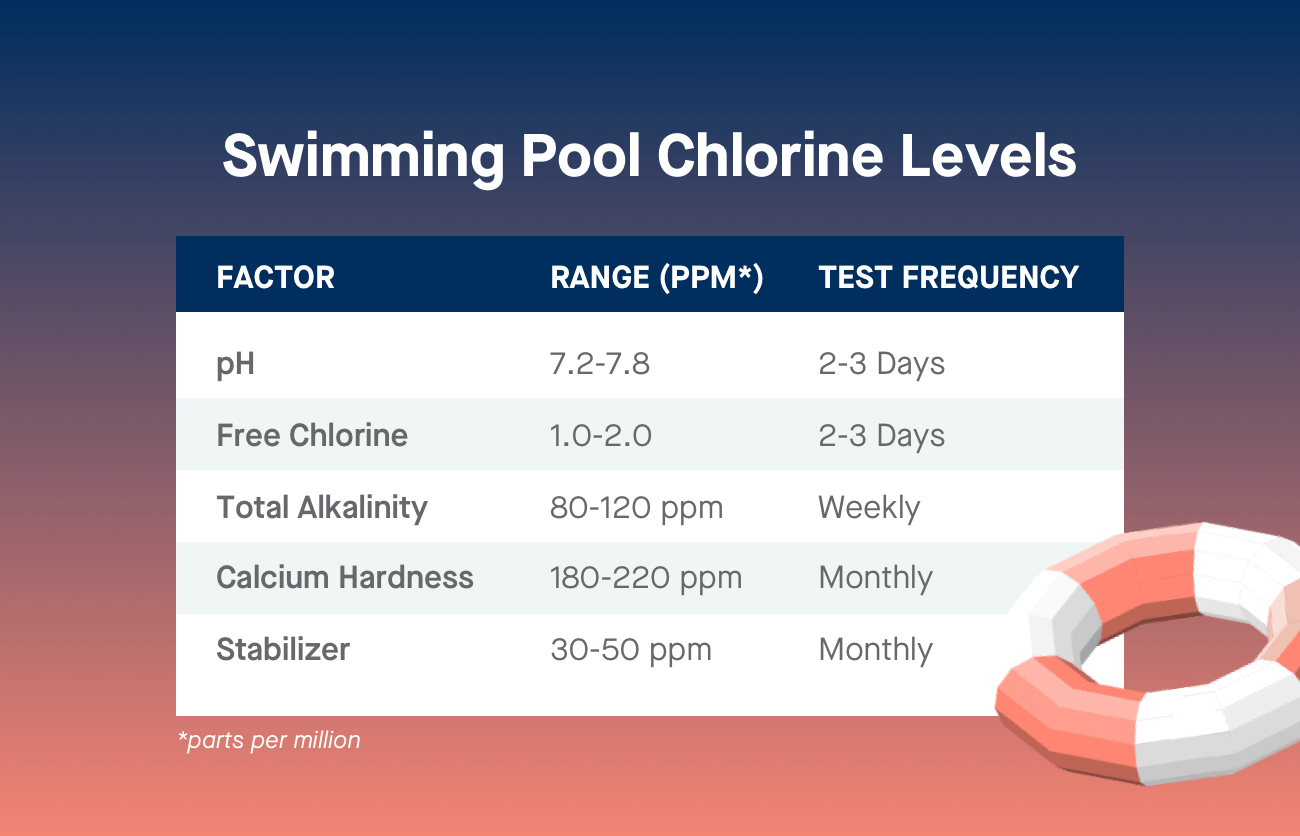
The generally accepted ideal range for free chlorine in residential swimming pools is between 1 to 3 parts per million (ppm).
- 1-2 ppm: This is often considered the maintenance level, sufficient for regular use and adequate sanitation under normal conditions.
- 2-3 ppm: This range provides a buffer and is recommended during periods of heavy bather load, high temperatures, or after a significant rain event, as these conditions can deplete free chlorine more rapidly.
Exceeding 4 ppm can lead to discomfort for swimmers, potential damage to pool equipment (especially liners and metal components), and discoloration of swimsuits. Conversely, levels below 1 ppm leave your pool vulnerable to the proliferation of algae and harmful bacteria, compromising water quality and safety.
It’s important to note that these are general guidelines. Several factors can influence the ideal chlorine level for your specific pool:
- Bather Load: More swimmers mean more organic contaminants introduced into the water, requiring higher chlorine levels to effectively sanitize.
- Water Temperature: Warmer water accelerates the rate at which chlorine dissipates and reduces its efficacy. Higher temperatures often necessitate slightly elevated chlorine levels.
- Sunlight (UV Exposure): Ultraviolet rays from the sun are a major destroyer of free chlorine. Pools exposed to direct sunlight for extended periods will require more frequent monitoring and potentially higher initial levels.
- pH Levels: Chlorine’s effectiveness is highly dependent on the pH of the water. In high pH environments (above 7.8), chlorine becomes significantly less potent. Maintaining proper pH is critical for chlorine to perform optimally.
- Presence of Algae or Contaminants: If you’re dealing with an algae bloom or have a heavily contaminated pool, you’ll need to “shock” the pool, which involves temporarily raising the chlorine level much higher to effectively kill off all contaminants.

The Technological Arsenal: Tools for Precise Chlorine Monitoring and Management
Gone are the days of relying solely on rudimentary test strips that offer colorimetric approximations. The modern pool owner has access to a sophisticated array of technological tools designed to provide accurate, real-time data and even automate chemical adjustments. These innovations not only simplify pool maintenance but also elevate it from an art to a science, ensuring optimal chlorine levels and overall water balance.
Digital Water Testers: Accuracy at Your Fingertips
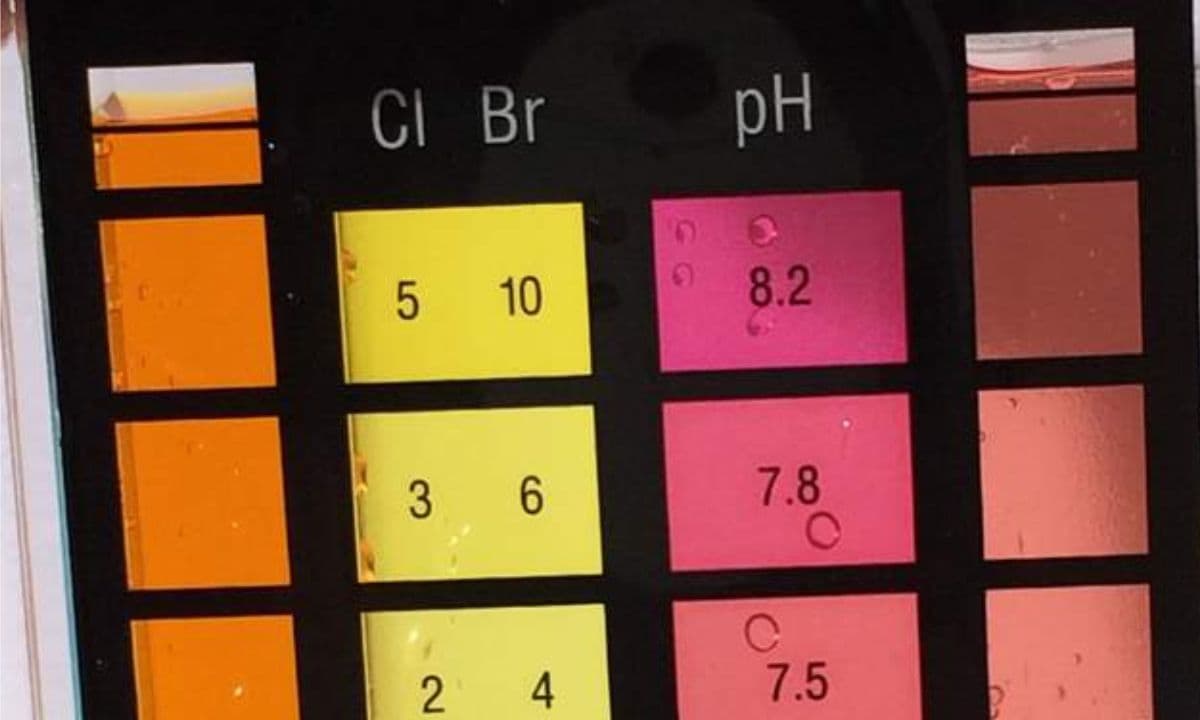
Digital water testers represent a significant leap forward in pool chemistry analysis. These devices offer a more precise and consistent measurement of various water parameters, including free chlorine, total chlorine, pH, alkalinity, and more, compared to traditional test strips.
- Electrochemical Testers: Many digital testers utilize electrochemical sensors. When a water sample is introduced, the sensors react with the specific chemical ions, generating an electrical signal that is then translated into a precise numerical reading on a digital display. These devices eliminate subjective color matching and provide readings to a much finer degree of accuracy, typically to the hundredth or tenth of a decimal place.
- Colorimetric Testers with Digital Readout: Some digital testers still employ colorimetric reagents but use a digital reader to objectively interpret the color intensity, thereby removing human error from the equation.
- Smart Pool Testers and Apps: The most advanced digital testers often integrate with smartphone applications. After taking a reading, the data is transmitted wirelessly (via Bluetooth or Wi-Fi) to a dedicated app. These apps not only display the results but can also provide historical data, trend analysis, personalized recommendations for chemical adjustments, and even predictive alerts. Some apps can even analyze water samples using a smartphone camera and AI-powered algorithms.
- Benefits of Digital Testers:
- Accuracy: Significantly more precise than traditional test strips.
- Consistency: Reduces variability due to user interpretation or lighting conditions.
- Convenience: Faster and often easier to use.
- Data Tracking: Enables detailed record-keeping for better management.
- Integration: Smart testers connect to apps for enhanced functionality and alerts.
Automated Chemical Feeders and Controllers: The Hands-Off Approach
For pool owners seeking ultimate convenience and consistent water chemistry, automated chemical feeders and controllers are invaluable. These systems take the manual labor out of maintaining optimal chlorine levels, ensuring that the water remains within the desired parameters with minimal intervention.
- Automated Chlorinators (Saltwater Systems): Saltwater pools are a prime example of automated chlorine generation. A salt chlorine generator uses electrolysis to convert dissolved salt in the pool water into chlorine. The system can be programmed to produce chlorine at a specific rate, maintaining a consistent free chlorine level. Some advanced systems can even adjust their output based on sensor readings.
- Dosing Pumps and Controllers: For traditional chlorine pools, sophisticated dosing pumps can be integrated with pH and ORP (Oxidation-Reduction Potential) sensors.
- ORP Sensors: ORP is a measurement that reflects the oxidizing capacity of the water. A higher ORP reading generally indicates a higher level of sanitizing power (and thus, more effective chlorine). By monitoring ORP, these systems can infer the level of active sanitizer.
- pH Sensors: As pH affects chlorine efficacy, an integrated pH sensor allows the system to dispense acid or base to maintain the ideal pH range, thereby ensuring the chlorine is working at its peak.
- Dosing Logic: The controller analyzes the data from the ORP and pH sensors and activates the appropriate dosing pump to dispense liquid chlorine (or other sanitizers) or pH adjusters as needed, keeping the water chemistry within your pre-set parameters.
- Smart Pool Management Systems: These comprehensive systems often combine sensor technology, automated dosing, and connectivity to a user-friendly app. They provide a holistic view of pool health, allowing for remote monitoring and adjustments. Some systems can even integrate with weather forecasts to anticipate changes in water chemistry due to environmental factors.
- Benefits of Automated Systems:
- Consistency: Maintains stable chlorine levels 24/7.
- Reduced Labor: Eliminates the need for daily or weekly manual chemical additions.
- Optimal Performance: Ensures chlorine is always working at its most effective.
- Preventative Maintenance: Avoids the costly issues associated with fluctuating water chemistry (e.g., algae blooms, equipment damage).
- Peace of Mind: Enjoy your pool without constant worry about chemical balance.
Integrating Technology for a Superior Pool Experience
The effective management of pool chlorine levels has transitioned from a chore to a technologically-enhanced aspect of modern pool ownership. By understanding the underlying principles of chlorine sanitation and embracing the available technological solutions, pool owners can achieve a level of water quality and convenience previously unattainable.
The Synergy of Testing and Automation
The true power of technological solutions lies in their synergistic application. A sophisticated digital testing device, while excellent on its own, becomes even more potent when integrated with an automated chemical controller. The tester provides the precise baseline data, and the controller uses this information (or similar sensor data) to make minute, continuous adjustments. This closed-loop system ensures that your pool’s chlorine level is not just measured, but actively managed to remain within the optimal 1-3 ppm range, adapting to the dynamic conditions of pool usage and the environment.
Proactive vs. Reactive Maintenance: The Tech Advantage
Traditional pool maintenance often operates on a reactive basis. You notice a problem – cloudy water, algae growth – and then you take steps to fix it. This reactive approach can lead to significant downtime, increased chemical usage, and potential damage. Technology, particularly smart pool management systems, enables a proactive approach. By continuously monitoring key parameters like free chlorine and pH, these systems can detect deviations from the ideal range before they become noticeable problems. They can then automatically dispense the necessary chemicals to bring the water back into balance, preventing issues from ever taking root. This not only saves you time and money in the long run but also ensures a consistently pristine and safe swimming environment.
Embracing the Future: AI and Predictive Maintenance
The evolution of pool technology is far from over. Artificial intelligence (AI) is beginning to play a role in pool management. AI algorithms can analyze historical data, current sensor readings, weather forecasts, and even usage patterns to predict future chemical needs and optimize chemical dispensing. This means your pool system could, for instance, proactively increase chlorine output in anticipation of a hot weekend with expected high bather load, or adjust for a predicted heavy rainstorm. Predictive maintenance ensures that your pool is always operating at peak efficiency, minimizing chemical waste and maximizing the lifespan of your equipment.
In conclusion, the question of what the chlorine level should be in your pool is best answered through the lens of technological capability. The ideal range of 1-3 ppm remains constant, but the methods for achieving and maintaining it have been revolutionized. By investing in digital testing devices and automated control systems, pool owners are not just buying products; they are investing in peace of mind, enhanced safety, and a superior swimming experience, all powered by intelligent technology. The future of pool care is precise, automated, and effortlessly managed.
aViewFromTheCave is a participant in the Amazon Services LLC Associates Program, an affiliate advertising program designed to provide a means for sites to earn advertising fees by advertising and linking to Amazon.com. Amazon, the Amazon logo, AmazonSupply, and the AmazonSupply logo are trademarks of Amazon.com, Inc. or its affiliates. As an Amazon Associate we earn affiliate commissions from qualifying purchases.