
The Engineering Behind Automotive Occupant Protection
The question of which seat is the safest in a car is a perennial concern, often met with simplified answers. However, a comprehensive understanding demands a deeper dive into the sophisticated engineering and technological advancements that underpin modern automotive safety. It’s not merely about proximity to impact but a complex interplay of vehicle structure, restraint systems, and intelligent safety features designed to mitigate injury in a collision.
At its core, automotive safety engineering aims to manage kinetic energy during an impact. When a vehicle collides, its forward motion abruptly halts, but the occupants continue to move forward until restrained. The car’s structure and its integrated safety systems work in concert to decelerate occupants at a controlled rate, distribute impact forces, and prevent contact with harmful interior components. This involves a meticulous design process that utilizes advanced materials, computational fluid dynamics, and extensive crash testing to refine every aspect of occupant protection.
Structural Integrity and Energy Absorption Zones
Modern vehicles are engineered with intricate designs that include crumple zones, safety cages, and load paths. Crumple zones, strategically placed in the front and rear of the vehicle, are designed to deform progressively during an impact. This deformation absorbs kinetic energy, effectively extending the time over which the impact occurs and reducing the peak deceleration forces experienced by the occupants. The goal is to sacrifice the vehicle’s exterior structure to protect the interior cabin, forming a rigid “safety cage” around the passengers.
The materials used in vehicle construction are pivotal to this strategy. High-strength steel alloys, often boron steel, are selectively deployed in critical areas of the safety cage – such as the A-, B-, and C-pillars, roof rails, and door beams – to resist intrusion and maintain cabin integrity. Advanced manufacturing techniques, including hydroforming and laser welding, allow for complex, lightweight, and incredibly strong structural components. The precise geometric design of these structures ensures that impact forces are channeled along specific load paths, away from the occupants and into the crumple zones, preventing localized stress concentrations that could compromise the safety cage.
Advanced Restraint Systems: Seatbelts and Airbags
Beyond the passive safety provided by the vehicle’s structure, active restraint systems are paramount. These systems are constantly evolving with new technologies to enhance their effectiveness.
Intelligent Seatbelt Technologies
Today’s seatbelts are far more sophisticated than their predecessors. They incorporate technologies such as pre-tensioners and force limiters. Pre-tensioners rapidly tighten the seatbelt during the initial milliseconds of an impact, pulling the occupant firmly into the seatback and eliminating slack. This crucial action ensures optimal contact with the seat and positions the occupant correctly for airbag deployment, reducing forward excursion and the risk of striking the dashboard or steering wheel.
Force limiters then gradually release a small amount of webbing after the initial tightening. This controlled release allows for a measured amount of forward movement, distributing deceleration forces over the occupant’s chest and shoulders more gently, thereby reducing the risk of seatbelt-related injuries such as rib fractures or internal organ damage. These systems are often pyrotechnically or mechanically activated, relying on sensors to detect impact severity and direction to deploy at the optimal moment.
Multi-Stage Airbag Systems
Airbag technology has advanced significantly from simple front-mounted bags to a sophisticated network of intelligent restraints. Modern vehicles can feature upwards of ten airbags, each designed for specific protection scenarios:
- Frontal Airbags: Now often multi-stage, they deploy at different pressures or inflation rates depending on impact severity, occupant size, and seating position, as detected by an array of sensors. This adaptive deployment minimizes injury by avoiding overly aggressive inflation in minor collisions or for smaller occupants.
- Side-Impact Airbags: Integrated into the seatbacks or door panels, these protect the torso and pelvis from side intrusion.
- Curtain Airbags: Deploying from the roofline, these protect occupants’ heads in side impacts and rollovers, remaining inflated longer to provide sustained protection.
- Knee Airbags: Located under the dashboard, these help prevent lower leg injuries and control occupant kinematics, reducing submarining (where an occupant slides under the lap belt).
- Rear-Seat Airbags: Increasingly found in premium vehicles, these aim to provide similar frontal protection for rear passengers.
- Center Airbags: Designed to prevent occupant-to-occupant contact in side impacts.
The deployment of these airbags is managed by a sophisticated crash sensing unit (ACU – Airbag Control Unit) that processes data from accelerometers, pressure sensors, and gyroscopes located throughout the vehicle. This electronic brain determines impact severity, direction, and occupant presence/classification to trigger the appropriate airbags at the precise microsecond for maximum effect.
Strategic Seating: Leveraging Technology for Optimal Safety
Given the intricate technological layers, the “safest seat” isn’t a universal static position but rather a strategic choice influenced by vehicle design, occupant characteristics, and the nature of potential impacts.

The Rear Middle Seat: A Statistical Edge
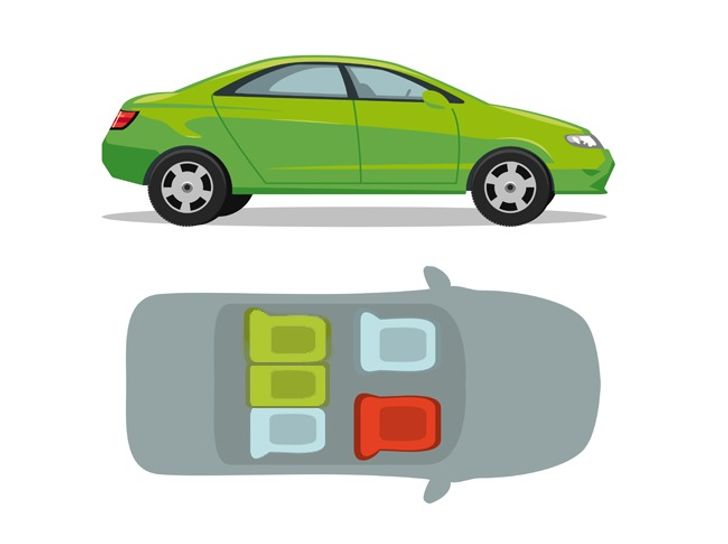
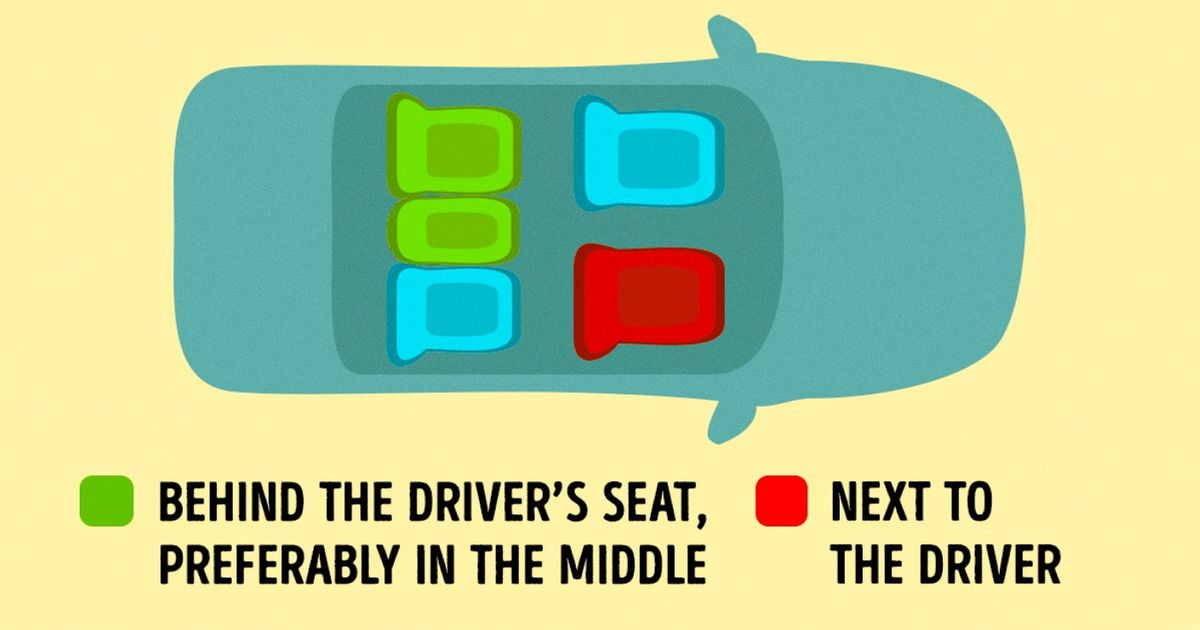
Statistically, the rear middle seat has often been cited as the safest position, particularly for children. This advantage largely stems from its spatial isolation: it is furthest from potential points of impact in both frontal and side collisions. Modern vehicle engineering reinforces this. The central tunnel, often a structural backbone, can offer additional rigidity. Furthermore, advances in three-point seatbelt systems and LATCH (Lower Anchors and Tethers for Children) connectors for child seats in this position provide secure, technologically supported restraint. The absence of direct side doors or windows immediately adjacent to the occupant reduces the risk of intrusion and glass-related injuries that outboard passengers might face.
Rear Outboard Seats: Enhanced Side Impact Protection
While the rear middle seat offers advantages, modern rear outboard seats (the seats on either side in the back) have seen significant technological advancements to boost their safety profile. The advent of robust side-impact airbags, often coupled with curtain airbags, provides a formidable barrier against intrusion from side collisions. Door structures are increasingly reinforced with high-strength steel beams and energy-absorbing materials. Some vehicles even integrate pre-collision side impact preparation systems, which can pre-tension seatbelts and even move seats slightly away from the impact side milliseconds before an anticipated collision.
For children, rear-facing car seats, typically installed in outboard positions, are technologically superior for infants and toddlers. They distribute impact forces across the child’s entire back and neck, significantly reducing stress on a developing spine. Innovations in child seat technology include integrated load legs that brace against the vehicle floor, reducing rotation and rebound, and anti-rebound bars that absorb energy. Advanced materials like expanded polypropylene (EPP) foam are used extensively in car seat shells to absorb crash energy effectively.
Driver and Front Passenger Seats: A Technologically Complex Zone
The front seats are arguably the most technologically fortified in the vehicle due to the inherent risks of frontal impacts and the necessity for controls. Engineers have developed sophisticated systems to protect front occupants:
- Adaptive Crumple Zones: Frontal structures are designed to deform in specific ways to protect the engine compartment and cabin.
- Advanced Steering Columns: Energy-absorbing steering columns collapse upon impact, preventing the driver from striking the wheel directly with full force.
- Pedal Release Systems: Pedals are designed to break away or collapse to prevent leg and foot injuries in severe frontal impacts.
- Pre-Collision Systems (PCS): These active safety technologies use radar, cameras, and lidar sensors to detect potential collisions. They can warn the driver, apply autonomous emergency braking (AEB), and pre-tension seatbelts before impact, optimizing the effectiveness of passive restraints.
- Driver Monitoring Systems: Some advanced vehicles can detect driver fatigue or distraction and issue warnings, or even intervene, further preventing potential collisions.
The complexity of these systems means that while front seats are exposed to greater direct impact forces, the sheer volume of integrated technology makes them incredibly safe in engineered scenarios.
The Future of Seating Safety: AI, Sensors, and Personalized Protection
The trajectory of automotive safety technology points towards increasingly intelligent, predictive, and personalized occupant protection.
Real-time Occupant Monitoring and Adaptive Restraints
Future vehicles will likely feature sophisticated cabin monitoring systems using high-resolution sensors and AI to continuously assess occupant size, posture, and even micro-movements. This data will allow restraint systems to adapt in real-time. Imagine seatbelts that dynamically adjust tension based on the occupant’s precise position at the moment of impact, or airbags that deploy with infinitesimally varied force profiles tailored to the individual. Seat structures themselves could become active, incorporating actuators that adjust seat geometry or firmness milliseconds before a collision to optimize occupant positioning for maximum safety.
Vehicle-to-Everything (V2X) Communication for Predictive Safety
The integration of V2X communication (Vehicle-to-Vehicle, Vehicle-to-Infrastructure, Vehicle-to-Pedestrian) promises a revolutionary leap in predictive safety. Cars will communicate wirelessly with each other and their environment, sharing data on speed, direction, braking, and potential hazards. This real-time information exchange could allow a vehicle to anticipate a collision even before its on-board sensors detect it, providing precious extra milliseconds for pre-emptive safety measures to activate. For instance, if an adjacent car reports imminent loss of control, a vehicle could automatically prepare its side-impact protection, adjust seat positions, and prime airbags for deployment before the direct threat is physically detectable.
Autonomous Driving and the Redefinition of Passenger Safety
As autonomous driving technologies mature, the concept of the “safest seat” will evolve dramatically. With the driver no longer needing to face forward and control the vehicle, interior designs may become more flexible, featuring swivel seats, lounge-like configurations, or even beds. The challenge for engineers will be to ensure equivalent or superior safety for occupants in these non-traditional positions. This will necessitate advanced restraint systems integrated directly into the seats themselves, potentially with deployable internal airbags, force-distributing structures, and advanced material sciences that adapt to dynamic seating arrangements. The focus will shift from protecting occupants in a rigid, forward-facing posture to ensuring safety irrespective of orientation or activity, presenting a profound engineering challenge and opportunity for innovation.
Ultimately, the safest seat in a car is not a fixed location but rather a dynamic outcome of relentless technological innovation, meticulous engineering, and the intelligent integration of passive and active safety systems designed to protect occupants against an ever-evolving spectrum of collision scenarios.
aViewFromTheCave is a participant in the Amazon Services LLC Associates Program, an affiliate advertising program designed to provide a means for sites to earn advertising fees by advertising and linking to Amazon.com. Amazon, the Amazon logo, AmazonSupply, and the AmazonSupply logo are trademarks of Amazon.com, Inc. or its affiliates. As an Amazon Associate we earn affiliate commissions from qualifying purchases.