
The “He Gets Us” campaign has become one of the most polarizing and fascinating case studies in modern marketing. With a massive, multi-million-dollar footprint spanning Super Bowl spots, high-traffic digital advertising, and physical billboards across major metropolitan areas, the campaign has successfully commanded the national conversation. Yet, for all its visibility, the campaign remains intentionally vague regarding its specific denominational ties. For brand strategists and marketing professionals, this represents a masterclass in “brand positioning by omission.”
To understand “He Gets Us” from a professional branding perspective, one must peel back the layers of its aesthetic, its audience targeting, and the strategic decision to avoid traditional religious labeling.

The Strategy of Inclusive Ambiguity
At the core of the “He Gets Us” campaign is a deliberate departure from the standard “church branding” playbook. Historically, religious organizations market themselves through specific denominational markers—Baptist, Catholic, Non-Denominational, or Evangelical—which act as both entry points for believers and exclusionary barriers for those who don’t identify with those labels.
“He Gets Us” takes a diametrically opposed approach. By stripping away denominational tags, the campaign functions as a generic, high-production-value brand identity. This is a classic “top-of-funnel” strategy. The goal is not to convert the viewer to a specific pew, but to invite them into a broader, more relatable narrative of the historical Jesus. By removing the baggage of specific church politics, the brand creates a lower barrier to entry. This is a lesson in audience segmentation: when your market share is broad, you must minimize friction. By not stating a denomination, the brand avoids the immediate “not for me” reaction that occurs when a skeptical consumer encounters a brand they’ve already categorized based on past negative experiences.
The Power of Narrative Consistency
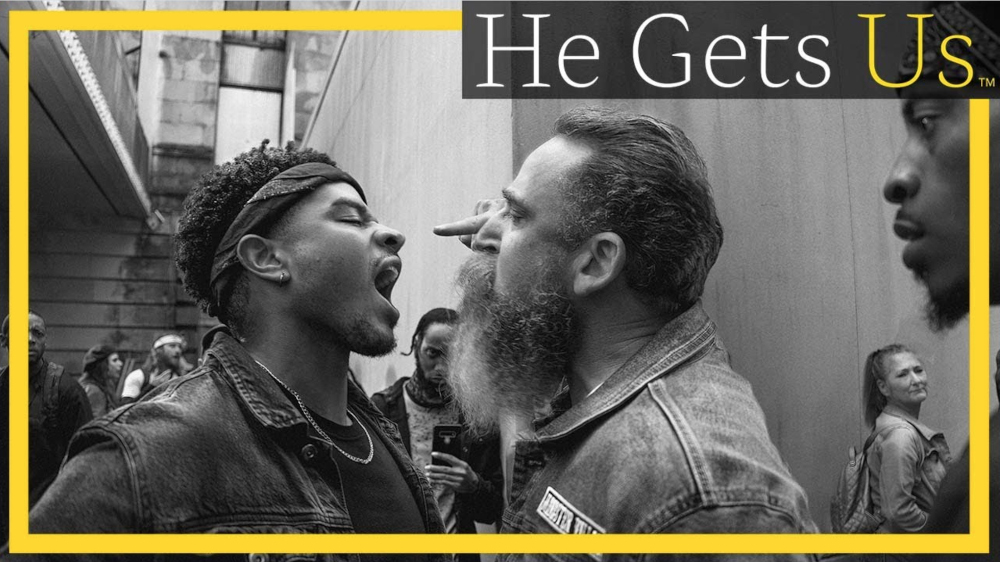
The campaign’s creative direction—focusing on themes like empathy, fatigue, hunger, and loneliness—positions the subject, Jesus, as a “human-centric” figure. This is an application of humanizing a brand, a common tactic in corporate identity work. By focusing on shared human struggles rather than theological dogma, the campaign frames the subject as a relatable peer. For the modern marketer, this is the ultimate example of “customer-centric” messaging. They have identified the primary pain points of their audience and mapped them onto their subject, making the “brand” feel personal rather than institutional.
Market Segmentation and the Cost of Visibility
When we analyze the campaign’s budget—which reaches into the hundreds of millions—we are looking at a level of brand saturation rarely seen in non-profit or religious sectors. The sheer volume of impressions suggests a strategy focused on “brand recall” rather than immediate conversion. In traditional marketing, this is the equivalent of a “prestige brand” launch.

Investing in Brand Equity
The campaign is building immense brand equity by associating the Jesus brand with specific emotional triggers. Through consistent visual storytelling, they are attempting to redefine the perception of a historical figure. From a strategy standpoint, this is a “rebranding” effort of monumental proportions. When a brand has been tainted by years of institutional controversy, the only way to regain ground is to decouple the core product from the current institutional associations. “He Gets Us” does not represent a church; it represents an idea. By distancing itself from the physical institutions of religion, it preserves the integrity of the “brand story” they are trying to tell.
Addressing the Skeptic
For the savvy brand strategist, the most interesting aspect of “He Gets Us” is how it handles the “brand detractor.” Critics often point out that the campaign is funded by conservative donors with specific political and social agendas, yet the advertising itself remains impeccably neutral. This creates a fascinating tension. The campaign succeeds by maintaining a “clean” brand image while the political discourse happens in the comments section and on social media platforms. By staying silent on policy and focusing exclusively on “vibe-based” marketing, they maintain control over their narrative, even if the public discourse spirals elsewhere.
The Digital Ecosystem of Conversion
The “He Gets Us” campaign is not merely a collection of television commercials; it is a sophisticated digital conversion funnel. If a user clicks through the ad, they are directed to a landing page experience that is highly optimized for user engagement. This is where the “branding” transitions into “lead generation.”
The Funnel Architecture
The website structure is designed to guide the user from emotional resonance (the ad) to information gathering (the articles/content) to connection (the invite to join a local group). This is a textbook conversion funnel. The “Call to Action” is soft—inviting someone to learn more or chat—which is essential for an audience that is likely skeptical of hard-sell proselytizing. By making the landing page feel like a content hub rather than a recruitment office, they build trust.
Data and Targeting
The digital footprint of the campaign allows for intense data collection and retargeting. They are not simply casting a wide net; they are analyzing which ads resonate with which demographics and adjusting their creative output accordingly. This technical precision is what separates “He Gets Us” from the grassroots proselytizing of the past. They are using the same data-driven tools that major consumer goods companies use to capture market share. They understand that in a crowded digital marketplace, the battle is for attention, and once attention is captured, the battle shifts to retention.
Lessons for Modern Brand Identity
Whether one views the “He Gets Us” campaign as a triumph of modern advertising or a contentious display of corporate religion, there is no denying its efficacy as a branding exercise. It has succeeded in making a two-thousand-year-old subject relevant to a secular, digital-first audience.
The Takeaway for Marketers
- Remove Barriers to Entry: If your brand identity has historical friction points, find a way to decouple your core value proposition from the negative associations.
- Focus on Universal Human Pain Points: People connect with brands that understand their struggles. Shift the focus from features (or in this case, theology) to outcomes and emotional resonance.
- Control the Creative, Ignore the Noise: The campaign succeeds because it remains disciplined. Despite massive public scrutiny, the advertising creative never wavers. It sticks to its brand guidelines, maintaining a consistent aesthetic and tone, regardless of the criticism it faces.
- The Value of Vagueness: Sometimes, being everything to everyone starts with saying very little about what you are, and everything about what you can do for the consumer.
“He Gets Us” is, at its heart, an exercise in brand positioning. It successfully navigates the complex landscape of cultural and political tribalism by focusing on the one thing that transcends denominational boundaries: the human experience. As marketers, we can learn from the audacity of their scale and the precision of their restraint. They aren’t trying to win an argument; they are trying to win a place in the cultural conversation. By refusing to label their religion, they have ensured that the conversation remains open, allowing every viewer to project their own understanding onto the brand. That is not just clever marketing; that is a strategic masterstroke in influence.
aViewFromTheCave is a participant in the Amazon Services LLC Associates Program, an affiliate advertising program designed to provide a means for sites to earn advertising fees by advertising and linking to Amazon.com. Amazon, the Amazon logo, AmazonSupply, and the AmazonSupply logo are trademarks of Amazon.com, Inc. or its affiliates. As an Amazon Associate we earn affiliate commissions from qualifying purchases.