
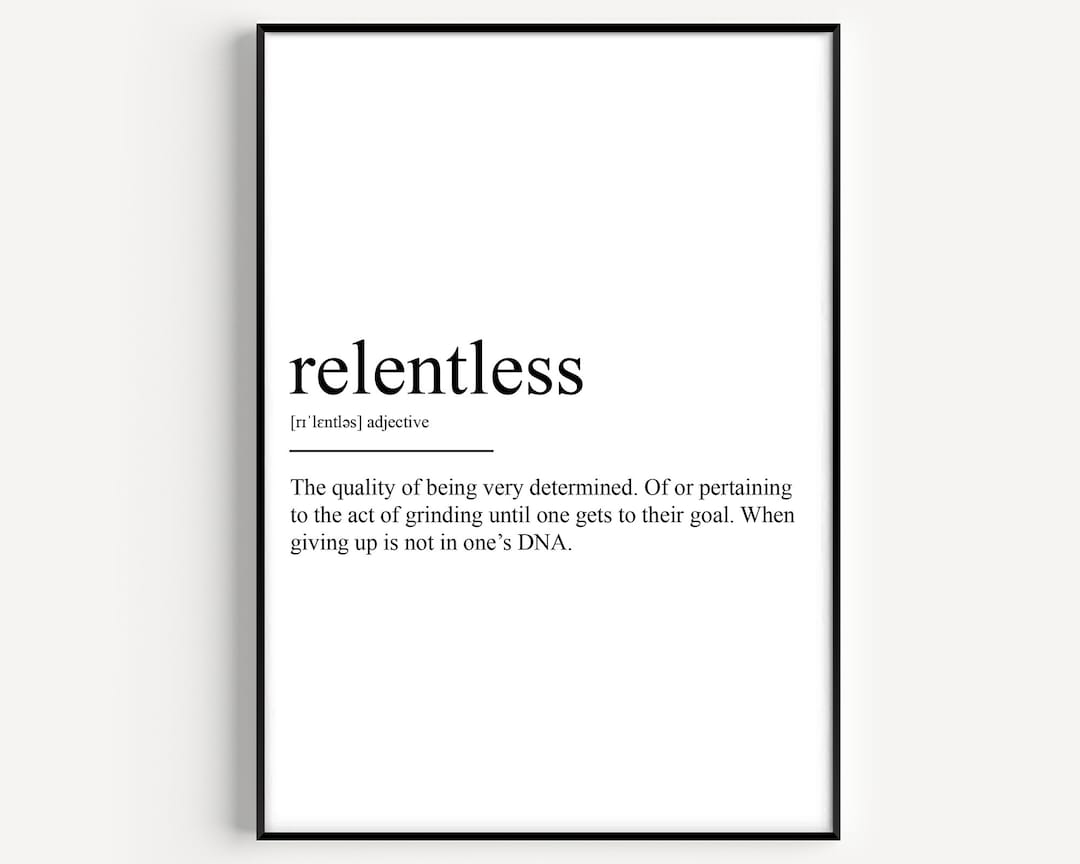
In the hyper-competitive landscape of modern commerce, “relentless” is a term often tossed around in boardrooms and mission statements. Yet, when stripped of its buzzword status, it represents the most critical differentiator between brands that fade into obscurity and those that achieve generational dominance. For a brand, being relentless is not merely about working harder or pushing more aggressive marketing; it is a strategic philosophy of unyielding consistency, iterative improvement, and an obsessive focus on the customer experience.
To be a relentless brand is to operate with a singular, unwavering focus on your core value proposition, regardless of market volatility or competitive noise. It is the architectural discipline of ensuring that every touchpoint, from the initial digital interaction to the final point of sale, reinforces the identity you have promised to the world.
The Architecture of Brand Consistency
Consistency is often mistaken for repetition. However, in the context of brand strategy, consistency is the bedrock of trust. A relentless brand does not waver in its visual language, its tone of voice, or its core mission. It understands that customer loyalty is built on predictability—not in the sense of being boring, but in the sense of being reliable.
The Role of Design Systems in Brand Integrity
A relentless brand treats design as an immutable law. Every font choice, color palette, and layout constraint serves a purpose: to anchor the brand in the consumer’s mind. When a company becomes lax with its visual identity—allowing inconsistent logos, mismatched color profiles, or disparate web experiences—it signals a lack of internal discipline.
True brand integrity requires a robust design system that acts as a guardrail. This system does not restrict creativity; rather, it provides a playground within which innovation can happen without eroding the brand’s soul. By maintaining absolute fidelity to the design system, a brand ensures that every new asset created is immediately recognizable, compounding the brand’s equity over time.
Tone of Voice as a Strategic Asset
Your tone of voice is the personality of your brand. A relentless brand ensures that this personality remains consistent across all channels—whether it is a customer service email, an aggressive social media campaign, or a technical white paper. If the brand promise is one of “radical simplicity,” that simplicity must manifest in the grammar, the vocabulary, and the structural density of every piece of content released. Deviating from this tone creates cognitive dissonance for the consumer, which is the fastest way to dissolve brand authority.
Iterative Excellence: The Anti-Complacency Engine
If consistency is the foundation, iteration is the engine of a relentless brand. Complacency is the silent killer of market share. Brands that succeed in the long term possess a culture of “permanent beta”—the recognition that their current offering is merely the best version for today, and that tomorrow requires an evolution.
The Feedback Loop as a Competitive Advantage
Being relentless means listening with an intensity that borders on obsession. This does not mean chasing every consumer whim, which leads to a diluted identity. Instead, it means filtering market data through the lens of your brand’s core objectives.
A relentless brand integrates customer feedback into the product development cycle with surgical precision. It creates closed-loop systems where marketing, product, and sales teams are not merely communicating, but are actively cross-pollinating insights. When a user identifies a friction point in a product, a relentless brand doesn’t just fix it; it audits the entire ecosystem to see if that friction point is symptomatic of a larger departure from the brand’s promise.
Failing Forward and Scaling Success
Relentlessness requires the courage to optimize aggressively. It involves the rigorous testing of every variable—from ad copy conversion rates to UX flow abandonment. While many brands are content with “good enough,” a relentless brand is never satisfied until it has achieved the peak performance possible within its current constraints. This requires a culture where data is the ultimate arbiter, and where the “way we’ve always done it” is considered a dangerous sentiment.
The Psychology of High-Intent Positioning
The most profound realization in brand strategy is that you are not competing for attention; you are competing for belief. A relentless brand positions itself not as a commodity, but as an authority. This requires a level of conviction in your messaging that makes competitors seem tentative by comparison.
Commanding the Narrative
Market narratives are often hijacked by loudest voices or the most well-funded incumbents. A relentless brand, however, commands its own narrative. It doesn’t wait for industry trends to dictate its direction; it sets the terms of engagement. By consistently producing thought leadership, high-value content, and category-defining positioning, the brand forces the market to play on its home court.
This requires a refusal to engage in “me-too” marketing. If your competitors are zigzagging to catch the latest trend, a relentless brand stays the course, doubling down on the value that it alone provides. This creates a psychological moat. Over time, consumers begin to associate the entire category with your brand, because you have been the only constant in a sea of changing variables.
The Power of Radical Focus
The greatest enemy of a relentless brand is “feature creep” or “message bloat.” It is tempting for brands to expand their scope to appeal to everyone. However, market dominance is rarely won by the generalist; it is won by the specialist who has attained total saturation in their niche.
Being relentless means having the discipline to say “no” to opportunities that do not align with your core identity. It means turning down revenue streams that distract from the primary mission. This radical focus is what allows a brand to achieve deep penetration. When you stand for everything, you stand for nothing. A relentless brand stands for something specific, and it defends that position against all encroachment.
The Long-Term Horizon
Building a brand is a marathon that is run at a sprinter’s pace. The disconnect between these two concepts is where most businesses fail. They either sprint until they burn out, or they adopt such a slow pace that they are eventually overtaken. Relentlessness is the ability to maintain a high-intensity, high-frequency, and high-quality output over an extended duration.
Compounding Brand Equity
Every interaction with a consumer is a micro-investment in the brand’s future. If you are inconsistent, you are effectively “spending” your brand equity rather than growing it. A relentless brand understands the compound interest of consistency. Every year of high-quality, on-brand output makes the next year more effective. This is how brands like Apple, Nike, or Patagonia achieved their status—not through a single miraculous campaign, but through thousands of small, relentlessly disciplined decisions made over decades.
Cultivating an Internal Culture of Discipline
Ultimately, the external output of a brand is a mirror of its internal culture. If the organization is chaotic, the brand will feel chaotic. A relentless brand cultivates an internal culture that values execution, precision, and an intolerance for mediocrity. This does not mean a culture of fear, but a culture of high standards.
When your team understands that every email, every line of code, and every design element is a piece of the brand’s legacy, the work naturally becomes more deliberate. This collective buy-in is the secret sauce. A relentless brand isn’t just one person with a vision; it is a unified force, moving in lockstep, powered by the conviction that the details matter more than anything else.
In conclusion, being relentless is not a temporary state of being; it is a permanent condition of excellence. It is the refusal to accept the status quo, the courage to maintain a singular vision, and the discipline to execute that vision with unwavering intensity. Brands that embrace this philosophy do not just survive the market—they define it.
aViewFromTheCave is a participant in the Amazon Services LLC Associates Program, an affiliate advertising program designed to provide a means for sites to earn advertising fees by advertising and linking to Amazon.com. Amazon, the Amazon logo, AmazonSupply, and the AmazonSupply logo are trademarks of Amazon.com, Inc. or its affiliates. As an Amazon Associate we earn affiliate commissions from qualifying purchases.