
The polygraph, often colloquially known as a “lie detector,” represents a technological application in the realm of forensic science and law enforcement screening. At its core, it is a diagnostic instrument designed to monitor and record several physiological indices such as blood pressure, pulse, respiration, and skin conductivity while a subject is asked a series of questions. Understanding the types of questions posed during a police polygraph examination is crucial to grasping the methodology of this controversial technology, which aims to infer deception based on physiological responses.
The Polygraph as a Forensic Technology: Components and Operational Principles
The polygraph system, whether an older analog model or a modern digital setup, functions by capturing specific bodily reactions that are thought to be involuntary responses to stress or cognitive load associated with deception. Modern polygraphs utilize advanced sensors and software to provide more precise data collection and analysis, though the fundamental principles remain largely unchanged.
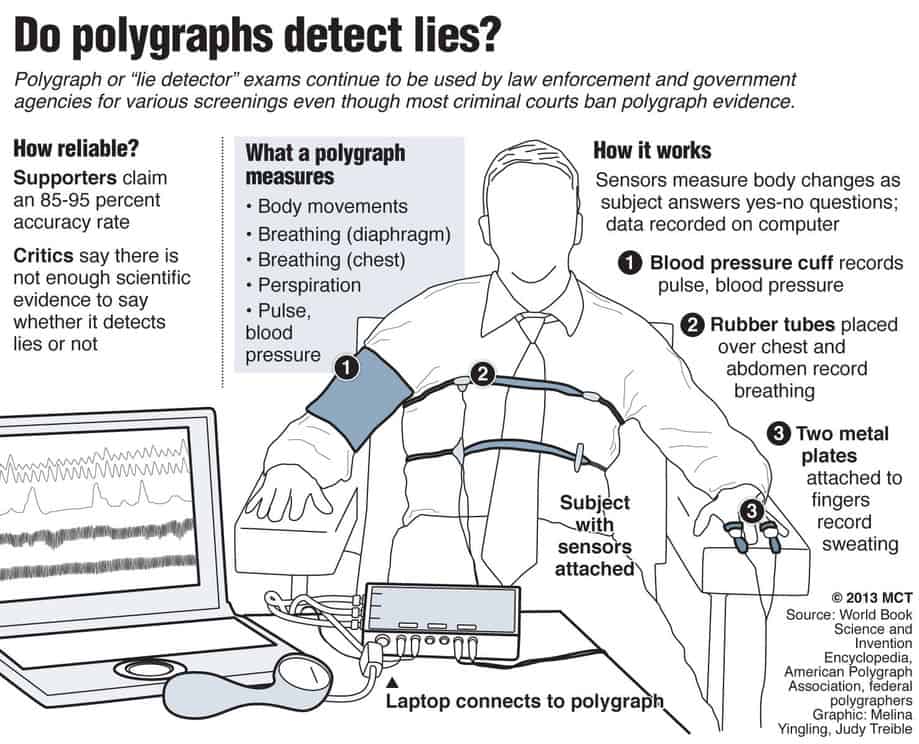
The primary components of a polygraph examination include:
- Pneumographs: Elastic tubes placed around the chest and abdomen to record respiratory patterns, including rate, amplitude, and anomalies like breath-holding or superficial breathing.
- Cardiograph: A blood pressure cuff wrapped around the arm to measure cardiovascular activity, including heart rate and blood pressure fluctuations.
- Galvanometer (or Electrodermal Activity Sensor): Electrodes attached to the fingertips to detect changes in skin conductivity, which correlate with sweat gland activity—an indicator of emotional arousal or stress.
These sensors feed data into a central unit, which, in contemporary systems, is a computer running specialized software. This software records the physiological data in real-time, displaying it as waveforms that an examiner interprets. The interpretation involves comparing responses to different types of questions to draw conclusions about veracity. While the technology can accurately record physiological changes, the scientific consensus on its ability to reliably detect deception directly remains a subject of extensive debate.
Deconstructing the Questioning Protocol: Types and Tactical Formulation
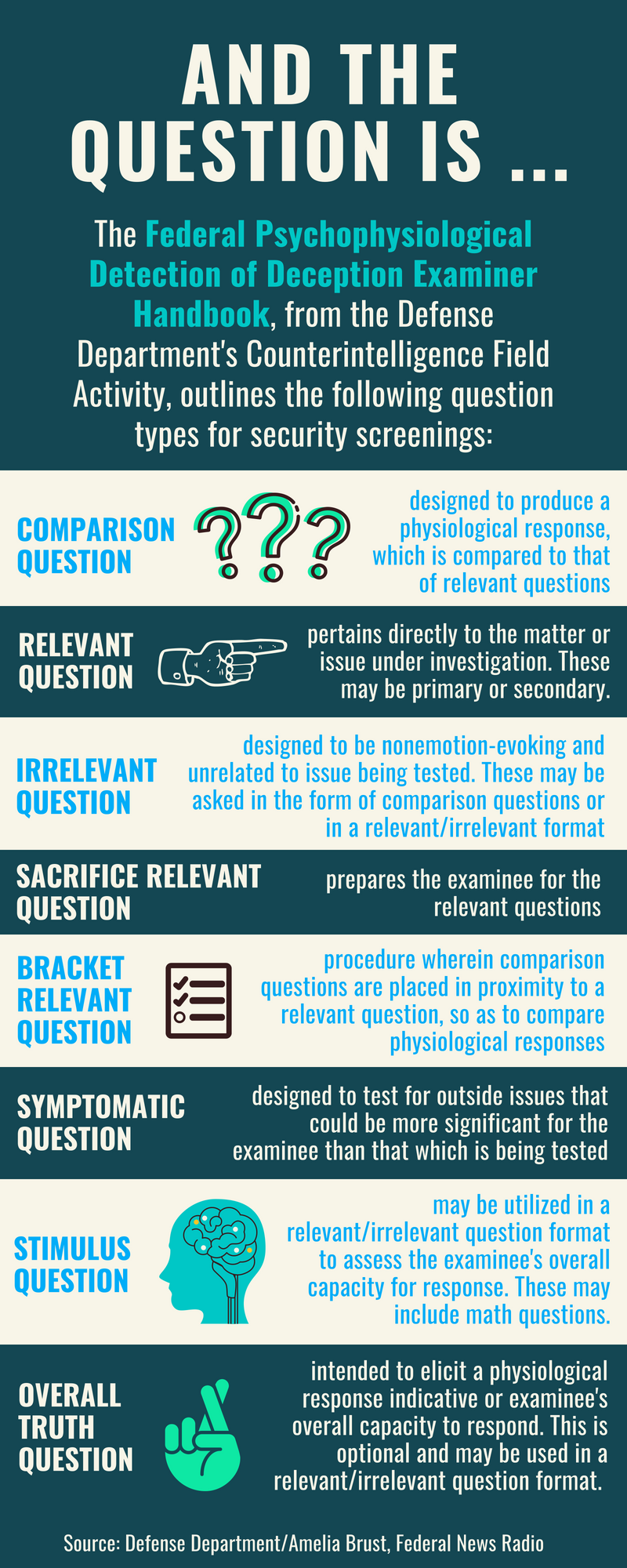
The structure and type of questions are paramount to the polygraph technique, serving as the stimulus for the physiological responses being measured. Polygraph examinations typically follow specific questioning formats, with the Comparison Question Test (CQT) being the most common for specific issue investigations. This method relies on comparing responses to “relevant” questions with “control” (or comparison) questions.
Relevant Questions
These are the core of any polygraph examination, directly pertaining to the incident or behavior under investigation. They are formulated to elicit a strong physiological response from a deceptive subject. To be effective, relevant questions must be unambiguous, direct, and require a simple “yes” or “no” answer.
- Specificity: Questions must be highly specific to avoid misinterpretation. For example, instead of “Did you do anything wrong?”, a polygrapher would ask, “Did you take the money from the desk?”
- Singular Focus: Each question should address only one aspect of an issue. Compound questions are avoided to prevent confounding physiological data.
- Directness: Questions are phrased to be clear and concise, leaving no room for subjective interpretation or mental qualification by the subject.
Examples of relevant questions in a police context might include:
- “Regarding the theft of the evidence, did you take it?”
- “Did you intentionally falsify your police report about the incident?”
- “Do you know who stole the firearm from the property locker?” (If the subject is suspected of withholding information).
Irrelevant Questions
Irrelevant questions are neutral queries used to establish a baseline of a subject’s normal physiological responses and to allow the subject to acclimate to the examination process. These questions are non-threatening and have no direct bearing on the matter under investigation, thus typically eliciting minimal physiological arousal from any subject, truthful or deceptive.
- Baseline Establishment: They help the examiner understand how the subject’s body reacts under normal, low-stress conditions.
- Acclimatization: They allow the subject to become comfortable with the testing environment and the questioning rhythm.
Examples include:
- “Is your first name [Subject’s Name]?”
- “Are you currently sitting in a chair?”
- “Is today [Day of the Week]?”
Control Questions (Comparison Questions)
Control questions are arguably the most controversial component of the CQT method. These questions are designed to be emotionally arousing for virtually all subjects, regardless of their guilt concerning the relevant issue. The premise is that an innocent person will show a stronger physiological reaction to a control question (where they might tell a minor lie or be concerned about past indiscretions) than to a relevant question, whereas a guilty person will react more strongly to the relevant questions.

- Psychological Manipulation: Control questions are typically broad in scope, covering past behaviors that most individuals would rather not admit, even if minor. The examiner often encourages the subject to lie or at least feel uncertain about their truthfulness regarding these questions, to ensure they elicit a significant response.
- Eliciting Concern: They are constructed to make even an innocent subject feel some apprehension about their answer, leading to a measurable physiological response.
- Temporal Framing: They usually cover a longer period (e.g., “Before the age of 25…”) than the relevant questions, increasing the likelihood of past transgressions.
Examples of control questions:
- “Prior to the age of 20, did you ever tell a lie to get out of trouble?”
- “Have you ever secretly taken something that did not belong to you?”
- “Besides what we have discussed, have you ever deceived someone who trusted you?”
The comparison of physiological responses between relevant and control questions forms the basis for polygraph scoring. Stronger reactions to relevant questions compared to control questions are interpreted as indicative of deception, while stronger reactions to control questions are interpreted as truthfulness regarding the relevant issue.
Symptomatic Questions
These questions are used to identify any unexpressed concerns or fears the subject might have that are unrelated to the specific issue being tested but could potentially influence their physiological responses. By addressing these concerns, the examiner attempts to ensure that recorded responses are solely attributable to the questions designed for the test.
- Identifying External Stressors: They help uncover anxieties not directly tied to the primary investigation, such as fear of the polygraph itself, unrelated personal problems, or unlisted fears about the test.
- Maintaining Test Integrity: If a subject is distracted or overly anxious about something outside the test parameters, it could confound the results.
An example might be:
- “Do you have any concerns that I have not covered in our discussion?”
- “Is there anything else on your mind about this test that you haven’t told me?”
The Technology Behind the Readings: Advanced Sensors and Data Analysis
The evolution of polygraph technology has moved from ink pens on rolling charts to sophisticated digital systems. This technological shift has brought improved precision in data acquisition and new methods for analysis, though the core sensors remain similar.
Pneumographs (Respiration)
Digital pneumographs offer highly sensitive and accurate measurement of both thoracic (chest) and abdominal breathing patterns. Software analyzes not only the rate of breathing but also subtle changes in amplitude, regularity, and specific patterns like suppression, hyperventilation, or sighs, all of which are considered potential indicators of psychological stress.
Cardiographs and Blood Pressure Cuffs (Cardiovascular Activity)
Modern digital systems capture cardiovascular data with greater resolution, allowing for a more detailed analysis of heart rate variability (HRV) and blood pressure fluctuations. Advanced algorithms can identify minute changes in these parameters, which are then integrated into the overall assessment. The use of photoplethysmography (PPG) sensors for continuous blood volume pulse monitoring has also enhanced the precision of cardiovascular data capture.
Galvanometers (Electrodermal Activity/GSR)
The electrodermal activity (EDA) sensor, or galvanometer, measures the electrical conductance of the skin, which is directly related to sweat gland activity. This response is almost entirely involuntary and reflects the activation of the sympathetic nervous system, often associated with emotional arousal, stress, or cognitive effort. Digital systems allow for precise measurement of both tonic (baseline) and phasic (event-related) skin conductance responses, offering detailed insights into a subject’s arousal levels.
Software and Data Analysis
The most significant technological advancement in polygraphy has been the integration of specialized software for data acquisition, display, and scoring. These programs allow examiners to view multiple physiological channels simultaneously, mark responses, and even employ computerized scoring algorithms. While human interpretation remains a critical component, automated scoring systems aim to reduce subjectivity and enhance consistency, though their reliability is also subject to scientific scrutiny. These systems also facilitate the archiving and secure management of test data.
The Technological Debate: Reliability, Validity, and Data Integrity
Despite technological advancements in data capture and analysis, the fundamental debate regarding the polygraph’s scientific validity and reliability persists. This is a critical aspect when considering the polygraph as a technological tool.
Scientific Scrutiny and Limitations
The core criticism stems from the lack of a direct physiological indicator of deception. The polygraph measures arousal, not lies. Factors such as anxiety, fear, anger, or even physical discomfort can produce physiological responses similar to those attributed to deception. Conversely, individuals skilled in counter-measures (e.g., controlled breathing, muscle tension) or those with certain psychological profiles may be able to manipulate their responses, leading to inconclusive or erroneous results. Leading scientific bodies, such as the National Research Council, have concluded that there is little scientific basis for the validity of polygraph tests in detecting deception, especially in specific issue investigations. The technology accurately records physiological states, but the interpretation of those states as indicative of truth or falsehood lacks robust scientific backing.
Digital Security and Data Integrity
With the shift to digital polygraph systems, concerns related to data integrity and security have emerged. The physiological data collected during an examination is sensitive and personal.
- Data Storage and Access: Ensuring that this digital data is stored securely, protected from unauthorized access, and maintained with a clear chain of custody is crucial. Misplaced or tampered data could lead to unjust outcomes.
- Software Vulnerabilities: Like any software, polygraph analysis programs could theoretically be susceptible to vulnerabilities, although ethical use generally assumes robust security measures. The algorithms used for computerized scoring must also be transparent and scientifically validated to ensure fair and accurate interpretations.
- Forensic Soundness: For polygraph results to be considered in any formal context, the integrity of the data from collection through analysis and storage must be unimpeachable, aligning with broader digital forensic standards. This involves rigorous protocols for hardware and software validation, data encryption, and access controls.
In conclusion, while polygraph technology has evolved to provide precise physiological measurements, the interpretation of these measurements in the context of deception remains highly contentious. The types of questions asked are designed to exploit psychological and physiological responses, but the scientific community largely questions the technology’s ultimate ability to reliably differentiate truth from falsehood, irrespective of how sophisticated the sensors or data analysis algorithms become.
aViewFromTheCave is a participant in the Amazon Services LLC Associates Program, an affiliate advertising program designed to provide a means for sites to earn advertising fees by advertising and linking to Amazon.com. Amazon, the Amazon logo, AmazonSupply, and the AmazonSupply logo are trademarks of Amazon.com, Inc. or its affiliates. As an Amazon Associate we earn affiliate commissions from qualifying purchases.