
In the high-stakes world of professional sports, success is measured by a singular metric: championships. While individual accolades like MVP trophies, scoring titles, and All-Star selections carry significant weight, the ultimate gold standard of a player’s legacy is the NBA title. From a financial and business perspective, these championships represent more than just hardware; they are the dividends of a career-long investment in excellence, teamwork, and strategic positioning. When we ask which player has the most NBA titles, we are not just looking at a basketball record—we are looking at the ultimate “blue-chip” career in the history of the league.
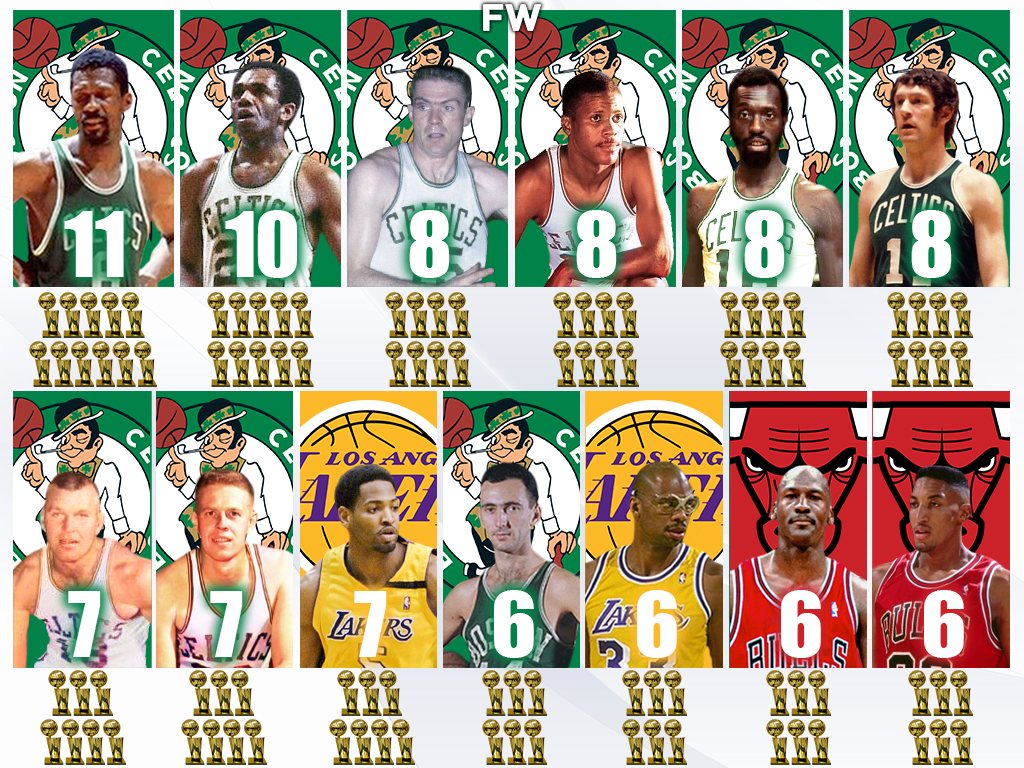
The answer to this question begins and ends with Bill Russell. The legendary center for the Boston Celtics holds the record with 11 NBA championships. To put this in a financial context, Russell’s career represents the greatest accumulation of “championship equity” in the history of the sport. Over his 13-year career, he achieved a success rate of nearly 85%, a level of consistency and return on investment (ROI) that is virtually unheard of in any competitive market.
The Bill Russell Standard: A Blueprint for Long-Term Asset Growth
Bill Russell’s 11 championships are a testament to the power of “defensive dividends.” In the investment world, a defensive strategy focuses on capital preservation and steady growth through market volatility. On the court, Russell pioneered this approach. He didn’t focus on high-volume scoring or flashy offensive metrics; instead, he dominated through rebounding and shot-blocking—the defensive fundamentals that stabilized his team and allowed them to win year after year.
The Boston Celtics as a Market Monopoly
During the 1960s, the Boston Celtics functioned as a sports dynasty that mirrored a market monopoly. From 1957 to 1969, they won 11 titles in 13 seasons, including an unprecedented eight consecutive championships from 1959 to 1966. This era of dominance was built on a culture of shared sacrifice and intellectual capital, led by head coach Red Auerbach and Russell himself.
For modern investors and entrepreneurs, the Celtics’ run offers a masterclass in organizational stability. While other teams frequently turned over their rosters in search of a “quick fix,” the Celtics maintained a core group of players—including Sam Jones (10 titles), Tom Heinsohn (8 titles), and K.C. Jones (8 titles)—who understood their roles perfectly. This low turnover rate allowed the team to compound its success, much like an investment portfolio that benefits from decades of uninterrupted growth.
The Financial Value of Selflessness
Bill Russell’s career also highlights the financial wisdom of the “team-first” model. In an era before the explosion of modern NBA salaries, Russell understood that winning was the ultimate leverage. By prioritizing championships over individual statistics, he created a brand of winning that remains the most respected in the industry. Today, players who follow this blueprint—taking slightly less in salary to ensure a competitive roster—often find that their long-term “winner’s premium” in endorsements and post-career business ventures far outweighs the immediate gain of a maximum contract on a losing team.
The Strategic Positioning of Robert Horry: The “Specialized Asset” Model
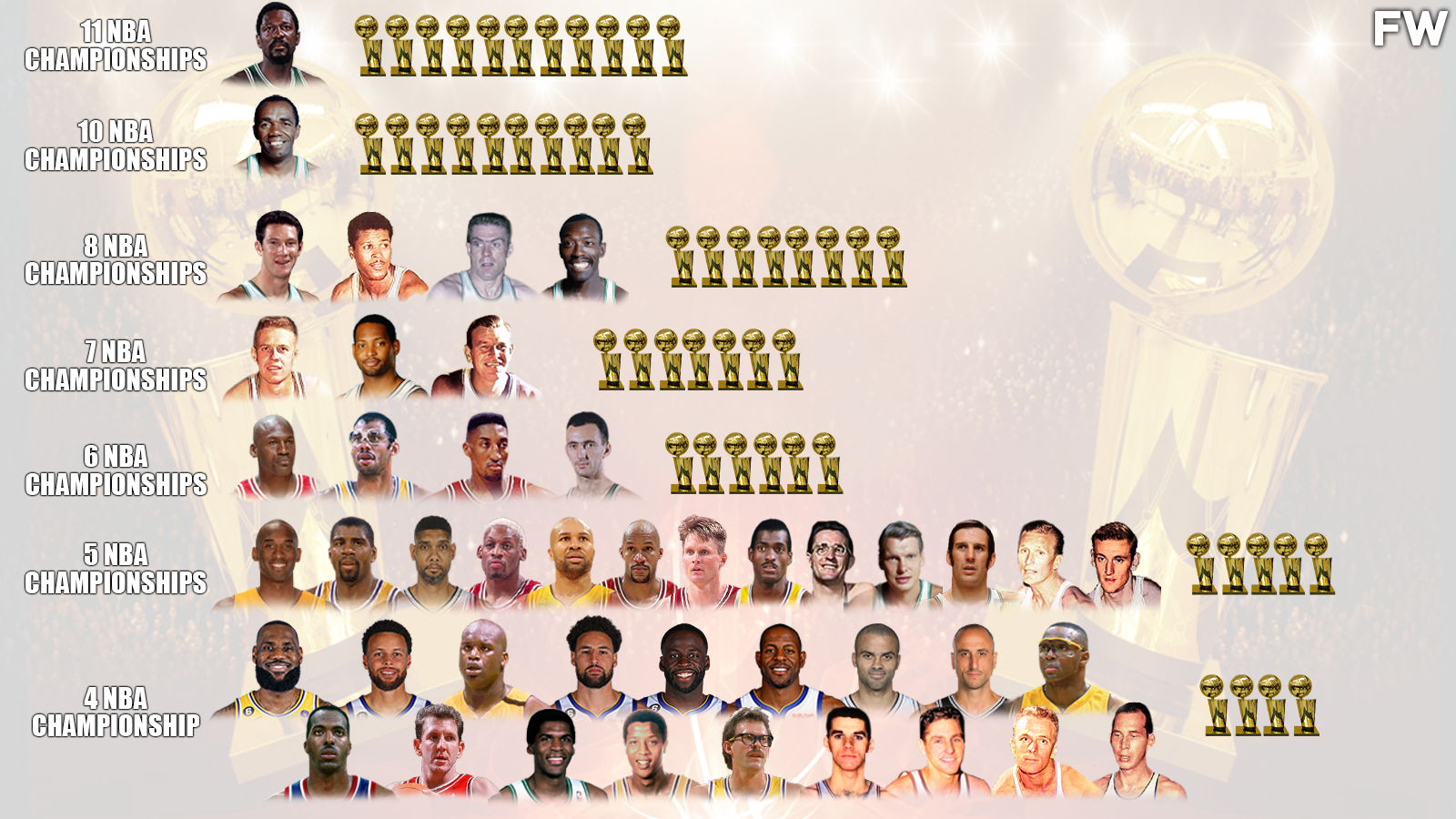
While Bill Russell leads the list with 11 titles, and his teammates fill out the top five, there is one name that stands out in the modern era: Robert Horry. With seven NBA titles, Horry has more championships than Michael Jordan, Kareem Abdul-Jabbar, or Kobe Bryant. Horry’s career provides a fascinating case study in strategic career positioning and the “specialized asset” model of wealth building.
Diversification Across Winning Portfolios
Unlike Bill Russell, who spent his entire career with one organization, Robert Horry won his seven titles across three different franchises: the Houston Rockets (2), the Los Angeles Lakers (3), and the San Antonio Spurs (2). In financial terms, Horry was a highly diversified asset. He had a unique ability to identify high-potential “markets” (teams) and provide the specific value needed to push them over the top.
Horry was never the “CEO” or the primary star of his teams; he was the ultimate “CFO” or high-level consultant. He specialized in high-pressure situations, earning the nickname “Big Shot Bob.” This specialization made him indispensable to championship contenders. His career demonstrates that you don’t always have to be the primary owner of a venture to reap the greatest rewards; sometimes, being the most reliable “closing” partner in several successful ventures is the faster route to an elite portfolio.
Capitalizing on the “Winner’s Premium”
The financial impact of Horry’s seven rings is evident in his longevity and post-career opportunities. In a league where the average career lasts fewer than five years, Horry played for 16 seasons. His reputation as a winner allowed him to stay in the league longer and command higher salaries than many players with better statistical profiles. This “winner’s premium” is a real phenomenon in the business of sports—organizations are willing to pay a high price for individuals who have a proven track record of delivering results when the stakes are highest.
The Economics of the Modern Dynasty: Jordan, Kareem, and the Six-Ring Threshold
When discussing the most decorated players, the conversation inevitably turns to Michael Jordan and Kareem Abdul-Jabbar, both of whom have six NBA titles. These players represent the “high-growth/high-reward” model of professional success. They were the primary engines of their teams’ economies, and their championships served as the foundation for multi-billion dollar brands.
Michael Jordan and the Creation of Personal Equity
Michael Jordan’s six championships with the Chicago Bulls transformed the NBA into a global commercial powerhouse. From a money perspective, Jordan did more than just win games; he created a blueprint for athlete-led entrepreneurship. Each championship acted as a “funding round” for his personal brand, increasing the value of the Jordan Brand under Nike and paving the way for his eventual ownership of the Charlotte Hornets.
Jordan’s 6-0 record in the NBA Finals is often cited as the ultimate mark of his “clutch” performance, but it also reflects a perfect execution of business strategy. He ensured that every time his brand reached the biggest stage, it delivered. This 100% success rate in the Finals created an aura of invincibility that remains a key component of his brand’s massive valuation today.
Kareem Abdul-Jabbar and Long-Term Sustainability
Kareem Abdul-Jabbar’s six titles were spread across two decades, winning one with the Milwaukee Bucks in 1971 and five with the Los Angeles Lakers in the 1980s. Kareem’s career is a study in “sustainability and adaptation.” As the NBA evolved, Kareem maintained his value by refining his “Skyhook”—the most unblockable shot in basketball history.
In the business world, Kareem’s career is akin to a company that remains a market leader for 20 years by consistently innovating while staying true to its core product. His ability to win championships as both the primary star (in Milwaukee) and a veteran anchor (with the Lakers) shows the importance of evolving one’s role within an organization to ensure continued profitability and success.
The ROI of Championship Gold: Why Rings Matter for Net Worth
Beyond the history and the records, the pursuit of the most NBA titles is driven by a very real financial incentive. The “ROI of a ring” extends far beyond the playoff bonuses paid out by the league.
Post-Career Business Ventures and Board Seats
Players with multiple championships are often viewed as “proven winners” by the corporate world. This perception opens doors to lucrative board seats, private equity partnerships, and investment opportunities. When a former champion like Magic Johnson (5 titles) or Shaquille O’Neal (4 titles) enters a boardroom, they bring a level of credibility that is impossible to replicate. They have successfully navigated the most competitive environments in the world, a trait that is highly valued in the world of high-finance and business leadership.
The Collectibles and Memorabilia Market
From an alternative investment standpoint, the physical rings and jerseys of players with the most titles are blue-chip assets in the sports memorabilia market. A Bill Russell championship ring or a Michael Jordan game-worn jersey from a Finals run can fetch millions of dollars at auction. The scarcity of these items, combined with the historical significance of the players who owned them, makes them highly liquid and appreciating assets. For the players themselves, their legacy of winning is a form of “intellectual property” that pays dividends for the rest of their lives.

Final Analysis: The Championship Portfolio
The question of which player has the most NBA titles ultimately reveals a hierarchy of success that mirrors the most effective strategies in the world of money and business. Whether it is the compounding success of Bill Russell’s Celtics, the strategic diversification of Robert Horry, or the brand-building dominance of Michael Jordan, these champions prove that winning is the most valuable currency in professional sports.
For the aspiring professional or investor, the lesson is clear: individual stats may get you a contract, but championships build a legacy that transcends the game. By focusing on teamwork, strategic positioning, and long-term value creation, these players didn’t just win games—they built financial and cultural empires that will stand the test of time. In the NBA, as in finance, those who hold the most assets (rings) at the end of the day are the ones who truly own the market.
aViewFromTheCave is a participant in the Amazon Services LLC Associates Program, an affiliate advertising program designed to provide a means for sites to earn advertising fees by advertising and linking to Amazon.com. Amazon, the Amazon logo, AmazonSupply, and the AmazonSupply logo are trademarks of Amazon.com, Inc. or its affiliates. As an Amazon Associate we earn affiliate commissions from qualifying purchases.