
For millennia, the question “what planets are out?” required a deep knowledge of celestial mechanics, a stack of star charts, and a significant amount of patience. Today, that curiosity is satisfied in seconds through the interface of a smartphone or the lens of a smart telescope. The intersection of technology and astronomy has transformed the night sky from a distant mystery into an interactive digital map. By leveraging advanced sensors, artificial intelligence, and sophisticated software, modern tech has democratized the cosmos, allowing both amateur enthusiasts and professional researchers to identify celestial bodies with unprecedented precision.

The Digital Lens: How Mobile Apps Revolutionized Amateur Astronomy
The most significant shift in how we identify which planets are visible has occurred in our pockets. The smartphone has become the ultimate tool for the modern stargazer, replacing cumbersome physical ephemerides with real-time, data-rich interfaces.
Real-Time Sky Mapping and AR Overlays
Augmented Reality (AR) is perhaps the most impactful tech trend in this niche. Apps like SkyView, Star Walk, and Stellarium utilize a device’s internal compass, gyroscope, and GPS to overlay a digital map of the heavens onto the live view from the camera. When a user asks “what planet is that bright light?” they no longer need to guess. By simply pointing their phone toward the object, the software identifies it as Jupiter or Venus, providing a 3D rendering and real-time orbital data. This seamless integration of hardware sensors and graphical rendering has lowered the barrier to entry for space observation, turning every smartphone owner into a nascent astronomer.
Deep-Space Databases and Cloud Integration
Beyond simple identification, modern astronomy apps are backed by massive, cloud-hosted databases. These repositories contain centuries of astronomical observations, precisely calculated orbital paths (ephemerides), and high-resolution imagery from the Hubble and James Webb Space Telescopes. When you search for a planet’s visibility, the app isn’t just showing a static image; it is processing real-time coordinates from NASA’s Jet Propulsion Laboratory (JPL) APIs. This connectivity ensures that users receive up-to-the-minute information on planetary transits, eclipses, and conjunctions, regardless of their location on Earth.
Hardware Evolution: From Traditional Lenses to Smart Telescopes
While software identifies the planets, new hardware technology allows us to see them with a clarity once reserved for university observatories. The transition from purely optical instruments to “smart” telescopes represents a paradigm shift in hobbyist tech.
The Rise of Computational Photography in Stargazing
Traditional telescopes require a steep learning curve, involving manual alignment and a deep understanding of right ascension and declination. However, the latest generation of smart telescopes—manufactured by companies like Unistellar and Vaonis—uses computational photography to solve these challenges. These gadgets utilize “Plate Solving” technology, where an onboard computer takes a photo of the stars, compares it to an internal database to determine its exact orientation, and then automatically slews the telescope to the desired planet. Furthermore, these devices use digital stacking algorithms to negate the effects of light pollution, allowing users in the middle of bright cities to see the rings of Saturn in vivid detail.
Connectivity and Remote Observation
Modern telescope tech is increasingly focused on the “Internet of Things” (IoT). Many new setups do not even have an eyepiece; instead, they stream a high-definition video feed directly to a tablet or computer via Wi-Fi. This allows for comfortable, indoor observation and the ability to capture long-exposure images that can be shared instantly on social media. This level of connectivity has turned planetary observation into a collaborative, digital experience, where data can be synced across devices and shared with global communities in real-time.
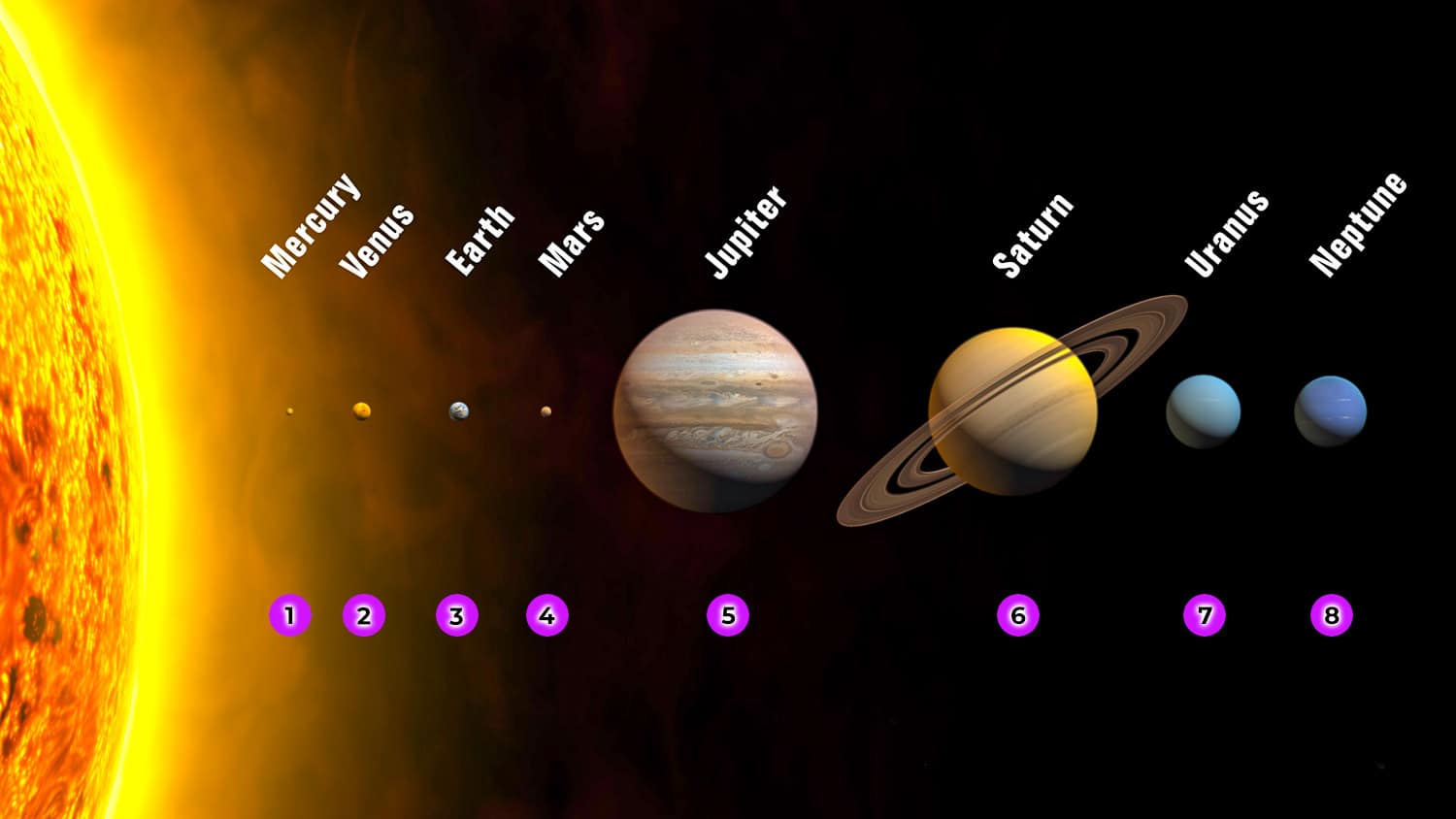
The Data Behind the Stars: How AI and Cloud Computing Track Planetary Motion
The answer to “what planets are out” is rooted in complex mathematics. Modern technology has automated these calculations, making planetary tracking more accurate than ever before.
Predictive Algorithms and Ephemeris Calculations
At the heart of every astronomy tool is a set of predictive algorithms. These pieces of software calculate the positions of celestial bodies based on Keplerian elements. In the past, these calculations were computationally expensive. Today, AI and machine learning are being used to refine these models, accounting for tiny gravitational perturbations caused by other planets. This ensures that when a tech platform tells you Mars will rise at 10:14 PM, it is accurate to the second. This precision is vital not just for hobbyists, but for the logistics of space agencies and satellite operators who must navigate an increasingly crowded orbital environment.
Citizen Science and Collaborative Data Platforms
Technology has facilitated a “Big Data” approach to astronomy. Platforms like Zooniverse or the SETI@home legacy projects have shown that distributed computing and human-tech collaboration can lead to significant discoveries. When users track planets using smart tech, they often contribute their data back to global networks. This collaborative ecosystem allows scientists to monitor changes in planetary atmospheres or track the movement of Near-Earth Objects (NEOs). The “tech” in this instance isn’t just the device; it’s the global network of interconnected users providing a 24/7 watch on the heavens.
Emerging Trends in Space Observation Technology
As we look toward the future, the technology used to identify and observe planets continues to evolve, facing both new opportunities and unique challenges.
Satellite Constellations and the Future of Visibility
The rise of massive satellite constellations, such as SpaceX’s Starlink, has introduced a new variable into the “what’s out tonight” equation. For the first time, technology is competing with the stars for visibility. To combat this, developers are creating “satellite-aware” software that can digitally subtract satellite streaks from astronomical images. This represents a sophisticated application of image processing tech, designed to preserve our ability to see the natural “planets that are out” amidst a growing grid of artificial ones.
The Impact of Virtual and Mixed Reality
Virtual Reality (VR) and Mixed Reality (MR) are set to redefine space education. Instead of looking at a 2D screen to see where Jupiter is, users can wear MR headsets that project the entire solar system into their living room, scaled to real-time positions. This immersive tech provides a spatial understanding of the “planetary plane” that was previously difficult to visualize. By walking through a digital representation of the solar system, users can understand why certain planets are visible at different times of the year, turning a simple query into a comprehensive educational experience.
Conclusion: The Infinite Horizon of Digital Astronomy
The question “what planets are out” serves as a bridge between our ancient curiosity and our digital future. Through the advancement of mobile applications, smart hardware, and complex data processing, technology has rendered the heavens accessible to everyone. We are no longer limited by our eyesight or our geographic location; instead, we are empowered by sensors and algorithms that can pierce through light pollution and vast distances.
As AI continues to refine our predictive models and AR becomes more integrated into our daily eyewear, the distinction between the digital world and the celestial world will continue to blur. Technology has not only answered our questions about the night sky but has also provided us with the tools to explore it more deeply than ever before. Whether through a 5-inch screen or a smart-sensor telescope, the planets are closer than they have ever been, thanks to the relentless pace of technological innovation.
aViewFromTheCave is a participant in the Amazon Services LLC Associates Program, an affiliate advertising program designed to provide a means for sites to earn advertising fees by advertising and linking to Amazon.com. Amazon, the Amazon logo, AmazonSupply, and the AmazonSupply logo are trademarks of Amazon.com, Inc. or its affiliates. As an Amazon Associate we earn affiliate commissions from qualifying purchases.