
In the early days of the social internet, the “What Animal Are You?” personality test was a cornerstone of viral engagement—a simple, often whimsical diversion designed for clicks and community sharing. However, as we move deeper into the era of artificial intelligence and sophisticated data modeling, these tests have undergone a profound technological transformation. What was once a rudimentary series of “if/then” scripts has evolved into a complex intersection of psychometric software, machine learning algorithms, and advanced UI/UX design. Today, the technology behind personality profiling serves as a blueprint for how software understands human behavior, moving far beyond digital entertainment into the realms of predictive analytics and cognitive computing.

1. The Evolution of Personality Logic: From Binary Quizzes to Machine Learning
The architecture of personality assessments has shifted from static, rule-based systems to dynamic, learning-centric models. Understanding this evolution is key to grasping how modern technology interprets the nuances of human character through the lens of animal archetypes.
The Legacy of Rule-Based Scripts
In the Web 2.0 era, personality tests were built on basic heuristic trees. A developer would write a script where specific answers were weighted toward a fixed outcome. For instance, if a user selected “I prefer the night” and “I am a solitary worker,” the script would add points to the “Owl” or “Wolf” category. These were deterministic systems; the logic was transparent but lacked depth, as they could not account for contradictions in human behavior or provide nuanced results. They were limited by the developer’s manual input and a finite set of variables.
Integrating Natural Language Processing (NLP)
The modern “What Animal Are You?” test often utilizes Natural Language Processing (NLP) to analyze open-ended responses rather than just multiple-choice buttons. By integrating Large Language Models (LLMs) like GPT-4 or Claude via API, developers allow users to describe their feelings, ambitions, and fears in plain text. The technology then performs sentiment analysis and semantic mapping to compare the user’s linguistic patterns against a vast database of psychological traits associated with specific animal metaphors. This shift from “selecting” to “expressing” represents a leap in how software captures the “vibe” of a user’s personality.
2. The Tech Stack Behind Behavioral Assessment Apps
Building a high-performance personality assessment tool requires more than just a creative premise. It involves a robust tech stack designed to handle data processing, real-time feedback, and high-concurrency traffic.
Backend Architectures for Data Processing
Modern assessment platforms typically rely on scalable cloud infrastructure, such as AWS or Google Cloud, to manage user data. The backend—often written in Python due to its superior libraries for data science (like Pandas, NumPy, and Scikit-learn)—is responsible for the heavy lifting. When a user submits their answers, the backend runs a scoring algorithm that may involve vector embeddings. By representing personality traits as high-dimensional vectors, the software can calculate the “cosine similarity” between a user’s profile and the “ideal” profile of a specific animal archetype, ensuring a mathematically precise match.
UI/UX Gamification in Assessment Software
The front-end experience is equally critical. Using frameworks like React or Vue.js, developers create “frictionless” interfaces that use micro-interactions to keep the user engaged. Gamification technology—such as progress bars, haptic feedback on mobile devices, and dynamic transitions—is used to reduce “quiz fatigue.” By employing asynchronous data loading (AJAX), the app can calculate results in the background, providing an instantaneous, visually stimulating reveal that feels like magic to the user but is actually the result of optimized API calls and rapid server-side processing.
3. AI-Driven Psychometrics: Beyond Surface-Level Archetypes
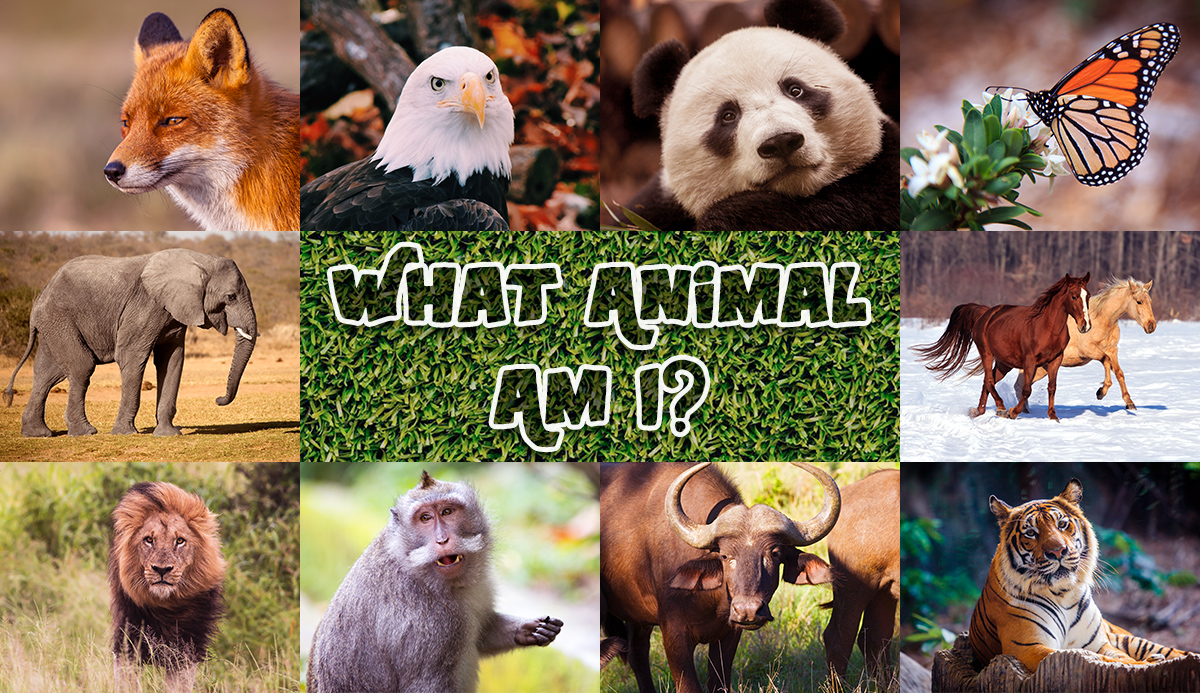
The intersection of technology and psychology, often called “Psychometrics,” has been supercharged by artificial intelligence. In a sophisticated “animal personality” test, the software is doing much more than picking a mascot; it is mapping a cognitive profile.
Neural Networks and Pattern Recognition
Artificial Neural Networks (ANNs) allow personality tests to identify patterns that are invisible to human observers. By training a model on hundreds of thousands of previous test-takers, the AI can find correlations between seemingly unrelated data points. For example, the technology might discover that individuals who prefer a specific color palette and have a certain typing cadence on their smartphone are 80% more likely to exhibit the leadership traits of a “Lion.” This predictive capability is a hallmark of modern AI tools, transforming a simple quiz into a sophisticated behavioral diagnostic.
Real-Time Personalization through Generative AI
One of the most exciting trends in personality-driven tech is the use of Generative AI to create bespoke results. Instead of showing a pre-written paragraph about being a “Dolphin,” the software can generate a unique, 500-word analysis tailored specifically to the user’s unique input. By feeding the user’s data back into a generative model, the tool can produce custom artwork, personalized advice, and even a unique “hybrid” animal identity that exists only for that specific user. This level of hyper-personalization is only possible through the recent advancements in transformer-based architectures.
4. Digital Security and Data Privacy in Personality Profiling
As personality tests become more technologically advanced, they also become more invasive. The data collected—often referred to as “psychographic data”—is incredibly valuable and, if mishandled, poses significant security risks.
The Ethics of Big Data Collection
The tech industry still feels the ripples of the Cambridge Analytica scandal, which utilized personality quizzes to harvest data for political profiling. Today’s developers must navigate a complex landscape of regulations like GDPR and CCPA. Modern personality apps must implement “Privacy by Design,” ensuring that the sensitive behavioral data collected during a “What Animal Are You?” test is anonymized. Tech leaders are now focusing on “Data Minimization,” where the software only collects the specific signals needed to generate the result, discarding the rest to protect user identity.
Encrypted Assessments and User Sovereignty
To build trust, the next generation of personality tools is exploring decentralized technology. By using blockchain or Zero-Knowledge Proofs (ZKPs), developers can allow users to take a personality test and prove their “Animal Type” to a third party (like a dating app or a workplace) without ever revealing the specific answers they gave. This technological layer ensures that while the AI gets the data it needs to perform its function, the user retains total sovereignty over their digital “psychological fingerprint.”
5. The Future of Virtual Identity: VR and Biometric Integration
The trajectory of personality testing technology is moving away from the screen and into the physical and virtual worlds. The “What Animal Are You?” test of the future will likely be an immersive, multi-sensory experience.
Immersive Personality Exploration in the Metaverse
With the rise of Virtual Reality (VR) and Spatial Computing (like the Apple Vision Pro), personality assessments are becoming environmental. Instead of answering questions, a user might navigate a virtual forest. The tech tracks their movements, their gaze (eye-tracking), and how they interact with virtual objects. This behavioral data provides a much more accurate personality profile than a written test ever could. The software then renders a 3D avatar—your animal counterpart—that mirrors your movements in real-time, blurring the line between human and digital archetype.

Wearable Tech and Biological Feedback Loops
We are also seeing the emergence of “Bio-Acoustics” and “Affective Computing,” where wearable devices (like the Oura Ring or Apple Watch) feed physiological data into personality assessments. By measuring Heart Rate Variability (HRV), skin conductance, and sleep patterns, a personality app can determine your “animal state” based on biological reality rather than self-reported bias. If the tech detects high levels of persistent energy and fast reaction times, it might classify your “current animal” as a Hummingbird. This shift represents the ultimate integration of technology and biology, where your personality isn’t just something you say you have—it’s something your data proves you live.
In conclusion, the “What Animal Are You?” personality test has transitioned from a simple digital curiosity into a sophisticated showcase of modern tech capabilities. Through the lens of AI, high-performance backend engineering, and ethical data practices, these tools offer a glimpse into the future of how we interact with software. As technology continues to evolve, these assessments will become even more precise, providing us with deeper insights into our own digital identities and the algorithmic forces that help define them.
aViewFromTheCave is a participant in the Amazon Services LLC Associates Program, an affiliate advertising program designed to provide a means for sites to earn advertising fees by advertising and linking to Amazon.com. Amazon, the Amazon logo, AmazonSupply, and the AmazonSupply logo are trademarks of Amazon.com, Inc. or its affiliates. As an Amazon Associate we earn affiliate commissions from qualifying purchases.