
The question “what planet does Titan orbit?” elicits a direct answer for any astronomy enthusiast: Titan orbits Saturn. However, this seemingly simple fact belies an incredibly complex and captivating narrative of human ingenuity, scientific dedication, and cutting-edge technological advancement. Knowing that Titan, Saturn’s largest moon, circles the ringed gas giant is not a piece of knowledge that was easily acquired. It is the culmination of centuries of observational astronomy and, more recently, an extraordinary era of space exploration driven by sophisticated technology, advanced engineering, and relentless innovation.
This article delves into the technological underpinnings that have allowed humanity to identify Titan as a satellite of Saturn, study its enigmatic surface, and probe its unique atmosphere. From the first telescopic observations to the highly advanced probes and data analysis tools of today, technology has been the indispensable engine powering our understanding of this distant world and its cosmic parent. Without these technological leaps, Titan would remain an unidentifiable speck in the night sky, its secrets forever locked away.

The Technological Odyssey to Saturn and Titan
The journey to comprehending Titan’s place in the solar system began with rudimentary instruments and has evolved into an intricate dance of robotic explorers, precision engineering, and global communication networks. Each step in this odyssey has been defined by new technologies pushing the boundaries of what is possible.
Early Observational Tools: From Galileo to Modern Telescopes
The initial discovery of Saturn’s rings and its major moons was made possible by the invention of the telescope. Galileo Galilei, in the early 17th century, first observed Saturn and its peculiar “ears,” which Christian Huygens later identified as rings, also discovering Titan in 1655. These early observations, while revolutionary, were limited by the optics and stability of the instruments. Fast forward to the 20th and 21st centuries, and ground-based telescopes have grown exponentially in size and sophistication, incorporating adaptive optics to counteract atmospheric distortion and using advanced digital sensors to capture fainter light.
Beyond Earth’s atmosphere, space telescopes like the Hubble Space Telescope (HST) provided unprecedented views of Saturn and its moons, free from atmospheric interference. HST’s high-resolution imaging capabilities allowed scientists to resolve details on Titan’s surface and atmosphere that were impossible from Earth. Furthermore, radio telescopes and very long baseline interferometry (VLBI) played a crucial role, not just in observing distant galaxies but also in precisely tracking the positions and movements of celestial bodies within our own solar system, laying the groundwork for future probe missions. These advancements moved the understanding of Titan from a mere pinpoint of light to a distinct, albeit hazy, world orbiting Saturn.
Robotic Explorers: The Cassini-Huygens Mission as a Technological Marvel
The pinnacle of our technological endeavor to understand Titan and Saturn is undoubtedly the Cassini-Huygens mission. Launched in 1997, this joint NASA-ESA-ASI project was a triumph of engineering and a testament to the power of international scientific collaboration. The Cassini orbiter, a 5,712 kg spacecraft, carried a suite of 12 sophisticated instruments designed to study Saturn, its rings, magnetosphere, and moons, including Titan, for over 13 years. Its longevity, maneuverability, and data collection capabilities were unparalleled for an outer solar system mission.
The Huygens probe, developed by ESA, was perhaps the most audacious piece of technology on board. Designed to be released from Cassini and descend through Titan’s thick atmosphere, Huygens was the first spacecraft to land on a moon in the outer solar system. It carried six instruments to measure atmospheric properties, sample aerosols, image the surface during descent, and analyze the surface composition upon landing. The engineering challenges involved in designing a probe that could survive the extreme cold, navigate autonomously through a hazy atmosphere, and transmit data across billions of miles back to Cassini (and then to Earth) were immense, pushing the boundaries of materials science, autonomous systems, and communication technology.
Data Transmission and Processing: Bridging Billions of Miles
The success of missions like Cassini-Huygens hinges not just on the hardware sent into space but also on the sophisticated infrastructure that enables communication across astronomical distances. The Deep Space Network (DSN), operated by NASA, is a critical global network of large radio antennas that provides continuous communication with spacecraft. These massive dishes, located in California, Spain, and Australia, are capable of sending commands to and receiving telemetry and scientific data from probes thousands of times farther than the Moon.
The technology involved includes highly sensitive receivers, powerful transmitters, and intricate error-correction coding algorithms to ensure data integrity over interstellar communication links prone to noise and signal degradation. Once received on Earth, the raw data undergoes extensive processing. This involves specialized software to decode telemetry, calibrate instruments, correct for environmental factors, and transform raw signals into meaningful scientific data – images, spectra, and numerical readings. The sheer volume of data returned by Cassini over its mission lifetime required advanced data management systems and computational power, laying the groundwork for modern big data analytics in space science.
Sophisticated Instrumentation: Peering Beneath Titan’s Haze
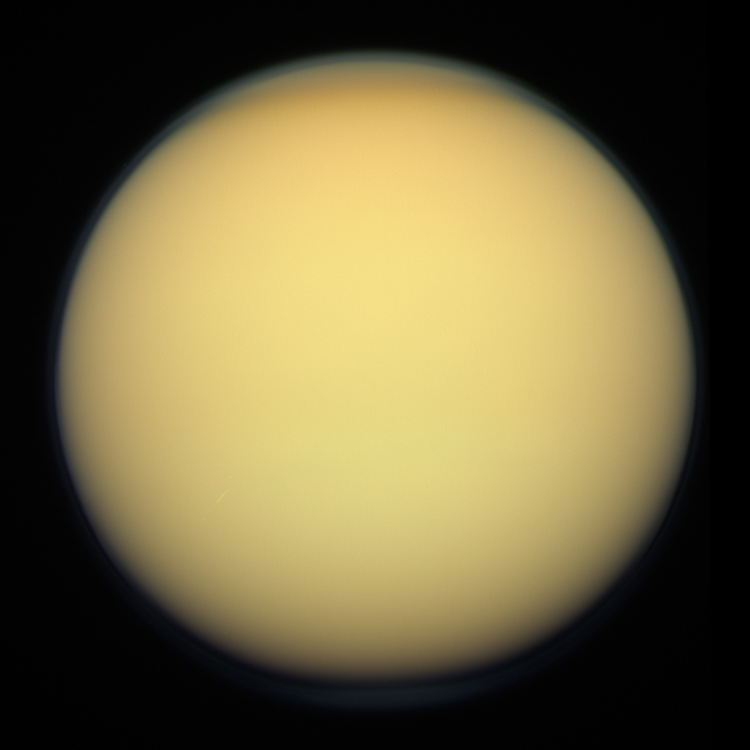
Titan’s distinguishing feature is its dense, opaque atmosphere, which largely obscured its surface from Earth-based telescopic views. It was the advanced instrumentation aboard Cassini and Huygens that allowed humanity to finally pierce this veil and reveal a remarkably Earth-like world.
Imaging Systems and Spectrometers: Unveiling Surface Features and Composition
Cassini was equipped with a versatile array of imaging instruments. Its Imaging Science Subsystem (ISS) included wide-angle and narrow-angle cameras capable of capturing visible light images. More critically for Titan, Cassini also carried a Visual and Infrared Mapping Spectrometer (VIMS) and a Synthetic Aperture Radar (SAR). VIMS could peer through atmospheric windows at specific infrared wavelengths, allowing scientists to see features on Titan’s surface that were invisible to optical cameras. This provided crucial information about surface composition and detected features like ice deposits and hydrocarbon lakes.
The SAR instrument was particularly revolutionary. Operating much like Earth-based radar, it sent radio waves through Titan’s atmosphere, which then bounced off the surface and returned to Cassini. By analyzing the time delay and intensity of the echoes, SAR could map the topography, identify smooth liquid surfaces (like lakes and seas), and differentiate between various terrains, regardless of the atmospheric haze or lighting conditions. This technology provided the first detailed maps of Titan’s hidden landscape, revealing vast lakes, river networks, and mountainous regions.
Atmospheric Probes and Sensors: Decoding Titan’s Unique Air
The Huygens probe was specifically designed to characterize Titan’s atmosphere from top to bottom. As it descended, the Gas Chromatograph Mass Spectrometer (GCMS) sampled the atmospheric gases, identifying their composition and molecular structures. This instrument was vital for confirming Titan’s nitrogen-rich atmosphere, similar to Earth’s early atmosphere, but with significant methane and other hydrocarbons. The Aerosol Collector and Pyrolyser (ACP) collected atmospheric particles (aerosols) and heated them to analyze their chemical makeup, revealing the complex organic chemistry occurring in Titan’s sky.
Other sensors, such as the HASI (Huygens Atmospheric Structure Instrument), measured atmospheric pressure, temperature, and electrical conductivity at different altitudes. An Acoustic Sounder on Huygens even allowed scientists to “hear” the sounds of Titan’s atmosphere as the probe descended. These dedicated atmospheric sensors provided an unprecedented, in-situ understanding of Titan’s meteorology, chemistry, and physical structure, painting a picture of a world with a complex weather system, including methane rain and clouds.

Gravitational and Magnetic Field Detectors: Pinpointing Internal Structure
Beyond surface and atmospheric observations, Cassini’s sophisticated tracking capabilities and scientific instruments allowed for inferences about Titan’s internal structure. By meticulously tracking Cassini’s trajectory and measuring minute changes in its velocity as it passed close to Titan, scientists could precisely measure Titan’s gravitational field. Variations in the gravitational field across the moon’s surface indicate differences in mass distribution beneath the surface. This data was crucial in inferring the presence of a subsurface liquid water ocean beneath Titan’s icy crust, a discovery with profound implications for astrobiology.
Additionally, Cassini’s magnetometer and plasma instruments investigated Titan’s interaction with Saturn’s powerful magnetic field and the surrounding plasma environment. While Titan itself does not have a strong intrinsic magnetic field, its atmospheric properties and interaction with Saturn’s magnetosphere provide clues about its internal conductivity and ongoing geological activity. These subtle measurements, requiring extremely sensitive detectors and precise orbital mechanics, contribute to a holistic understanding of Titan, from its atmosphere to its core.
AI, Data Science, and Simulation: Enhancing Our Understanding
The sheer volume and complexity of data generated by modern space missions demand advanced computational techniques. Artificial Intelligence (AI), data science, and sophisticated simulation tools are now indispensable partners in planetary exploration, allowing scientists to extract deeper insights and make more accurate predictions.
AI in Image Processing and Feature Recognition
The thousands of images returned by Cassini from Saturn and Titan represent a treasure trove of information. Manually sifting through these images to identify specific geological features, track changes over time, or categorize landforms is an arduous and time-consuming task. AI, particularly machine learning algorithms like convolutional neural networks (CNNs), has become instrumental in automating and accelerating this process. AI can be trained to recognize specific types of terrains, impact craters, liquid bodies, or atmospheric phenomena on Titan’s surface and in its atmosphere with remarkable speed and accuracy. This not only speeds up analysis but also helps identify subtle patterns that might be missed by the human eye, facilitating the creation of comprehensive geological maps and climate models for Titan.
Predictive Modeling and Orbital Mechanics Simulation
Understanding the complex gravitational interactions between Saturn, its myriad moons (including Titan), and the Cassini spacecraft required extremely precise orbital mechanics. Advanced simulation software and supercomputing power were used to model these interactions, predict future trajectories, and plan intricate maneuvers for Cassini. These models ensured that Cassini could execute numerous close flybys of Titan (over 127 in its mission) with incredible precision, using the moon’s gravity to alter its course and conserve fuel – a technique known as gravity assist. Beyond mission planning, these simulations also help scientists understand the long-term evolution of Titan’s orbit, its tidal interactions with Saturn, and its past geological activity, providing context for current observations.
Virtual Reality and Data Visualization for Planetary Exploration
Making sense of multi-dimensional data – from topography and composition to atmospheric profiles – requires powerful visualization tools. Virtual Reality (VR) and augmented reality (AR) are increasingly being employed to allow scientists and the public to “explore” celestial bodies like Titan in immersive 3D environments. By rendering high-resolution images and topographical data into navigable virtual landscapes, researchers can gain a more intuitive understanding of Titan’s geology and features. Data visualization tools also help in overlaying different types of data (e.g., radar maps with infrared composition data) to identify correlations and generate new hypotheses. This technology transforms abstract datasets into tangible, explorable worlds, enhancing both scientific discovery and public engagement.
The Future of Titan Exploration: Next-Gen Technologies on the Horizon
The successful exploration of Titan to date is just the beginning. The next generation of missions will push technological boundaries even further, employing autonomous systems and novel designs to delve deeper into Titan’s mysteries.
Dragonfly Mission: A New Era of Autonomous Exploration
The most anticipated future mission to Titan is NASA’s Dragonfly, an innovative rotorcraft lander scheduled for launch in 2027. Dragonfly represents a paradigm shift in planetary exploration. Unlike wheeled rovers, this drone-like vehicle will fly across Titan’s surface, making multiple hops to different scientific targets. This mobility will allow it to access a far wider range of geological features than any previous lander. The technology behind Dragonfly is remarkable: it must operate autonomously in Titan’s dense, cold atmosphere, navigate using optical sensors and altimeters, and power its flight and instruments using a radioisotope thermoelectric generator (RTG). Its sophisticated suite of instruments, including mass spectrometers, gamma-ray and neutron spectrometers, and meteorological sensors, will search for chemical biosignatures and study the processes that have shaped Titan’s surface and atmosphere. Dragonfly is a testament to the continued evolution of robotic autonomy and atmospheric flight technology for extraterrestrial environments.
Advanced Propulsion and Communication Systems
Future deep space missions will demand even more efficient propulsion and faster communication. Research into advanced propulsion systems, such as next-generation ion engines or even nuclear electric propulsion, aims to reduce transit times to the outer solar system, enabling more frequent and ambitious missions. For communication, laser communication (optical communication) is being developed as a potential successor to radio waves. Laser systems can transmit data at much higher rates, allowing for the return of even larger volumes of high-resolution images and complex datasets, which will be crucial for missions exploring worlds like Titan with increasing detail. These technologies will enable missions to gather more data faster, enhancing our understanding of distant celestial bodies.
Miniaturization and Swarm Robotics for Distributed Sensing
The trend in technology towards miniaturization is also impacting space exploration. Smaller, more capable sensors and instruments can be packed onto smaller spacecraft. This opens the door to concepts like swarm robotics, where multiple small, independent probes or landers could be deployed to cover a wider area or perform simultaneous measurements at different locations on Titan. Imagine a fleet of mini-Huygens probes, each gathering atmospheric data or surface samples from a different region, providing a comprehensive, distributed sensing network. Such approaches, enabled by advancements in microelectronics, artificial intelligence for coordination, and robust autonomy, could revolutionize our ability to characterize complex and dynamic environments like Titan.
Conclusion
The answer to “what planet does Titan orbit?” is undeniably Saturn. But the journey to confidently provide that answer, and to then go far beyond it to understand Titan’s lakes, dunes, and unique atmospheric chemistry, is a monumental saga of technological triumph. From Galileo’s rudimentary telescope to the intricate Cassini-Huygens mission, and looking ahead to the autonomous Dragonfly, every piece of knowledge we gather about this enigmatic moon is a direct consequence of relentless innovation in technology.
The ability to build instruments that can survive billions of miles of space travel, peer through thick alien atmospheres, analyze chemical compositions, and transmit data across the solar system is a testament to humanity’s scientific curiosity and engineering prowess. The ongoing quest to explore and understand Titan, and indeed the wider universe, will continue to be driven by ever-more sophisticated technology, blurring the lines between science fiction and scientific reality, and continuously pushing the boundaries of what we can achieve in the cosmos.
aViewFromTheCave is a participant in the Amazon Services LLC Associates Program, an affiliate advertising program designed to provide a means for sites to earn advertising fees by advertising and linking to Amazon.com. Amazon, the Amazon logo, AmazonSupply, and the AmazonSupply logo are trademarks of Amazon.com, Inc. or its affiliates. As an Amazon Associate we earn affiliate commissions from qualifying purchases.