
Elon Musk’s name is inextricably linked with Tesla, the pioneering electric vehicle and clean energy company. More than just a CEO, he is the public face, the chief evangelist, and a driving force behind its stratospheric rise. Consequently, the question of his financial stake in the company is not merely a trivial fact but a critical indicator of his commitment, his wealth, and his influence over one of the world’s most valuable corporations. For investors, financial analysts, and market watchers, understanding the precise percentage of Tesla stock owned by Musk provides profound insights into governance, shareholder value, and the company’s long-term financial trajectory.
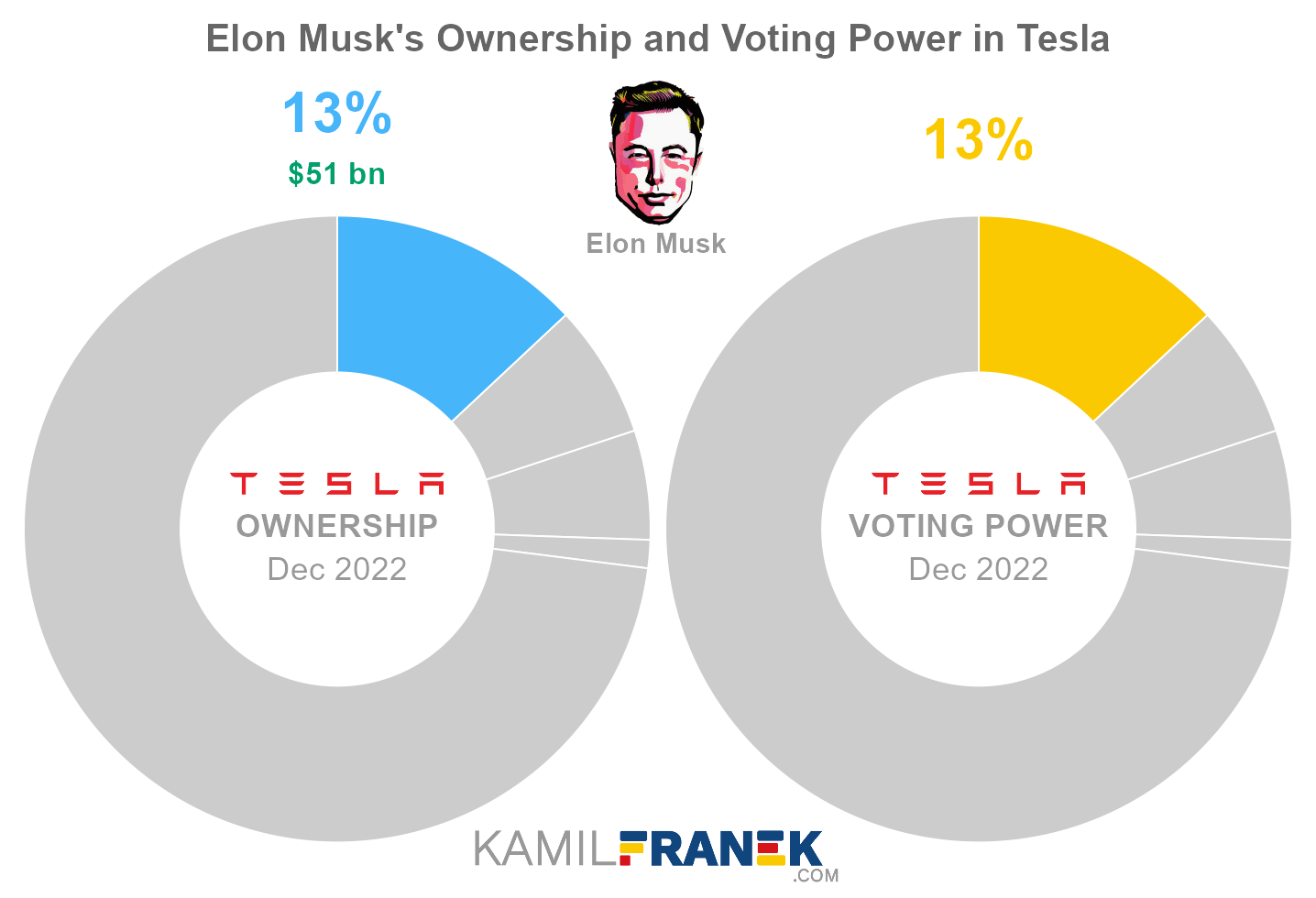
Musk’s ownership percentage is not static; it’s a dynamic figure that has evolved significantly over time due to various factors including stock option exercises, share sales, compensation packages, and general market movements affecting share count. This fluctuating stake directly impacts his personal net worth, Tesla’s shareholder structure, and the broader market’s perception of the company’s stability and future direction. His significant, often dominant, position as a shareholder ensures a powerful voice in strategic decisions, capital allocation, and the very culture of the company, making it a focal point for anyone analyzing Tesla’s financial health and prospects.
The Evolving Equity: Tracing Elon Musk’s Tesla Ownership Journey
Elon Musk’s journey to becoming Tesla’s largest individual shareholder is a testament to a unique blend of entrepreneurship, financial structuring, and long-term vision. His ownership stake has been shaped by a series of strategic financial maneuvers and company milestones, each impacting the delicate balance of equity.
Initial Investment and Early Dilution
Musk’s involvement with Tesla began not as a founder in the traditional sense, but as a significant early investor and chairman in 2004, leading the Series A funding round. He later assumed the role of CEO. His initial capital injection was crucial for the fledgling company’s survival and development. As Tesla progressed through subsequent funding rounds (Series B, C, etc.) and eventually its initial public offering (IPO) in 2010, new shares were issued to attract fresh capital from institutional investors and the public. Each new issuance, while providing essential funding for growth, inherently diluted the percentage ownership of existing shareholders, including Musk.
However, Musk’s early and substantial financial commitment, combined with his operational leadership, ensured he retained a significant, albeit percentage-wise diluted, portion of the company. This initial phase laid the groundwork for his future control, demonstrating his belief in the company’s vision even when faced with the necessity of sharing equity to fuel expansion.
Compensation Packages and Stock Options
A pivotal factor in the growth of Musk’s Tesla ownership has been his highly unconventional and performance-based executive compensation packages. Rather than receiving a traditional salary, Musk has largely opted for compensation tied directly to Tesla’s market capitalization and operational milestones. The most notable of these was the 2012 compensation plan, and its successor, the 2018 performance award.
The 2018 plan, in particular, was unprecedented in its scale and ambition. It offered Musk the opportunity to vest tranches of stock options, each equivalent to 1% of Tesla’s outstanding shares at the time of the grant, contingent upon the company hitting incredibly aggressive market capitalization targets (e.g., reaching $100 billion, then $150 billion, and so on, up to $650 billion) and operational goals (such as revenue and adjusted EBITDA benchmarks). As Tesla achieved these targets, often years ahead of expectations, Musk earned the right to purchase millions of shares at a deeply discounted strike price. This mechanism allowed him to significantly increase his percentage ownership without personally investing more cash into the company at market rates, effectively aligning his personal wealth creation with direct shareholder value generation. These option exercises, while increasing his stake, also sometimes required the sale of other shares to cover the substantial tax liabilities associated with exercising such valuable options.
Share Sales and Rebalancing
While the focus often lies on Musk acquiring more shares, there have been several instances where he has sold significant portions of his Tesla holdings. These sales are typically for a few key financial reasons:
- Tax Obligations: When Musk exercises stock options, the difference between the strike price and the market price on the exercise date is considered taxable income. The tax bill on such a massive gain can be enormous, often requiring the sale of a portion of the newly acquired shares to cover these “cashless exercise” taxes.
- Funding Other Ventures: Musk is involved in multiple capital-intensive companies, such as SpaceX and Neuralink. While less frequent for Tesla shares, sales from one venture could potentially free up capital for investments in another, though he primarily funds those via other means or venture capital.
- Liquidity and Diversification (Rarely for Musk): For most large shareholders, periodic sales provide liquidity for personal expenses or to diversify their portfolio. For Musk, whose wealth is heavily concentrated in his companies, diversification in a traditional sense is less of a driving factor, given his belief in these companies. However, ensuring he has accessible funds for large-scale personal commitments or strategic investments could necessitate sales.
Each instance of share sale or option exercise changes Musk’s reported ownership percentage, which is closely watched by the market as an indicator of his confidence and immediate financial needs.
Financial Impact of Musk’s Ownership on Tesla’s Market Value
Elon Musk’s substantial ownership stake in Tesla is not just a personal wealth metric; it’s a fundamental aspect of the company’s financial dynamics, profoundly influencing its market valuation, investor sentiment, and strategic direction.
Investor Confidence and Volatility
Musk’s significant ownership percentage, combined with his highly public persona and visionary leadership, plays a crucial role in shaping investor confidence in Tesla. Many investors see his substantial financial commitment as a direct alignment of his interests with their own, believing that his personal wealth is so tied to Tesla’s success that he will always act in the company’s best long-term financial interest. This belief can drive positive sentiment and contribute to higher valuations.
However, this strong link also introduces a unique layer of volatility. Musk’s public statements, social media activity, and actions – whether related to Tesla or his other ventures – can trigger significant shifts in Tesla’s stock price. Any perceived distraction, controversy, or even a hint of disengagement can lead to investor apprehension and sharp sell-offs. His financial stake means that his individual actions have outsized financial implications for all Tesla shareholders, creating a “Musk premium” or “Musk discount” on the stock depending on sentiment. This dynamic is a critical consideration for any financial analyst or investor valuing Tesla shares.
Shareholder Structure and Governance
With a large individual stake, Musk wields considerable voting power within Tesla. This concentration of ownership has significant implications for corporate governance. While it allows for decisive leadership and swift execution of ambitious projects—a factor often cited by proponents as crucial for Tesla’s rapid innovation—it also raises questions about checks and balances.
A substantial controlling stake can make it challenging for other shareholders, including large institutional investors, to significantly influence strategic decisions or executive compensation plans that Musk supports. This dynamic impacts the balance of power between management and the board, and potentially between Musk and other stakeholders. For financial stakeholders, understanding this power structure is key to assessing governance risks and the long-term sustainability of the company’s decision-making process. The influence over board appointments and key strategic votes flows directly from his equity position, shaping the company’s financial future.
Capital Allocation and Growth Strategies
Musk’s vision, heavily backed by his substantial ownership, is the primary driver of Tesla’s capital allocation and growth strategies. His financial stake gives him the authority and leverage to push through ambitious, often capital-intensive, projects such as building new Gigafactories, investing in autonomous driving technology, or expanding into new energy solutions.
From a financial perspective, this means Tesla’s investment decisions are heavily influenced by a long-term, high-risk, high-reward philosophy. This can lead to periods of high expenditure and lower short-term profitability but with the potential for massive future returns. For investors, it requires an understanding that Tesla’s financial strategy is not necessarily optimized for quarterly earnings but rather for exponential long-term growth and market dominance, a strategy underpinned by Musk’s belief in the company’s revolutionary potential, reinforced by his personal financial commitment. His ownership ensures that capital is deployed in alignment with his vision, even if it deviates from more conservative financial strategies advocated by some traditional investors.
The Billion-Dollar Question: Valuing Musk’s Tesla Holdings
The valuation of Elon Musk’s Tesla holdings is a moving target, directly proportional to Tesla’s market capitalization, but understanding its components provides crucial insights into his personal wealth and the company’s financial underpinnings.
Calculation of Net Worth and Market Cap Contribution
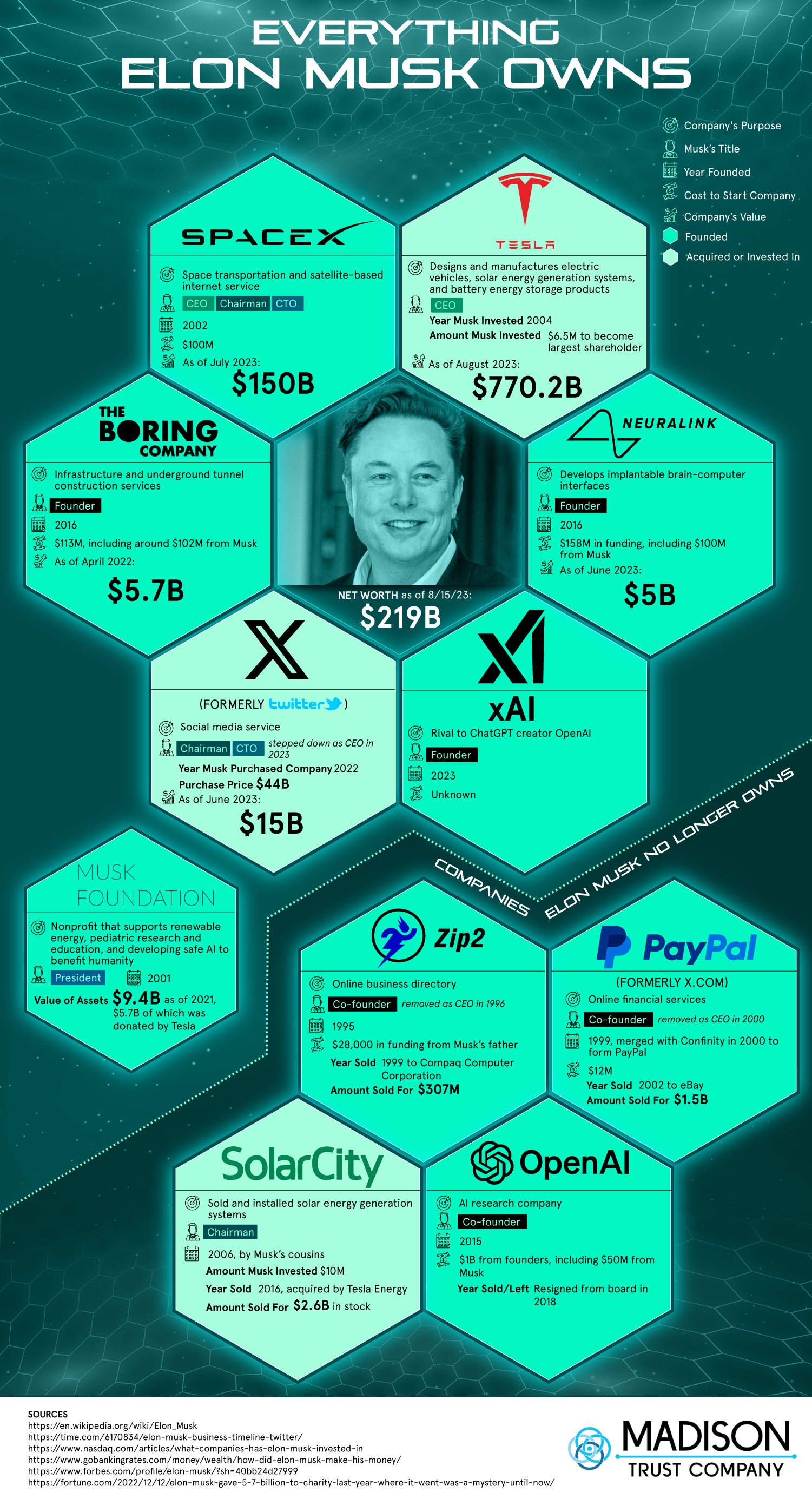
Musk’s net worth is largely dominated by the value of his equity in Tesla (and SpaceX). The calculation is straightforward: his total number of Tesla shares multiplied by the current market price per share. Given Tesla’s often multi-trillion-dollar market capitalization, even a single-digit percentage ownership translates into tens or hundreds of billions of dollars.
For example, if Tesla’s market cap is $800 billion and Musk owns 15% of the shares (a rough figure subject to constant change), his stake alone would be worth $120 billion. This figure fluctuates daily with the stock price, making him one of the wealthiest individuals globally. His stake is a significant portion of Tesla’s outstanding shares, meaning his individual wealth is deeply intertwined with the company’s overall market performance and investor sentiment.
Understanding Vesting Schedules and Performance Targets
It’s critical to distinguish between shares Musk owns outright and shares he has the right to acquire through stock options. His performance-based compensation plans, particularly the 2018 award, are structured with complex vesting schedules tied to both operational metrics (like production targets or revenue figures) and market capitalization milestones.
These unvested options are not yet “owned” but represent a substantial potential increase in his future ownership. Investors must monitor these targets because as Musk vests and exercises these options, his ownership percentage can increase, potentially diluting other shareholders, though the plans are generally structured to reward significant market cap growth, which benefits all shareholders. The financial implications are massive: exercising these options at a low strike price when the market price is high immediately adds billions to his net worth and increases his voting power.
Tax Implications of Equity Compensation
The financial mechanics of Musk’s compensation are heavily influenced by tax laws. When stock options are exercised, the difference between the exercise price and the fair market value of the shares on the exercise date is typically taxed as ordinary income. For someone with Musk’s volume of options, this can amount to colossal tax bills – often billions of dollars.
To cover these tax obligations, Musk often sells a portion of the shares he acquires from exercising options. These sales are not necessarily an indication of a lack of confidence in Tesla, but rather a necessary financial transaction to meet tax liabilities. From a financial perspective, this process of “cashless exercise” and subsequent sale is a carefully managed event that impacts his personal liquidity, the outstanding share count, and can temporarily add selling pressure to Tesla’s stock. Understanding this financial cycle is key to interpreting share sales and their motivations.
Future Financial Scenarios: What Musk’s Ownership Means Next
Elon Musk’s financial stake in Tesla isn’t just about the present; it casts a long shadow over the company’s future financial landscape, influencing everything from capital structure to long-term strategic direction.
Potential for Further Dilution or Consolidation
Tesla’s growth trajectory may necessitate further capital raises in the future, particularly if it ventures into entirely new, capital-intensive markets or needs to fund massive production expansions. Issuing new shares to raise capital would inherently dilute the ownership percentage of all existing shareholders, including Musk, unless he chooses to participate proportionally in such offerings.
Conversely, Tesla could, at some point, consider share buybacks if it generates substantial free cash flow and sees its stock as undervalued. Buybacks would reduce the number of outstanding shares, thereby increasing the percentage ownership of remaining shareholders, including Musk. The financial implications of either scenario are significant: dilution spreads future earnings over more shares, potentially lowering EPS, while consolidation concentrates ownership and future earnings per share. Musk’s active role in capital decisions ensures his ownership will be a key factor in these strategic financial choices.
Impact on Shareholder Activism and Control
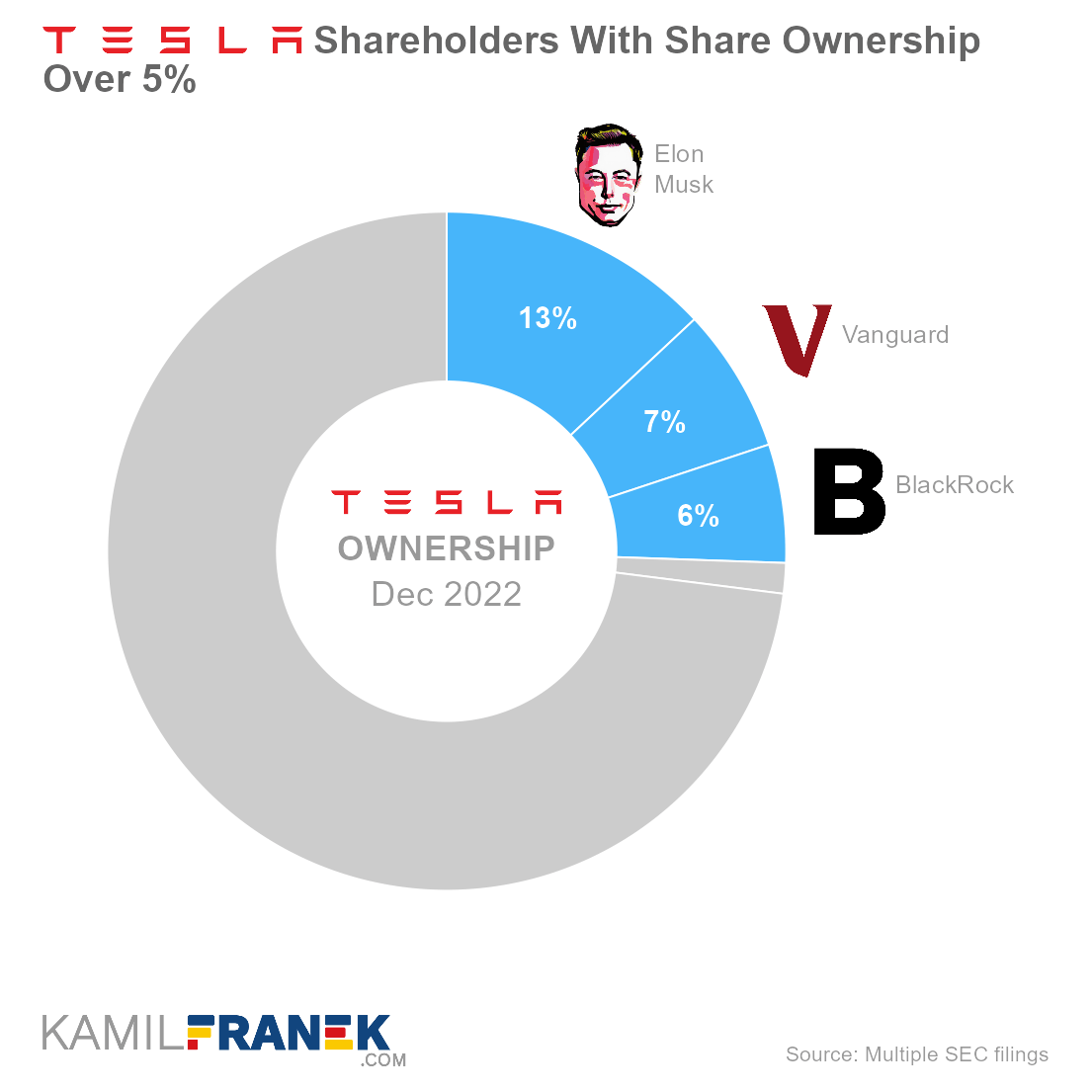
Musk’s substantial individual stake grants him immense control over Tesla. This level of concentrated ownership means that traditional shareholder activism, where institutional investors might band together to force changes in strategy or governance, faces an uphill battle. While major institutional investors like Vanguard or BlackRock hold significant portions of Tesla, their collective power might still be less than Musk’s individual voting block, especially considering his alignment with retail investors.
From a financial governance perspective, this dynamic can be both a strength and a weakness. It allows for swift, visionary decision-making without the drag of dissenting minority shareholders, which can accelerate growth. However, it also places considerable power in one individual’s hands, raising questions about accountability and the protection of minority shareholder interests, especially concerning capital allocation or related-party transactions. Investors must factor this concentrated financial control into their risk assessments.
Legacy and Long-Term Financial Vision
Ultimately, Musk’s ownership percentage is intertwined with his long-term financial vision for Tesla and his legacy. His financial stake is not merely a number but a reflection of his profound commitment to transforming the automotive and energy industries. He has consistently demonstrated a willingness to forgo short-term gains for long-term, ambitious goals, a strategy facilitated by his significant ownership.
The financial implications are that Tesla is likely to continue pursuing groundbreaking, albeit risky, projects that might not yield immediate returns but could unlock vast future markets. His ownership ensures that the company’s financial resources, including retained earnings and capital raised, will continue to be directed toward these transformative initiatives, rather than solely maximizing immediate profits or dividends. For long-term investors, Musk’s sustained significant financial interest is often seen as a guarantee that Tesla will remain focused on its ambitious mission, with the potential for substantial financial rewards down the line.
In conclusion, Elon Musk’s ownership percentage of Tesla is far more than a simple statistic. It’s a complex financial narrative encompassing initial investments, innovative compensation structures, strategic sales for tax purposes, and profound implications for investor confidence, corporate governance, capital allocation, and Tesla’s long-term financial destiny. For anyone with a financial interest in Tesla, understanding the nuances of Musk’s evolving stake is indispensable for informed decision-making.
aViewFromTheCave is a participant in the Amazon Services LLC Associates Program, an affiliate advertising program designed to provide a means for sites to earn advertising fees by advertising and linking to Amazon.com. Amazon, the Amazon logo, AmazonSupply, and the AmazonSupply logo are trademarks of Amazon.com, Inc. or its affiliates. As an Amazon Associate we earn affiliate commissions from qualifying purchases.