
Astigmatism is one of the most common refractive errors globally, affecting approximately one in every three people. While traditionally viewed through a purely clinical lens, the prevalence of this condition—characterized by an irregular curvature of the cornea or lens—has sparked a technological revolution in the optical industry. As we analyze what percentage of people have astigmatism, we must look beyond the biological statistics and explore the sophisticated software, hardware, and AI-driven tools currently being deployed to diagnose, monitor, and correct this vision impairment.
In the modern digital landscape, the intersection of ophthalmology and technology is more than just a convenience; it is a necessity. From machine learning algorithms that predict the progression of corneal warping to the high-precision robotics used in refractive surgery, tech is the primary driver in improving quality of life for the billions of individuals living with blurred vision.

Understanding the Global Scale: Data-Driven Insights into Astigmatism Prevalence
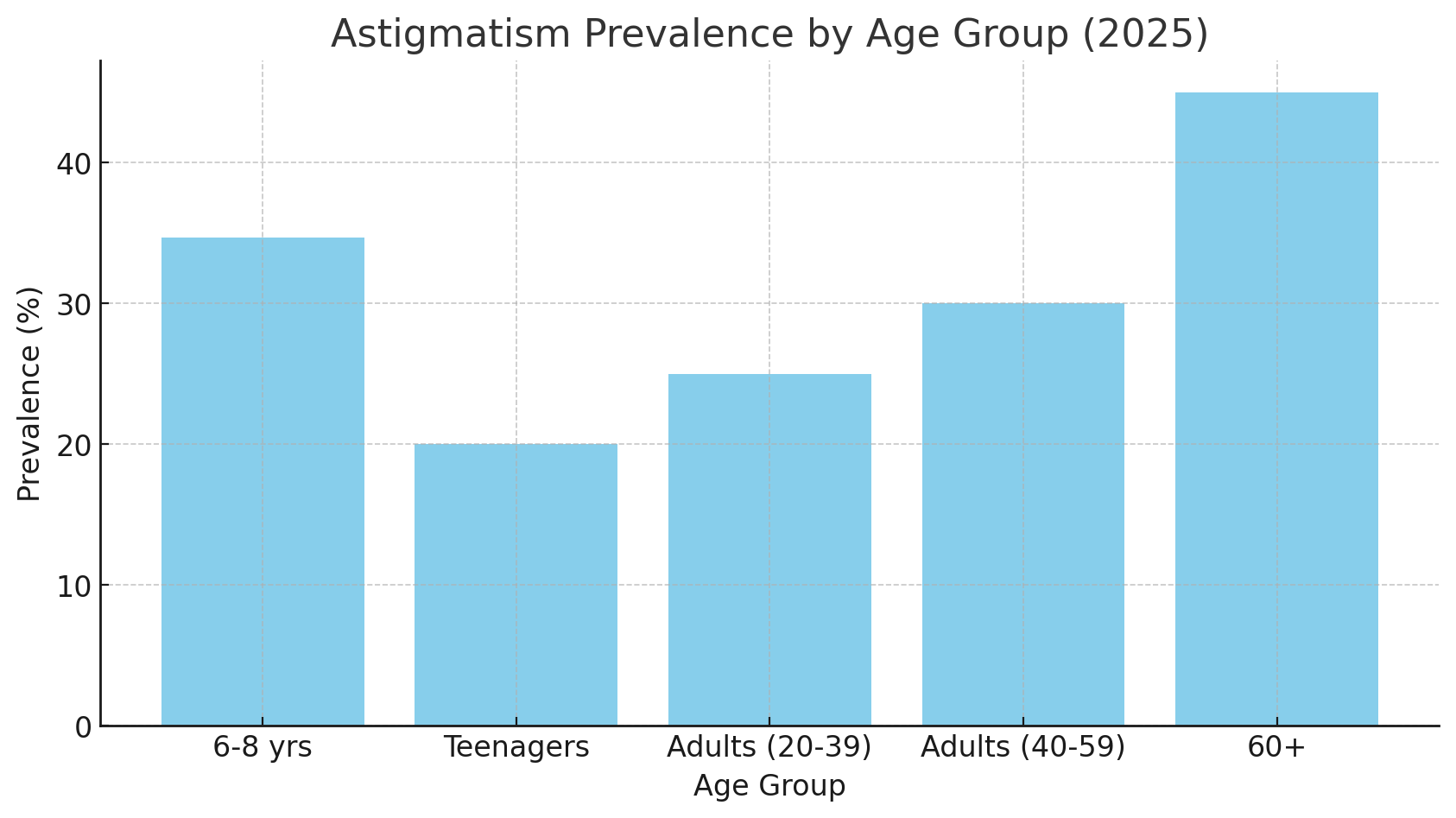
Statistical data suggests that roughly 33% to 40% of the global population has some degree of astigmatism. However, these numbers are not static. The rise of digital device usage and the subsequent increase in screenings have led to a more nuanced understanding of how these percentages vary across demographics.
The Role of Big Data in Global Ophthalmic Trends
The collection and analysis of massive datasets have allowed tech companies to map the prevalence of astigmatism with unprecedented accuracy. By leveraging Electronic Health Records (EHR) and cloud-based diagnostic platforms, researchers can identify environmental and genetic clusters. This “Big Data” approach helps tech developers prioritize software updates for diagnostic tools in regions where specific types of astigmatism—such as against-the-rule or with-the-rule—are more prevalent.
AI-Powered Screening and Statistical Modeling
Artificial Intelligence (AI) is now being used to analyze retinal images and corneal maps to detect astigmatism in its earliest stages. Machine learning models can process thousands of scans in seconds, identifying patterns that the human eye might miss. These tools are particularly vital in tele-health applications, where remote screening technology allows people in underserved areas to receive a diagnosis via a simple smartphone interface or a portable high-tech scanner.
Diagnostic Frontiers: Software and AI in Vision Measurement
The journey of an astigmatism patient begins with measurement. In the past, this was a manual process prone to human error. Today, diagnostic technology has transformed into a high-fidelity digital process that captures the unique “fingerprint” of the human eye.
Corneal Topography and Wavefront Mapping Tech
Modern diagnostic hardware, such as corneal topographers, utilizes sophisticated software to create a three-dimensional map of the eye’s surface. This process involves projecting thousands of points of light onto the cornea and measuring their reflection. The resulting data is processed into a visual heat map that identifies every irregularity in the eye’s curvature.
Wavefront technology goes a step further by measuring how light travels through the entire optical system. This tech captures “higher-order aberrations” that traditional vision tests cannot detect. For software developers, the challenge lies in translating this complex mathematical data into a user-friendly interface that optometrists can use to customize prescriptions with sub-millimeter precision.
Mobile Applications: Can Your Smartphone Detect Astigmatism?
The app economy has not ignored the optical sector. A new wave of mobile applications utilizes the high-resolution cameras and lidar sensors found in modern smartphones to perform preliminary vision screenings. While these apps are not yet a replacement for a professional exam, they represent a significant trend in “consumerized” health tech. These tools use computer vision algorithms to track how a user’s eye reacts to specific visual stimuli on the screen, providing a tech-forward way to monitor vision health at home.
The Evolution of Corrective Solutions: From Traditional Lenses to Smart Glass
Once astigmatism is diagnosed, the focus shifts to correction. This is where hardware engineering and material science converge. The tech industry has moved beyond simple glass lenses to embrace smart materials and wearable technology.
Precision Engineering in Toric Contact Lens Design
Correcting astigmatism requires a “toric” lens—a lens shaped like a slice of a doughnut rather than a sphere. The technical challenge has always been stability; if a toric lens rotates on the eye, the vision becomes blurred.
Modern contact lens tech utilizes “Accelerated Stabilization Design” (ASD). This involves using software to model the pressure of the eyelids during a blink. The lenses are then manufactured using high-precision lathes that create micro-zones of varying thickness, ensuring the lens stays oriented correctly. This is a triumph of mechanical engineering and fluid dynamics software.
The Future of Augmented Reality (AR) and Prescription Integration
As we move toward a world of “Smart Glasses,” tech giants are grappling with how to integrate prescriptions into AR displays. For the 33% of people with astigmatism, a standard AR overlay can appear distorted.
Innovative startups are developing “liquid lenses” or “adaptive optics” within AR headsets. These devices use electrical currents to change the shape of a fluid-filled lens in real-time, potentially allowing the hardware to adjust its focus to match the user’s specific astigmatism profile. This integration of software-defined optics is the next frontier for wearable tech.
Surgical Innovation: Robotics and Laser Precision
For those seeking a permanent solution to astigmatism, technology offers refractive surgery. This field has evolved from manual incisions to fully automated, robotic procedures guided by advanced AI.
Femtosecond Lasers and AI-Guided LASIK
The gold standard for astigmatism correction is the femtosecond laser. This tech operates at speeds of one-quadrillionth of a second, allowing surgeons to create ultra-thin flaps in the cornea with microscopic accuracy.
The software powering these lasers is the real star. It uses “eye-tracking technology” that monitors eye movement thousands of times per second. If the patient’s eye moves even a fraction of a millimeter, the laser adjusts its position instantaneously. This level of synchronization between hardware and software ensures that the correction is applied exactly where the digital map dictated during the diagnostic phase.
Digital Twins in Pre-Operative Planning
The concept of a “Digital Twin”—a virtual replica of a physical object—has moved from industrial manufacturing into eye surgery. Surgeons can now create a digital twin of a patient’s eye based on their diagnostic data. They can then run “flight simulations” of the surgery using specialized software to predict the outcome. This predictive modeling reduces risk and allows for a customized surgical plan that accounts for the specific percentage of astigmatism and the structural integrity of the patient’s cornea.
Cybersecurity and Data Privacy in Optometric Health Tech
As vision correction becomes increasingly digitized, the industry faces a new set of challenges: digital security and data privacy. Every corneal map and digital prescription is a piece of sensitive biometric data.
Protecting Sensitive Biometric Eye Data
The data generated by high-tech diagnostic tools is highly personal. In the wrong hands, biometric eye scans could theoretically be used for unauthorized identity verification. As a result, tech companies in the optical space are investing heavily in end-to-end encryption and blockchain-based storage solutions. Ensuring that a patient’s “eye map” remains private while being accessible to their network of specialists is a significant hurdle for current health-tech infrastructure.
The Intersection of Telehealth and Secure Digital Infrastructure
The rise of remote diagnostics for astigmatism requires a robust and secure digital pipeline. Tele-optometry platforms must comply with strict regulations (like HIPAA in the U.S.) while providing a seamless user experience. This involves sophisticated cloud computing architectures that can handle large image files without latency. As the percentage of people seeking remote eye care grows, the demand for secure, high-bandwidth optical tech solutions will only continue to rise.

Conclusion
The question of “what percentage of people have astigmatism” reveals more than just a medical statistic; it highlights a massive market and a profound technological challenge. With over a third of the population requiring specialized optical solutions, the tech industry has stepped up with an array of innovations ranging from AI diagnostics to robotic surgery.
We are currently witnessing a shift where vision correction is becoming a subset of high-tech data management. As software continues to refine our measurements and hardware continues to push the boundaries of what is possible with light and lenses, the “blur” of astigmatism is being sharpened by the precision of modern technology. For the billions affected, the future of vision is not just clear—it is digital.
aViewFromTheCave is a participant in the Amazon Services LLC Associates Program, an affiliate advertising program designed to provide a means for sites to earn advertising fees by advertising and linking to Amazon.com. Amazon, the Amazon logo, AmazonSupply, and the AmazonSupply logo are trademarks of Amazon.com, Inc. or its affiliates. As an Amazon Associate we earn affiliate commissions from qualifying purchases.