
In the modern gig economy, Uber stands as the titan of flexible income. For millions of individuals worldwide, the allure of being your own boss and setting your own hours is a powerful draw. However, the most persistent question for both current and prospective drivers remains: “What percentage of a fare does an Uber driver actually get?”
The answer has evolved significantly over the last decade. Gone are the days of a simple, flat-percentage commission. Today’s earnings structure is a complex algorithm of upfront pricing, service fees, and external costs. To treat Uber as a serious side hustle or a primary business finance venture, one must look past the gross numbers and understand the intricate breakdown of the take-home pay.
Understanding the Math: How Uber’s Take Rate Works
Historically, Uber’s payment model was transparently simple: the company took a fixed 20% or 25% commission, and the driver kept the rest. As the company matured and moved toward profitability as a public entity, this model was replaced by “Upfront Pricing.” This shift fundamentally changed how a driver’s share is calculated.
The Shift from Fixed Commissions to Upfront Pricing
Under the current Upfront Pricing model, what a rider pays and what a driver earns are decoupled. Uber uses machine learning to determine what a passenger is willing to pay for a specific route at a specific time. Simultaneously, they offer the driver a flat dollar amount to complete that trip.
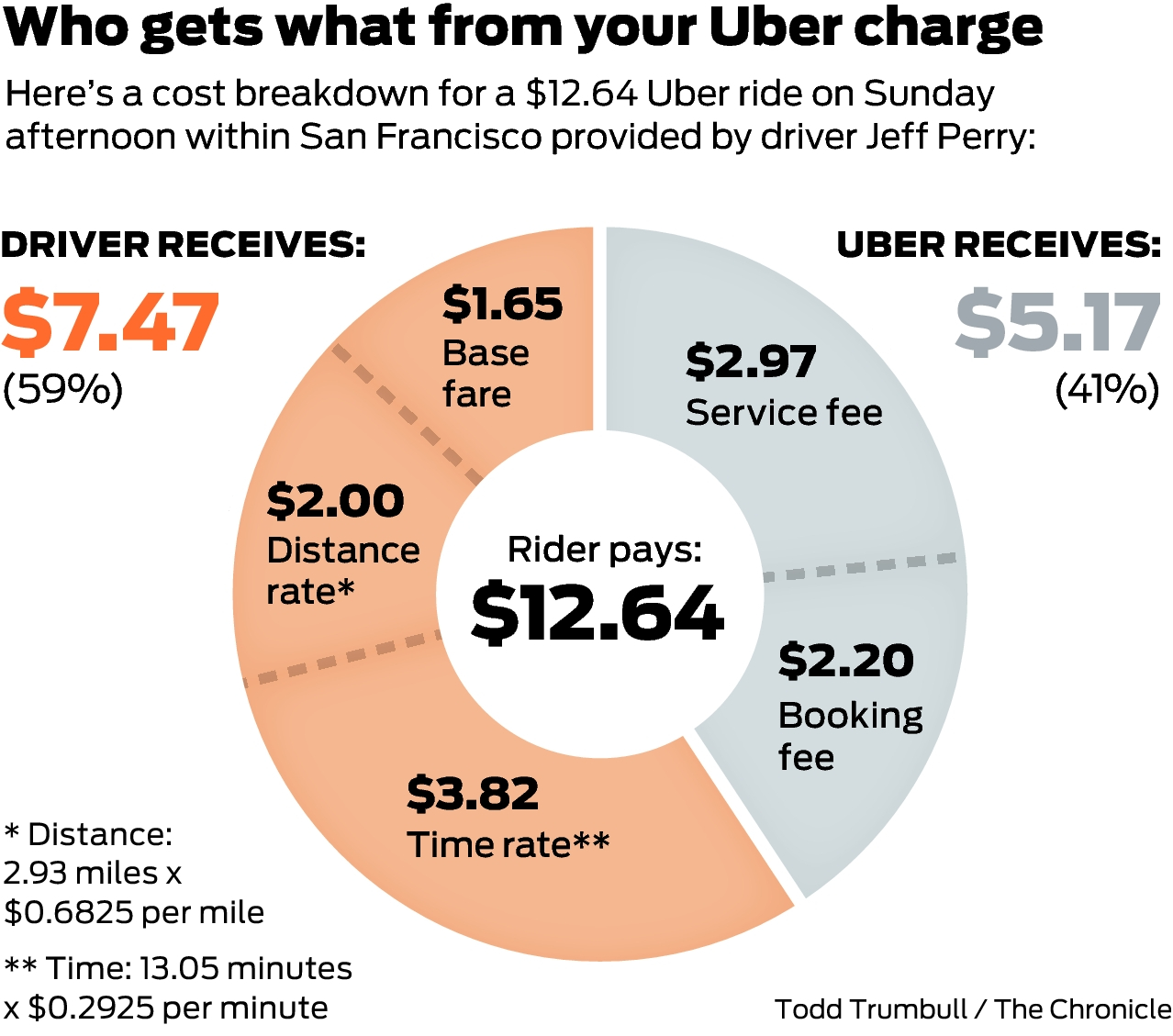
Consequently, there is no longer a “fixed percentage.” On a short trip with high demand, a driver might receive 70% of the fare. On a long-distance trip where Uber has high overhead or insurance costs, that percentage might dip below 50%. On average, most independent studies and driver earnings reports suggest that Uber’s “take rate”—the amount they keep—ranges between 25% and 45%, leaving the driver with roughly 55% to 75% of the total passenger payment.
Uber’s Service Fee vs. Booking Fees
To understand your percentage, you must distinguish between the various line items on a trip receipt. The “Booking Fee” is a flat fee per trip that goes directly to Uber to cover operational costs, such as background checks and safety initiatives. This fee is deducted before the driver’s cut is even calculated.
The “Service Fee” is the variable amount Uber retains from the remaining fare. While the service fee covers the use of the platform and app maintenance, it is the primary lever Uber uses to balance its own books. For the driver, the most important metric isn’t the percentage of the gross fare, but the “Net Earnings” after these deductions are finalized.
Calculating Your Net Income: Beyond the Gross Fare
In the world of personal finance, there is a massive difference between revenue and profit. For an Uber driver, the fare shown in the app is revenue. To find the true percentage of the fare that stays in your pocket, you must account for the “invisible” costs of running a transportation business.
Self-Employment Taxes and Insurance
Uber drivers are independent contractors, not employees. This means the 15.3% self-employment tax in the United States (covering Social Security and Medicare) falls entirely on the driver. In a traditional job, an employer would pay half of this. Furthermore, standard personal auto insurance often does not cover ride-sharing. Drivers must often pay for “rideshare endorsements” or commercial policies, which eats into the monthly bottom line.
Vehicle Depreciation and Maintenance
The silent killer of gig economy profits is vehicle depreciation. Every mile driven for Uber reduces the resale value of your car. Financial experts suggest that for every dollar earned, a significant portion should be set aside for future repairs and the eventual replacement of the vehicle. Tires, oil changes, and brake pads are frequent expenses that significantly lower the effective “percentage” of the fare a driver actually retains.
Fuel Costs and Real-Time Expenses
Fuel is the most volatile variable in a driver’s financial portfolio. When gas prices spike, a driver’s net percentage of the fare can plummet overnight. Unlike traditional businesses that can easily raise prices, Uber drivers are at the mercy of the platform’s pricing algorithm. Successful drivers treat fuel as a primary overhead cost, often utilizing fuel-reward apps and high-efficiency vehicles to protect their margins.

Factors That Influence Your Percentage per Ride
Because the percentage isn’t fixed, savvy drivers look for ways to tip the scales in their favor. Several factors can drastically increase the dollar amount a driver receives, regardless of what the passenger pays.
Surge Pricing and Incentive Bonuses
Surge pricing occurs when demand exceeds the supply of available drivers. During these periods, Uber adds a “multiplier” or a flat-rate “sticky surge” to the fare. Interestingly, during intense surges, the driver’s percentage of the total fare often increases.
Additionally, Uber offers “Quests” (bonuses for completing a set number of rides) and “Boosts” (guaranteed higher rates in specific areas). When a driver hits a $100 Quest bonus, their effective percentage of the fares for that week rises significantly. For many, these incentives are the difference between a low-margin hustle and a highly profitable enterprise.
Wait Time and Cancellation Fees
Time is the driver’s most valuable asset. If a passenger keeps a driver waiting, Uber charges a per-minute wait fee after an initial grace period. The majority of this fee typically goes to the driver. Similarly, cancellation fees provide a small financial cushion when a rider fails to show up. While these don’t represent large percentages of a total day’s income, they are essential for protecting the driver’s “hourly rate,” which is the ultimate metric for financial success in the gig economy.
Geography and Local Market Regulations
Where you drive matters as much as how you drive. In certain jurisdictions, like New York City or California (under Prop 22), there are minimum earnings guarantees. These regulations ensure that drivers receive a specific percentage of the local minimum wage plus mileage expenses. In these markets, the percentage of the fare a driver receives is often higher and more predictable than in regions with fewer labor protections.
Maximizing Profitability in the Gig Economy
To maximize the percentage of money that stays in your bank account, you must transition from a “driver” mindset to a “business owner” mindset. This involves strategic planning and the use of financial tools to track every cent.
Strategic Timing and Heat Maps
The most profitable drivers don’t drive aimlessly. They study “heat maps” and identify peak hours—such as airport runs in the early morning or bar closings on weekend nights. By driving when demand is highest and traffic is lowest, a driver minimizes the time spent on “dead miles” (driving without a passenger), which is the most effective way to keep the net percentage of earnings high.
Multi-Apping as a Financial Strategy
Many professional gig workers “multi-app,” running Uber alongside Lyft or food delivery services like DoorDash. This reduces downtime. If Uber isn’t offering a surge, but Lyft is, the driver can switch platforms to ensure they are always working at the highest possible rate. This diversification is a classic financial strategy to mitigate risk and maximize income streams.
Financial Tracking Tools for Uber Drivers
Because of the complexity of taxes and expenses, using financial tools is non-negotiable for the serious driver. Apps that track mileage automatically (like MileIQ or Stride) are essential for maximizing tax deductions. Every mile driven while the app is “On”—even if a passenger isn’t in the car—is a potential tax deduction. By lowering your taxable income through diligent record-keeping, you effectively increase the percentage of your fare that you keep after the tax man takes his cut.

Conclusion: The Bottom Line on Uber Earnings
So, what percentage of a fare does an Uber driver get? While the gross percentage usually hovers between 55% and 75% of what the rider pays, the “Net Profit” is often lower once expenses are factored in.
In the world of personal finance, Uber should be viewed as a high-revenue, high-expense business. A driver may see $1,500 in weekly deposits, but after accounting for gas, taxes, maintenance, and depreciation, the actual profit might be closer to $800 or $900.
Success in this niche requires more than just good driving; it requires an analytical approach to income. By focusing on incentives, minimizing overhead, and utilizing every available tax deduction, drivers can ensure that the “percentage” they take home is not just a fraction of a fare, but a sustainable and profitable income. For those who master the math, Uber remains one of the most accessible and flexible ways to build wealth and manage cash flow in the modern economy.
aViewFromTheCave is a participant in the Amazon Services LLC Associates Program, an affiliate advertising program designed to provide a means for sites to earn advertising fees by advertising and linking to Amazon.com. Amazon, the Amazon logo, AmazonSupply, and the AmazonSupply logo are trademarks of Amazon.com, Inc. or its affiliates. As an Amazon Associate we earn affiliate commissions from qualifying purchases.