
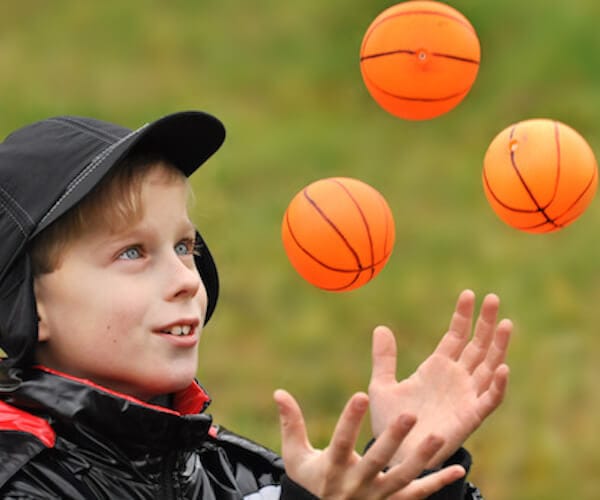
Hand-eye coordination, the intricate dance between our visual perception and motor control, is a fundamental human capability. It’s the silent conductor orchestrating countless daily actions, from the mundane task of threading a needle to the complex maneuvers of a surgeon. While deeply ingrained in our biological makeup, its significance has been amplified exponentially in the digital age. In the realm of technology, hand-eye coordination isn’t just a biological function; it’s a critical interface, a performance metric, and a key component in the design and effectiveness of numerous technological applications. This article will explore the multifaceted role of hand-eye coordination within the technological landscape, examining its importance, how technology leverages and enhances it, and its future implications.
The Neurological and Biological Underpinnings of Hand-Eye Coordination
Before delving into its technological applications, it’s crucial to understand the biological foundation upon which hand-eye coordination is built. This complex process involves a sophisticated interplay of sensory input, neural processing, and motor output, all happening at astonishing speeds.
The Visual Pathway: Seeing the World in Motion
The journey begins with the eyes, our primary windows to the world. Light enters the eye, stimulating photoreceptor cells in the retina. This visual information is then converted into electrical signals that travel along the optic nerve to the brain. Key areas of the brain, including the visual cortex, process this information, interpreting shapes, colors, distances, and movements. This continuous stream of visual data provides the essential context for guiding our actions. Without accurate and timely visual input, our ability to interact with our environment would be severely compromised. The brain constantly uses this information to predict the trajectory of moving objects, to gauge distances for grasping, and to understand the spatial relationships between ourselves and the objects we interact with.
The Motor Cortex and Cerebellum: The Architects of Movement
Simultaneously, the brain’s motor cortex, located in the frontal lobe, is responsible for planning and executing voluntary movements. It sends signals down the spinal cord to the muscles in our arms, wrists, and hands, dictating the force, direction, and timing of each action. The cerebellum, situated at the back of the brain, plays a crucial role in coordinating these movements, ensuring they are smooth, precise, and balanced. It acts as a fine-tuner, comparing intended movements with actual performance and making real-time adjustments. This continuous feedback loop is what allows us to achieve the fluidity and accuracy we associate with good hand-eye coordination. Errors in either the visual processing or motor execution can lead to a breakdown in this intricate system, resulting in clumsiness or an inability to perform tasks requiring precision.
The Feedback Loop: A Constant Dialogue Between Sight and Action
The magic of hand-eye coordination lies in the constant, rapid feedback loop between the visual system and the motor system. As we initiate a movement, say reaching for a cup, our eyes are continuously tracking the cup’s position. This visual information is fed back to the brain, allowing it to monitor the progress of our arm and hand. If our hand is moving too fast or is slightly off course, the brain can instantly make micro-adjustments to the motor signals, ensuring we grasp the cup accurately and without spilling its contents. This feedback mechanism is essential for learning new skills, refining existing ones, and adapting to unexpected changes in our environment. It’s this dynamic interaction that makes activities like catching a ball, typing on a keyboard, or even navigating a virtual reality environment possible.
Technology’s Reliance on and Enhancement of Hand-Eye Coordination
Modern technology is intrinsically linked to hand-eye coordination, both by demanding it from users and by actively seeking to improve it. From the simplest interfaces to the most sophisticated systems, our ability to effectively interact with technology often hinges on our visuomotor skills.
User Interfaces and Input Devices: The Tangible Interface
The design of virtually all user interfaces and input devices is predicated on human hand-eye coordination. A mouse, a touchscreen, a joystick, a game controller – all are designed to translate our visual cues and intended actions into digital commands. A mouse cursor’s movement on a screen directly corresponds to the physical movement of the mouse, requiring precise hand-eye coordination to navigate menus, click on icons, and draw lines. Touchscreens, ubiquitous in smartphones and tablets, demand even more direct and immediate visuomotor responses. The ability to accurately tap on small buttons or swipe across a screen is a testament to our refined hand-eye coordination. In gaming, this relationship is magnified. Players must visually track on-screen action and translate those perceptions into rapid, precise button presses or joystick movements, often under intense pressure. The latency between visual stimulus and motor response can be the difference between victory and defeat.
Virtual and Augmented Reality: Immersive Visuomotor Experiences
The burgeoning fields of Virtual Reality (VR) and Augmented Reality (AR) represent a significant frontier for hand-eye coordination. These technologies create immersive environments where users interact with digital elements that appear to exist in their physical space. VR headsets completely replace the user’s vision with a digital world, while AR overlays digital information onto the real world. In both cases, accurate and responsive tracking of head and hand movements is paramount. Handheld controllers or specialized gloves often serve as input devices, allowing users to manipulate virtual objects, perform gestures, and navigate these simulated environments. The effectiveness of VR and AR experiences is heavily dependent on the fidelity of their hand-eye coordination tracking. Jittery movements, delayed responses, or inaccurate mapping of physical actions to virtual outcomes can lead to cybersickness, immersion-breaking glitches, and a frustrating user experience. Developers strive for near-perfect synchronization to create seamless and believable interactions.
Robotics and Automation: Extending Human Capabilities

Robotics and automation are areas where hand-eye coordination is not just a user requirement but a fundamental operational necessity. Industrial robots on assembly lines, surgical robots assisting in complex procedures, and autonomous vehicles all rely on sophisticated systems that mimic and, in some cases, surpass human visuomotor capabilities. For instance, robotic arms used in manufacturing must be able to precisely pick up, place, and assemble components with incredible accuracy. This requires sensors that provide visual feedback to the robot’s control system, allowing it to adjust its movements in real-time based on the position and orientation of parts. In the medical field, robotic surgery systems enhance a surgeon’s precision and dexterity, allowing for minimally invasive procedures. The surgeon’s hand movements are translated to microscopic movements of surgical instruments within the patient’s body, all guided by high-definition visual displays. The development of these technologies often involves studying and replicating the principles of human hand-eye coordination.
Measuring and Enhancing Hand-Eye Coordination Through Technology
Recognizing the importance of hand-eye coordination, technology has evolved to both measure and actively improve this vital skill. This has significant implications across various domains, from education and rehabilitation to professional training and entertainment.
Assessment Tools and Diagnostic Technologies
Numerous technological tools are employed to assess and quantify hand-eye coordination. Simple digital reaction time tests, which measure the speed at which an individual can respond to a visual stimulus with a motor action, are common. More complex systems utilize motion tracking cameras and sophisticated software to analyze the precision, speed, and fluidity of movements during specific tasks. In the realm of sports science, motion capture technology can analyze the intricate coordination required for athletes to perform complex maneuvers, identifying areas for improvement. For rehabilitation purposes, specialized VR and AR applications are being developed to provide engaging and quantifiable ways to retrain motor skills for individuals recovering from stroke, injury, or neurological conditions. These technologies offer objective data on progress, allowing therapists to tailor treatment plans more effectively.
Training Applications and Skill Development Software
The proliferation of mobile apps, computer games, and specialized training programs highlights technology’s role in actively enhancing hand-eye coordination. Many popular video games inherently improve visuomotor skills, as players must constantly process visual information and respond with precise physical actions. Beyond entertainment, dedicated training software exists for specific professions. Pilots use flight simulators that meticulously replicate the visual and kinesthetic demands of flying, honing their coordination under various conditions. Surgeons can practice intricate procedures on virtual surgical simulators, refining their dexterity and spatial reasoning. Even educational apps for children are designed to incorporate elements that promote the development of hand-eye coordination, such as tracing shapes or matching patterns, laying a foundation for more complex technological interactions later in life. These applications often incorporate adaptive learning algorithms, adjusting the difficulty and type of challenges to optimize skill development for each individual.
Wearable Technology and Haptic Feedback: The Next Frontier
The evolution of wearable technology and the advancement of haptic feedback systems are pushing the boundaries of how we interact with and enhance hand-eye coordination. Smartwatches and fitness trackers, while primarily for monitoring physiological data, can also provide visual cues that require precise interaction, such as responding to notifications with a tap. More advanced wearables, like specialized gloves equipped with sensors, can provide detailed data on finger and hand movements, which can then be used for training or controlling other devices. Haptic feedback, the technology that provides tactile sensations, is crucial for creating more realistic and intuitive interactions. In VR, for example, haptic gloves can simulate the sensation of touching virtual objects, adding another layer of realism to visuomotor tasks. As these technologies mature, they promise to offer even more immersive and effective ways to train, assess, and augment human hand-eye coordination.
The Future of Hand-Eye Coordination in a Technologically Evolving World
As technology continues its relentless advance, the relationship between humans and machines will become even more intertwined, placing a premium on sophisticated hand-eye coordination and driving further innovation in its enhancement.
Human-Machine Collaboration and Advanced Robotics
The future will see an increasing emphasis on seamless human-machine collaboration. As robots become more adept at complex tasks, the ability for humans to intuitively guide and work alongside them will be paramount. This will require advanced interfaces that leverage and augment our natural hand-eye coordination. Think of scenarios where a human supervisor, using gesture recognition and sophisticated visual feedback, can direct a swarm of drones for complex logistical operations or intricate construction projects. In healthcare, robots will likely become even more sophisticated partners for surgeons, requiring refined visuomotor skills from their human operators to achieve optimal outcomes. The development of AI that can better understand and predict human motor intentions will also play a crucial role in facilitating smoother collaboration.
Immersive Learning Environments and Skill Transfer
The potential for VR and AR in education and training is immense. Imagine medical students practicing complex surgeries in a risk-free virtual environment, or engineers collaboratively designing and testing prototypes in a shared digital space. These immersive environments offer unparalleled opportunities for skill development and transfer. Hand-eye coordination will be a critical factor in how effectively individuals can learn and master these new skills. As these technologies become more accessible, they have the potential to democratize advanced training, making high-level skill acquisition available to a much broader audience. The ability to simulate real-world scenarios with a high degree of fidelity ensures that learned skills are transferable to practical applications.

The Ethical and Societal Implications
As technology becomes more integrated with our physical selves, and as we develop tools that can augment or even modify our biological capabilities, important ethical and societal questions arise. For instance, as assistive technologies become more sophisticated in their ability to compensate for diminished hand-eye coordination due to age or disability, how do we ensure equitable access? Furthermore, as AI-powered systems become increasingly adept at tasks requiring fine motor skills, what impact will this have on the job market and the value we place on human dexterity? These are complex issues that will require careful consideration and ongoing dialogue as we navigate the future landscape of human-technology interaction. The very definition of “skill” may evolve as our reliance on and interaction with advanced technological systems grows.
In conclusion, hand-eye coordination, a fundamental aspect of human physiology, has transcended its biological origins to become a critical element in our technological interactions. From the design of intuitive interfaces to the cutting-edge realms of VR, AR, and robotics, technology both demands and actively enhances our visuomotor capabilities. As we look to the future, the symbiotic relationship between human hand-eye coordination and technological advancement promises to unlock new possibilities, redefine skills, and reshape how we work, learn, and interact with the world around us.
aViewFromTheCave is a participant in the Amazon Services LLC Associates Program, an affiliate advertising program designed to provide a means for sites to earn advertising fees by advertising and linking to Amazon.com. Amazon, the Amazon logo, AmazonSupply, and the AmazonSupply logo are trademarks of Amazon.com, Inc. or its affiliates. As an Amazon Associate we earn affiliate commissions from qualifying purchases.