
The intricate tapestry of human perception is woven from a symphony of sensory inputs, each contributing to our rich and complex understanding of the world. Among these, the sense of smell, or olfaction, holds a unique and profound position. Often referred to as the most primal sense, it possesses an unparalleled ability to evoke memories, stir emotions, and even trigger immediate physiological responses. But have you ever paused to consider the sophisticated neural architecture that orchestrates this olfactory marvel? What specific part of the brain acts as the conductor for this invisible orchestra of scent? Delving into the neurobiological underpinnings of olfaction reveals a fascinating interplay of specialized structures and intricate pathways, a testament to the remarkable processing power of the human brain.
The exploration of olfaction’s neural control is not merely an academic exercise in biological curiosity; it has profound implications for technological innovation. Understanding how our brains process smells can pave the way for groundbreaking advancements in fields ranging from artificial intelligence and digital scent technology to medical diagnostics and even the creation of immersive virtual experiences. The ability to replicate, manipulate, or even augment our sense of smell through technological means hinges on a deep comprehension of its biological origins.
The Olfactory Pathway: A Journey from Nose to Brain
The journey of a scent molecule from its point of origin to its perception by our consciousness is a remarkably efficient and complex process, involving a series of specialized neural structures. This intricate pathway begins the moment an odorant molecule enters the nasal cavity and interacts with sensory receptors, ultimately culminating in the conscious awareness of a smell.
From Nasal Cavity to the Olfactory Epithelium
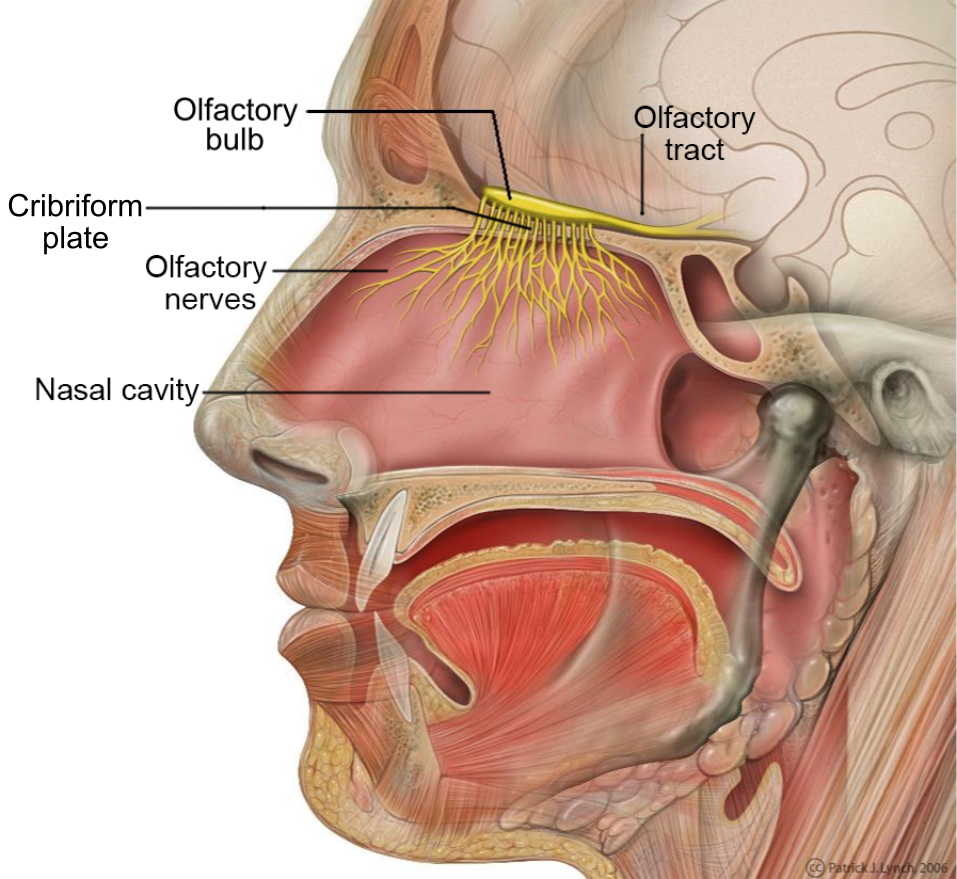
The initial encounter with an odorant molecule occurs within the nasal cavity. As we inhale, airborne molecules are drawn into the nasal passages, where they come into contact with the olfactory epithelium. This specialized tissue, located in the roof of the nasal cavity, is densely populated with olfactory sensory neurons (OSNs). These neurons are unique in the sensory system for their ability to regenerate throughout life, a remarkable biological adaptation.
Each OSN expresses a specific type of olfactory receptor protein, and humans possess a vast repertoire of these receptors, estimated to be around 400 different types. These receptors act like molecular locks, each capable of binding to a specific range of odorant molecules, or keys. When an odorant molecule binds to a receptor, it triggers a cascade of biochemical events within the OSN, leading to the generation of an electrical signal. This signal is the nascent form of olfactory information, ready to embark on its journey to the brain.
The Olfactory Bulb: The First Relay Station
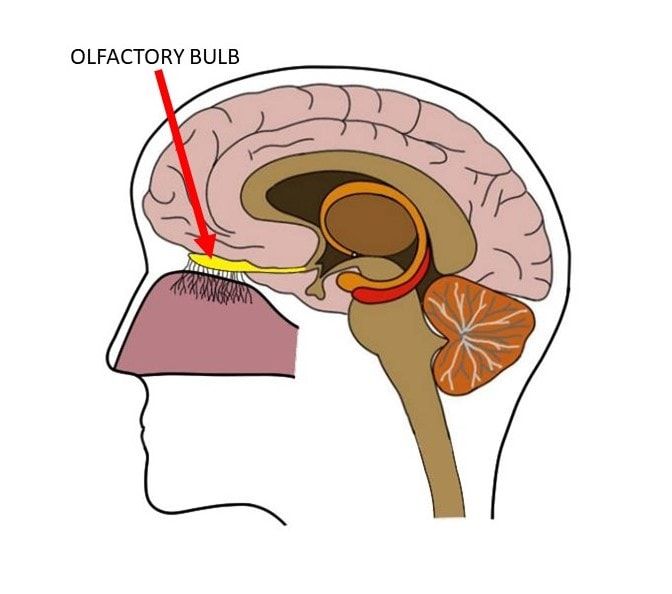
The axons of the olfactory sensory neurons, which are essentially the “wires” transmitting the electrical signals, converge in a structure located just above the nasal cavity and beneath the frontal lobes of the brain: the olfactory bulb. This is the first primary processing center for olfactory information. Within the olfactory bulb, OSN axons synapse with mitral cells and tufted cells in specialized structures called glomeruli.
Crucially, OSNs expressing the same type of olfactory receptor converge onto the same glomerulus, regardless of their spatial location within the olfactory epithelium. This topographic organization within the olfactory bulb is a fundamental aspect of olfactory processing, allowing for the segregation of different odorant signals at this early stage. The olfactory bulb, therefore, acts as a crucial sorting and initial processing hub, filtering and organizing the vast array of incoming scent information before it is sent to higher brain centers. The intricate wiring and the organized structure of the olfactory bulb are areas of intense research interest for technologists aiming to develop sophisticated olfactory sensors and artificial olfaction systems.
Beyond the Bulb: The Piriform Cortex and Beyond
From the olfactory bulb, signals are transmitted via the olfactory tract to various brain regions, bypassing the thalamus, which is a relay station for most other sensory information. This direct pathway to higher brain centers highlights the primal nature of olfaction.
The primary destination for olfactory signals is the piriform cortex, located within the temporal lobe. This area is considered the primary olfactory cortex and is responsible for the conscious perception and identification of smells. Unlike the topographic organization seen in the olfactory bulb, the piriform cortex exhibits a more distributed and complex processing of olfactory information. Here, patterns of neural activity across different populations of neurons begin to form the basis of our perception of distinct odors.
From the piriform cortex, olfactory information is further relayed to other brain regions, including the amygdala, which is involved in processing emotions, and the hippocampus, crucial for memory formation. This explains why smells are so powerfully linked to emotional experiences and long-term memories, a phenomenon often referred to as the ” Proustian effect.” The interconnectedness of olfactory processing with emotional and memory centers underscores its profound impact on our subjective experiences and the potential for olfactory cues in therapeutic and recall-enhancing technologies.
Technological Frontiers in Olfactory Neuroscience
The scientific understanding of the brain’s olfactory mechanisms is not just a subject of academic fascination; it is a fertile ground for technological innovation. Researchers and engineers are actively leveraging this knowledge to develop novel applications that can sense, interpret, and even mimic the complexities of smell.
Artificial Olfaction and Electronic Noses
The quest to replicate the human sense of smell has led to the development of artificial olfaction systems, often referred to as “electronic noses” or e-noses. These devices aim to detect and identify odors by mimicking the biological process of olfaction. At their core, e-noses typically consist of an array of chemical sensors, each designed to respond to a particular class of volatile organic compounds (VOCs).
These sensors generate electrical signals when exposed to specific odorants. The collective response from the sensor array is then fed into a pattern recognition system, often employing machine learning algorithms, to identify the odor. The algorithms are trained on vast datasets of known odors, allowing the e-nose to learn to distinguish between different scents and even their concentrations.
The development of more sensitive, selective, and robust sensor arrays, along with increasingly sophisticated AI algorithms for pattern recognition, is a key area of technological advancement. Applications for e-noses are diverse, ranging from environmental monitoring and food quality control to medical diagnostics (e.g., detecting diseases through breath analysis) and security screening. The precision with which these technologies can interpret complex scent profiles continues to improve, pushing the boundaries of what is possible in odor detection and analysis.
Neuroprosthetics and Olfactory Implants
For individuals who have lost their sense of smell due to injury or disease, the prospect of restoring this vital sense is a tantalizing one. Neuroprosthetics and olfactory implants represent cutting-edge technological endeavors aimed at achieving this goal. These devices typically involve stimulating the olfactory nerve or directly interfacing with olfactory processing centers in the brain.
One approach involves implanting electrodes that can deliver electrical stimulation to the olfactory nerve. This stimulation aims to mimic the signals generated by natural odorants, thereby triggering a perceived smell in the brain. Another, more ambitious, avenue explores direct brain stimulation, potentially targeting areas like the olfactory bulb or piriform cortex.
The challenges in this field are significant, including achieving selective stimulation of specific olfactory receptors, minimizing invasiveness, and ensuring long-term functionality and safety. However, as our understanding of neural coding and the brain’s plasticity grows, so does the potential for these advanced neuroprosthetic technologies to restore lost olfactory function, dramatically improving the quality of life for affected individuals.
Digital Scent Technology and Immersive Experiences
The integration of olfactory cues into digital and virtual environments is another exciting technological frontier. Digital scent technology, also known as olfaction technology or scent-on-demand, aims to deliver specific scents in a controlled manner to enhance user experiences. This can involve devices that release precise combinations of odorants to create a desired scent profile.
Imagine virtual reality experiences where the scent of a forest, a bustling market, or a blooming garden accompanies the visual and auditory stimuli. This level of sensory immersion can profoundly enhance engagement and realism. Furthermore, digital scent technology has potential applications in marketing, entertainment, and even therapy, where specific scents can be used to evoke particular moods or memories.
The technological hurdles involve creating miniaturized, fast-responding, and precise scent delivery systems, as well as developing sophisticated software for scent composition and synchronization with other media. As this technology matures, it promises to add a new, powerful dimension to our digital interactions, making them more visceral and memorable.
The Future of Olfactory Technology: Beyond Basic Perception
The journey to fully understand and technologically harness the sense of smell is far from over. While significant strides have been made, future advancements promise even more sophisticated applications that go beyond simply detecting or replicating scents.
Enhanced Olfactory Computing and AI
The ongoing development of artificial intelligence and machine learning is intrinsically linked to the future of olfactory technology. AI algorithms are becoming increasingly adept at interpreting complex patterns, and this capability can be applied to the vast and nuanced data generated by olfactory systems.
Future AI systems could not only identify specific odors with remarkable accuracy but also learn to associate them with contexts, emotions, and even predict potential chemical interactions or biological effects. This could lead to AI-powered systems capable of complex scent analysis for environmental monitoring, personalized health recommendations based on subtle olfactory cues, or even AI agents that can “smell” the digital world for information. The concept of “olfactory computing,” where scent information is processed and manipulated by computational systems, is an emerging area with vast potential.
Bio-inspired Olfactory Sensors and Biomimicry
Nature has had millions of years to perfect the art of olfaction. Future technological developments are likely to draw even more inspiration from biological systems. This could involve the development of bio-inspired olfactory sensors that utilize biological components, such as olfactory receptor proteins immobilized on sensor surfaces, to achieve unparalleled sensitivity and specificity.
Biomimicry in olfactory technology aims to replicate the structural and functional design principles of the natural olfactory system. This could lead to more efficient and adaptable sensor architectures, as well as new methods for signal processing that mimic the brain’s own efficient computations. The integration of synthetic biology with sensor technology may also open doors to novel ways of creating and detecting complex olfactory information.

Ethical Considerations and Human Augmentation
As olfactory technology advances, so too do the ethical considerations surrounding its development and application. The ability to precisely control and manipulate scents raises questions about privacy, potential for misuse (e.g., olfactory manipulation in advertising or social engineering), and the implications of human augmentation.
The development of olfactory implants and neuroprosthetics, while offering hope for restoration, also prompts discussions about what it means to augment human senses and the potential societal implications of such advancements. Ensuring responsible innovation, establishing clear ethical guidelines, and engaging in public discourse will be crucial as we continue to explore the fascinating frontier of olfactory technology and its profound impact on our lives. The brain’s control over our sense of smell is a marvel of biological engineering, and as technology continues to advance, our ability to interact with, understand, and even enhance this fundamental sense will undoubtedly reshape our relationship with the world around us.
aViewFromTheCave is a participant in the Amazon Services LLC Associates Program, an affiliate advertising program designed to provide a means for sites to earn advertising fees by advertising and linking to Amazon.com. Amazon, the Amazon logo, AmazonSupply, and the AmazonSupply logo are trademarks of Amazon.com, Inc. or its affiliates. As an Amazon Associate we earn affiliate commissions from qualifying purchases.