
Problem-solving, a cornerstone of human intellect, is the intricate process of identifying, analyzing, and overcoming obstacles to reach a desired outcome. It’s a multifaceted cognitive function that underpins our ability to adapt, innovate, and navigate the complexities of life. While the entire brain orchestrates this symphony of thought, certain regions play more prominent roles in the distinct stages of problem-solving. Understanding these neural substrates offers profound insights into how we tackle challenges, from the mundane to the monumental, and holds significant implications for fields like artificial intelligence, education, and mental health.
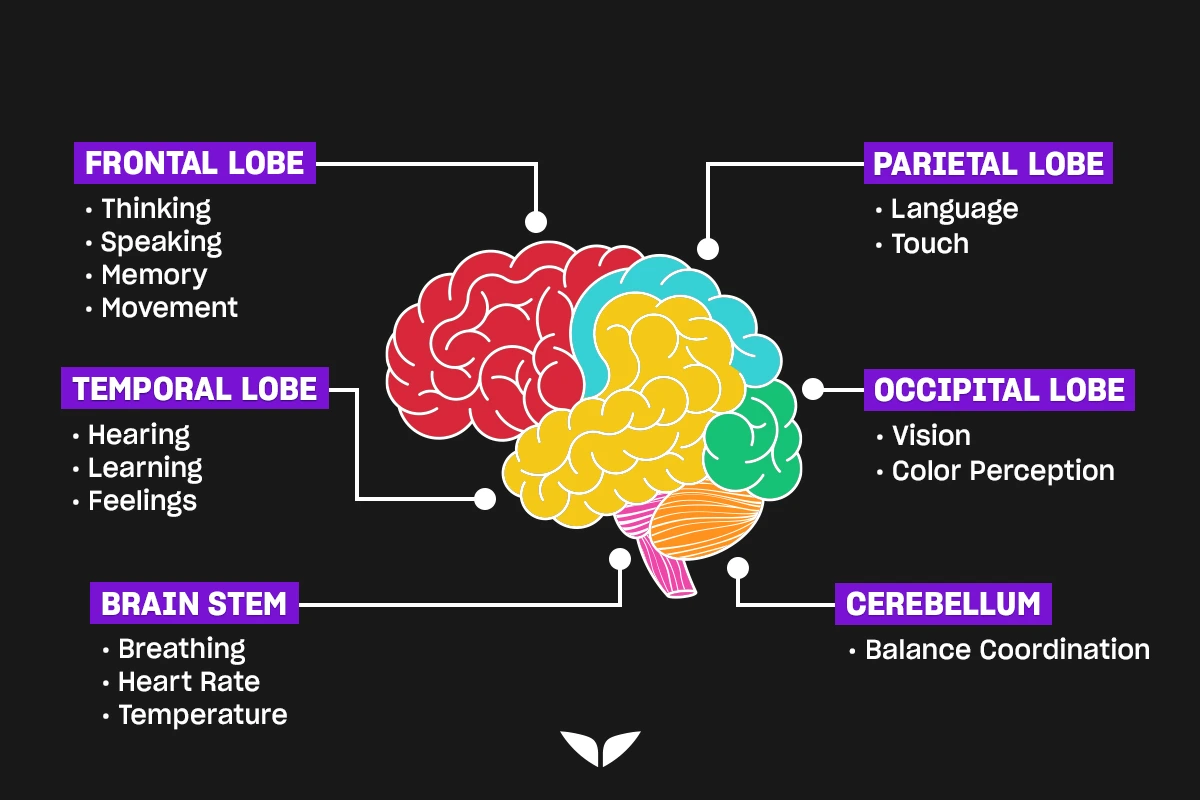
The Prefrontal Cortex: The Executive Command Center for Problem Solving
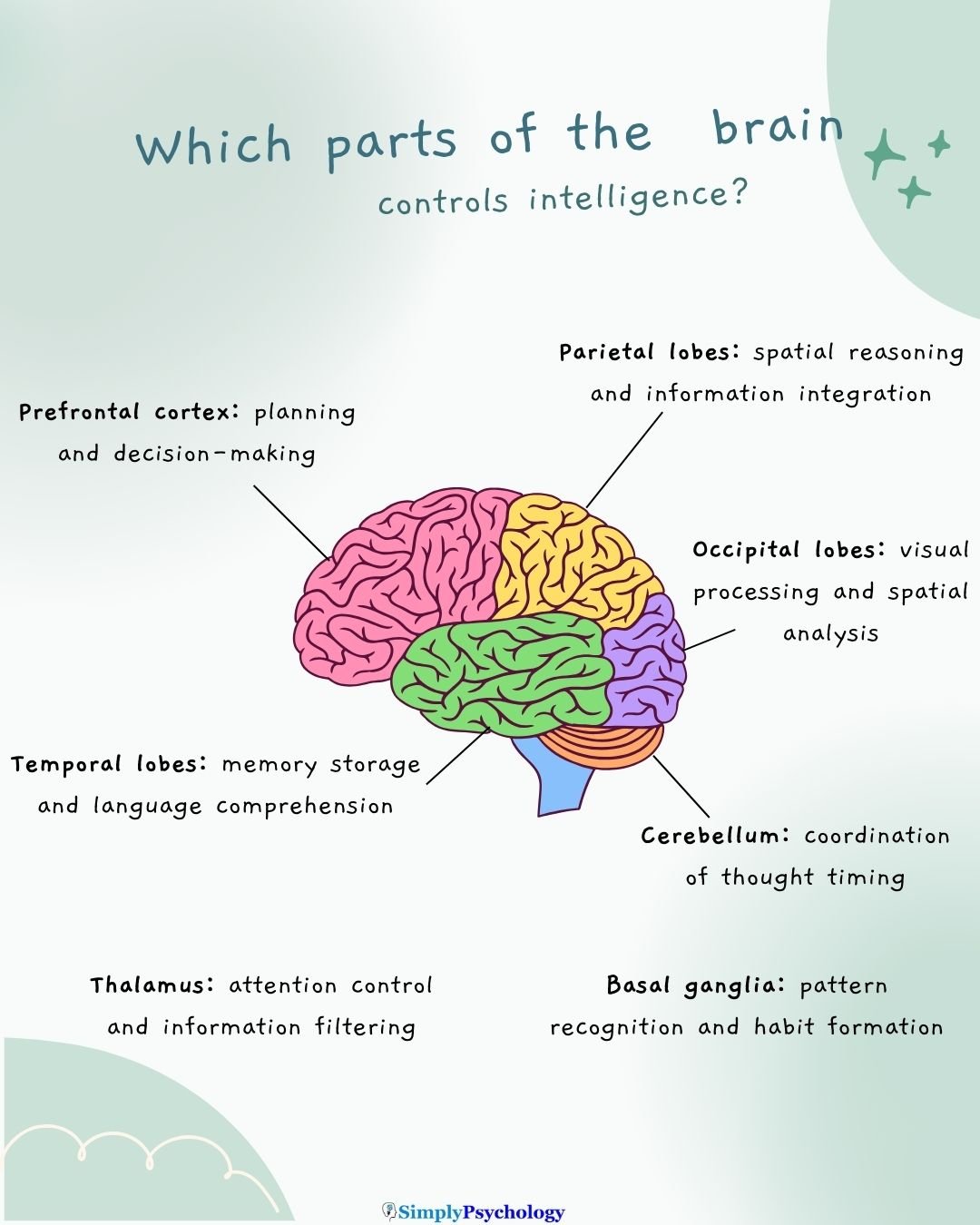
At the forefront of cognitive control and executive functions lies the prefrontal cortex (PFC). This highly evolved region of the frontal lobe is the brain’s master planner, orchestrating goal-directed behavior, decision-making, and crucially, the complex processes involved in problem-solving. Its vast network of interconnected neurons allows for the integration of information from various brain areas, enabling us to devise strategies, evaluate potential solutions, and adapt our approaches as needed. The PFC’s intricate architecture supports the planning, initiation, and execution of cognitive tasks, making it indispensable for effective problem-solving.
Planning and Strategy Formation: The Genesis of Solutions
The dorsolateral prefrontal cortex (DLPFC), a key sub-region of the PFC, is particularly implicated in the initial stages of problem-solving. This area is crucial for holding information in working memory, manipulating it, and forming sequential plans. When faced with a novel problem, the DLPFC actively engages in:
- Goal Representation: It establishes and maintains a representation of the ultimate goal we aim to achieve. This mental blueprint guides all subsequent actions and thought processes.
- Working Memory: The DLPFC is central to working memory, the temporary storage and manipulation of information. This allows us to hold relevant facts, rules, and intermediate steps in mind while we work through a problem. For instance, when solving a mathematical equation, the DLPFC keeps track of the numbers, operations, and intermediate results.
- Cognitive Flexibility: This refers to our ability to switch between different mental sets and strategies. The DLPFC facilitates this flexibility, allowing us to abandon ineffective approaches and adopt new ones when circumstances change or initial plans prove unsuccessful. Consider a chess player who must constantly adapt their strategy based on their opponent’s moves; this requires significant cognitive flexibility orchestrated by the DLPFC.
- Sequencing and Organization: The DLPFC helps to break down complex problems into smaller, manageable steps and organize them in a logical sequence. This systematic approach is vital for tackling multi-step challenges, whether it’s assembling furniture or designing a software program.
Decision-Making and Evaluation: Weighing the Options
Beyond planning, the PFC, in conjunction with other brain regions, plays a critical role in evaluating potential solutions and making decisions.
- Orbitofrontal Cortex (OFC): This region, located at the base of the frontal lobe, is heavily involved in value-based decision-making and processing rewards and punishments. The OFC helps us assess the potential outcomes of different solutions, assigning subjective values to them. This allows us to choose the option that is most likely to lead to a favorable result. For example, when deciding between two job offers, the OFC helps us weigh the salary, benefits, career progression, and personal satisfaction associated with each.
- Anterior Cingulate Cortex (ACC): The ACC is a crucial area for conflict monitoring and error detection. During problem-solving, it signals when there might be an error in our thinking or when competing responses arise. This alerts us to potential difficulties and prompts us to re-evaluate our strategy, thus preventing us from persevering with an incorrect solution. The ACC is like an internal alarm system, ensuring we stay on track and correct our mistakes.
The Parietal Lobe: Spatial Reasoning, Integration, and Numerical Cognition
While the PFC is the conductor, the parietal lobe acts as a crucial sensory and spatial processing hub, providing essential information and tools for problem-solving, especially those involving spatial relationships and numerical manipulation. This region, situated at the top and back of the brain, integrates sensory input from various modalities and is fundamental for our understanding of space, numbers, and navigation.
Spatial Navigation and Manipulation: Visualizing the Problem
The posterior parietal cortex is deeply involved in our ability to process spatial information. This is critical for problem-solving scenarios that require mental visualization, manipulation of objects in space, or navigation.
- Mental Rotation: This cognitive skill, facilitated by the parietal lobe, allows us to mentally rotate three-dimensional objects in our minds. This is essential for tasks like assembling flat-pack furniture, understanding architectural plans, or solving certain types of puzzles.
- Spatial Reasoning: The parietal lobe enables us to understand and reason about the relationships between objects in space. This can be applied to problems like planning a route, organizing items in a physical space, or understanding diagrams and maps.
- Visuospatial Working Memory: Building upon the PFC’s working memory capabilities, the parietal lobe contributes to holding and manipulating visual and spatial information. This allows us to keep track of the spatial layout of a problem and how different elements relate to each other.
Numerical Processing and Calculation: The Language of Quantities
The inferior parietal lobule, particularly areas within the intraparietal sulcus, is a critical nexus for numerical cognition. This region is essential for understanding quantities, performing calculations, and applying mathematical principles to solve problems.
- Number Sense: This innate ability to grasp quantities is supported by the parietal lobe. It allows us to intuitively understand concepts like “more,” “less,” and “equal.”
- Arithmetic Operations: The parietal lobe is crucial for performing basic arithmetic operations like addition, subtraction, multiplication, and division. These are fundamental building blocks for solving quantitative problems in various domains.
- Mathematical Reasoning: Beyond simple calculations, the parietal lobe supports more complex mathematical reasoning, enabling us to apply mathematical concepts to solve word problems, analyze data, and engage in logical deduction based on numerical information.
The Temporal Lobe: Memory, Language, and Abstract Concepts
The temporal lobe, situated beneath the lateral fissure on both sides of the brain, plays a vital role in problem-solving through its functions related to memory, language comprehension, and the processing of abstract concepts. Its contributions are essential for retrieving past experiences, understanding the nuances of problem descriptions, and forming abstract representations of challenges.
Memory Retrieval and Association: Drawing on Past Experiences
The hippocampus, a key structure within the temporal lobe, is central to the formation and retrieval of long-term memories. This is invaluable for problem-solving as it allows us to:
- Access Past Solutions: We can draw upon similar problems we have encountered and solved in the past, leveraging established strategies and avoiding reinventing the wheel. For instance, if you’ve previously fixed a leaky faucet, you can recall that experience when faced with a similar plumbing issue.
- Form Analogies: The hippocampus helps us identify abstract similarities between current problems and past experiences, allowing us to apply solutions from one domain to another. This analogical reasoning is a powerful problem-solving tool.
- Store Knowledge: The temporal lobe, in general, is crucial for storing a vast repository of knowledge acquired through learning and experience. This knowledge base provides the raw material that the PFC and other regions utilize when tackling new challenges.
Language Comprehension and Semantic Understanding: Decoding the Problem
The superior temporal gyrus, including Wernicke’s area, is the primary hub for language comprehension. Effective problem-solving often begins with understanding the problem statement, which heavily relies on language processing.
- Interpreting Instructions: The ability to understand written or spoken instructions is paramount. Wernicke’s area allows us to decode the meaning of words and sentences, grasping the core of the problem.
- Semantic Networks: The temporal lobe houses rich semantic networks, allowing us to access the meaning of words and concepts and their relationships to one another. This is crucial for understanding the context and implications of a problem.
- Abstract Concept Formation: The temporal lobe contributes to the formation of abstract concepts, enabling us to move beyond concrete details and understand the underlying principles of a problem. This is particularly important for theoretical or highly conceptual challenges.
The Occipital Lobe and Cerebellum: Visual Processing and Motor Coordination in Action
While not typically considered primary problem-solving centers in the same way as the PFC or parietal lobe, the occipital lobe and cerebellum play supporting, yet critical, roles in certain types of problem-solving that involve visual perception and coordinated action.
Visual Input for Problem Interpretation
The occipital lobe, located at the back of the brain, is dedicated to processing visual information. In problem-solving, this translates to:
- Visualizing the Problem Space: For problems that involve diagrams, charts, images, or physical environments, the occipital lobe provides the visual input that allows other brain regions to analyze and understand the situation.
- Pattern Recognition: The occipital lobe is adept at identifying visual patterns, which can be crucial for recognizing recurring elements in a problem or identifying anomalies.

Motor Control and Fine-Tuning for Executing Solutions
The cerebellum, situated at the back and base of the brain, is primarily known for its role in motor control and coordination. However, it also contributes to some aspects of cognition, including procedural learning and fine-tuning complex actions.
- Executing Physical Solutions: For problems that require physical manipulation or precise motor skills, the cerebellum ensures smooth, coordinated movements. This could range from assembling a complex mechanical device to performing a delicate surgical procedure.
- Procedural Memory: The cerebellum is involved in learning and executing well-practiced sequences of actions, contributing to efficient problem-solving when a familiar procedure can be applied.
In conclusion, problem-solving is not the domain of a single brain region but rather a distributed network process. The prefrontal cortex acts as the executive command center, orchestrating planning, decision-making, and cognitive flexibility. The parietal lobe provides spatial and numerical reasoning capabilities, crucial for understanding and manipulating abstract representations of problems. The temporal lobe contributes essential memory retrieval, language comprehension, and abstract conceptualization. And the occipital lobe and cerebellum offer vital visual processing and motor coordination for interpreting and executing solutions. By understanding the specialized contributions of these brain regions, we gain a deeper appreciation for the remarkable cognitive architecture that enables human ingenuity and our capacity to overcome any challenge.
aViewFromTheCave is a participant in the Amazon Services LLC Associates Program, an affiliate advertising program designed to provide a means for sites to earn advertising fees by advertising and linking to Amazon.com. Amazon, the Amazon logo, AmazonSupply, and the AmazonSupply logo are trademarks of Amazon.com, Inc. or its affiliates. As an Amazon Associate we earn affiliate commissions from qualifying purchases.