
For decades, the prospect of living on other planets was relegated to the realms of science fiction. However, as we move deeper into the 21st century, the conversation has shifted from “if” to “how” and “when.” The transition of humanity into a multi-planetary species is no longer a philosophical debate but a massive technological undertaking. To answer the question of which planets we could inhabit, we must look through the lens of cutting-edge technology, software, and engineering. From the red deserts of Mars to the subsurface oceans of icy moons, our ability to survive depends entirely on the digital and physical tools we build today.

The Digital Blueprint: AI and Simulation in Planetary Selection
Before a single human sets foot on a distant world, the heavy lifting is done by algorithms. The process of identifying habitable candidates—and simulating the conditions of those environments—relies on the most advanced AI tools and data processing software available.
Exoplanet Discovery via Machine Learning
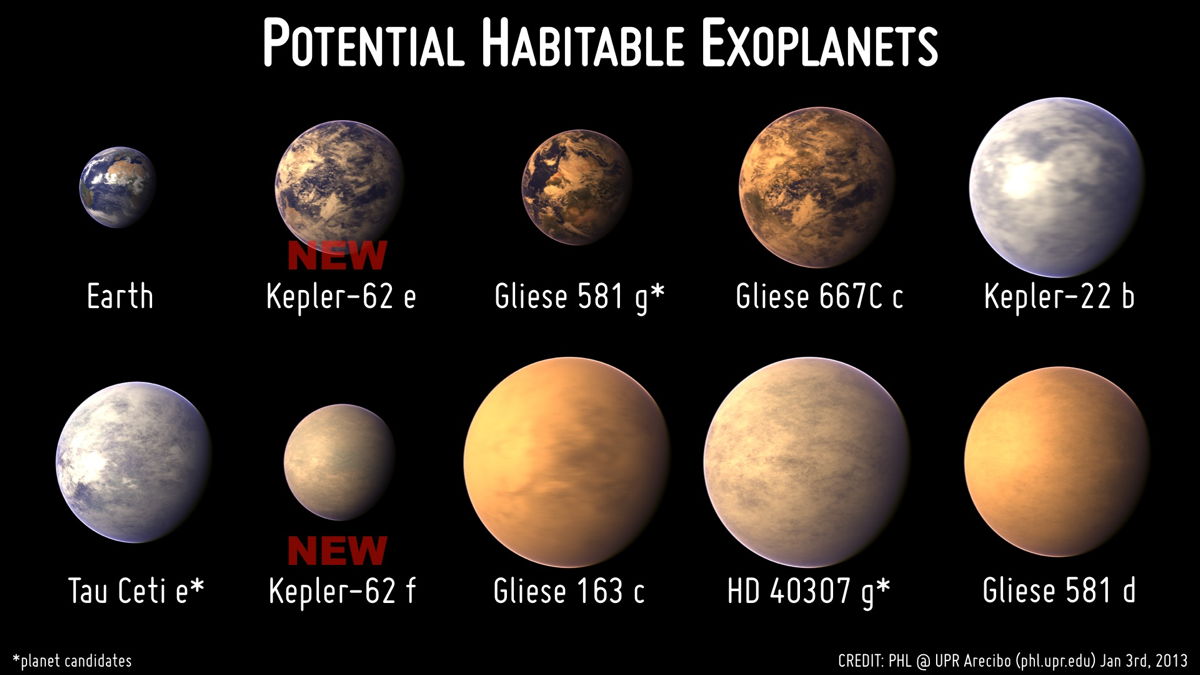
The search for “Earth 2.0” begins with massive datasets from telescopes like Kepler and TESS. Identifying a planet in the “Goldilocks Zone”—the region around a star where liquid water can exist—requires sifting through trillions of data points. Traditional observation methods are often slow and prone to human error. Today, NASA and private space firms use deep learning neural networks to detect the subtle “dimming” of stars that indicates a transiting planet. These AI models can differentiate between a true planet and stellar noise with over 96% accuracy, allowing us to build a catalog of high-potential targets like Proxima Centauri b and the TRAPPIST-1 system.
Digital Twins: Modeling Martian Habitability
Mars is our primary candidate for colonization, but its environment is hostile. To understand how humans would survive there, engineers use “Digital Twin” technology. A digital twin is a high-fidelity virtual replica of a physical environment or system. By feeding Martian atmospheric data, soil composition, and radiation levels into powerful simulation software, scientists can run “what-if” scenarios for decades of habitation in a matter of hours. These simulations help determine where to land, how structures will withstand dust storms, and the precise amount of energy required to maintain a breathable atmosphere.
Sustaining Life: Advanced Life Support Systems and Bio-Tech
Once we identify a planet, the next technological hurdle is staying alive. Earth provides us with a “free” life support system; on another planet, we must manufacture every breath of air and every drop of water using sophisticated hardware and biological engineering.
Closed-Loop Bio-Regenerative Systems
Current life support on the International Space Station (ISS) is highly efficient, recycling about 90% of water. However, for a colony on Mars or a moon of Jupiter, we need a 100% closed-loop system. This requires the integration of “Bio-Tech”—using genetically modified plants and algae to scrub carbon dioxide and produce oxygen. Advanced software manages these “bioreactors,” monitoring nutrient levels and lighting cycles with surgical precision to ensure the biological components don’t fail, which would be catastrophic for the inhabitants.
3D Printing Habitats with In-Situ Resource Utilization (ISRU)
Shipping building materials from Earth is economically impossible. The solution lies in In-Situ Resource Utilization (ISRU), paired with large-scale robotic 3D printing. Autonomous robots equipped with laser-sintering technology or microwave-heating tools will harvest Martian regolith (soil) and transform it into a concrete-like substance. Companies like ICON are already developing the software and robotics to print pressurized habitats that can shield humans from extreme temperatures and cosmic radiation. This technological pivot turns the planet’s own surface into the very shield we need to survive on it.
The Transit Tech: Propulsion Systems for Deep Space Travel
The journey to another planet is perhaps the most dangerous phase. With current chemical rockets, a trip to Mars takes seven to nine months, exposing the crew to debilitating radiation and bone-density loss. Technological breakthroughs in propulsion are essential to making other planets accessible.
Nuclear Thermal Propulsion vs. Ion Drives
To reach planets further out, such as the moons of Jupiter (Europa) or Saturn (Enceladus), we need faster engines. Nuclear Thermal Propulsion (NTP) is a leading contender, utilizing a nuclear reactor to heat a propellant like hydrogen to extreme temperatures. This could potentially cut travel time to Mars in half. On the other hand, Ion Drives—already used in deep-space probes—use electricity to accelerate ions. While they provide lower thrust, they are incredibly efficient over long durations. The software managing these engines must be autonomous, as the time delay in communications between Earth and a deep-space craft makes real-time human piloting impossible.
Autonomous Navigation and AI Pilots
Deep space is a chaotic environment filled with micrometeoroids and radiation belts. Future spacecraft will rely on AI-driven navigation systems that can make split-second decisions without waiting for instructions from Mission Control. Using “Star Tracker” software and lidar-based mapping, these systems can navigate through asteroid belts or perform complex orbital insertions. This level of automation is the “gadgetry” of the future, turning a spacecraft into a self-aware entity capable of protecting its human cargo.
Terraforming and Atmospheric Engineering
If we are to live on another planet long-term, we must eventually move beyond pressurized bubbles. This leads us to the most ambitious technological concept: terraforming, or the deliberate modification of a planet’s atmosphere and temperature.
Nano-Tech Solutions for Atmospheric Density
Mars has a very thin atmosphere, primarily composed of carbon dioxide. One proposed technological solution involves the deployment of “nano-mirrors” in orbit. These ultra-light, thin-film structures would reflect sunlight onto the Martian poles to melt frozen CO2, thickening the atmosphere and creating a greenhouse effect. Managing a fleet of millions of these mirrors requires decentralized “Swarm Intelligence” software, ensuring they stay in formation and adjust their orientation based on solar wind and gravitational pulls.
Robotic Swarms in Global Engineering
Large-scale engineering on a planetary level will be the work of robots, not humans. We are seeing the early stages of this with swarm robotics—hundreds or thousands of small, specialized machines working in unison. In a terraforming scenario, these swarms could be deployed to the surface to mine minerals, distribute atmospheric gases, or plant engineered microbes. The digital security of these swarms is paramount; a “hack” or a software bug in a planetary-scale engineering project could result in irreversible environmental damage, making digital security a cornerstone of space colonization tech.
The Gadgets of the New Frontier: Wearables and Neural Interfaces
Life on another planet will change how we interact with technology. The “gadgets” of a space colonist will be integrated into their very bodies and suits, providing a constant stream of data necessary for survival.
Next-Gen Spacesuit Tech
The spacesuit of the future is more than a pressurized bag; it is a wearable computer. Integrated with AR (Augmented Reality) HUDs (Heads-Up Displays), these suits will provide real-time data on oxygen levels, radiation exposure, and pathfinding. Advanced haptic feedback systems will allow explorers to “feel” the texture of rocks through thick gloves, and built-in AI assistants will provide voice-activated troubleshooting for equipment repairs in the field.
BCIs for Remote Operation of Planetary Rovers
Brain-Computer Interfaces (BCIs) are a burgeoning field in tech that will find a critical home in space. Because of the physical toll of extravehicular activity (EVA), much of the work on a planet’s surface will be done by rovers and drones. BCIs will allow colonists to operate these machines with their thoughts, providing a level of precision and “presence” that traditional joysticks cannot match. This fusion of man and machine will be essential for building the infrastructure of the first extra-terrestrial cities.
Conclusion: The Silicon Bridge to the Stars
The question of what other planets we could live on is ultimately a question of how far our technology can take us. Mars is the immediate target, followed by the intriguing moons of the outer solar system. However, the true “habitability” of these worlds is being created right now in software labs, robotics workshops, and aerospace hangars. Through the power of AI, advanced materials science, and revolutionary propulsion systems, we are building the silicon bridge that will eventually lead us away from our home planet. As we refine these tools, the hostile environments of the cosmos will transform from unreachable voids into the next great frontier for human innovation.
aViewFromTheCave is a participant in the Amazon Services LLC Associates Program, an affiliate advertising program designed to provide a means for sites to earn advertising fees by advertising and linking to Amazon.com. Amazon, the Amazon logo, AmazonSupply, and the AmazonSupply logo are trademarks of Amazon.com, Inc. or its affiliates. As an Amazon Associate we earn affiliate commissions from qualifying purchases.