
Tupac Shakur’s impact on culture is undeniable, a supernova of talent that burned brightly in music, poetry, and activism. However, his multifaceted artistic spirit also found expression on the silver screen, leaving an indelible mark on the film industry. While his musical career often overshadows his cinematic endeavors, the films Tupac starred in offer a compelling glimpse into his acting prowess, his commitment to storytelling, and the enduring themes that resonated with him. This exploration delves into Tupac Shakur’s filmography, examining his most notable roles and the lasting significance of his contributions to cinema.

The Cinematic Debut and Early Roles
Tupac’s journey into acting wasn’t a casual sidestep from his music career; it was a deliberate pursuit that showcased his ambition and a desire to connect with audiences through a different medium. His early foray into acting laid the groundwork for a career that, though tragically cut short, demonstrated significant potential.
Juice (1992): A Defining Entrance
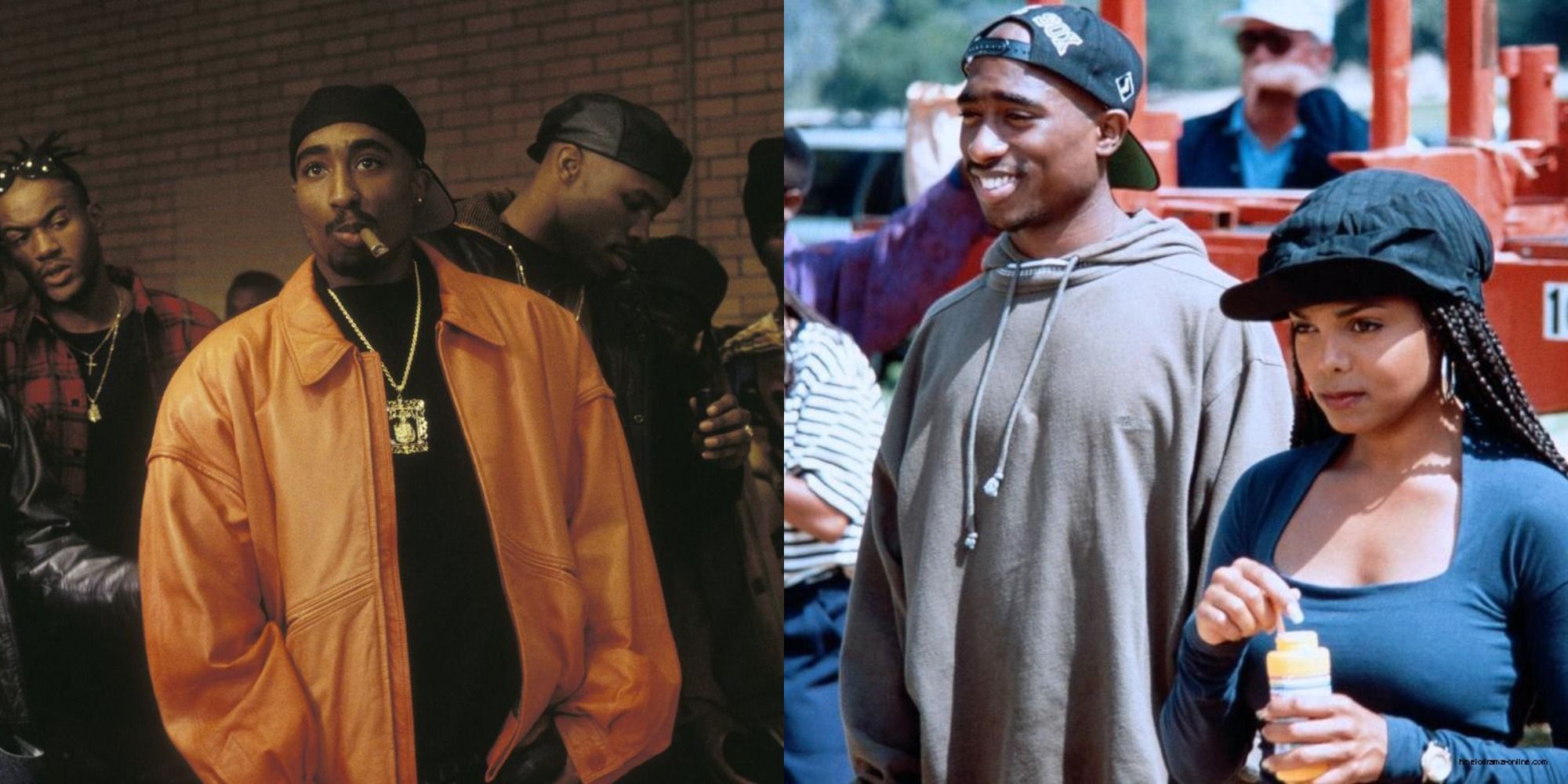
Released in 1992, “Juice” served as Tupac Shakur’s feature film debut and remains arguably his most iconic cinematic performance. Directed by Ernest Dickerson, the film explores the lives of four Harlem teenagers navigating the harsh realities of urban life and the allure of street gangs. Tupac delivered a powerful and nuanced portrayal of Bishop, a charismatic yet increasingly volatile young man who becomes a dangerous influence on his friends.
Bishop is a character that embodies a complex mix of charm, ambition, and deep-seated insecurity. Tupac’s performance captured this duality with remarkable authenticity, imbuing Bishop with a magnetic presence that draws viewers in even as his descent into violence becomes horrifyingly apparent. His ability to convey a range of emotions – from bravado and humor to fear and desperation – was striking, particularly for a relatively new actor. The film’s exploration of themes such as peer pressure, disillusionment, and the struggle for identity resonated deeply, and Tupac’s performance was central to its critical acclaim and lasting impact. His portrayal of Bishop is often cited as a testament to his raw talent and his ability to embody flawed, compelling characters.
Poetic Justice (1993): A Romantic and Thought-Provoking Turn
Following the success of “Juice,” Tupac starred in John Singleton’s “Poetic Justice” (1993). In this romantic drama, he played Lucky, a postal worker with a gentle soul and a talent for poetry who finds himself drawn to Justice, portrayed by Janet Jackson. This role offered a stark contrast to the intensity of Bishop, showcasing Tupac’s versatility as an actor.
Lucky is a character marked by a quiet thoughtfulness and a yearning for something more, a reflection of Tupac’s own poetic sensibilities. His interactions with Justice are imbued with a tender authenticity, and his delivery of spoken word poetry within the film further highlighted his lyrical prowess. “Poetic Justice” allowed Tupac to explore themes of love, loss, and the search for meaning in a world often fraught with hardship. His chemistry with Janet Jackson was palpable, contributing to the film’s emotional resonance. The film, while perhaps not as gritty as “Juice,” proved that Tupac could also portray vulnerability and romanticism with equal conviction.
Expanding the Repertoire: More Notable Performances
Tupac Shakur’s acting career, though brief, was marked by a willingness to explore different genres and challenging roles. His commitment to his craft shone through in each of his subsequent film appearances, solidifying his status as a legitimate actor.
Above the Rim (1994): Navigating Basketball and the Streets
In Jeff Pollack’s “Above the Rim,” Tupac took on the role of Birdie, a charismatic but morally ambiguous drug dealer and former basketball star. The film centers on Kyle Watson, a gifted high school basketball player torn between pursuing a college scholarship and succumbing to the allure of the streets represented by Birdie.
Birdie is a character who exudes authority and a certain streetwise wisdom, yet is deeply entangled in the criminal underworld. Tupac’s performance captures Birdie’s magnetic personality and his dangerous influence over the younger generation. He brings a layered complexity to the character, hinting at the life that Birdie might have had if circumstances were different. The film’s exploration of the intersection of sports, dreams, and the pervasive realities of urban crime provided a potent backdrop for Tupac’s acting. His presence lent an undeniable authenticity and gravitas to the narrative, further demonstrating his ability to inhabit characters with challenging moral landscapes.
Bullet (1996): A Gritty and Intense Performance
Released posthumously, “Bullet” (1996) features Tupac in a role that many have seen as a darker reflection of the pressures and violence he often depicted in his music. He plays Tank, an ex-convict recently released from prison, who finds himself drawn back into a life of crime alongside his volatile friend, Butch, played by Mickey Rourke.
Tank is a character grappling with the demons of his past and the harsh realities of his present. Tupac’s performance in “Bullet” is raw and intense, embodying the desperation and nihilism that can permeate environments of poverty and crime. The film is characterized by its gritty realism and unflinching depiction of violence, and Tupac’s portrayal of Tank is central to its unsettling atmosphere. His ability to convey a sense of weariness and a simmering rage made his performance compelling, even as the film itself garnered mixed reviews. It stands as a stark reminder of the challenging themes Tupac often explored and his commitment to portraying them with unvarnished honesty.
The Enduring Cinematic Legacy
Tupac Shakur’s filmography, though concise, represents a significant facet of his artistic legacy. His willingness to step beyond the microphone and into the demanding world of acting showcased a profound artistic curiosity and a desire to explore the human condition through diverse narrative forms.
A Symbol of Complex Characters
The characters Tupac embodied – Bishop, Lucky, Birdie, and Tank – were rarely one-dimensional. They were often complex individuals wrestling with societal pressures, personal demons, and the consequences of their choices. Tupac’s ability to imbue these characters with a sense of raw humanity, vulnerability, and often, dangerous charisma, resonated with audiences and critics alike. His performances in films like “Juice” and “Poetic Justice” are widely considered to be seminal works, capturing the spirit of a generation and the struggles faced by many in urban communities.
The Intersection of Art and Life
Tupac’s cinematic roles often mirrored or touched upon themes prevalent in his music and public persona: struggle, resilience, social injustice, and the search for identity. This intersection between his art forms created a powerful synergy, allowing his fans to connect with him on multiple levels. His screen presence was as magnetic and thought-provoking as his lyrical delivery, proving that his talents extended far beyond the realm of hip-hop.

A Testament to Untapped Potential
The tragic loss of Tupac Shakur at the age of 25 meant that his full potential as an actor, like his potential as a musician and poet, was never fully realized. However, the films he did complete offer a compelling testament to his talent, his dedication to his craft, and his ability to deliver performances that remain memorable and impactful decades later. His cinematic legacy, though less voluminous than his musical one, is an integral part of his enduring cultural significance, reminding us of the multifaceted artist he was and the profound contributions he made to both music and film.
aViewFromTheCave is a participant in the Amazon Services LLC Associates Program, an affiliate advertising program designed to provide a means for sites to earn advertising fees by advertising and linking to Amazon.com. Amazon, the Amazon logo, AmazonSupply, and the AmazonSupply logo are trademarks of Amazon.com, Inc. or its affiliates. As an Amazon Associate we earn affiliate commissions from qualifying purchases.