
The question “what movie was Max Headroom in?” often serves as a gateway to a fascinating chapter in media history, revealing a character whose influence far transcends his initial screen appearances. While the direct answer points to the 1985 British television film Max Headroom: 20 Minutes into the Future, followed by a Channel 4 series and later an American ABC series, his true legacy is less about cinematic chronology and more about his monumental impact as a disruptive brand entity. Max Headroom wasn’t just a character; he was a meticulously crafted persona, a virtual spokesperson, and a cultural phenomenon that redefined brand identity and marketing strategies, foreshadowing an era dominated by digital personas and virtual influencers.

In an age where AI-driven content, virtual idols, and digital brand ambassadors are becoming commonplace, understanding the genesis and sustained appeal of Max Headroom offers profound insights into the evolution of branding. He represented a paradoxical blend of high-tech and human imperfection, a glitched-out avatar that perfectly captured the zeitgeist of the 1980s while simultaneously casting a long shadow into the future of digital marketing. This article will delve into how Max Headroom transcended his narrative origins to become an iconic brand, analyzing the strategies that cemented his place in pop culture and marketing history.
The Genesis of a Glitch: From Screen Character to Cultural Phenomenon
The journey of Max Headroom from a speculative fiction concept to a pervasive cultural brand began with a bold creative vision. His initial appearance was designed not just as entertainment but as a commentary on media, technology, and consumerism, inadvertently laying the groundwork for a revolutionary approach to branding.
The Narrative Origin: “Max Headroom: 20 Minutes into the Future”
The character of Max Headroom first appeared in the 1985 British television film, Max Headroom: 20 Minutes into the Future. The premise involved a cynical investigative journalist, Edison Carter, who, after a motorcycle accident, has his consciousness uploaded into a computer by an eccentric young hacker. The resulting AI construct, “Max Headroom” (a play on the last thing Carter saw on a parking barrier: “MAX. HEADROOM 2.3 M”), was a glitchy, stuttering, and self-aware digital personality. Portrayed by actor Matt Frewer under heavy prosthetics and clever visual effects, Max was a sharp, satirical, and often anarchic critic of the very broadcast media he inhabited. His origin story, firmly rooted in a dystopian future where television networks held immense power, immediately positioned him as an edgy, unconventional voice. This narrative provided a rich foundation upon which a complex and enduring brand could be built.
Crafting a Unique Persona: The Blueprint of a Digital Brand
What made Max Headroom immediately captivating and brand-worthy was the meticulous crafting of his unique persona. His appearance was instantly recognizable: a slick, angular haircut, a perpetually shiny suit, and a fixed, artificial smile, all set against a shimmering, geometric digital background. His voice, characterized by its famous stutter and repeated phrases, was equally distinctive, conveying a sense of digital instability combined with sharp wit. These elements weren’t accidental; they were carefully designed to make him stand out in a visually saturated media landscape.
The creators understood that for a fictional entity to become a brand, it needed a clear, consistent, and compelling identity. Max Headroom’s identity was one of an intelligent, sarcastic, yet oddly charming digital being who was both a product of the future and a critique of it. This multi-layered persona allowed him to be simultaneously a cutting-edge icon and an “anti-establishment” figure, appealing to diverse audiences and making him ripe for commercial exploitation in a sophisticated manner. He was the epitome of a digital brand before digital branding was a widely understood concept.
Max Headroom as a Pioneering Virtual Spokesperson
The transition of Max Headroom from a cult sci-fi figure to a mainstream brand ambassador marked a watershed moment in advertising history. His role as a virtual spokesperson for a major global brand demonstrated the untapped potential of digital personalities in marketing.
The Coca-Cola Connection: A Landmark in Brand Endorsement
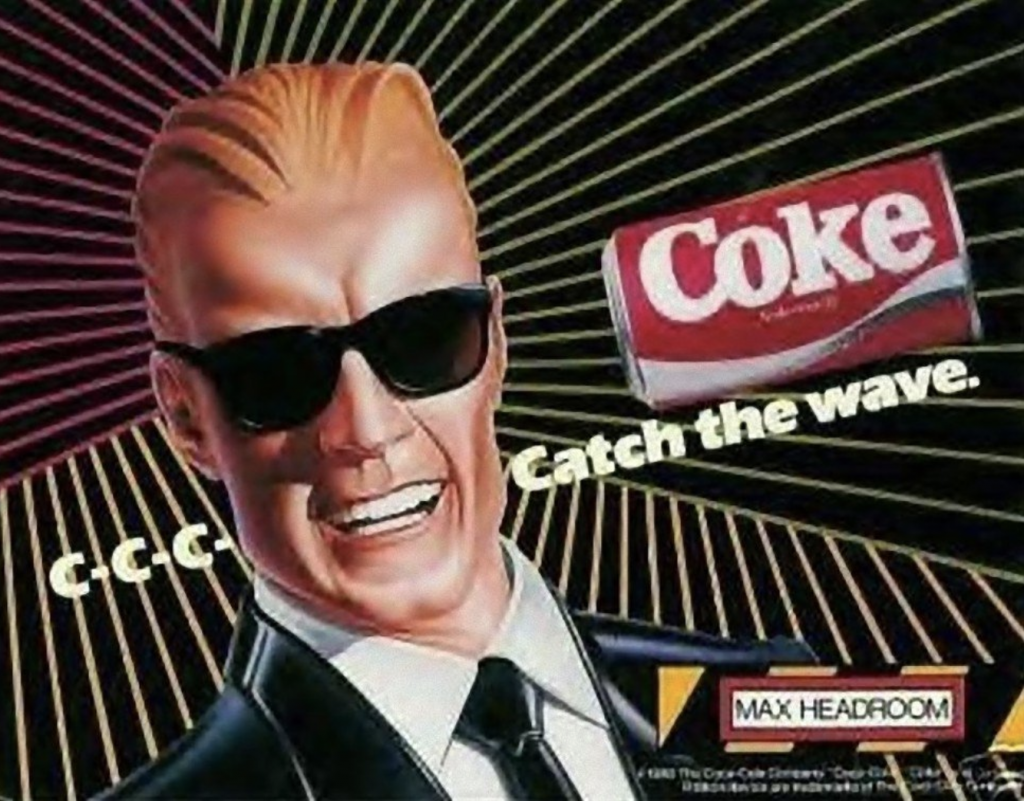
Perhaps Max Headroom’s most iconic and impactful brand collaboration was with The Coca-Cola Company. In 1987, Coca-Cola launched its “Catch the Wave” campaign for its flagship beverage, New Coke, and later for Coke II, featuring Max Headroom as its pitchman. This was a bold and unprecedented move. Instead of a traditional celebrity, Coca-Cola opted for a glitchy, artificial intelligence character. The commercials leveraged Max Headroom’s established persona, portraying him as hip, irreverent, and technologically savvy. He would famously utter phrases like “C-c-c-catch the wave!” and “It’s pure, it’s pure, it’s pure, pure, p-p-pure genius!”
The choice of Max Headroom for a major campaign was groundbreaking. It signaled a shift in thinking about brand endorsements, moving beyond human celebrities to embrace the unique appeal of a virtual entity. For Coca-Cola, Max Headroom offered a modern, futuristic image that resonated with a younger demographic and symbolized innovation, aligning perfectly with the repositioning of its product. This collaboration proved that a non-human, digital brand could effectively communicate a product’s message, build brand recognition, and capture consumer attention on a massive scale, establishing a precedent for future virtual influencers.
Beyond Beverages: Expanding the Brand Footprint
Max Headroom’s brand influence extended beyond the realm of carbonated beverages. His distinctive look and voice were utilized across various media, further cementing his status as a versatile and recognizable brand. He appeared in music videos, notably for The Art of Noise’s “Paranoimia,” which prominently featured his digital persona. He was licensed for merchandise, including comics, toys, and apparel, allowing fans to physically engage with his brand. His image became synonymous with the cutting edge, a symbol of the burgeoning digital era.

This multi-platform presence demonstrated the adaptability of his brand identity. Whether he was satirizing media on television, promoting a soft drink, or starring in a music video, Max Headroom maintained a consistent yet flexible persona. This ability to traverse different cultural touchpoints while retaining his core brand attributes is a testament to the strength of his initial conceptualization and the strategic decisions that guided his subsequent appearances. He became, in essence, a brand of himself, capable of endorsing other brands or simply existing as a standalone cultural artifact.
The Anatomy of a Disruptive Brand Identity
Max Headroom’s brand identity was not just unique; it was disruptive. It challenged conventional notions of what a brand spokesperson should look like or how a brand should communicate, proving that imperfection and irony could be powerful marketing tools.
The “Anti-Hero” Appeal: Subverting Traditional Branding Norms
A significant part of Max Headroom’s brand appeal lay in his status as an “anti-hero.” Unlike the clean-cut, overtly positive spokespersons that typically dominated advertising, Max was sarcastic, glitchy, and occasionally cynical. His persona carried an undercurrent of rebellion, a meta-commentary on the commercialism he was often a part of. This subversive quality resonated deeply with an audience growing tired of traditional, often saccharine, marketing messages. He was a commercial product that felt genuinely counter-culture.
This “meta-branding” aspect was revolutionary. Max Headroom wasn’t just selling products; he was subtly critiquing the act of selling itself, making him more authentic and intriguing. Consumers felt a connection to his edgy intelligence, recognizing the irony and wit in his delivery. This approach taught marketers a valuable lesson: authenticity, even an artificial, glitched form of it, could forge a stronger bond with consumers than manufactured perfection. His brand identity demonstrated that embracing flaws and a degree of irreverence could create a powerful, relatable, and disruptive market presence.
Visual and Auditory Signifiers: Building Instant Recognition
The immediate and lasting recognition of the Max Headroom brand was meticulously built upon distinct visual and auditory signifiers. His high-gloss, slicked-back hair, the sharp lines of his suit, and the pixelated, geometric backdrop were instantly identifiable. These visual cues communicated sophistication, technology, and a slightly unsettling futuristic aesthetic. Paired with these visuals was his unforgettable voice: the characteristic stutter, the abrupt pauses, and his distinctive, somewhat forced, digital laugh. These auditory elements were not just quirks; they were integral to his brand voice, making him memorable and unique.
These consistent signifiers created a cohesive and powerful brand package. They ensured that even a fleeting glimpse or sound byte of Max Headroom was enough for instant recognition. This meticulous attention to sensory details is a cornerstone of effective brand building, allowing for effortless recall and reinforcement of brand identity. Max Headroom exemplified how to create a multi-sensory brand experience that was both innovative for its time and enduringly effective.
Legacy and Modern Resonance: Max Headroom’s Enduring Brand Influence
Decades after his peak popularity, Max Headroom continues to be a point of reference and fascination, especially in discussions surrounding technology, media, and branding. His pioneering role laid essential groundwork for contemporary brand strategies and virtual personalities.
Foreshadowing the Age of Virtual Influencers and AI Branding
Max Headroom was, in many respects, the original virtual influencer. Long before the rise of CGI characters like Hatsune Miku, Lil Miquela, or the myriad of AI-generated personalities gracing social media today, Max Headroom demonstrated the power and potential of a non-human entity to captivate audiences and endorse products. He proved that audiences could form connections, however ironic, with a character that was explicitly artificial.
His success offered a blueprint for future digital branding efforts. It showed that personality, consistency, and a well-defined identity could transcend physical form. Today, brands invest heavily in creating virtual spokespersons and AI assistants, drawing clear parallels to Max Headroom’s early adoption. His legacy is particularly pertinent in an era where AI is not only a creative tool but also a distinct brand presence, capable of shaping consumer perception and driving engagement. He was a tangible forecast of our current digital marketing landscape.
A Case Study in Longevity and Pop Culture Relevance
The enduring presence of Max Headroom in popular culture underscores the timelessness of his brand and the strength of his initial impact. He continues to be referenced in television shows, films, music, and art, often as a symbol of early digital culture, AI, or corporate satire. His distinctive look and voice have become iconic shorthand for a specific era and a particular commentary on the media.
For modern brands, Max Headroom serves as an invaluable case study in achieving longevity and cultural relevance. His success teaches that a strong brand identity, built on unique personality and consistent messaging, can transcend trends and maintain its appeal over decades. It also highlights the power of intelligent satire and self-awareness in marketing. Brands can learn from Max Headroom’s ability to be both a commercial tool and a cultural commentator, proving that authenticity and edginess, even when digitally constructed, can forge an incredibly powerful and lasting connection with an audience.
In conclusion, while “what movie was Max Headroom in?” provides a direct answer in the form of a 1985 TV film, the true significance of the character lies in his profound impact on the world of branding. From his meticulously crafted glitchy persona to his groundbreaking role as a virtual spokesperson for Coca-Cola, Max Headroom was a trailblazer. He disrupted traditional marketing, foreshadowed the age of virtual influencers, and built an enduring brand identity that continues to resonate today. His story is a testament to the power of innovation in brand strategy, proving that even a character born of binary code and television static can become an unforgettable icon.
aViewFromTheCave is a participant in the Amazon Services LLC Associates Program, an affiliate advertising program designed to provide a means for sites to earn advertising fees by advertising and linking to Amazon.com. Amazon, the Amazon logo, AmazonSupply, and the AmazonSupply logo are trademarks of Amazon.com, Inc. or its affiliates. As an Amazon Associate we earn affiliate commissions from qualifying purchases.