
Achieving a six-figure salary is a significant financial milestone, but it does not automatically grant you an unlimited budget when purchasing a home. When you earn $100,000 per year, your ability to secure a mortgage—and your comfort level in paying it off—is governed by strict banking guidelines, your existing debt obligations, and your long-term financial goals. Navigating the path to homeownership at this income level requires a nuanced understanding of how lenders view your salary and how you can position yourself to get the best possible terms.
Understanding Lender Guidelines and the DTI Ratio
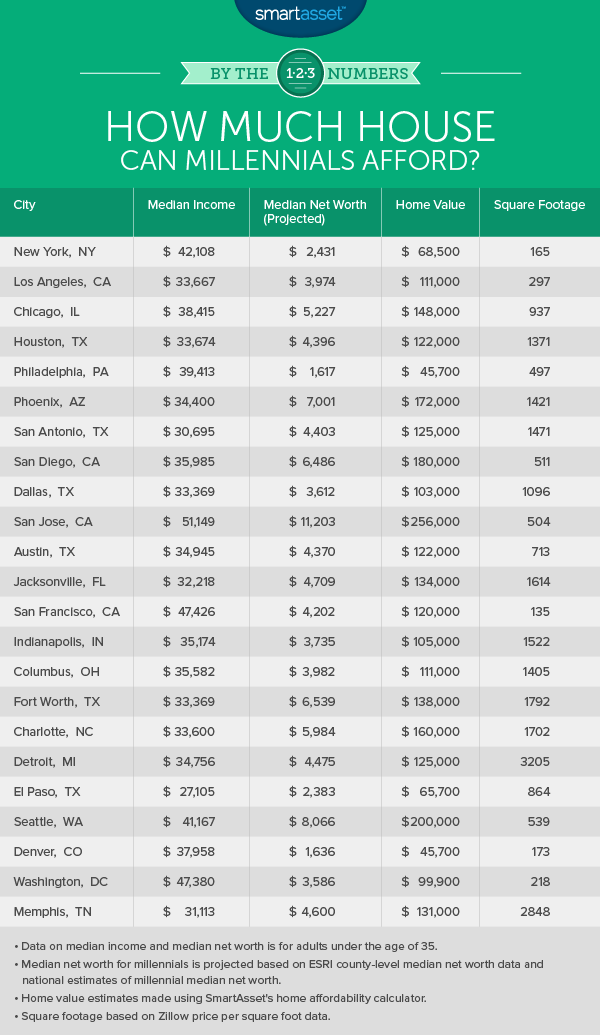
The most critical metric lenders use to determine your borrowing power is the Debt-to-Income (DTI) ratio. This percentage represents how much of your gross monthly income goes toward paying off debts. Lenders use this figure to ensure that you are not over-leveraging yourself, which reduces the risk of default.
The 28/36 Rule
Many financial institutions operate under the “28/36 rule.” This rule suggests that your total housing expenses (including mortgage principal, interest, taxes, and insurance) should not exceed 28% of your gross monthly income. Furthermore, your total debt load—which includes your housing payment plus student loans, car payments, and credit card minimums—should not exceed 36% of your gross monthly income.
If you earn $100,000 annually, your gross monthly income is approximately $8,333. Under the 28% threshold, a lender might suggest a maximum monthly mortgage payment of about $2,333. However, if you have existing monthly debt obligations of $500, the 36% limit suggests your total combined monthly debt payments should stay under $3,000. Because your housing costs are part of that $3,000, your mortgage payment capacity would effectively drop to $2,500 minus your $500 in other debt.
Why Gross Income Isn’t Your Take-Home Pay
It is essential to distinguish between gross income and net income. While lenders use gross income to qualify you, your budget must be based on your take-home pay. After federal and state taxes, retirement contributions, and health insurance premiums, your $8,333 monthly paycheck may look more like $6,000. If you commit $2,500 to a mortgage, you are committing a significant portion of your net income to housing. Failing to account for this discrepancy is the most common reason new homeowners find themselves “house poor.”
Calculating Your Actual Borrowing Capacity
To arrive at a realistic mortgage amount, you must look beyond the DTI ratios and account for the realities of current interest rates, down payments, and ownership costs.
Impact of Interest Rates
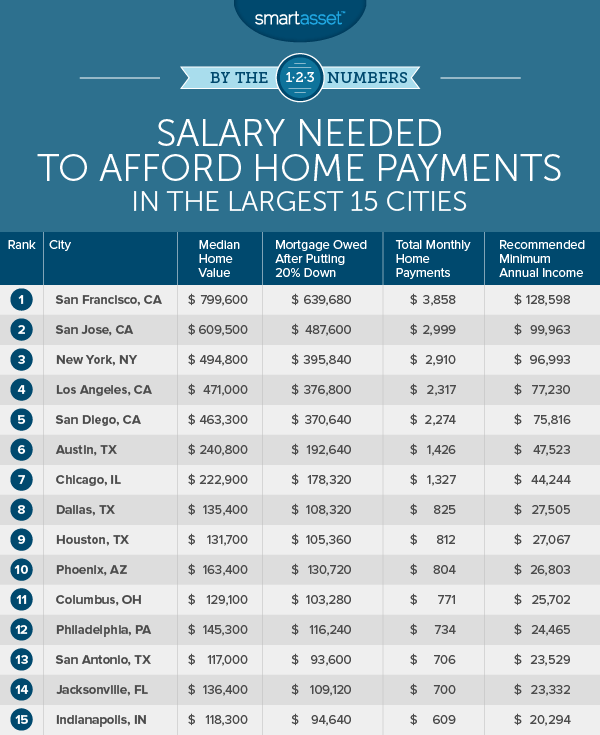
Interest rates fluctuate based on broader economic conditions and your credit score. A difference of even 1% in your interest rate can significantly alter your monthly payment and your total purchasing power. If you are qualified for a $400,000 loan at a 6.5% interest rate, your monthly principal and interest payment is approximately $2,528. If rates rise to 7.5%, that same payment would only cover a loan of approximately $3,550.
Factoring in Taxes, Insurance, and HOA Fees
When calculating what you can afford, remember that the mortgage “payment” is often an escrow account payment. This includes:
- Property Taxes: These vary wildly by state and county. A high-tax state can effectively reduce your purchasing power by hundreds of dollars per month compared to a low-tax state.
- Homeowners Insurance: This is non-negotiable and based on the replacement cost of the home and local risks, such as flood or fire zones.
- Private Mortgage Insurance (PMI): If your down payment is less than 20% of the home’s value, you will likely pay PMI. This can add $100 to $300 to your monthly bill until you reach 20% equity.
- HOA Fees: If you purchase a condo or a home within a planned community, you must factor in mandatory Homeowners Association fees. These are costs that are not tax-deductible and reduce the amount you can spend on the mortgage itself.
Strategic Planning for the Home Purchase
Earning $100,000 provides a strong foundation, but the house you choose should be dictated by your broader financial health, not just what a bank is willing to lend you.
The Importance of the Down Payment
A larger down payment is your best tool to lower your monthly obligation. Saving 20% on a $400,000 home requires $80,000, which can be a heavy lift. However, putting down 20% eliminates PMI and lowers the principal balance significantly, providing a buffer against market fluctuations. If 20% is not feasible, aim for at least 5% or 10% to demonstrate financial commitment and secure a better interest rate.
Emergency Reserves and Maintenance Costs
Homeownership comes with “hidden” costs that renters often overlook. When you own your home, you are responsible for roof repairs, appliance failures, and landscape maintenance. Financial advisors generally recommend maintaining a home emergency fund that is separate from your down payment and your general emergency savings. A rule of thumb is to set aside 1% of the home’s purchase price annually for maintenance and repairs. On a $400,000 home, this is $4,000 per year—roughly $333 per month that you should build into your housing budget.
Future-Proofing Your Mortgage
Consider your lifestyle trajectory over the next five to ten years. If you plan to start a family, pursue further education, or change career paths, you need a mortgage that provides flexibility. Taking the maximum loan amount that a bank approves—often called “maxing out your DTI”—leaves little room for error. If you find yourself in a financial squeeze, you cannot simply return the house. Aiming for a monthly payment that feels comfortable—perhaps 20% to 25% of your take-home pay rather than 28% of your gross—will provide the financial peace of mind necessary to enjoy your home.
Summary of Financial Reality
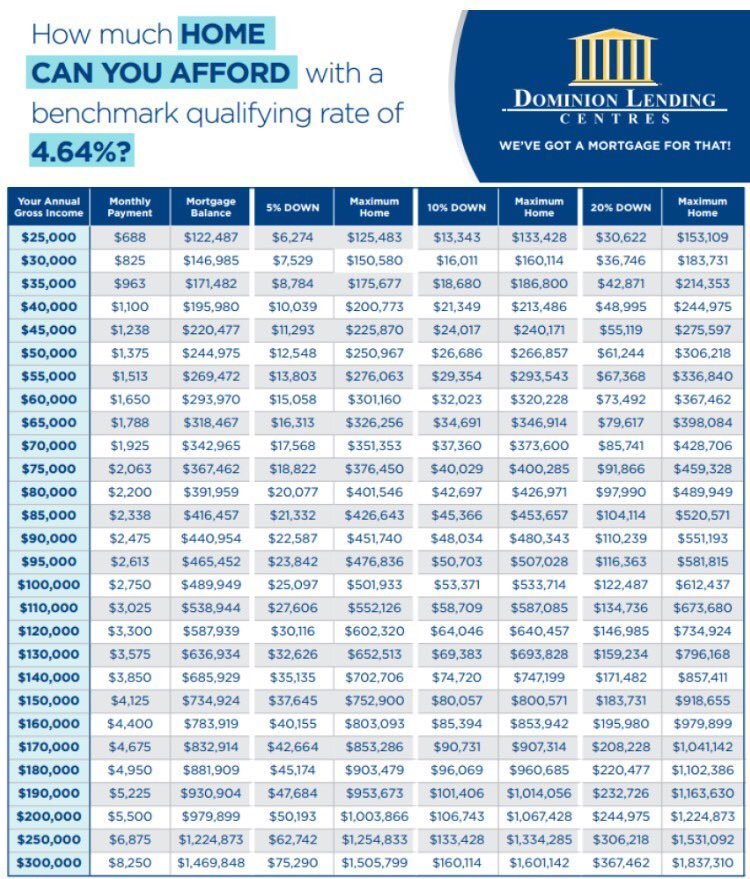
For a $100,000 earner, a safe mortgage “affordability” window typically falls between $300,000 and $450,000, depending heavily on your existing debt load, the property tax rate of the area you are moving to, and the size of your down payment.
To determine your specific number:
- Run your DTI: Add up all monthly debt payments and subtract them from 36% of your gross monthly income.
- Estimate the Total Payment: Use an online calculator to include PITI (Principal, Interest, Taxes, Insurance) and HOA fees.
- Adjust for Lifestyle: Subtract your savings goals (retirement, travel, childcare) from your net monthly income to see what remains for housing.
- Consult a Professional: Speak with a mortgage broker to get pre-approved, but remember that the “pre-approval amount” is the absolute ceiling, not a recommendation.
Ultimately, your mortgage should be a tool that enhances your life, not a weight that restricts your choices. By prioritizing a manageable monthly payment over the maximum loan amount, you can leverage your $100,000 salary to build long-term wealth through home equity without sacrificing your current quality of life. Balancing the bank’s requirements with your own personal financial constraints is the hallmark of smart homeownership.
aViewFromTheCave is a participant in the Amazon Services LLC Associates Program, an affiliate advertising program designed to provide a means for sites to earn advertising fees by advertising and linking to Amazon.com. Amazon, the Amazon logo, AmazonSupply, and the AmazonSupply logo are trademarks of Amazon.com, Inc. or its affiliates. As an Amazon Associate we earn affiliate commissions from qualifying purchases.