
Navigating the complexities of tax season can often feel like deciphering a foreign language, especially when it comes to deducting medical expenses. For 2024, understanding which out-of-pocket healthcare costs can lighten your tax burden is crucial for maximizing your financial well-being. The Internal Revenue Service (IRS) allows individuals to deduct qualified medical expenses that exceed a certain percentage of their Adjusted Gross Income (AGI). This deduction, often overlooked or misunderstood, can provide significant relief, particularly for those facing substantial healthcare costs. This article will delve into the intricacies of deductible medical expenses for 2024, outlining what qualifies, how to track these costs, and key considerations to ensure you’re taking full advantage of this tax provision.
Understanding the Threshold for Deducting Medical Expenses
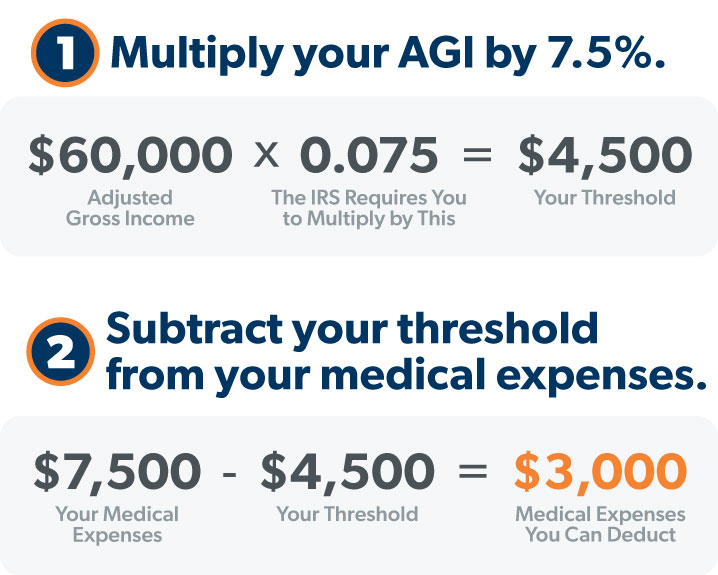
The ability to deduct medical expenses on your tax return is not a blanket provision; it’s subject to specific rules and limitations set by the IRS. The primary hurdle you must overcome is the AGI threshold. For the 2024 tax year, you can only deduct the amount of your qualified medical expenses that exceeds 7.5% of your Adjusted Gross Income (AGI). This means if your AGI is $50,000, you would need to have more than $3,750 in qualified medical expenses before any portion becomes deductible.
Adjusted Gross Income (AGI): The Foundation of Your Deduction
Your AGI is a crucial figure on your tax return, representing your gross income minus certain specific deductions, known as “above-the-line” deductions. These can include things like student loan interest, IRA contributions, and health savings account (HSA) contributions. Understanding your AGI is the first step in determining your medical expense deduction. It’s important to accurately calculate your AGI, as any errors can affect the deductible amount. Remember that AGI is not your total income, but a more refined figure that dictates your eligibility for various tax benefits, including medical expense deductions.
The 7.5% AGI Limit: A Strict Requirement
The 7.5% AGI limitation is a non-negotiable rule. Only the expenses above this percentage are eligible for deduction. For instance, if your AGI is $60,000 and you have $9,000 in qualified medical expenses, you first calculate 7.5% of your AGI: $60,000 * 0.075 = $4,500. You can then deduct the amount exceeding this threshold, which is $9,000 – $4,500 = $4,500. If your qualified medical expenses are less than $4,500, you won’t be able to claim any medical expense deduction for that tax year. This limit applies regardless of your age or tax filing status.
What Constitutes Qualified Medical Expenses?
The IRS defines “medical expenses” broadly, encompassing payments for the diagnosis, cure, mitigation, treatment, or prevention of disease, or for treatments affecting any structure or function of the body. However, not every healthcare-related cost qualifies. It’s essential to familiarize yourself with the types of expenses that are generally considered deductible.
Medical Care Services and Treatments
This is the most common category and includes a wide array of services. Doctor’s office visits, hospital stays, surgeon’s fees, and diagnostic tests are all typically deductible. This also extends to payments for dentists, optometrists, chiropractors, psychologists, and other licensed healthcare professionals. Treatments for chronic conditions, rehabilitation services, and even certain preventative care measures fall under this umbrella. If a service is prescribed or recommended by a medical professional to address a health issue, it’s more likely to be considered a qualified expense.
Medications and Medical Supplies
Prescription medications are a significant out-of-pocket expense for many. The cost of prescription drugs, including insulin and other necessary medications, is generally deductible. Over-the-counter medications, such as aspirin or antacids, are not deductible unless prescribed by a doctor. This distinction is critical. Additionally, medical supplies like crutches, bandages, and prosthetic devices are deductible if they are for medical purposes.
Insurance Premiums: A Nuanced Area
Health insurance premiums can be deductible, but the rules vary depending on your situation. If you are self-employed and pay for your own health insurance, you may be able to deduct these premiums as an adjustment to income, which is taken before AGI. This means these premiums effectively reduce your AGI, thereby potentially increasing your medical expense deduction. However, if your employer provides health insurance and you contribute to the premiums through payroll deductions, those contributions are typically pre-tax and therefore already reduce your taxable income. You cannot deduct premiums paid with pre-tax dollars. Premiums paid for long-term care insurance are deductible, but subject to age-based limits.
Transportation and Lodging for Medical Care
The IRS recognizes that sometimes travel is necessary to receive medical treatment. You can deduct the cost of transportation primarily for and essential to medical care. This includes the cost of bus, train, or taxi fares. If you use your own car, you can deduct the actual expenses of operating the car (gas, oil, tolls, parking) or use the standard medical mileage rate (which is 21 cents per mile for 2024). You can also deduct lodging expenses while away from home for medical care, but only up to $50 per night for each person (you, your spouse, and your dependents) if the lodging is primarily for and essential to medical care provided by a physician in a licensed hospital or similar facility. This does not include food or any luxurious accommodations.
Home Improvements for Medical Reasons
Certain home improvements made for medical reasons can also be deductible. This typically applies to individuals with chronic illnesses or disabilities. For example, installing ramps, widening doorways, or modifying bathrooms to accommodate a wheelchair may be deductible. The deduction is generally limited to the amount by which the cost of the improvement exceeds the increase in the property’s value. Keep detailed records and consult with a tax professional to determine eligibility and the correct calculation.

Expenses That Are Generally NOT Deductible
While the list of deductible medical expenses is extensive, it’s equally important to understand what the IRS considers personal or cosmetic, and therefore not eligible for deduction. Misunderstanding these exclusions can lead to incorrect deductions and potential issues with the IRS.
Cosmetic Surgery
Unless the surgery is necessary to correct a congenital deformity, a personal injury resulting from an accident or illness, or disfigurement arising from a disease, cosmetic surgery is generally not deductible. This includes procedures like facelifts, liposuction, and hair transplants performed solely for aesthetic purposes. The IRS’s definition hinges on medical necessity rather than personal preference.
Non-Prescribed Over-the-Counter Medications and General Health Items
As mentioned earlier, over-the-counter medications that are not prescribed by a doctor are typically not deductible. This includes common remedies for colds, headaches, or minor ailments. Similarly, items taken to improve general health, such as vitamins or dietary supplements not recommended by a physician for a specific medical condition, are usually not deductible. The key is whether the expense is for the treatment or prevention of a specific disease or medical condition.
Elective Procedures and Treatments for General Well-being
Procedures or treatments sought for general well-being or improved lifestyle, even if they have some perceived health benefits, are often not deductible. This can include things like gym memberships, weight-loss programs (unless prescribed by a doctor for a specific medical condition like obesity), or alternative therapies that are not medically recognized or prescribed. The IRS focuses on expenses directly related to a diagnosed medical condition.
Premiums Paid with Pre-Tax Dollars
If your employer offers health insurance and deducts your share of the premiums directly from your paycheck before taxes are calculated, you cannot deduct those premiums again on your tax return. They have already reduced your taxable income. This is a common point of confusion, but it’s crucial to remember that you cannot get a double tax benefit.
How to Track and Document Your Medical Expenses
Proper record-keeping is paramount when claiming medical expense deductions. The IRS requires substantiation for all deductions claimed. Without meticulous documentation, your deduction could be disallowed if audited.
Maintain a Dedicated Expense Log
The most effective way to track medical expenses is to maintain a dedicated log or spreadsheet. For each expense, record the date, the provider’s name, the service or item purchased, and the amount paid. This log should be updated regularly, ideally as soon as an expense is incurred. This proactive approach prevents the painful process of trying to recall or find receipts from months or years prior.
Keep All Relevant Receipts and Statements
In addition to your log, it is essential to keep all original receipts, bills, and Explanation of Benefits (EOB) statements from your insurance company. For services rendered by doctors, dentists, hospitals, and other healthcare providers, ensure the bills clearly state the nature of the service. For prescription medications, keep the pharmacy receipts that detail the drug name and cost. For insurance premiums, retain policy documents and proof of payment.
Differentiate Between Deductible and Non-Deductible Expenses
As you track your expenses, make a clear distinction between those that are likely deductible and those that are not. This will save you time and prevent you from inadvertently including non-qualifying expenses in your calculations. If you are unsure about a specific expense, err on the side of caution and consult the IRS guidelines or a tax professional.
Consult a Tax Professional
Given the nuances and ever-changing tax laws, consulting with a qualified tax professional is highly recommended, especially if you have significant medical expenses or a complex financial situation. They can provide personalized advice, ensure you are claiming all eligible deductions, and help you navigate any potential complexities, maximizing your tax savings and ensuring compliance with IRS regulations.
By understanding the rules, meticulously tracking your spending, and seeking professional guidance when needed, you can effectively leverage the medical expense deduction in 2024 to reduce your tax liability and improve your personal finances. Remember, the goal is to ensure you’re not paying more in taxes than necessary by taking advantage of all legitimate deductions available to you.
aViewFromTheCave is a participant in the Amazon Services LLC Associates Program, an affiliate advertising program designed to provide a means for sites to earn advertising fees by advertising and linking to Amazon.com. Amazon, the Amazon logo, AmazonSupply, and the AmazonSupply logo are trademarks of Amazon.com, Inc. or its affiliates. As an Amazon Associate we earn affiliate commissions from qualifying purchases.