
For the modern investor, the concept of a “closed” market is increasingly becoming a relic of the past. In an interconnected global economy, capital flows across borders with a fluidity that ignores time zones, creating a continuous cycle of opportunity and risk. Understanding what markets are open now requires more than just a glance at a wall clock; it demands a deep comprehension of the global financial relay race, where one major hub hands off the baton to the next in a 24-hour cycle.
Whether you are a retail trader looking for volatility, a long-term investor monitoring a portfolio, or a business owner managing currency exposure, the “open” status of a market dictates liquidity, price discovery, and strategic timing. This guide explores the intricate schedule of global stock exchanges, the relentless nature of the foreign exchange market, and the emerging frontier of 24/7 digital asset trading.
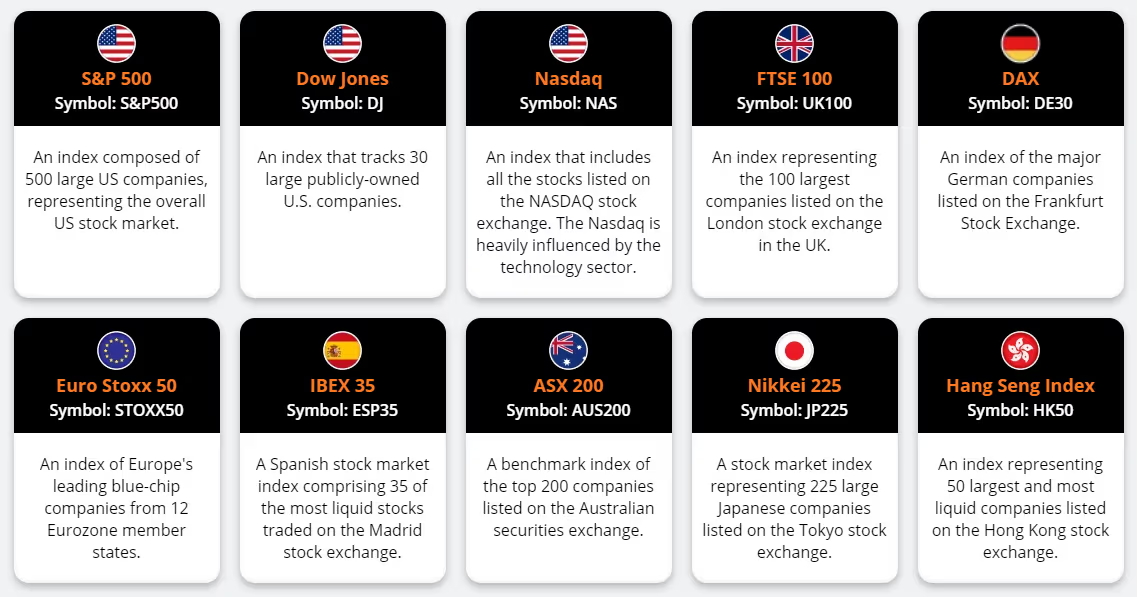
The Mechanics of the 24-Hour Global Market Cycle
The global financial system operates on a synchronized schedule designed to maximize participation within local business hours. This cycle is traditionally divided into four major trading sessions: the Sydney session, the Tokyo session, the London session, and the New York session. Together, they ensure that from Sunday evening in New York until Friday afternoon, there is almost always a major financial hub facilitating trade.
The Four Major Trading Sessions
The cycle begins in the Asia-Pacific region. The Sydney session opens first, often serving as the initial testing ground for news that broke over the weekend. While Sydney is smaller in volume than the giants that follow, it sets the early tone for the Pacific region. Shortly thereafter, the Tokyo session (often called the Asian session) begins. As the third-largest trading center in the world, Tokyo provides significant liquidity, particularly for the Japanese Yen and regional equities.
As the sun moves westward, the London session takes over. London is the undisputed capital of the foreign exchange market and a massive hub for global banking. Its opening marks a significant surge in volatility and volume, as it overlaps with the late hours of the Asian session. Finally, the New York session opens, creating the “overlap” period—the most liquid and active window in the entire financial world, where the two largest financial centers operate simultaneously.
Understanding Time Zones and UTC/GMT
To navigate these markets, professionals use Universal Coordinated Time (UTC) or Greenwich Mean Time (GMT) as a baseline. Because of Daylight Saving Time (DST) adjustments in the United States, Europe, and Australia, the “open” times in your local clock may shift twice a year. For instance, the gap between New York and London changes when the UK shifts its clocks on a different schedule than the US. Successful global participants maintain a “market clock” that accounts for these shifts to avoid missing critical opening bells or economic data releases.
Equity Markets: Stock Exchange Hours and Regional Nuances
While currency and commodity markets often feel continuous, stock exchanges (equities) maintain strict opening and closing hours. These hours represent the primary window for “lit” trading, where the highest concentration of buyers and sellers meet to establish the value of the world’s largest corporations.
The North American Powerhouse
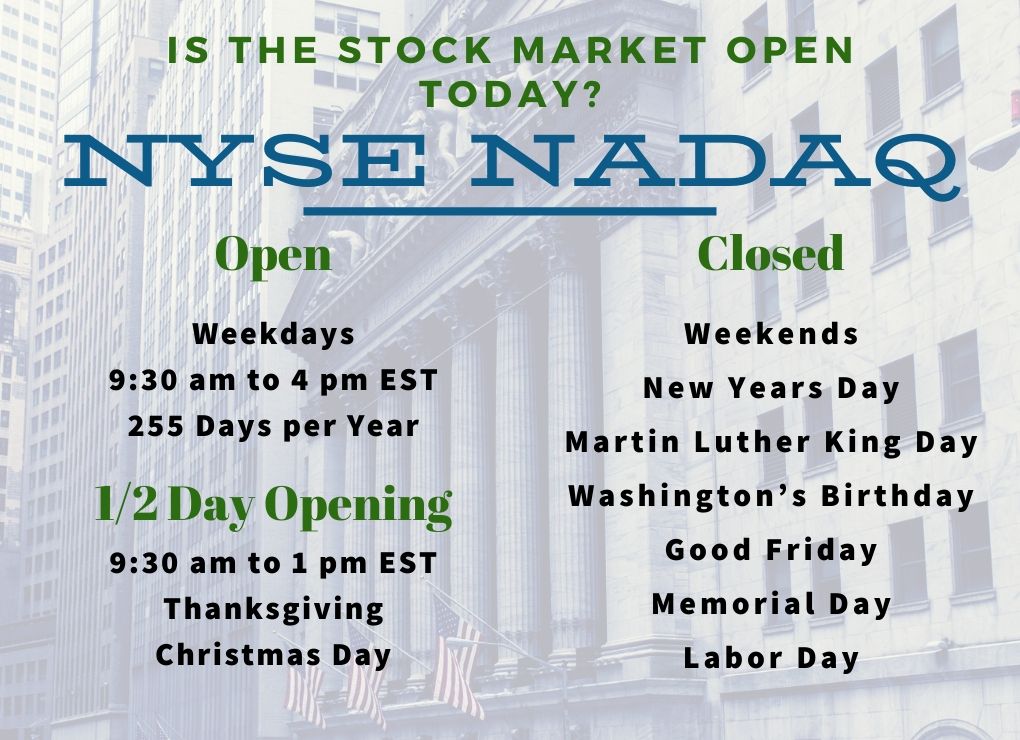
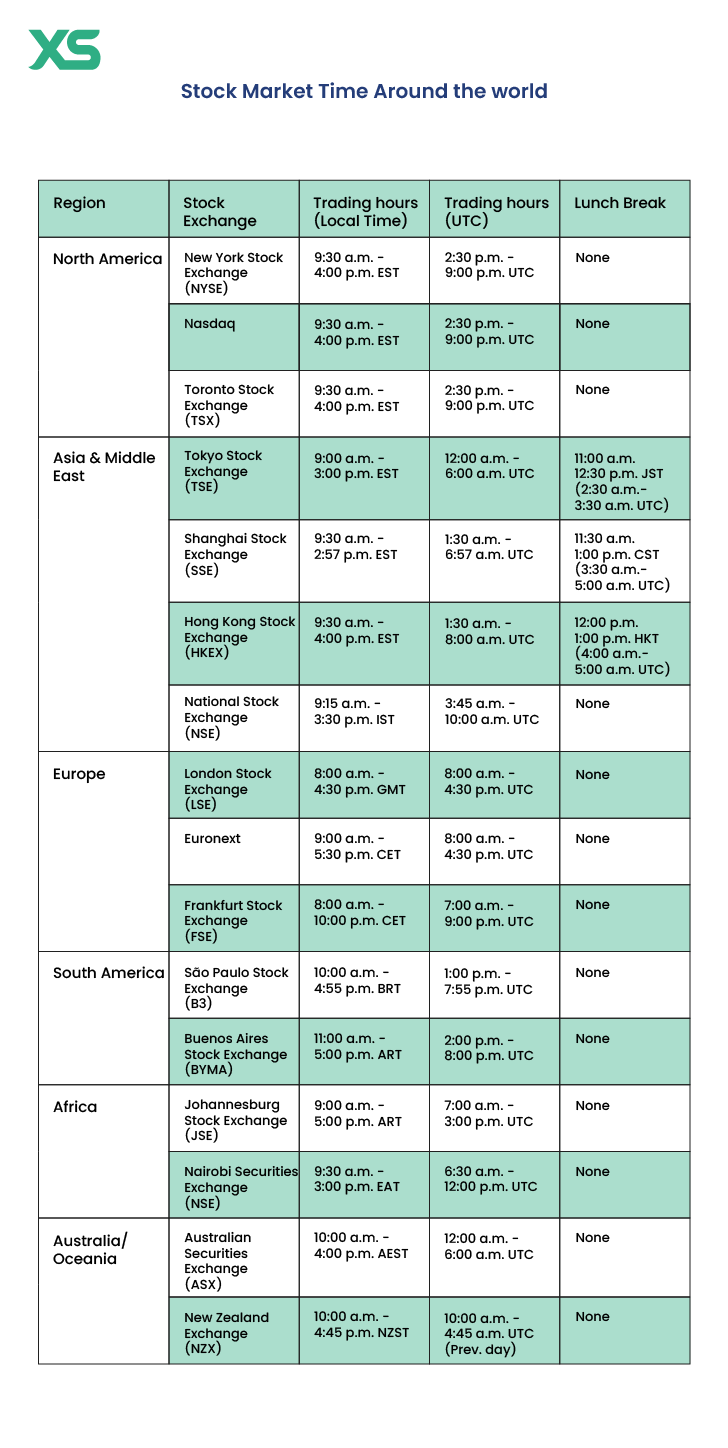
In North America, the New York Stock Exchange (NYSE) and the NASDAQ are the primary engines of activity. Both operate from 9:30 AM to 4:00 PM Eastern Time (ET), Monday through Friday. Unlike some international counterparts, major US exchanges do not close for a lunch break. This continuous seven-and-a-half-hour window is characterized by intense activity at the “open” and “close,” driven by institutional rebalancing and the processing of overnight news.
Canada’s Toronto Stock Exchange (TSX) mirrors these hours, creating a unified North American trading block. For investors, this session is critical because it handles the lion’s share of global tech and blue-chip volume, often dictating the direction of global sentiment for the following day.
European Financial Hubs
The European session is geographically dispersed but highly integrated. The London Stock Exchange (LSE) opens at 8:00 AM and closes at 4:30 PM local time. Other major exchanges, such as the Euronext (Paris, Amsterdam, Brussels) and the Deutsche Börse (Frankfurt), operate on similar schedules.
A unique feature of many European markets is their length; they remain open longer than US markets, which often leads to a period of “directionless” trading in the early afternoon until the US markets open at 2:30 PM London time. Once the US open occurs, European volume spikes as cross-Atlantic arbitrage and hedging strategies take flight.
The Asian-Pacific Engine
The Asian session is characterized by the presence of “mid-day breaks.” The Tokyo Stock Exchange (TSE), for example, typically trades from 9:00 AM to 11:30 AM, closes for an hour-and-a-half lunch, and then resumes from 1:00 PM to 3:00 PM. The Hong Kong Stock Exchange (HKEX) and the Shanghai Stock Exchange also follow this fragmented schedule.
These breaks can create “gaps” in pricing where news occurring during the lunch hour is suddenly priced in at the start of the afternoon session. For global investors, the Asian session provides critical insight into manufacturing, electronics, and the health of the Chinese economy, which often acts as a leading indicator for global commodity demand.
The Forex Market: Why It Never Truly Sleeps
If the equity markets are a series of individual sprints, the Foreign Exchange (Forex) market is a marathon. It is the largest and most liquid financial market in the world, with an estimated daily turnover exceeding $7 trillion. Because currency exchange is vital for global trade and central bank operations, the market operates 24 hours a day, five days a week.
Market Overlaps and Volatility
The most important concept in Forex trading is the “overlap.” When two major sessions are open at the same time, liquidity is at its peak, and spreads (the difference between the buy and sell price) are typically at their narrowest. The London-New York overlap (roughly 8:00 AM to 12:00 PM ET) is the most significant. During this window, the vast majority of Euro (EUR), British Pound (GBP), and US Dollar (USD) transactions occur.
Conversely, the “dead zones”—such as the period between the New York close and the Sydney open—can be dangerous for traders. Low liquidity during these times can lead to erratic price movements and “slippage,” where orders are filled at prices far from the expected level.
The Sunday Opening and Friday Closing
The Forex week begins when the sun rises in New Zealand on Monday morning (which is Sunday afternoon in New York). This “Sunday Open” is a moment of high scrutiny, as the market “gaps” to account for geopolitical events or economic data that occurred over the weekend. The week concludes at 5:00 PM ET on Friday, when the last New York banks close their desks. For those holding positions over the weekend, this Friday close represents a period of significant risk management, as the market will be inaccessible for 48 hours while the world continues to turn.
Alternative Assets: Crypto and Extended Hours Trading
The traditional 9-to-5 financial world is being challenged by two major forces: the rise of 24/7 cryptocurrency markets and the expansion of “extended hours” trading in traditional stocks.
The 24/7/365 World of Cryptocurrency
Cryptocurrency markets, including Bitcoin and Ethereum, never close. They operate on decentralized networks that do not observe bank holidays, weekends, or time zones. This 24/7 nature has fundamentally changed the psychology of modern investing. While it offers unparalleled access, it also means that a market crash or a massive rally can occur at 3:00 AM on a Sunday.
For traditional investors moving into crypto, the lack of an “opening bell” means there is no daily reset. This leads to a continuous stream of data and requires sophisticated automated tools or “bots” to manage risk when the investor is asleep.
Pre-Market and After-Hours Stock Trading
Even in the world of stocks, the “official” hours are no longer the only way to trade. Most major brokerages now offer access to Pre-Market (as early as 4:00 AM ET) and After-Hours (until 8:00 PM ET) sessions. These sessions occur on Electronic Communication Networks (ECNs) that match buyers and sellers outside the main exchange floor.
While these extended hours allow investors to react immediately to earnings reports or late-breaking news, they come with caveats. Volume is much lower, meaning prices can be highly volatile and spreads are wider. Professional investors often use these hours to “position” themselves, but the true valuation of a stock is rarely confirmed until the high-volume primary session opens.
Strategic Implications for Investors and Traders
Knowing what markets are open is only the first step; the second is knowing how to act based on that timing. The “when” of trading is often just as important as the “what.”
Liquidity and Slippage
Liquidity refers to how easily an asset can be bought or sold without affecting its price. When the major markets (New York and London) are open, liquidity is high. This is the safest time for large institutional moves and for retail investors to execute trades with minimal “slippage.” For a business owner needing to convert a large amount of currency for an international supplier, executing that trade during the London-New York overlap can save thousands of dollars in transaction costs compared to doing so during the low-volume Sydney session.
Economic Calendars and Global News Flow
Market openings are often synchronized with the release of economic data. The US Bureau of Labor Statistics typically releases employment data at 8:30 AM ET, just before the New York open. Similarly, the European Central Bank (ECB) releases its interest rate decisions during the London session.
Strategic investors monitor an “economic calendar” to see which market will be most affected by upcoming news. If a major policy shift is announced in Japan, the impact will ripple through the Tokyo session first, then hit Europe, and finally the US. Understanding this sequence allows investors to anticipate “contagion” or “momentum” as the news travels across the globe.
By mastering the global clock, participants in the financial markets can move from being reactive to being proactive. Whether you are navigating the structured hours of the NYSE or the boundless volatility of the crypto markets, knowing what is open now—and what opens next—is the foundation of sound financial decision-making. In a world where money never sleeps, the most successful individuals are those who know exactly which part of the world is currently awake and trading.
aViewFromTheCave is a participant in the Amazon Services LLC Associates Program, an affiliate advertising program designed to provide a means for sites to earn advertising fees by advertising and linking to Amazon.com. Amazon, the Amazon logo, AmazonSupply, and the AmazonSupply logo are trademarks of Amazon.com, Inc. or its affiliates. As an Amazon Associate we earn affiliate commissions from qualifying purchases.