
In the landscape of real estate investment and home ownership, the 1950s represent a golden era of construction that sits at a precarious crossroads between artisanal tradition and industrial efficiency. For the modern investor or homeowner, understanding the material composition of a 1950s property is not merely an academic exercise in architectural history; it is a critical component of financial due diligence. Specifically, the interior plaster walls of this era—often a hybrid of “rock lath” and gypsum plaster—carry significant implications for property valuation, renovation budgeting, and long-term asset management.
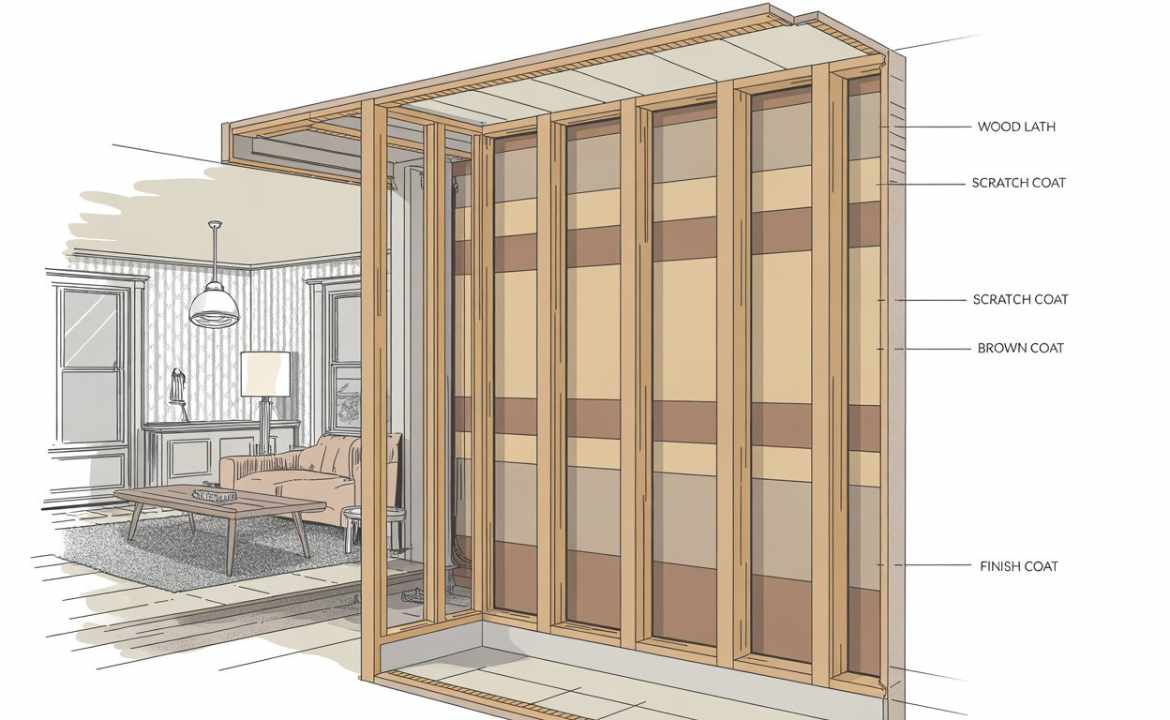
When we peel back the wallpaper of a 1950s home, we are looking at a complex layering of materials that dictates the financial feasibility of a flip, a rental strategy, or a primary residence restoration. This article explores the economic reality of 1950s wall systems, analyzing the costs of maintenance, the risks of hidden liabilities, and the ultimate ROI of preserving these mid-century staples.
The Valuation of Structural Integrity: Plaster vs. Drywall in the Real Estate Market
To understand the financial worth of a 1950s home, one must understand the transition that occurred in the mid-20th century. This was the decade where “rock lath” became the industry standard, replacing the labor-intensive wood lath of the early 1900s and preceding the universal adoption of modern thin-coat drywall.
The Transition from Rock Lath to Modern Gypsum Board
In the 1950s, wall construction typically involved “button board” or gypsum lath. These were small sheets of gypsum board (usually 16 by 48 inches) nailed to studs, which then received a base coat (brown coat) and a finish coat of plaster. From a financial perspective, this system offers a density and sound-dampening quality that modern, half-inch drywall cannot match. Investors often find that homes with original, well-maintained plaster walls command a “quality premium” in the boutique real estate market. The sheer mass of the walls contributes to thermal inertia, potentially lowering HVAC costs—a secondary but relevant financial benefit for the long-term holder.
How Wall Composition Influences Property Appraisal
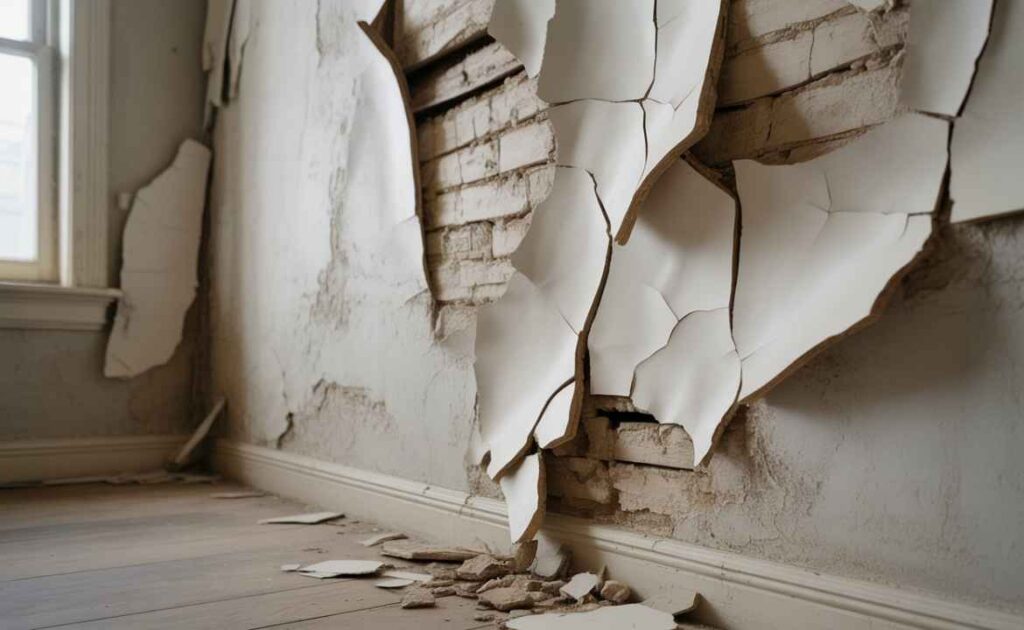
Appraisers and sophisticated buyers look for signs of “solid” construction. A 1950s home with its original plaster intact feels more substantial than a modern build. This perceived value translates into higher appraisal figures in markets where “Mid-Century Modern” is a trending aesthetic. However, the financial downside appears during the inspection phase. If the plaster is cracking or “delaminating” (separating from the lath), the cost of repair can be three to four times that of a simple drywall patch. Understanding the specific composition of the plaster—whether it contains perlite or vermiculite for insulation—is essential for accurately projecting the “as-is” value versus the “after-repair” value (ARV).
Hidden Liabilities: The Financial Impact of Material Testing and Remediation
While 1950s plaster is celebrated for its durability, it can also be a vessel for hidden financial liabilities. For the business-minded homeowner, “unforeseen conditions” are the primary enemy of a balanced budget.
Asbestos and Lead: The Cost of Compliance in 1950s Renovations
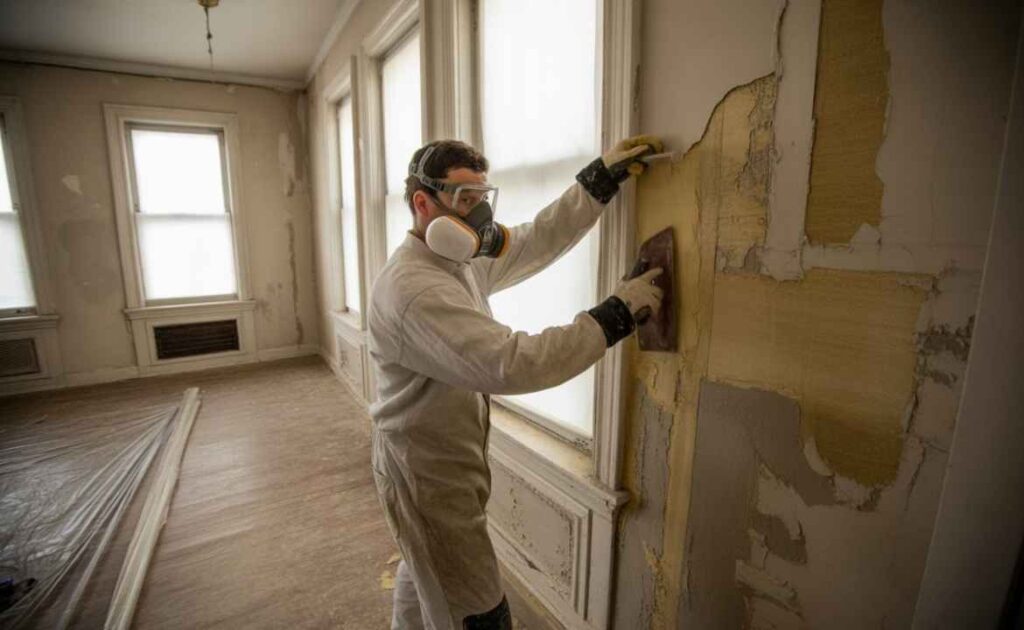
The 1950s was a peak period for the inclusion of additives in building materials. It is not uncommon to find asbestos fibers used as a binding agent in the base coat of plaster or in the joint compounds used around the seams of the gypsum lath. From a money management perspective, the discovery of asbestos during a renovation can trigger mandatory abatement protocols. Professional removal can cost anywhere from $15 to $30 per square foot, a price point that can instantly evaporate the profit margin of a residential “fix-and-flip.”
Furthermore, the paint layers atop 1950s plaster almost certainly contain lead. The Financial Risk Management (FRM) of such a project must include the costs of EPA-certified Lead-Safe work practices. Ignoring these regulations doesn’t just pose a health risk; it opens the owner to massive legal liabilities and fines that can reach tens of thousands of dollars.
Budgeting for Professional Environmental Inspections
Because the composition of 1950s plaster is so varied, a “guess-and-check” method is a financial disaster waiting to happen. Smart investors allocate $500 to $1,500 in their initial acquisition budget for comprehensive material testing. By identifying the chemical makeup of the walls before the first sledgehammer swings, an owner can accurately negotiate the purchase price down to account for necessary remediation, ensuring that the “hidden” components of the wall are accounted for on the balance sheet.
Restoration vs. Replacement: A Cost-Benefit Analysis
When faced with aging 1950s walls, the most common financial dilemma is whether to patch and restore the existing plaster or to gut the interior and install modern drywall.
The ROI of Preserved Original Plaster
There is a growing market of “purist” buyers willing to pay a premium for “unmolested” mid-century homes. In high-end markets like Palm Springs or Austin, the ROI on professional plaster restoration can exceed 100%. This is because plaster offers a seamless, artisanal finish that mimics a high-end “level 5” drywall finish at a fraction of the cost—if the original structure is sound. The financial strategy here is “preservation as a value-add.” By keeping the original walls, you maintain the home’s historic integrity, which serves as a unique selling proposition (USP) in a crowded market.
Labor Intensity and the Premium for Specialized Craftsmen
The primary hurdle to restoration is the scarcity of skilled labor. In the 1950s, plasterers were common; today, they are specialists. When budgeting for a 1950s renovation, one must account for the “specialist premium.” Hiring a traditional plasterer to repair “rock lath” systems can cost $80 to $120 per hour. Conversely, replacing the walls with drywall is a “commodity labor” task, often costing significantly less in total man-hours. However, the demolition of plaster generates an incredible amount of heavy debris. The financial burden of waste management—specifically the cost of multiple 40-yard dumpsters and landfill fees—often makes “gutting it” more expensive than initial estimates suggest.
Modern Financial Tools for Heritage Home Maintenance
Owning a home with 1950s plaster requires a specific financial approach to maintenance and upgrades, particularly when it comes to capital expenditures (CapEx).
Leveraging Home Equity Lines of Credit (HELOCs) for Restoration
Because the restoration of 1950s interiors is often seen as a “value-add” rather than a mere “repair,” many homeowners successfully utilize HELOCs to fund these projects. Banks often look favorably on restoration projects that use high-quality, period-correct materials because they stabilize the long-term value of the collateral. When applying for financing, presenting a detailed breakdown of the wall composition and the planned restoration technique can help justify a higher loan-to-value (LTV) ratio.
Tax Credits and Incentives for Period-Correct Upgrades
In many jurisdictions, 1950s homes are approaching or have already reached “historic” status. This opens the door to localized financial incentives. Some municipalities offer property tax freezes or credits for homeowners who preserve original interior features, including specialized plaster work. For a property investor, these tax breaks can significantly improve the net operating income (NOI) of a rental property. Researching the local tax code regarding “Contributing Structures” in historic districts can reveal thousands of dollars in hidden savings that offset the higher cost of maintaining 1950s plaster.
Conclusion: The Bottom Line on 1950s Interior Walls
What makes up the interior plaster walls of a 1950s home is more than just gypsum, sand, and lime; it is a complex intersection of historic value and modern financial risk. To the untrained eye, these walls are merely a backdrop. To the financially savvy owner, they are a significant asset or a looming liability.
By understanding the transition from rock lath to gypsum, accounting for the costs of potential asbestos and lead remediation, and weighing the ROI of restoration against the commodity cost of replacement, one can navigate the 1950s real estate market with confidence. Whether you are a homeowner looking to preserve the charm of your mid-century residence or an investor seeking to maximize your internal rate of return (IRR), the composition of your walls is a fundamental factor in your financial success. In the world of real estate, knowledge of what lies beneath the surface is the ultimate tool for wealth preservation.
aViewFromTheCave is a participant in the Amazon Services LLC Associates Program, an affiliate advertising program designed to provide a means for sites to earn advertising fees by advertising and linking to Amazon.com. Amazon, the Amazon logo, AmazonSupply, and the AmazonSupply logo are trademarks of Amazon.com, Inc. or its affiliates. As an Amazon Associate we earn affiliate commissions from qualifying purchases.